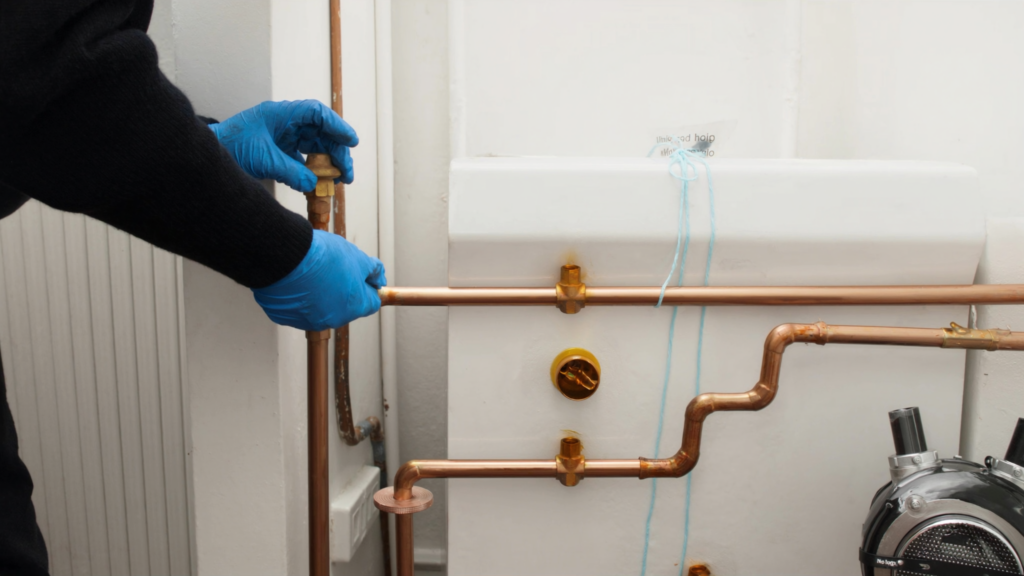
The Boiler Upgrade Scheme now covers £7,500 of a heat pump, roughly half the total installed cost of an air-source heat pump for a typical three-bedroom semi-detached house.
The Boiler Upgrade Scheme (BUS) provides a government grant to help homeowners in England and Wales replace their fossil-fuel heating system with a heat pump. For 2026, the grant for an air-source heat pump is fixed at £7,500. This figure was increased from £5,000 in October 2023 and has not changed since (GOV.UK, 2026).
According to the Energy Systems Catapult, a typical air-source heat pump installation for a three-bedroom semi-detached house costs between £12,000 and £15,000 before the grant (Energy Systems Catapult, 2026). After the £7,500 grant is deducted, the homeowner’s share is roughly £5,000 to £7,500.
Boiler Upgrade Scheme eligibility, property, heating system, and installer rules
To qualify for the BUS grant, your property must meet three main conditions. First, it must have a valid Energy Performance Certificate (EPC) with no outstanding recommendations for loft or cavity wall insulation (GOV.UK, 2026). If your EPC recommends insulation work, you must complete that work before applying.
Second, the scheme is only available for homes in England and Wales. Scotland has its own separate grant and loan scheme through Home Energy Scotland (Energy Saving Trust, 2026).
Third, you must be replacing an existing fossil-fuel heating system, such as a gas, oil, LPG, or electric boiler. The new system must be an air-source or ground-source heat pump. Biomass boilers are only eligible if your home is not connected to the gas grid (Ofgem, 2026).
Quick numbers, what you pay, what you save, and the payback period
| Cost or saving item | Typical figure (GBP or years) | Source |
|---|---|---|
| Upfront cost after £7,500 grant (air-source heat pump) | £5,000 to £7,500 | Energy Systems Catapult, 2026 |
| Annual heating bill saving vs. gas boiler | £200 to £400 | Energy Saving Trust, 2026 |
| Annual electricity cost increase for running the heat pump | £100 to £200 | Energy Saving Trust, 2026 |
| Net annual saving | £100 to £200 | Ofgem, 2026 |
| Estimated payback period (based on net savings) | 10 to 15 years | Calculated from EST and Ofgem data |
These figures assume a typical three-bedroom semi-detached house with a well-insulated building fabric. Actual savings depend on your current heating system, your energy tariff, and how efficiently the heat pump is installed and operated. how to reduce heat pump running costs
The actual walkthrough, applying for the £7,500 Boiler Upgrade Scheme step by step
The application process is handled entirely by your installer. You do not apply directly to Ofgem. Here is the sequence of steps.
Step 1: Get a quote from an MCS-certified installer. The installer must hold current Microgeneration Certification Scheme (MCS) certification for heat pump installation. They will assess your property and provide a written quote that includes the £7,500 grant deduction.
Step 2: The installer submits the application to Ofgem. Using the BUS online portal, the installer provides your property address, your EPC number, and the quote. This must happen before any installation work begins (Ofgem, 2026).
Step 3: Ofgem issues a grant approval reference number. The installer must receive this reference number before starting the installation. If work starts before approval, the grant is not paid.
Step 4: The installer completes the work and submits a post-installation confirmation. Ofgem then pays the £7,500 directly to the installer, who deducts it from your final bill. You only pay the remaining balance.
Does the £7,500 grant really cover the heat pump cost? The breakdown of typical installer quotes
A full air-source heat pump system quote typically breaks down into four main components. The heat pump unit itself costs £4,000 to £6,000. Installation labour adds £2,500 to £4,000. A new hot water cylinder costs £1,500 to £2,500. Any electrical or pipework upgrades add £1,000 to £2,000 (MCS, 2026).
The £7,500 grant usually covers the heat pump unit and a portion of the installation labour. This leaves the homeowner paying for the hot water cylinder and any electrical or pipework upgrades. In practice, this means your out-of-pocket cost after the grant is typically £5,000 to £7,500, as stated above. heat pump installation costs explained in full
How to verify your installer, MCS certification and TrustMark registration explained
To apply for the BUS grant, your installer must hold current MCS certification for heat pump installation. MCS is the Microgeneration Certification Scheme, which sets standards for renewable energy installers (MCS, 2026).
You should also check that the installer is registered with TrustMark, the government-endorsed quality scheme for home improvements. TrustMark registration provides consumer protection and a complaints process (TrustMark, 2026).
You can verify an installer’s MCS certificate number on the MCS register website. TrustMark registration can be checked on the TrustMark website. Do not rely on the installer’s own claims, always check the registers yourself.
What the £7,500 grant does NOT cover, and the costs you still pay
The BUS grant only covers the heat pump system and its installation. It does not cover several essential upgrades that most homes need.
A new hot water cylinder is almost always required for a heat pump system, because heat pumps operate at lower temperatures than gas boilers and need a larger cylinder. This costs £1,500 to £2,500 (Energy Saving Trust, 2026).
Electrical upgrades are often needed, such as a new consumer unit or wiring to the outdoor unit. These cost £500 to £1,500. Radiator upgrades, such as larger panels to work with the lower flow temperatures of a heat pump, cost £1,000 to £3,000 for a typical home (MCS, 2026).
These additional costs are not covered by the grant and must be paid by the homeowner. A thorough quote from your installer should include all of these items so you know the total cost before you commit.
Frequently Asked Questions
The Boiler Upgrade Scheme grant is £7,500 for an air-source heat pump in 2026, as confirmed by GOV.UK. This amount was raised from £5,000 in October 2023 and has not changed since.
Yes, you need a valid Energy Performance Certificate (EPC) with no outstanding recommendations for loft or cavity wall insulation, according to GOV.UK. If your EPC recommends insulation work, you must complete it before applying.
No, the Boiler Upgrade Scheme only covers homes in England and Wales, as stated by GOV.UK. Scotland has its own separate grant and loan scheme through Home Energy Scotland, managed by the Energy Saving Trust.
You can replace an existing fossil-fuel heating system, such as a gas, oil, LPG, or electric boiler, with an air-source or ground-source heat pump, according to Ofgem. Biomass boilers are only eligible if your home is not connected to the gas grid.
After the £7,500 grant, a typical air-source heat pump installation for a three-bedroom semi-detached house costs the homeowner £5,000 to £7,500, based on figures from the Energy Systems Catapult. This is roughly half the total installed cost of £12,000 to £15,000.