Hydrogen-ready boilers are built to operate on natural gas today while being fully convertible to run on 100% hydrogen in the future, a capability that could make them central to the UK’s plan to decarbonise home heating across approximately 23 million gas-boiler households. The UK government’s hydrogen strategy identifies blended hydrogen-natural gas networks and potential regional hydrogen trials as key stepping stones toward net zero by 2050, and hydrogen-ready boilers are the technology built to bridge that transition without requiring homeowners to replace their heating system twice.
How Hydrogen-Ready Boilers Work
A hydrogen-ready boiler operates on exactly the same principles as a conventional gas boiler, combusting fuel to heat water, which then circulates through your radiators and provides hot water on demand. The critical difference lies in the engineering tolerances and component materials used in its construction.
Hydrogen burns at a higher flame temperature than natural gas and produces a nearly invisible flame, which means standard boiler components would degrade rapidly under sustained hydrogen combustion. Hydrogen-ready boilers use stainless steel heat exchangers rather than aluminium, upgraded seals and gaskets rated for hydrogen permeation, modified burner designs that handle hydrogen’s faster combustion speed, and revised gas valve settings calibrated for hydrogen’s different energy density.
Natural gas contains roughly 10.55 kWh of energy per cubic metre. Hydrogen contains approximately 3.0 kWh per cubic metre, meaning the gas valve and injector nozzles must allow a significantly higher volumetric flow rate to deliver equivalent heat output. When a hydrogen-ready boiler is converted, a qualified engineer replaces the burner, injectors, and gas valve with hydrogen-specific components. The heat exchanger, flue, controls, and pipework remain unchanged, keeping conversion costs low.
Under the current voluntary British Standard (PAS 4444:2024), a hydrogen-ready boiler must be convertible to 100% hydrogen in under one hour by a trained engineer, a practical benchmark that distinguishes genuinely hydrogen-ready products from marketing-only claims.
The Current State of Hydrogen Heating in the UK
Understanding where hydrogen heating sits in 2026 requires separating pilot projects from policy commitments. The UK’s H100 Fife project in Scotland, the world’s first 100% hydrogen domestic heating network, began supplying homes in 2023 and has provided real-world data on safety, appliance performance, and consumer behaviour. In parallel, the government committed to a decision on whether to allow hydrogen blending (up to 20% by volume) in the gas grid by 2026, with a full policy framework for potential 100% hydrogen town pilots expected to follow.
In 2026, the vast majority of UK homes are still connected to the natural gas grid. No widespread hydrogen distribution network exists yet. What this means practically is that if you install a hydrogen-ready boiler today, it will run on natural gas, possibly for the next 10 to 15 years. The hydrogen-ready designation is a future-proofing investment, not an immediate fuel switch.
The government’s Boiler Upgrade Scheme currently prioritises heat pumps, but policy guidance signals that hydrogen-ready boilers will likely remain permissible under building regulations through the late 2020s, giving homeowners a viable replacement option if their existing boiler fails.
How Much Do Hydrogen-Ready Boilers Cost in 2026
Hydrogen-ready boilers carry a modest price premium over conventional condensing boilers, typically 10% to 15% more for the unit itself. Installation costs are broadly equivalent. The table below gives realistic price ranges for supply and installation across common property types in 2026.
| Property Type | Recommended Output | Boiler Unit Cost | Installation Cost | Total Installed Cost |
|---|---|---|---|---|
| 1–2 bedroom flat | 24–26 kW | £900–£1,400 | £700–£1,000 | £1,600–£2,400 |
| 3 bedroom semi-detached | 28–32 kW | £1,100–£1,700 | £800–£1,200 | £1,900–£2,900 |
| 4 bedroom detached | 35–40 kW | £1,400–£2,200 | £900–£1,400 | £2,300–£3,600 |
| Large 5+ bedroom home | 40–50 kW | £1,800–£2,800 | £1,000–£1,600 | £2,800–£4,400 |
Additional costs you should budget for include a magnetic system filter (£80–£200 fitted), a new flue if your existing one is in poor condition (£150–£400), a smart thermostat upgrade (£150–£350 fitted), and a power flush of the central heating system if there is sludge build-up (£300–£600). On a like-for-like basis, switching from a standard condensing boiler to a hydrogen-ready equivalent adds roughly £150–£300 to the unit price, a modest premium for the future-proofing benefit.
| Cost Factor | Typical Price Range | Notes |
|---|---|---|
| Premium over standard combi boiler | £150–£300 | Unit cost difference only |
| Future hydrogen conversion kit | £200–£500 (estimated) | Labour under 1 hour per PAS 4444 |
| Annual service | £70–£120 | Standard service, same as conventional boiler |
| Boiler cover plan | £100–£250/year | Parts and labour included |
| Magnetic system filter (fitted) | £80–£200 | Recommended for all installations |
Benefits of Hydrogen-Ready Boilers
The case for choosing a hydrogen-ready boiler in 2026 rests on a combination of immediate practical benefits and longer-term strategic advantages for your home.
- Future-proof heating investment: With a boiler lifespan of 10–15 years, a hydrogen-ready boiler installed today will still be in service when hydrogen distribution networks may begin operating in your area. You avoid a second boiler replacement cost of £2,000–£4,000.
- No operational difference today: Running on natural gas, a hydrogen-ready boiler delivers identical performance, efficiency (typically 89–95% AFUE), and running costs to a standard condensing boiler.
- Carbon reduction potential: When operating on 100% green hydrogen (produced via electrolysis using renewable electricity), combustion produces only water vapour. That makes it a genuinely zero-carbon heating source. Even a 20% hydrogen blend reduces CO₂ emissions by approximately 7% per household.
- Compatibility with existing infrastructure: Unlike heat pump installations, hydrogen-ready boilers work smoothly with your existing radiators, pipework, and hot water cylinder, no system redesign required.
- Lower installation disruption: A hydrogen-ready boiler swap takes a single day in most cases. A heat pump retrofit often requires multi-day installation plus potential radiator upgrades.
- Familiar technology: Servicing, fault diagnosis, and parts sourcing follow exactly the same processes as conventional gas boilers, meaning no training gap for Gas Safe engineers.
- Property value protection: As building regulations tighten, having a certified hydrogen-ready boiler may prove advantageous when selling your home. This demonstrates a forward-compatible heating system to buyers and mortgage lenders focused on EPC ratings.
It is worth being candid about the limitations: hydrogen-ready boilers do not reduce your carbon footprint today beyond what a high-efficiency condensing boiler achieves. The benefit is entirely contingent on green hydrogen becoming available at scale, a genuine policy and infrastructure risk. Even so, the small cost premium makes it a low-regret decision when you are replacing a boiler regardless.
Hydrogen-Ready Boiler Types and Formats
Hydrogen-ready technology is available across the main boiler formats that UK homeowners already use, so you are not constrained to a single system type.
Hydrogen-Ready Combi Boilers
The most popular format in UK homes, hydrogen-ready combi boilers provide both central heating and instant hot water from a single compact unit. They are ideal for flats and smaller homes where space is limited and a hot water cylinder is not desired. Most hydrogen-ready combis available in 2026 fall in the 24–35 kW output range.
Hydrogen-Ready System Boilers
Hydrogen-ready system boilers heat the central heating circuit directly and supply hot water to a separate cylinder. They suit larger households with higher simultaneous hot water demand, typically four or more bedrooms. The hot water cylinder occupies a cupboard but enables multiple showers running at the same time without pressure loss.
Hydrogen-Ready Regular (Heat-Only) Boilers
Regular boilers work alongside a cold water storage tank in the loft and a hot water cylinder. They are the least common new installation choice in 2026 but remain relevant for older properties that already have this setup, where replacing the entire system would be unnecessarily costly.
While heat pumps represent the government’s preferred low-carbon pathway for many homes, hydrogen-ready boilers offer a viable alternative where heat pump installation is impractical, particularly in flats, terraced houses with no outdoor space, or listed buildings. The two technologies serve different segments of the housing stock rather than competing directly for the same customers.
How to Choose the Right Hydrogen-Ready Boiler
Choosing a hydrogen-ready boiler involves four core decisions: output size, format type, brand, and installer quality. Getting the first two wrong wastes money; the latter two determine how reliably the boiler performs over its 10–15 year life.
Sizing Your Boiler Correctly
Oversized boilers short-cycle, they fire up, reach temperature quickly, switch off, and repeat, which reduces efficiency and causes premature wear. The correct output for your home is calculated using a heat loss survey, which accounts for your property’s floor area, insulation levels, window type, and number of radiators. As a rough guide:
- 1–2 bedroom flat or small terrace: 24–26 kW
- 3 bedroom semi-detached house: 28–32 kW
- 4–5 bedroom detached house: 35–42 kW
Always ask your installer to justify their sizing recommendation. An engineer who specifies 40 kW for a well-insulated three-bedroom semi without a heat loss calculation is oversizing by guesswork.
Checking the Hydrogen-Ready Certification
Insist on products certified to PAS 4444:2024 or the relevant updated British Standard in force at the time of your purchase. This is the only reliable confirmation that a boiler meets the technical specification for genuine hydrogen readiness. Some manufacturers use the term loosely in marketing materials without formal certification, verify before you buy.
Brand and Warranty Considerations
Leading brands offering certified hydrogen-ready boilers in 2026 include Worcester Bosch, Baxi, Vaillant, Ideal, and Viessmann. Warranties typically run from 5 to 12 years depending on the manufacturer and whether you register within 30 days of installation. A longer warranty is not automatically better, check what it covers (parts only versus parts and labour) and whether the manufacturer has a strong UK service network. Worcester Bosch and Vaillant have particularly dense engineer networks, which matters when you need a fault resolved quickly in winter.
Installer Quality
All gas boiler installation and servicing in the UK must be carried out by a Gas Safe registered engineer. Verify your installer’s Gas Safe ID card and registration number on the Gas Safe Register website before work begins. Get a minimum of three quotes for any new boiler installation. Be wary of same-day quotes without a proper site survey, a reputable installer will check your flue route, condensate pipe drainage, gas supply pressure, and existing pipework condition before pricing the job.
Hydrogen-Ready Boiler Installation, What to Expect
A hydrogen-ready boiler installation follows the same process as any gas boiler replacement. Here is what a typical one-day installation involves.
- Pre-installation survey: Your engineer assesses the existing boiler location, flue route, gas supply, condensate drainage options, and central heating system condition. They confirm the correct boiler output using heat loss data.
- Draining the system: The central heating circuit is drained down. This takes 30–60 minutes depending on system size.
- Removing the old boiler: The old unit is disconnected from gas, water, and electrical supplies and removed from the property. Responsible installers include old boiler disposal in their quote.
- System flush: Before fitting the new boiler, the pipework is flushed, either a chemical flush or a full power flush if significant sludge is present. This protects the new heat exchanger from magnetite damage.
- Installing the new boiler: The hydrogen-ready boiler is mounted, connected to the gas supply, flue, flow and return heating pipework, condensate drain, and electrical supply. A new magnetic system filter is fitted on the return pipe.
- Commissioning and testing: The system is filled, pressurised, and tested. The engineer checks for gas leaks, verifies combustion settings, balances radiator flow, and sets up controls and thermostat.
- Benchmark certificate: Your installer completes the Benchmark Commissioning Checklist, a legal requirement that also validates your manufacturer warranty. Keep this document safely.
- Handover and registration: The engineer demonstrates the controls, explains the flue terminal location, and advises on annual servicing. You register the boiler with the manufacturer within 30 days to activate the full warranty period.
Most hydrogen-ready boiler swaps in a standard location take 6–8 hours. A complex installation, for example, relocating the boiler or upgrading a gravity-fed system, may extend to two days.
Grants and Funding for Hydrogen-Ready Boilers
The funding landscape for hydrogen-ready boilers in 2026 is more limited than for heat pumps. This reflects government policy that prioritises electrification. However, several routes may reduce your costs.
The Boiler Upgrade Scheme
The Boiler Upgrade Scheme (BUS), administered by Ofgem, provides grants of £7,500 for air source heat pumps and £7,500 for ground source heat pumps, but does not currently fund gas boiler replacements, including hydrogen-ready models. If you are eligible for BUS and your property is suitable for a heat pump, that subsidy is significantly more valuable than the modest premium difference for hydrogen-ready versus standard boilers.
The ECO4 Scheme
The Energy Company Obligation (ECO4) scheme, running to March 2026 and likely extended in revised form, funds heating upgrades for households on qualifying benefits or low incomes. ECO4 prioritises whole-house energy efficiency packages, insulation plus heating system upgrades. Where a gas boiler replacement is approved under ECO4 (typically only for homes that are not suitable for heat pumps), a hydrogen-ready boiler may be an eligible product depending on installer and scheme rules. Contact your energy supplier directly to assess eligibility.
The Great British Insulation Scheme
The Great British Insulation Scheme closed on 31 March 2026. It funded insulation measures only and never covered windows or glazing. Combining insulation upgrades with a correctly sized hydrogen-ready boiler delivers better long-term running cost savings than a larger boiler in a poorly insulated home.
Supplier and Manufacturer Offers
Several boiler manufacturers offer 0% finance on new installations, typically over 12–36 months. Some energy suppliers provide discounted installation packages when you switch tariff. These are commercial offers rather than government grants, but they can meaningfully reduce upfront costs, particularly useful given that the average total installed cost of a hydrogen-ready combi boiler sits at £2,000–£3,000 for most UK homes.
Common Problems and Maintenance for Hydrogen-Ready Boilers
Hydrogen-ready boilers are maintained and serviced in exactly the same way as conventional condensing gas boilers. The hydrogen-specific components, upgraded seals, burner, and heat exchanger, do not require any different servicing regime while the boiler is running on natural gas.
Annual Servicing
An annual service by a Gas Safe registered engineer is essential, both to maintain your manufacturer warranty and to ensure safe, efficient operation. During a service, the engineer checks combustion efficiency, inspects the heat exchanger for cracking, tests the gas pressure and valve, examines flue integrity, and cleans the burner assembly. Expect to pay £70–£120 for a standard annual service in 2026. Skipping annual services voids most manufacturer warranties after the first year.
Pressure Loss
The most common call-out issue for any combi or system boiler is loss of system pressure, typically caused by a small water leak or air in the system. Your boiler pressure gauge should read 1.0–1.5 bar when cold. If it drops below 0.8 bar, the boiler will lock out. Re-pressurising via the filling loop is a straightforward homeowner task described in your boiler manual, your installer should walk you through it at handover.
Frozen Condensate Pipe
Condensing boilers, including all hydrogen-ready models, produce acidic condensate water that drains to an external drain. In cold snaps, the external section of the condensate pipe can freeze, causing the boiler to lock out with a fault code. Thawing it with warm (not boiling) water restores operation. Routing the condensate pipe internally to an internal drain during installation avoids this entirely, worth specifying when planning your installation.
Magnetic System Filter Maintenance
The magnetic filter on your return pipe captures iron oxide sludge (magnetite) that would otherwise damage the heat exchanger. It should be cleaned at every annual service. If you have an older, heavily sludged system and skipped a power flush at installation, the filter may need cleaning more frequently in the first year.
Ignition and Flame Failure Faults
Flame failure lock-outs are typically caused by a faulty ignition lead, a dirty flame sensor, or low gas pressure. These are straightforward engineer repairs. Hydrogen-ready boilers do not exhibit any additional ignition complications while running on natural gas, the upgraded components simply provide a safety margin rather than changing day-to-day behaviour.
Hydrogen-Ready Boilers and Smart Controls
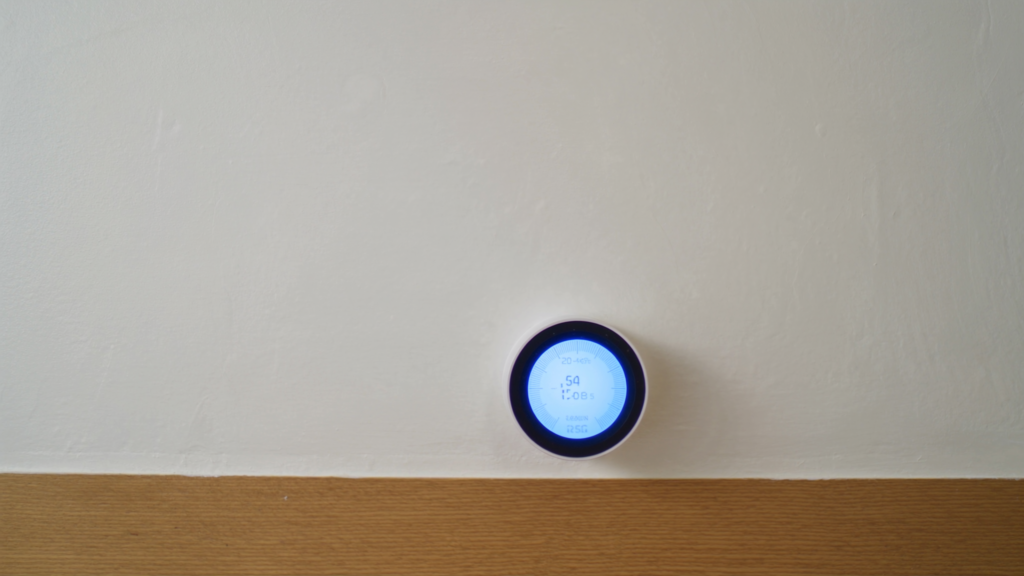
Pairing a hydrogen-ready boiler with a modern smart thermostat or weather-compensation controller extracts the maximum efficiency from the system. Most hydrogen-ready boilers support OpenTherm communication protocol, which allows the thermostat to modulate the boiler’s flow temperature rather than simply switching it on and off, a technique called load compensation or weather compensation.
Running a condensing boiler at lower flow temperatures (around 55°C rather than 70–80°C) improves condensing efficiency and can reduce gas consumption by 8–12% compared to a boiler cycled at fixed high temperature. This efficiency gain is available right now, regardless of when hydrogen arrives.
If your home has underfloor heating on the ground floor and radiators above, a hydrogen-ready boiler with a low-temperature weather-compensated flow can supply both circuits efficiently, the underfloor circuit typically running at 35–45°C and the radiator circuit at 55–65°C via a blending valve.
Is a Hydrogen-Ready Boiler Right for Your Home
A hydrogen-ready boiler makes strong practical sense in specific circumstances. It is the most straightforward choice if your existing gas boiler has failed or is approaching the end of its life, your home is not well-suited to a heat pump (flat, terrace, limited outdoor space, solid walls, listed building), and you want to replace like-for-like without significant additional investment or disruption.
The hydrogen-ready premium is small, typically £150–£300 on the unit cost, and given that the boiler will operate for 10–15 years, it is a sensible hedge against an uncertain energy transition. You are not betting on hydrogen succeeding; you are simply not betting against it at a negligible cost.
Where heat pump eligibility and BUS grant funding apply, the £7,500 subsidy changes the financial calculus significantly, and an honest assessment of both routes with your installer is worthwhile. But for the large proportion of UK homes where a heat pump retrofit carries significant practical or financial barriers, a hydrogen-ready boiler installed by a qualified engineer and properly maintained is a responsible, forward-looking heating decision for 2026 and beyond.