Why Loft Insulation Is the Single Most Effective Home Upgrade You Can Make
An uninsulated loft loses up to 25% of a home’s heat through the roof. That makes it the largest single source of heat loss in a typical UK property. Installing adequate loft insulation can save the average semi-detached homeowner between £150 and £400 per year on energy bills, and the material itself can last for 40 years or more with virtually no maintenance. In 2026, with energy prices still significantly higher than pre-2021 levels, loft insulation remains the highest-return home improvement investment available to UK homeowners.
How Loft Insulation Works
Heat moves from warm areas to cold ones through three processes: conduction, convection, and radiation. In a typical UK home, the living spaces are heated while the loft space above sits at close to outdoor temperatures. Without a thermal barrier, heat conducts straight through your ceiling plasterboard, into the cold loft air, and out through the roof tiles.
Loft insulation works by trapping millions of tiny pockets of air within its fibres or cells. Air is a poor conductor of heat, so these trapped pockets dramatically slow the rate at which warmth escapes upward. The effectiveness of any insulation material is measured by its thermal resistance, or R-value, and its thermal conductivity, known as lambda (λ). The lower the lambda value, the better the insulating performance per centimetre of thickness.
The UK government’s recommended depth for mineral wool loft insulation is 270mm, typically laid as 100mm between the joists and 170mm across the top at right angles. This cross-layering eliminates cold bridges through the timber joists themselves. At 270mm, a properly insulated loft achieves a U-value of approximately 0.16 W/m²K, comfortably meeting current Building Regulations standards for new builds and retrofits alike.
It’s also worth understanding the difference between a cold loft and a warm loft. In a cold loft, insulation sits at floor level (on top of the ceiling joists), keeping the living space warm but leaving the roof structure itself cold. In a warm loft, typically used when the loft is converted into habitable space, insulation is placed between and beneath the rafters, bringing the roof space within the thermal envelope of the home. Most standard loft insulation projects deal with cold lofts.
Types of Loft Insulation
Choosing the right insulation material depends on your loft’s layout, accessibility, and how you use the space. The four main types used in UK homes each have distinct properties.
Mineral Wool (Glass Wool and Rock Wool)
Mineral wool, sold under brand names like Knauf, Isover, and Rockwool, is the most widely installed type in the UK, covering the vast majority of domestic loft insulation projects. It comes in rolls, is straightforward to lay between joists, and is highly cost-effective. Glass wool typically has a lambda value of around 0.044 W/mK, while rock wool performs slightly better at around 0.038 W/mK. Both are non-combustible and resistant to vermin.
Loose Fill Insulation
Loose fill materials, including cellulose (recycled newspaper), mineral wool granules, and vermiculite, are blown or poured into the loft space. They’re particularly useful for lofts with irregular joist spacing, obstructions, or difficult access. Cellulose has good environmental credentials and a lambda value of approximately 0.040 W/mK. Loose fill is almost always installed by professionals using specialist blowing equipment.
Rigid Insulation Boards
Rigid boards, made from materials such as polyisocyanurate (PIR), expanded polystyrene (EPS), or phenolic foam, offer superior thermal performance in thinner profiles. PIR boards can achieve lambda values as low as 0.022 W/mK, meaning you need roughly half the thickness of mineral wool to hit the same U-value. They’re the preferred choice for warm loft conversions where rafter depth is limited. However, they cost considerably more per square metre than mineral wool rolls.
Spray Foam Insulation
Spray foam is applied directly to the underside of roof timbers and expands to fill gaps. While it offers excellent air sealing, it has become highly controversial in the UK mortgage market. Many lenders and surveyors now flag spray foam as a risk because it can obscure timber condition, trap moisture, and complicate future roof repairs. If you’re considering spray foam, check your mortgage provider’s position first, and be aware that it can affect your ability to sell the property.
| Insulation Type | Lambda Value (W/mK) | Typical Thickness for 270mm Target | Best For |
|---|---|---|---|
| Mineral Wool (Glass Wool) | 0.044 | 270mm rolls | Standard accessible lofts |
| Mineral Wool (Rock Wool) | 0.038 | 250–270mm | Standard lofts, improved performance |
| Cellulose Loose Fill | 0.040 | 270–300mm | Irregular or obstructed lofts |
| PIR Rigid Board | 0.022 | 120–140mm | Warm loft conversions, tight spaces |
| Phenolic Foam Board | 0.018 | 100–120mm | Premium warm roof applications |
How Much Does Loft Insulation Cost in 2026
Loft insulation costs in 2026 vary depending on property size, loft accessibility, insulation type, and whether you use a grant scheme. The figures below reflect typical installer quotes including materials and labour across England, Scotland, and Wales.
| Property Type | Loft Floor Area (approx) | Mineral Wool (DIY) | Mineral Wool (Professional) | Loose Fill (Professional) | PIR Board (Warm Loft) |
|---|---|---|---|---|---|
| Terraced House | 40–50 m² | £200–£350 | £300–£500 | £400–£600 | £1,500–£2,500 |
| Semi-Detached House | 50–65 m² | £300–£450 | £400–£650 | £500–£750 | £2,000–£3,500 |
| Detached House | 80–120 m² | £450–£700 | £600–£1,000 | £700–£1,200 | £3,000–£6,000 |
| Bungalow | 60–90 m² | £350–£550 | £500–£800 | £600–£900 | £2,500–£4,500 |
For a typical semi-detached house paying professional installation rates, the payback period for mineral wool loft insulation is typically 2 to 4 years, after which the energy savings are pure gain for the remaining 36+ years of the material’s lifespan. DIY installation using mineral wool rolls can push payback below 12 months.
Additional costs to factor in include:
- Loft hatch insulation, fitting an insulated hatch cover typically adds £50–£150 to any job
- Tank and pipe lagging, any cold water tanks and exposed pipes must be insulated once the floor-level insulation goes in, as they lose the warmth from below; budget £80–£200
- Eaves ventilation baffles, required to maintain airflow at the eaves and prevent condensation; usually included in professional quotes but worth confirming
- Loft clearance, if the loft is full of belongings, some installers charge extra for clearing a working path
Benefits of Loft Insulation
The case for loft insulation stacks up on multiple fronts, financial, environmental, and practical.
Energy Bill Savings
According to the Energy Saving Trust, upgrading from no insulation to 270mm of mineral wool in a gas-heated semi-detached house saves approximately £340 per year on heating bills at 2024–2026 energy price levels. Even topping up existing thin insulation (say, 100mm already installed) to the recommended 270mm delivers savings of around £140–£180 per year.
Improved EPC Rating
A good loft insulation upgrade typically increases a property’s Energy Performance Certificate (EPC) rating by one or two bands. Moving from an E to a C or D rating matters commercially, from 2028, proposed legislation is expected to require rental properties to achieve a minimum EPC rating of C, making loft insulation a near-essential upgrade for landlords.
Carbon Footprint Reduction
A well-insulated semi-detached home heated by gas produces roughly 560kg less CO₂ per year compared to an uninsulated equivalent. Over the 40-year lifespan of the insulation, that’s over 22 tonnes of CO₂ avoided from a single upgrade.
Increased Comfort
Beyond the numbers, homeowners consistently report that a properly insulated loft eliminates the “cold ceiling” effect in upstairs rooms during winter and reduces heat gain in summer, the insulation layer works in both directions, slowing the movement of heat whether it’s trying to escape in January or bake you in July.
Added Property Value
Research from the property market consistently links higher EPC ratings to higher sale prices. A 2023 analysis by the Department for Energy Security and Net Zero found that properties rated B or C sold for an average of 5–6% more than equivalent D-rated homes. Loft insulation is one of the cheapest ways to contribute to that rating improvement.
Grants and Funding for Loft Insulation in 2026
The UK government has maintained significant funding streams for loft insulation throughout 2025 and into 2026, primarily targeting lower-income households and the least efficient properties.
Great British Insulation Scheme (GBIS)
The Great British Insulation Scheme is the primary government programme for loft insulation grants in 2026. Households in England, Scotland, and Wales may qualify for fully funded or heavily subsidised loft insulation if they meet one of two eligibility routes:
- Income-based route, households receiving qualifying benefits (including Universal Credit, Pension Credit, and certain tax credits) with a home rated EPC D–G
- Council Tax band route, homes in Council Tax bands A–D (England), A–E (Scotland and Wales) with an EPC rating of D or below, regardless of income
The Great British Insulation Scheme closed on 31 March 2026. It funded insulation measures only and never covered windows or glazing.
ECO4 Scheme
The Energy Company Obligation (ECO4) scheme runs until March 2026 and targets low-income and fuel-poor households. It funds a broader package of energy efficiency measures including loft insulation, often alongside cavity wall insulation and heating upgrades. Households on means-tested benefits with homes rated EPC D–G are the primary target group. Social housing and privately rented properties can also qualify if tenants meet the income criteria.
Home Upgrade Grant (HUG2)
The Home Upgrade Grant Phase 2 covers off-gas-grid homes in England, typically rural properties using oil, LPG, or solid fuel. Eligible households can receive grants covering loft insulation and other energy efficiency measures. Local councils administer HUG2 funding, so eligibility and availability vary by area.
Scotland, Wales, and Northern Ireland
Scotland operates the Home Energy Scotland scheme, offering interest-free loans of up to £15,000 and cashback grants for energy efficiency improvements including loft insulation. Wales runs the Nest scheme for low-income households and the Optimised Retrofit Programme for social housing. Northern Ireland has its own Affordable Warmth scheme via the Housing Executive. If you’re in these nations, contact the relevant programme directly as eligibility rules and funding levels differ from England.
How to Choose the Right Loft Insulation
The right choice depends on four key factors: loft accessibility, whether the space is used for storage, if you’re converting the loft, and your budget.
Accessible Cold Loft, No Storage Use
If your loft is accessible via a hatch and you don’t need to use the floor for storage, mineral wool rolls are the clear choice. They’re cheap, widely available, easy to install yourself, and achieve excellent thermal performance at 270mm depth. This covers the majority of UK semi-detached and terraced homes built before 1990.
Accessible Cold Loft, Storage Required
If you store items in the loft, laying 270mm of mineral wool across the full floor area makes the space unusable. The solution is either to install a raised loft board system on legs above the insulation (products like LoftZone are purpose-designed for this), or to use rigid PIR boards between the joists, which can provide reasonable insulation at joist depth (typically 100–150mm) while leaving a flat surface for boards. This approach won’t hit 270mm performance, but a well-installed 100mm PIR layer still delivers significant savings over no insulation at all.
Difficult Access or Irregular Joists
For lofts with very low pitch, many obstructions, or irregular joist spacing, blown cellulose or mineral wool granules installed by a specialist contractor are the practical solution. The material flows around obstacles, fills every corner, and can be installed quickly without the installer needing full crawl space.
Loft Conversion
If the loft is or will be converted into habitable space, you need a warm roof approach using rigid boards between and under the rafters, or a specialist spray-applied system applied by a professional. For this scenario, see Roof Insulation guide for a detailed walkthrough of the options and building regulations requirements that apply specifically to warm roof construction.
Key Specifications to Check
- Look for products with a BBA certificate (British Board of Agrément) or EN13162/EN13501 certification confirming the stated thermal performance
- Ensure mineral wool products are rated Euroclass A1 or A2 for fire reaction
- Check the manufacturer’s stated lambda value, don’t compare products on thickness alone, always calculate the effective R-value (thickness ÷ lambda)
- For DIY installation, choose rolls with a stated width matching your joist spacing, standard UK joists are 400mm or 600mm centres
Loft Insulation Installation, What to Expect
If you’re doing it yourself or hiring a professional, understanding the installation process helps you ensure the job is done correctly.
Professional Installation
A professional installer will typically complete a standard cold loft in half a day to a full day, working in a two-person team. Here’s what the process looks like:
- Site survey, the installer checks loft access, joist depth and spacing, existing insulation depth, the position of the water tank, and ventilation at the eaves
- Preparation, any existing insulation below 100mm may be left in place and topped up; very old or contaminated insulation may be removed
- Ventilation baffles, breathable foam or cardboard baffles are fitted at the eaves to maintain a 50mm air gap and prevent condensation
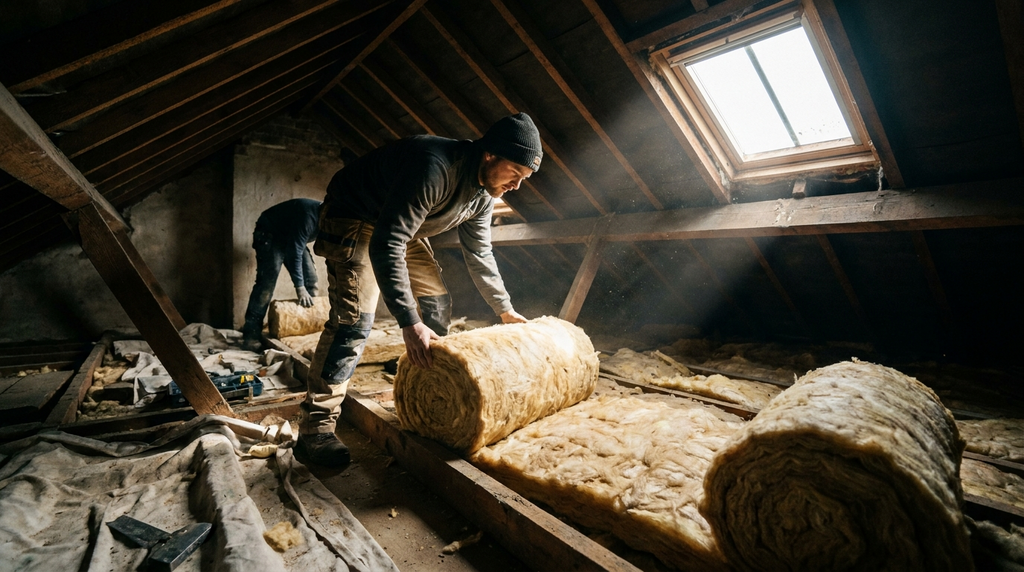
- First layer, 100mm mineral wool is cut and fitted between the joists, running perpendicular to the room below
- Second layer, 170mm rolls are laid at right angles across the joists, covering the timber to eliminate thermal bridging
- Tank and pipe lagging, any cold water tank is insulated on sides and top (not underneath, it needs ground warmth), and exposed pipes are lagged
- Loft hatch, an insulated cover or rigid board with draught seal is fitted to the hatch
A good installer will leave the loft hatch accessible, maintain clear ventilation paths, and not block any roof timbers or structural elements. Ask to see the installation before the team leaves and check that the second layer fully covers the joists with no gaps at the eaves or around the hatch.
DIY Installation
Mineral wool loft insulation is genuinely DIY-friendly for homeowners with a reasonably accessible loft. The main precautions are:
- Always wear a dust mask (FFP2 minimum), safety goggles, and long sleeves, mineral wool fibres cause skin, eye, and respiratory irritation
- Never stand directly on the ceiling joists, use a crawl board spanning at least three joists to spread your weight
- Work from the eaves inward so you don’t trap yourself in the loft without a clear path to the hatch
- Ensure the loft space is well lit, a head torch and a portable work light are both useful
- Don’t cover electrical junction boxes, these need to remain accessible and ventilated
If your loft is difficult to access, has very low pitch under 600mm, or contains asbestos materials (common in pre-1985 homes around tank insulation and pipe lagging), always use a professional contractor.
Common Problems and Maintenance
Loft insulation is largely maintenance-free once installed, but there are a handful of issues worth knowing about.
Condensation and Moisture
The most common problem in UK loft insulations is condensation, typically caused by one of two things: blocked eaves ventilation reducing airflow, or bathroom and kitchen extraction fans venting into the loft rather than through the roof. Both create humid conditions that encourage mould on timber and reduce insulation performance over time. Check annually that your eaves vents are clear and that any extractor fan outlets terminate outside the loft, not within it.
Settled or Compressed Insulation
Mineral wool can settle over time, particularly if it has been walked on or compressed by stored items. Check the depth every five years or so, if it has compressed to significantly below 270mm, topping up with an additional layer is cheap and quick.
Vermin
Rodents occasionally nest in mineral wool insulation. If you hear activity in the loft, address the infestation before it does significant damage to the insulation. Rigid boards and loose fill are less attractive to vermin than rolls.
Old or Damaged Insulation
Mineral wool from the 1970s and 1980s was often laid at only 50–100mm depth and may have degraded. If your insulation is visibly crumbling, discoloured, or contaminated with vermin debris, it’s worth replacing rather than topping up. Note that pre-1985 vermiculite loose fill insulation can contain asbestos, have it tested before disturbing it.
For homes with more complex insulation requirements, particularly those with dormer windows, flat roof sections, or partially converted loft spaces, see Roof Insulation guide and Home Insulation overview for guidance on how to approach these hybrid scenarios.
Loft Insulation and Building Regulations
For straightforward cold loft insulation top-ups in existing homes, Building Regulations approval is not required. You’re improving a roof space, not changing its structural use, so there’s no permit needed and no inspector required.
Building Regulations do apply when:
- You’re converting the loft into a habitable room, Part L (Conservation of Fuel and Power) sets minimum U-values for the roof, and Part B (Fire Safety) governs escape routes
- You’re replacing more than 25% of the roof covering at the same time as insulating, in this case the whole roof must be brought up to current thermal standards
- The property is a listed building, listed building consent may be required even for internal insulation works, and material choices may be restricted
The Great British Insulation Scheme closed on 31 March 2026. It funded insulation measures only and never covered windows or glazing. This ensures the installation is assessed, designed, and checked by competent professionals, a meaningful quality assurance step beyond the basic Building Regulations threshold.
Loft Insulation and Your Wider Home Energy Strategy
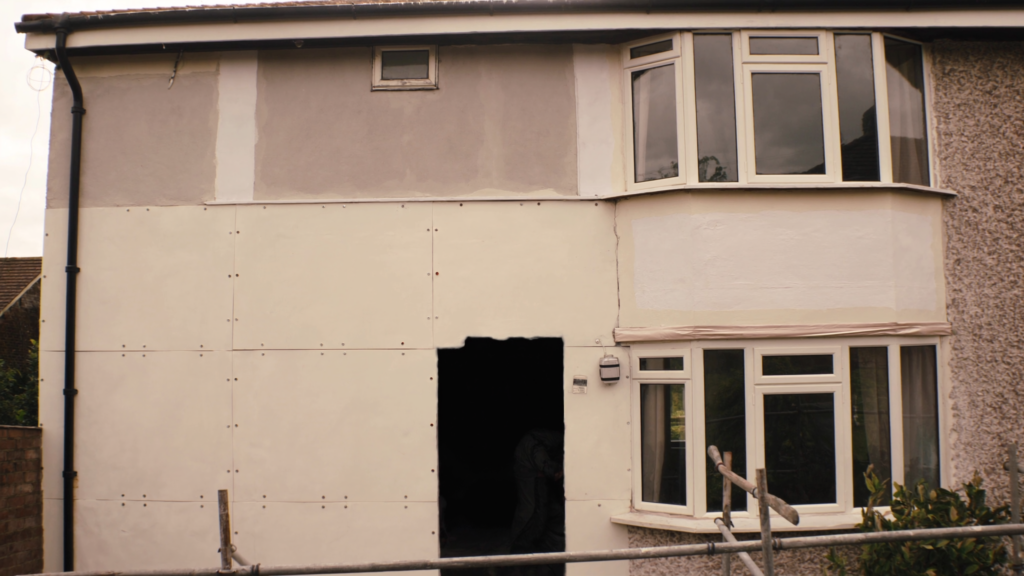
Loft insulation delivers the best return on investment of any single insulation measure, but it works best as part of a joined-up approach to home energy efficiency. Once you’ve insulated the loft, the next highest-impact areas are typically the walls, which account for around 35% of heat loss in an uninsulated home, and draughts, which can account for a further 10–20% of heating energy.
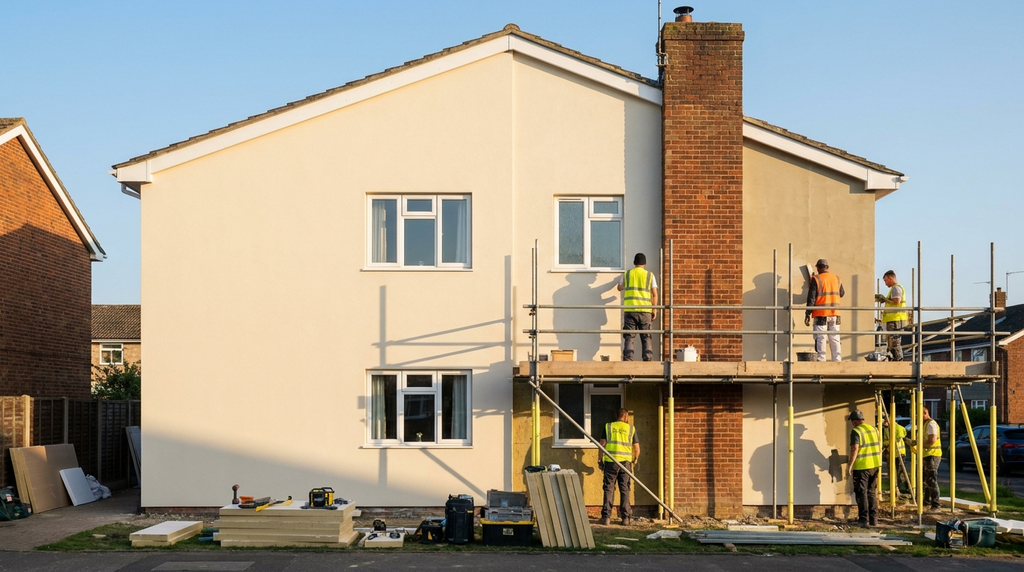
For homes with cavity walls (most UK properties built between 1920 and 1990), Cavity Wall Insulation guide covers the options and costs in detail. For solid-walled properties, particularly Victorian and Edwardian terraces, the choices are more complex and are covered in the Internal Wall Insulation guide and External Wall Insulation guide. Addressing draughts through letterboxes, skirting boards, and floorboards is covered in Draught Proofing guide.
The principle is straightforward: address the loft first, because it’s the cheapest, quickest, and most impactful measure available. Then work down through the building fabric systematically. Each measure you add compounds the benefit of the ones before it, and a home that is well sealed and insulated throughout will respond far more efficiently to any heating system, whether that’s a condensing gas boiler, a heat pump, or anything in between.