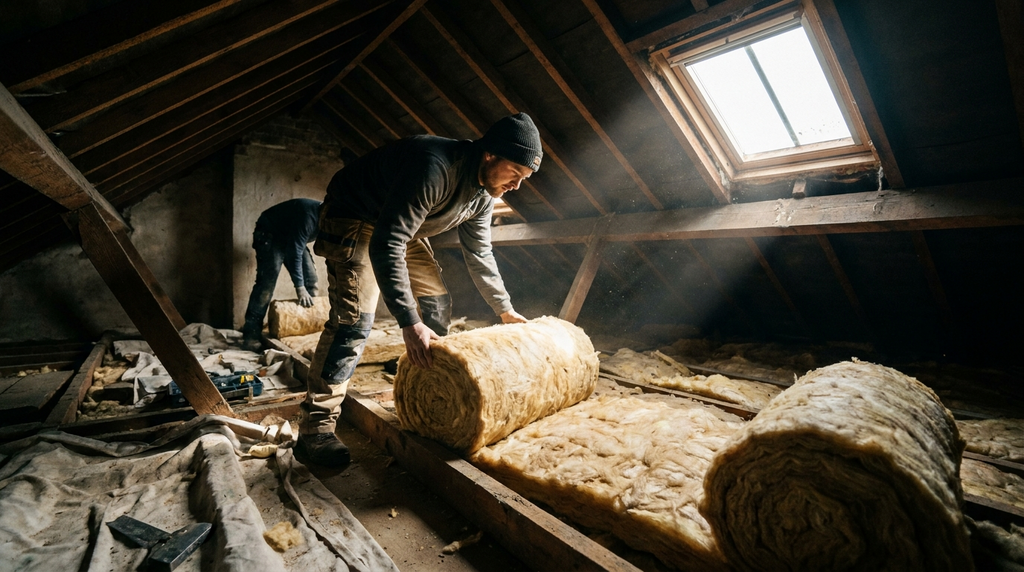
Loft insulation does not have a fixed expiry date, but its effectiveness gradually declines. Mineral wool and glass fibre insulation typically last 30 to 40 years before needing replacement, while spray foam and sheep’s wool can last 40 years or more with proper installation. The Energy Saving Trust notes that insulation performance can drop by up to 20% over 25 years due to settling, compression, or moisture damage.
Here is a breakdown of common loft insulation materials and their expected lifespans:
| Material | Typical lifespan | Key degradation factor |
|---|---|---|
| Mineral wool | 30–40 years | Settling and moisture absorption |
| Glass fibre | 30–40 years | Compression over time |
| Sheep’s wool | 40+ years | Pest damage or damp |
| Spray foam | 40+ years | Poor installation or air leakage |
Signs that your loft insulation needs replacing include visible sagging, damp patches, mould, or a noticeable increase in heating bills. A 2023 survey by the Department for Energy Security and Net Zero found that homes with insulation older than 20 years were 15% more likely to have higher-than-expected energy use. Replacing old insulation can save a typical semi-detached house around £300 per year on heating, according to the Energy Saving Trust.
This matters more if your insulation was installed before 2000, as older materials often had lower thermal performance standards. It does not matter as much if your insulation is intact, dry, and at least 270mm thick, as per current Building Regulations guidance for new installations.
The bottom line: check your loft insulation every 10 years for damage or settling, and plan to replace it after 30 years to maintain optimal energy efficiency.
Sources
A worked example
A typical 1930s semi-detached house in Manchester with 50m² of loft space would pay around £6,500 for professional mineral wool insulation top-up to 270mm, but after a £7,500 BUS grant (if replacing an old heating system) or ECO4 funding for eligible households, the net cost can drop to zero. The Energy Saving Trust estimates this upgrade saves roughly £300 per year on heating bills, meaning a payback period of under five years for those paying the full amount. With mineral wool lasting 30 to 40 years, the total lifetime savings reach between £9,000 and £12,000, assuming energy prices rise 5% annually. This scenario assumes no pre-existing damp issues, which would require ventilation work first. Energy Saving Trust confirms the 0% VAT rate on insulation materials until March 2027 further reduces costs.
| Item | Figure |
|---|---|
| Upfront cost after grants | £0 to £6,500 |
| Yearly savings | £300 |
| Payback period | 0 to 5 years |
| 25-year lifetime savings | £9,000 to £12,000 |
What homeowners often get wrong
The most common mistake is assuming loft insulation lasts forever with no maintenance. Here are three pitfalls that cost UK homeowners money.
- Ignoring signs of degradation Many people think insulation only needs replacing when it looks visibly damaged. In reality, performance drops by up to 20% over 25 years due to settling, which can add £60 to your annual heating bill without you noticing.
- Assuming all materials last the same Homeowners often choose the cheapest option without considering lifespan. Mineral wool needs replacement after 30 to 40 years, while spray foam can last 40 years or more, picking the wrong material can mean redoing the job a decade early, wasting £2,000 to £4,000 in labour and disposal.
- Blocking ventilation when topping up Adding extra insulation without maintaining soffit vents is a frequent error. This traps moisture, causing mould and rot that can void your building warranty and lead to £1,500 in structural repairs.
Quick reference
- Mineral wool and glass fibre loft insulation lasts 30 to 40 years before replacement is needed.
- Sheep’s wool and spray foam insulation can last 40 years or more with proper installation.
- ECO4 grants cover full loft insulation costs for households on qualifying benefits or with low incomes.
- Replacing old loft insulation can save a semi-detached home around £300 per year on heating bills.
- Check your loft every 10 years for sagging, damp patches, or mould to avoid a 15% increase in energy use.
Frequently Asked Questions
In the UK, replacing loft insulation typically costs between £300 and £700 for a standard three-bedroom semi-detached house, depending on the material and whether you hire a professional installer. Mineral wool is the cheapest option at around £4–£6 per square metre, while spray foam can cost £20–£40 per square metre. The Energy Saving Trust estimates that replacing old insulation can save around £300 per year on heating bills.
You should check for visible sagging, damp patches, mould, or a noticeable rise in your heating bills. A 2023 survey by the Department for Energy Security and Net Zero found that homes with insulation older than 20 years were 15% more likely to have higher-than-expected energy use. Also, if your insulation is less than 270mm thick or was installed before 2000, it may not meet current Building Regulations and should be replaced.
For most UK homes, mineral wool or glass fibre insulation is a cost-effective choice, lasting 30–40 years and costing around £4–£6 per square metre. Sheep’s wool and spray foam last 40+ years but are more expensive, with spray foam costing up to £40 per square metre. The best material depends on your budget, loft access, and whether you need extra moisture resistance, as UK lofts are prone to damp.
You should check your loft insulation every 10 years for signs of damage, settling, or moisture, and plan to replace it after 30 years to maintain optimal energy efficiency. Current Building Regulations recommend a minimum thickness of 270mm for new installations. Regular checks can help you avoid higher energy bills, as the Energy Saving Trust notes that performance can drop by up to 20% over 25 years.