Internal wall insulation can reduce heat loss through solid walls by up to 45%. That makes it one of the most impactful upgrades available to UK homeowners with pre-1920s solid-wall properties. Approximately 8 million homes in England alone have solid walls with no cavity, and internal wall insulation remains the primary method for bringing these properties up to modern thermal standards without altering their external appearance. Whether you live in a Victorian terrace, an Edwardian semi, or a mid-century concrete-frame house, internal insulation is often the most practical route to lower energy bills, improved comfort, and a better EPC rating.
How Internal Wall Insulation Works
Heat moves through solid masonry walls by conduction, warm air inside your home heats the wall surface, and that warmth gradually migrates through the brickwork until it escapes outside. A typical uninsulated solid brick wall has a U-value (a measure of heat transfer) of around 2.1 W/m²K. Internal wall insulation adds a layer of low-conductivity material to the inside face of external walls, dramatically slowing that heat transfer and reducing the U-value to as low as 0.30 W/m²K, more than seven times more thermally efficient.
The insulation system is installed directly onto the internal face of your external walls, then finished with plasterboard and skim coat so it looks like a standard plastered wall. The insulating layer traps air or uses materials with inherently low thermal conductivity, creating a barrier that keeps warmth inside during winter and keeps heat out during summer. This also means your walls stay warmer, which reduces condensation on internal surfaces and improves overall comfort, your radiators don’t need to work as hard to maintain the same room temperature.
One critical technical consideration is the dew point. When you insulate from the inside, the cold zone within the wall structure shifts inward, which can cause moisture to condense within the wall itself if vapour control is not properly managed. Reputable installers always include a vapour control layer (VCL) or use insulation materials with low vapour permeability to manage this risk and protect the fabric of your building.
Types of Internal Wall Insulation
There are several systems available, each suited to different wall types, budgets, and performance targets. Understanding the options helps you have a more informed conversation with installers and choose the right product for your home.
Rigid Insulation Board Systems
Rigid insulation boards are the most widely used option for internal wall insulation. They consist of a high-performance insulating core bonded to a plasterboard facing, creating a single composite panel that is glued and/or mechanically fixed to the wall. Common core materials include polyisocyanurate (PIR), expanded polystyrene (EPS), and phenolic foam. PIR boards offer the best thermal performance per millimetre, with a thermal conductivity of around 0.022–0.023 W/mK, meaning you lose less room space than with other materials for the same thermal result. A 60mm PIR board system can achieve a U-value of approximately 0.30 W/m²K on a solid brick wall.
Mineral Wool Stud Wall Systems
A stud wall system involves erecting a timber or metal frame off the internal wall surface, filling the cavity with mineral wool insulation batts, then fixing plasterboard over the frame. Mineral wool has excellent acoustic properties alongside good thermal performance and is non-combustible. That makes it a popular choice for homes where fire safety is a priority. The trade-off is that stud wall systems typically require 100–150mm of wall depth, resulting in greater room size reduction than rigid board systems.
Natural and Breathable Insulation
For older, traditionally built properties, particularly listed buildings or homes with solid stone walls, breathable insulation systems using materials such as hemp, wood fibre, or calcium silicate boards are often preferred. These materials allow moisture to move through the wall assembly rather than being blocked, which is important for buildings that rely on the masonry’s ability to dry out naturally. While their thermal performance per millimetre is lower than PIR, they are far better suited to historic fabric and are required in many conservation area applications.
Insulating Plaster and Thin Systems
Where minimal depth loss is essential, insulating plaster or aerogel-based thin systems can add a modest improvement, typically reducing U-values from 2.1 to around 0.9–1.0 W/m²K, with only 10–30mm of added depth. These are not a full insulation solution but can be appropriate for properties where planning restrictions or room dimensions make standard systems impractical.
| Insulation Type | Typical Thickness | Achievable U-value | Best For |
|---|---|---|---|
| PIR Rigid Board | 50–80mm | 0.25–0.35 W/m²K | Most solid-wall properties |
| Mineral Wool Stud Wall | 100–150mm | 0.20–0.30 W/m²K | Where acoustic performance matters |
| Wood Fibre / Hemp | 80–120mm | 0.30–0.45 W/m²K | Listed buildings, historic fabric |
| Calcium Silicate Board | 20–40mm | 0.60–0.90 W/m²K | Damp-prone walls, heritage properties |
| Aerogel / Thin Systems | 10–30mm | 0.80–1.00 W/m²K | Minimal depth loss required |
Benefits of Internal Wall Insulation
The advantages of internal wall insulation go beyond simply reducing your heating bills, though that is typically the headline benefit most homeowners are interested in.
- Energy savings: The Energy Saving Trust estimates that insulating solid walls can save a detached house approximately £475 per year on energy bills (2024 figures), with semi-detached homes saving around £275 per year. Savings will vary depending on your heating system, fuel type, and how many external walls you insulate.
- Improved EPC rating: Adding internal wall insulation to a solid-walled property typically improves the EPC rating by at least one full band, often two. Moving from an EPC E to a C can increase property value and is increasingly important as minimum energy efficiency standards for rental properties tighten.
- Reduced carbon emissions: A typical semi-detached solid-wall home could reduce its CO₂ emissions by approximately 1.1 tonnes per year after internal wall insulation is installed, a meaningful contribution to household decarbonisation targets.
- Improved thermal comfort: Insulated walls have a warmer interior surface temperature, which eliminates the “cold wall” effect that causes discomfort even when air temperature is adequate. Rooms feel warmer at lower thermostat settings.
- Condensation and damp reduction: Warmer wall surfaces stay above the dew point more reliably, significantly reducing surface condensation, mould growth, and associated health risks, particularly in bedrooms and living rooms with limited ventilation.
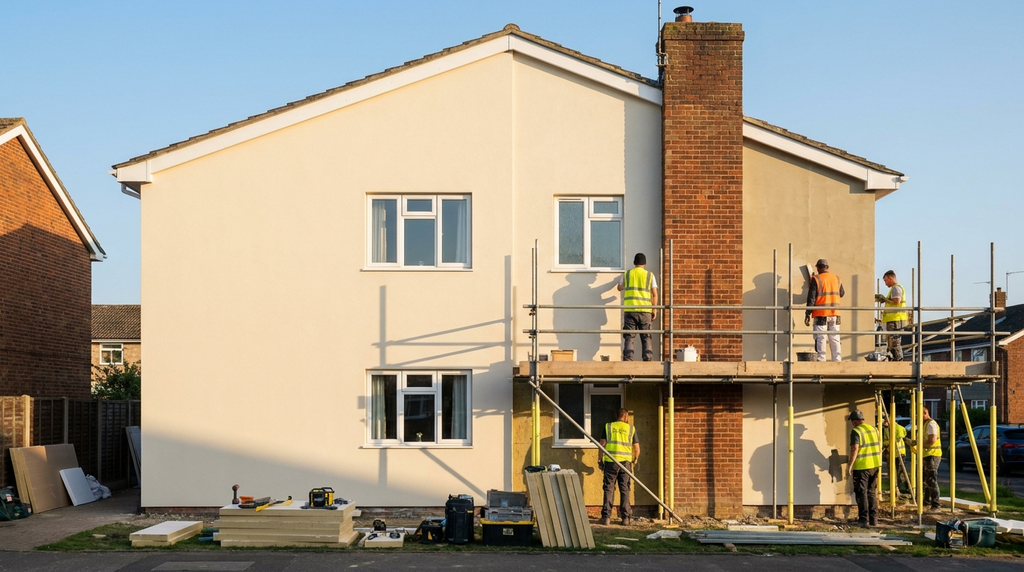
- No external disruption: Unlike external wall insulation, the internal approach requires no scaffolding, does not alter your home’s external appearance, and does not require planning permission in most cases.
- Noise reduction: Particularly with stud wall and mineral wool systems, internal insulation can meaningfully reduce transmission of external noise through walls.
How Much Does Internal Wall Insulation Cost in 2026
Costs vary significantly depending on the system chosen, the size of your home, the number of external walls being treated, and whether any remedial work (such as damp treatment) is needed before installation. The figures below are based on average UK installer quotes for 2026 and assume a straightforward installation with no major complications.
| Property Type | Approximate External Wall Area | Rigid Board System (PIR) | Stud Wall System | Breathable / Natural System |
|---|---|---|---|---|
| Mid-terrace house | 30–50 m² | £3,500–£6,500 | £4,000–£7,500 | £5,000–£9,000 |
| End-terrace or semi-detached | 50–80 m² | £5,500–£9,500 | £6,500–£11,000 | £8,000–£13,500 |
| Detached house | 80–120 m² | £8,500–£14,000 | £10,000–£16,500 | £12,000–£20,000 |
| Flat (external walls only) | 15–35 m² | £2,000–£4,500 | £2,500–£5,500 | £3,500–£7,000 |
These costs typically include materials, labour, and basic making good (skimming, painting-ready finish). They do not include costs for moving radiators, re-routing electrical sockets and switches, refitting skirting boards, or any pre-treatment for damp. Budget an additional £150–£400 per radiator moved and £50–£150 per electrical point relocated, these can add significantly to project costs in heavily fitted rooms.
On a per-square-metre basis, expect to pay £80–£150/m² for PIR rigid board systems and £90–£180/m² for stud wall systems when fully installed. Natural breathable systems typically cost £120–£200/m² installed.
Grants and Funding for Internal Wall Insulation
Internal wall insulation is eligible for several UK government funding schemes in 2026, which can substantially reduce your out-of-pocket costs. Always check current eligibility criteria with the scheme administrators, as thresholds and funding levels are updated periodically.
Great British Insulation Scheme
The Great British Insulation Scheme closed on 31 March 2026. It funded insulation measures only and never covered windows or glazing. Eligibility is split into two groups: a means-tested group (households receiving certain benefits) that can receive fully funded installation, and a general group where the scheme contributes a portion of costs. Homes must have a council tax band of A–D (in England) to qualify for the general group, though different rules apply in Wales and Scotland.
ECO4 Scheme
The Energy Company Obligation 4 (ECO4) scheme runs until March 2026 and obliges the largest energy suppliers to fund energy efficiency measures for low-income and vulnerable households. Solid wall insulation, including internal systems, is one of the key qualifying measures. If you receive means-tested benefits such as Universal Credit, Pension Credit, or certain disability payments, you may qualify for a fully funded installation. Your energy supplier or a registered ECO installer can assess your eligibility.
Home Upgrade Grant
The Home Upgrade Grant (HUG2) targets off-gas-grid homes in England with low EPC ratings. If your home uses oil, LPG, or solid fuel heating and has an EPC of D, E, F, or G, you may be eligible for internal wall insulation as part of a broader package of improvements. Funding is delivered through local authorities, so contact your council for details of local availability.
Scotland and Wales
In Scotland, the Warmer Homes Scotland scheme provides free energy efficiency improvements including solid wall insulation for low-income households. In Wales, the Nest and Optimised Retrofit programmes offer equivalent support. Northern Ireland has its own Affordable Warmth scheme through the Housing Executive.
0% VAT on Installation
Since April 2022, the installation of energy-saving materials including wall insulation in residential properties in Great Britain is subject to 0% VAT (reduced from 5%). This measure is currently legislated to remain in place until March 2027, saving a meaningful amount on larger installations.
Is Internal Wall Insulation Right for Your Home
Internal wall insulation is not appropriate for every property, and getting the initial assessment right prevents costly problems later. The following factors determine whether internal insulation is the right choice for your specific situation.
Wall Construction
Internal insulation is primarily used on solid wall construction, typically solid brick (one or two brick widths), stone, cob, or concrete. If your home was built after approximately 1920, it may have a cavity wall, in which case cavity wall insulation is usually more cost-effective and disruptive. Cavity Wall Insulation guide You can check your wall type by measuring the wall thickness: a solid brick wall is typically 225mm or more at the reveal of a window or door opening.
Existing Damp or Moisture Issues
Any active penetrating damp, rising damp, or roof leaks must be fully resolved before internal insulation is installed. Trapping moisture within a wall after insulation is added can cause serious structural damage and mould growth. A professional installer should carry out a moisture survey before work begins. Some breathable systems can tolerate low levels of background moisture better than PIR boards, but no system should be installed over a known active damp problem.
Room Size and Layout
Internal insulation reduces room dimensions. A standard 70mm PIR board system on all external walls of a living room can reduce floor area by approximately 0.5–1.0 m² in a typical room. This is rarely noticeable in larger rooms but can be significant in already small spaces. Consider which rooms are most critical for thermal performance and whether partial treatment (treating only the most exposed walls) might be a pragmatic compromise.
Listed Buildings and Conservation Areas
If your property is listed, you will need listed building consent for internal insulation work. While internal works are generally less restricted than external changes, some materials and methods may be required or prohibited by your local conservation officer. Always consult your local planning authority before proceeding with a listed building.
How to Choose the Right Internal Wall Insulation
With several systems on the market and a range of installers offering different approaches, narrowing down the right solution requires a structured approach.
- Commission a professional survey first. A reputable installer or independent assessor should survey your walls for moisture, check for existing services in the wall cavity, assess the condition of the plaster, and confirm the wall construction type before recommending a system.
- Match the system to the wall type. Modern construction with dense brick generally suits PIR boards well. Old stone or cob walls in older buildings almost always need breathable systems. Concrete panel homes may need specialist advice.
- Calculate the depth-to-performance trade-off. If room size is a major concern, prioritise high-performance thin systems like PIR or aerogel. If fire safety, acoustics, or breathability are priorities, a stud wall with mineral wool or a wood fibre board may be more appropriate.
- Check installer credentials. Look for membership of the Cavity Insulation Guarantee Agency (CIGA), the National Insulation Association (NIA), or TrustMark registration. The Great British Insulation Scheme closed on 31 March 2026. It funded insulation measures only and never covered windows or glazing.
- Get at least three quotes. Installation costs vary widely. Ensure each quote specifies the same system, thickness, and scope of work, including what is included for making good, relocating services, and guarantees.
- Ask about guarantees. Quality installations should come with a minimum 25-year product guarantee from the manufacturer and an installer workmanship guarantee. Some systems are backed by CIGA guarantees of 25 years.
Internal Wall Insulation Installation, What to Expect
Understanding the installation process helps you prepare practically and assess whether the work being proposed is thorough and professional.
Before Work Begins
Furniture and fittings near external walls will need to be moved. Skirting boards, architraves, and sometimes window sills will be removed and either re-fitted or replaced. Electrical sockets and switches on external walls will need to be repositioned outward to sit flush with the new wall surface, your installer should coordinate with a qualified electrician for this. Radiators on external walls will also need to be temporarily removed and re-fitted or, in some cases, relocated.
The Installation Process
For a rigid board system, the process typically follows these steps:
- The existing plaster is inspected and, where necessary, stripped back to bare masonry to ensure a sound substrate.
- Any damp issues identified during the survey are treated.
- A vapour control layer is applied or incorporated into the board system to manage moisture movement.
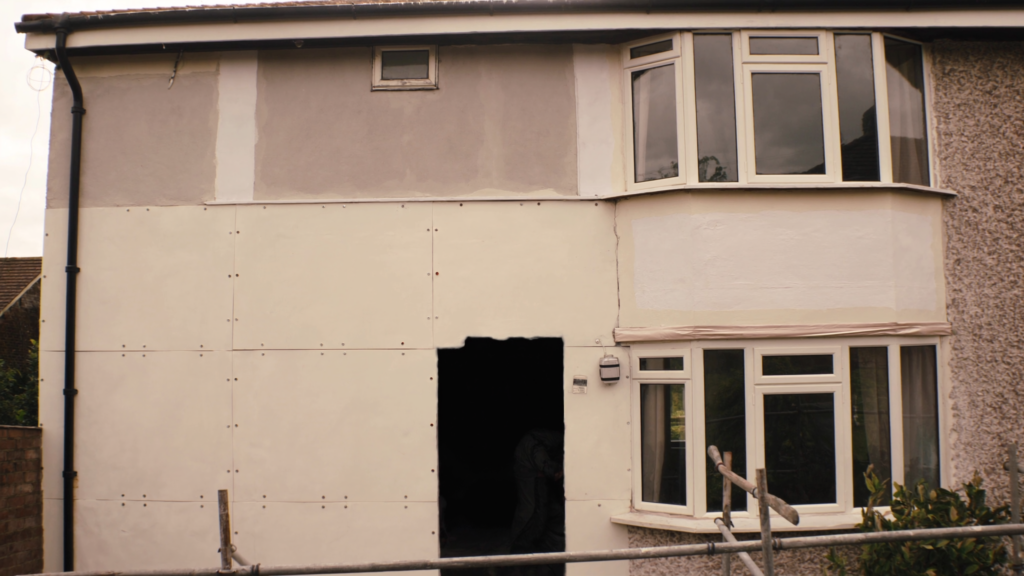
- PIR-backed plasterboard panels are fixed to the wall using a combination of adhesive dabs and mechanical fixings. This ensures a continuous, gap-free layer of insulation with particular care taken at junctions with floors, ceilings, and window reveals.
- Boards are taped at joints and the VCL is lapped and sealed at all edges to prevent moisture bypass.
- Electrical boxes are extended, radiators re-fitted, and skirtings replaced.
- The plasterboard is skimmed with a finish coat of plaster, ready for decoration.
Duration and Disruption
A typical mid-terrace house with two external walls being insulated will take a professional crew approximately 3–5 days to complete, with decoration (your responsibility or an additional cost) taking further time. You can typically remain in the property during works, though the affected rooms will be unavailable and dusty. For a whole-house treatment of a detached property, allow 7–14 working days.
Thermal Bridging at Junctions
One of the most technically important aspects of a quality internal wall insulation installation is managing thermal bridging, where heat bypasses the insulation layer through uninsulated structural elements. Junction detailing at floor, ceiling, and wall connections must be insulated correctly, or cold spots will persist and can lead to localised condensation and mould. Ask your installer how they will treat these junctions and review their proposed junction details before work begins.
Common Problems and Maintenance
Internal wall insulation is a long-lasting improvement, but there are specific issues to be aware of during the life of the installation.
Interstitial Condensation
If the vapour control layer is not properly installed or becomes damaged, moisture vapour from within the home can migrate into the wall structure and condense in the cold zone behind the insulation. Signs include damp patches appearing on the new plasterboard, bubbling paint, or mould. Prevention is entirely about quality installation with correctly specified and carefully installed VCL. If you suspect a problem, have a specialist carry out a moisture survey rather than attempting DIY investigation.
Impact Damage
Plasterboard-faced insulation boards are more susceptible to impact damage than solid plastered walls. Door stops should be fitted to prevent door handles crashing into the new wall face, and care should be taken when moving furniture. Minor damage can be repaired with standard plasterboard patching techniques.
Drilling and Fixings
Hanging pictures, shelves, or fittings on insulated walls requires different fixings than standard solid walls. You will need to use hollow wall anchors or locate the wall through-fixings that penetrate the board and reach the original masonry. Heavy loads (kitchen units, radiators) should be planned before installation so that noggins or extra fixings can be incorporated while the wall is open. Keep a copy of your installer’s as-built drawings showing the location of services and fixings within the wall construction.
Maintenance of Ventilation
Adding insulation to walls makes your home more airtight, which is beneficial for energy efficiency but requires attention to ventilation. If you have not already, consider whether your home needs background ventilation (trickle vents in windows) or mechanical ventilation with heat recovery (MVHR) to maintain good air quality. Draught Proofing and Home Ventilation guide The combination of better insulation and adequate ventilation is always the correct approach, insulation without ventilation can lead to increased condensation and poor indoor air quality.
Long-Term Performance
Quality internal wall insulation systems do not degrade significantly in thermal performance over time when properly installed. PIR boards will maintain their thermal properties for the life of the building. The most common long-term issues are mechanical damage, moisture ingress through unrelated building defects (failed window seals, roof leaks, or guttering problems), and thermal bridging that was not adequately addressed at installation. An annual visual inspection of the wall surfaces and any signs of damp or staining is all the routine maintenance required.
Internal Wall Insulation and Wider Home Energy Improvements
Internal wall insulation delivers the best results when it is part of a coordinated approach to improving your home’s energy performance. Installing wall insulation without addressing other major sources of heat loss may not deliver the full savings potential.
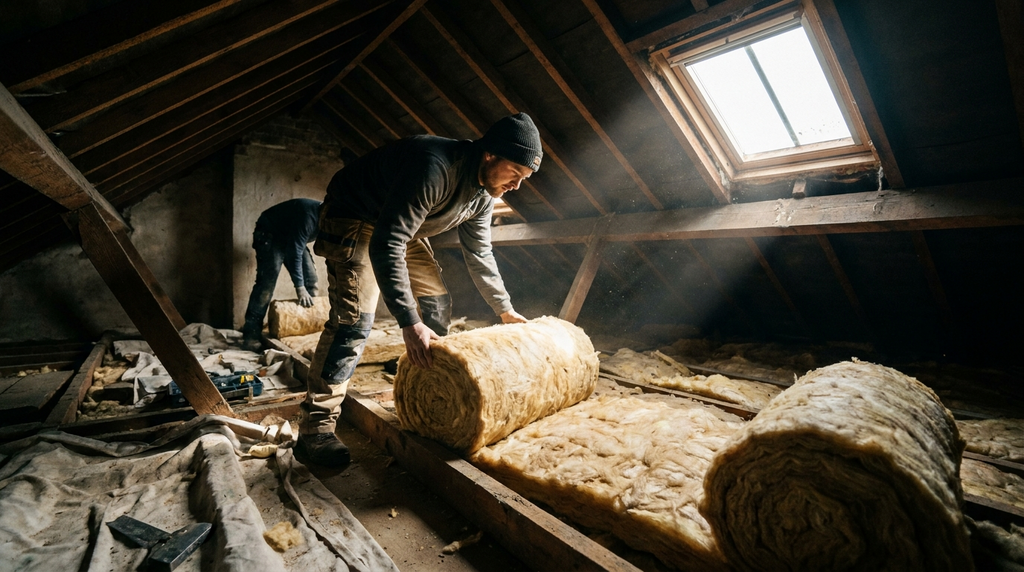
If your home has an uninsulated loft, this should almost always be addressed before or alongside wall insulation, loft insulation is typically cheaper per unit of heat saved and easier to install. Loft Insulation guide Similarly, if your floors are uninsulated, combining floor and wall treatment during a renovation phase can reduce overall disruption and cost.
When combined with a more efficient heating system, such as a heat pump, which operates most efficiently when homes have good fabric performance, internal wall insulation can enable a step-change in both energy bills and carbon footprint. The PAS 2035 retrofit standard specifically requires that a whole-house assessment is completed before individual energy efficiency measures are specified. This ensures that insulation measures are sequenced correctly and do not inadvertently cause problems such as increased condensation risk or oversized heating systems.
For solid-walled properties where maintaining external appearance is important but internal room loss is a concern, it is worth obtaining quotes for both internal and external wall insulation before committing, the right choice depends on your specific property, planning context, and priorities. Both approaches can achieve similar thermal outcomes, though via different routes and with different practical implications for your home.