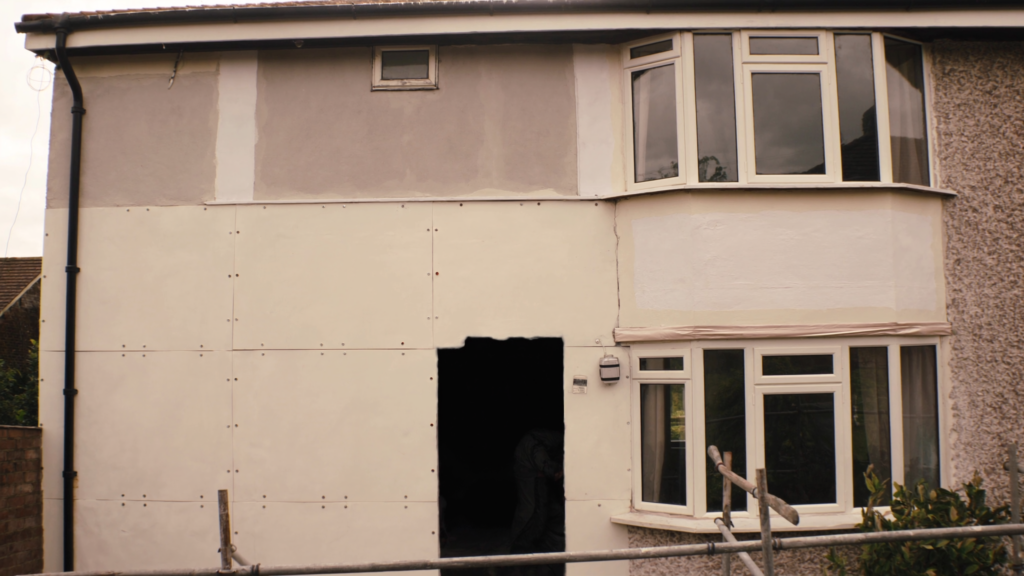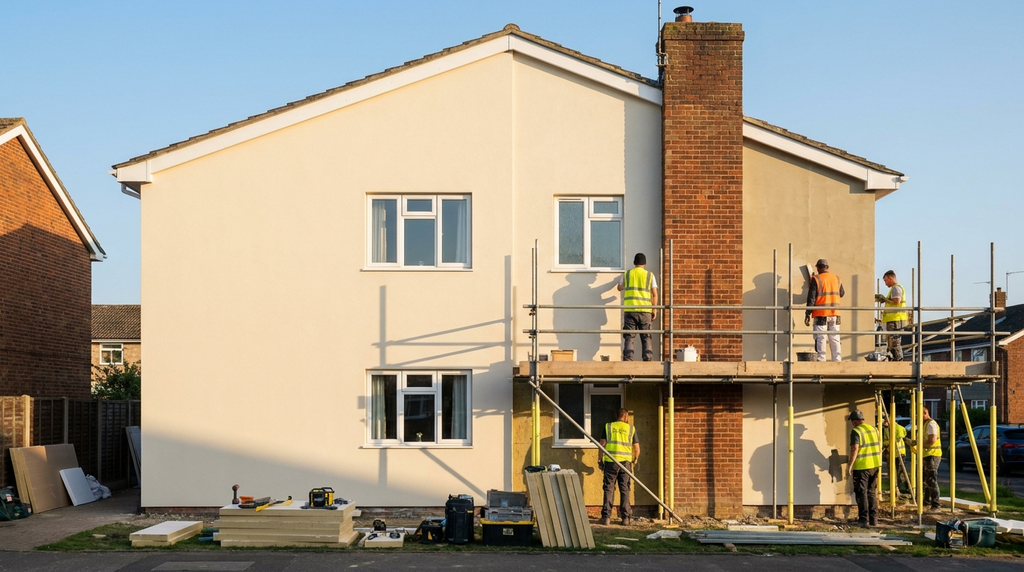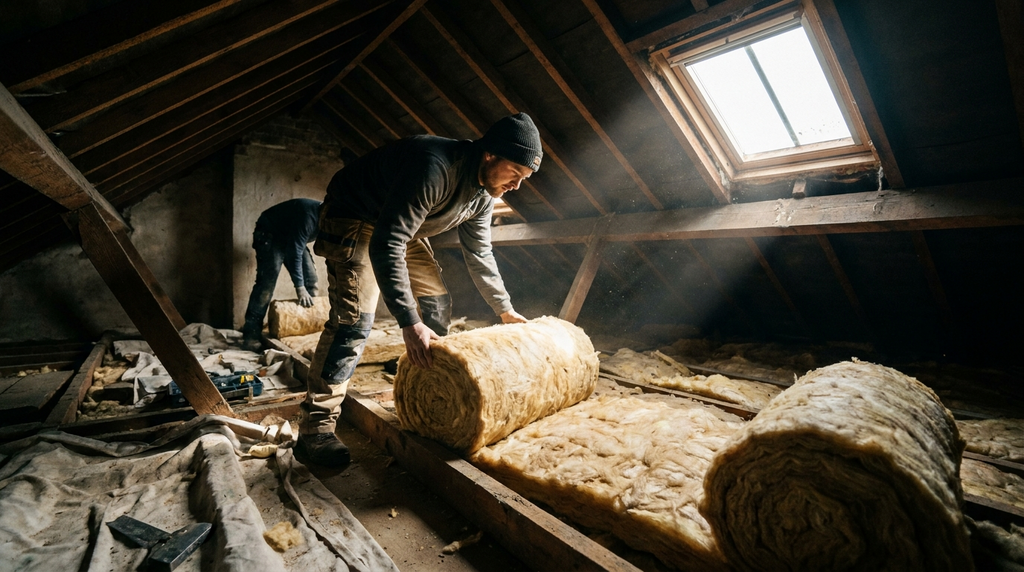
A typical room-in-roof insulation project costs £2,500–£6,000 depending on room size and material choice
Converting an attic or loft into a livable room often leaves the sloping ceiling uninsulated, leading to significant heat loss. The cost to insulate a room in the roof depends primarily on the roof area, which typically ranges from 20 to 50 square metres, and the insulation material you choose.
A typical project costs between £2,500 and £6,000, with labour accounting for roughly 40–60% of the total and materials making up the remainder (Energy Saving Trust, 2026). Rigid PIR boards are the most common option, costing £30–£60 per m² installed, while sheep’s wool can add £10–£20 per m² more. Multifoil and spray foam sit in a similar range but have different installation requirements. Access difficulty, such as limited headroom or awkward roof pitches, can push costs higher.
Annual heating bill savings range from £200 to £550 for a typical detached home
The savings from room-in-roof insulation depend on how much heat you are currently losing through the roof. An uninsulated sloping ceiling typically has a U-value of 1.5–2.5 W/m²K, meaning heat escapes rapidly. After insulation, the target U-value is 0.18 W/m²K or better, which reduces heat loss by 80–90%.
For a detached home, annual heating bill savings fall between £200 and £550 (Energy Saving Trust, 2026). A semi-detached home typically saves £250–£400 per year, while a mid-terrace saves £200–£300. The variation depends on the existing insulation level, the size of the roof area, and your heating fuel type. Homes heated by mains gas save less per year than those using electric heating, because gas is cheaper per kWh.
Payback period falls between 5 and 15 years based on current energy prices and grant availability
The payback period, the time it takes for energy savings to cover the installation cost, depends on the project cost, annual savings, and whether you receive a grant. At the October 2026 energy price cap set by Ofgem, a £3,500 project saving £300 per year would pay back in 11–12 years (Ofgem, 2026).
The Great British Insulation Scheme closed on 31 March 2026. It funded insulation measures only and never covered windows or glazing. Eligibility for these schemes is means-tested or based on your property’s Energy Performance Certificate rating. Without a grant, a smaller project costing £2,500 with £250 annual savings pays back in 10 years; a larger £6,000 project with £500 savings pays back in 12 years.
Quick numbers – typical costs, savings, and performance by insulation type
| Insulation type | Material cost per m² (including vapour barrier) | Labour cost per m² | Installed U-value target (W/m²K) | Typical annual saving (detached) | Payback years (no grant) |
|---|---|---|---|---|---|
| Rigid PIR board (50–100mm) | £20–£35 | £15–£25 | 0.18 | £350–£550 | 8–12 |
| Multifoil (25–50mm) | £25–£40 | £15–£25 | 0.20–0.25 | £300–£450 | 10–15 |
| Sheep’s wool (100–150mm) | £30–£50 | £15–£25 | 0.18 | £350–£500 | 10–14 |
| Spray foam (50–100mm) | £35–£55 | £20–£30 | 0.18–0.20 | £300–£450 | 10–15 |
All figures are approximate and based on a 30m² roof area in a detached home with mains gas heating. Actual costs vary by installer and region (Energy Saving Trust, 2026; MCS, 2026).
The direct answer to “is room-in-roof insulation worth it?” – yes for most homes with an uninsulated sloping ceiling
If your room-in-roof has no insulation or only 50mm between rafters, you are losing 20–30% of the home’s heat through the roof (Energy Saving Trust, 2026). This makes the room cold in winter, prone to draughts, and vulnerable to condensation.
Upgrading to the Building Regulations target of 0.18 W/m²K reduces heat loss by 80–90%, making the room usable year-round without additional heating or draught-proofing. For the vast majority of homes, the investment pays back within the lifetime of the insulation (typically 25–40 years) and adds to the property’s energy performance. The exception is homes with very low energy use, such as those with solar thermal or heat pumps, where savings may be smaller relative to the installation cost.
You must use an MCS-certified installer to qualify for government grants or the Green Homes Grant
The Great British Insulation Scheme closed on 31 March 2026. It funded insulation measures only and never covered windows or glazing. MCS certification ensures the installer meets technical standards for insulation work, including correct vapour control layer placement and air sealing.
You can verify an installer’s MCS registration at mcscertified.com and their TrustMark registration at trustmark.org.uk. For electrical work, such as wiring an extraction fan or lighting, the installer should also be registered with NICEIC or NAPIT (Gas Safe Register, 2026). Using an unregistered installer may void any grant eligibility and could leave you without recourse if the work is defective.
How to choose an MCS-certified insulation installer
Building Regulations require a minimum U-value of 0.18 W/m²K for room-in-roof insulation
When adding insulation to an existing room in the roof, Building Regulations Approved Document L1B (2025 edition, enforced in 2026) requires a minimum U-value of 0.18 W/m²K (HM Government, 2026). This applies regardless of whether you are renovating the room or simply upgrading the insulation.
The insulation must be continuous around the roof slope, with a vapour control layer on the warm side (the interior side) to prevent interstitial condensation. The BRE guide “Thermal Insulation: Avoiding Risks” (BR 262, 2026 update) recommends a minimum 50mm air gap between the insulation and the roofing felt to allow ventilation (BRE, 2026). Failure to meet these requirements can lead to condensation, rot, and invalidated building control sign-off.
Planning permission is rarely needed, but listed buildings and conservation areas require prior approval
Most room-in-roof insulation projects fall under permitted development rights, provided the roof shape and external appearance do not change (GOV.UK, 2026). You do not need planning permission for internal insulation that does not alter the roof structure or external cladding.
However, if your home is a listed building, Grade I, II*, or II, you need listed building consent before starting any insulation work, even if it is internal. For homes in conservation areas, you should check with the local planning authority, as restrictions on external changes may apply. Historic England’s 2026 guidance recommends a “whole-building approach” to avoid damaging historic fabric (Historic England, 2026).
Room in roof insulation and listed buildings – what you need to know