Vermiculite insulation was used in UK homes until the 1980s and may contain asbestos
If you own an older UK home, the loose-fill insulation in your loft could be vermiculite, a lightweight pebble-like material that was widely used before the 1980s. The Health and Safety Executive (HSE) has identified that much of the vermiculite sold in the UK came from a mine in Libby, Montana, which is now known to be contaminated with naturally occurring asbestos (HSE, 2026).
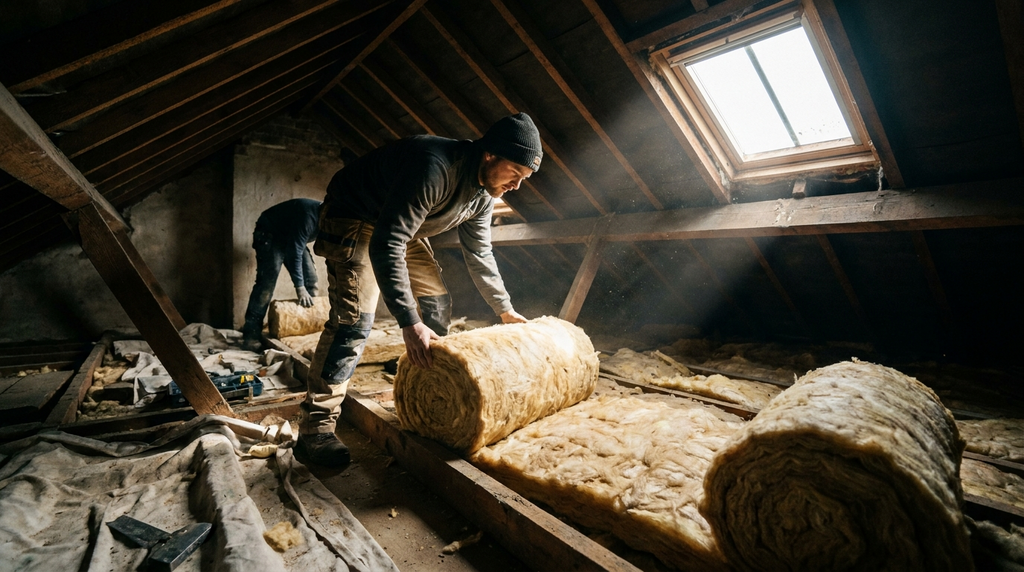
The Energy Saving Trust notes that loose-fill vermiculite was commonly poured into loft cavities and between floor joists in properties built or renovated before the 1980s (Energy Saving Trust, 2026). A 2026 DESNZ review confirms that any loose-fill insulation found in lofts of homes built before 1982 warrants professional inspection because of the asbestos risk (DESNZ, 2026). Homes built after 1985 are unlikely to contain vermiculite insulation, but retrofit additions remain a possibility in older properties.
how to identify different types of loft insulation
Who qualifies for UK government insulation grants if vermiculite is present on the property
The Great British Insulation Scheme closed on 31 March 2026. It funded insulation measures only and never covered windows or glazing. The DESNZ 2026 guidance states that homes with vermiculite insulation are NOT automatically excluded from grants, but the insulation must be professionally tested and declared asbestos-free before any new insulation can be installed over it (DESNZ, 2026).
If the vermiculite is confirmed to contain asbestos, the property will not qualify for loft insulation grants until the asbestos is removed by a licensed contractor, which is not covered by standard energy-efficiency schemes. The Ofgem ECO4 eligibility checker (2026 update) clarifies that grant applicants must provide proof of a clean asbestos survey from a UKAS-accredited laboratory for any property with suspected vermiculite (Ofgem, 2026).
Quick numbers costs, risks, and re-insulation figures for vermiculite insulation in UK homes
| Metric | Typical figure | Source |
|---|---|---|
| Properties affected | Estimated 1.5–2 million UK homes | HSE 2026 estimate |
| Asbestos content in tested samples | 10–15% by weight for Libby mine sources | HSE technical bulletin |
| Cost of professional asbestos survey | £200–£400 | Energy Saving Trust 2026 guide |
| Cost of licensed removal per square metre | £40–£70 | HSE-licensed contractor rates, 2026 |
| Typical loft insulation U-value target after re-insulation | 0.16 W/m²K | Building Regulations Part L, 2026 |
| Grant-eligible re-insulation cost (if vermiculite cleared) | Up to £1,500 under GBIS | Ofgem scheme rules |
The direct answer vermiculite insulation is a loose-fill material that is dangerous if it contains asbestos and must not be disturbed
Vermiculite insulation in UK homes is a lightweight, pebble-like loose-fill material commonly found in lofts and cavity walls of properties built before the 1980s. The HSE (2026) states that any vermiculite found in a UK home should be treated as potentially containing asbestos until professionally tested, because the most common source (Libby mine) was contaminated (HSE, 2026).
Disturbing vermiculite insulation can release asbestos fibres into the air, leading to serious health risks including lung cancer and mesothelioma. Homeowners must NOT vacuum, sweep, or remove vermiculite themselves; the only safe action is to seal the area and arrange a UKAS-accredited laboratory test via a certified surveyor.
How to confirm whether your vermiculite insulation contains asbestos and who to contact
The only reliable way to confirm asbestos content is to have a sample analysed by a UKAS-accredited laboratory, not by visual inspection or home test kits. The HSE (2026) recommends contacting a certified asbestos surveyor (listed on the UKAS website) who will take a sealed sample and send it for analysis, with results typically available within 5 working days (UKAS, 2026).
The surveyor will issue a written report stating the asbestos type (usually amphibole or chrysotile) and the percentage content, which is required for any subsequent grant application or removal work. Homeowners can search the UKAS directory for accredited testing bodies in their region; the cost of sampling and analysis is typically £100–£200 per sample (Energy Saving Trust, 2026).
Eligibility and certification requirements for installers who can handle or remove vermiculite insulation
Only HSE-licensed asbestos removal contractors are legally permitted to remove vermiculite insulation that contains asbestos, under the Control of Asbestos Regulations 2012 (Legislation.gov.uk, 2012). For re-insulation after removal, installers must be registered with the Microgeneration Certification Scheme (MCS) or TrustMark for loft insulation work, and Gas Safe Register if gas appliances are involved in the area.
The MCS and TrustMark registers (2026) require proof that the installer holds a valid asbestos awareness certificate and has a safe system of work for properties with previous contamination (MCS, 2026; TrustMark, 2026). Homeowners should verify the installer’s licence on the HSE’s Asbestos Licensing Unit database (licence number required) and check their MCS or TrustMark registration before any work begins.
If the vermiculite is tested and found asbestos-free, a standard MCS-certified insulation installer can proceed with adding new insulation, but they must still follow safe handling protocols for the existing material. how to find a certified insulation installer near you
Frequently Asked Questions
Vermiculite insulation is a lightweight, pebble-like loose-fill material used in UK lofts and floors before the 1980s. According to the Health and Safety Executive (HSE), much of the vermiculite sold in the UK came from a mine in Libby, Montana, now known to be contaminated with naturally occurring asbestos.
Vermiculite insulation looks like small, silver-grey or brown-gold pebbles or granules, similar to crushed mica. The Energy Saving Trust advises that if you have loose-fill insulation in your loft from before 1982, it warrants professional inspection due to the asbestos risk.
Not all vermiculite contains asbestos, but much of the supply used in the UK before the 1980s is contaminated. The HSE states that vermiculite from the Libby, Montana mine is known to contain naturally occurring asbestos, so professional testing is essential.
Under DESNZ 2026 guidance, if vermiculite contains asbestos, you must arrange licensed removal yourself before any new insulation can be installed.
Do not disturb the material. Arrange a professional asbestos survey from a UKAS-accredited laboratory. The DESNZ 2026 review confirms that any loose-fill insulation in pre-1982 homes warrants inspection before any work.