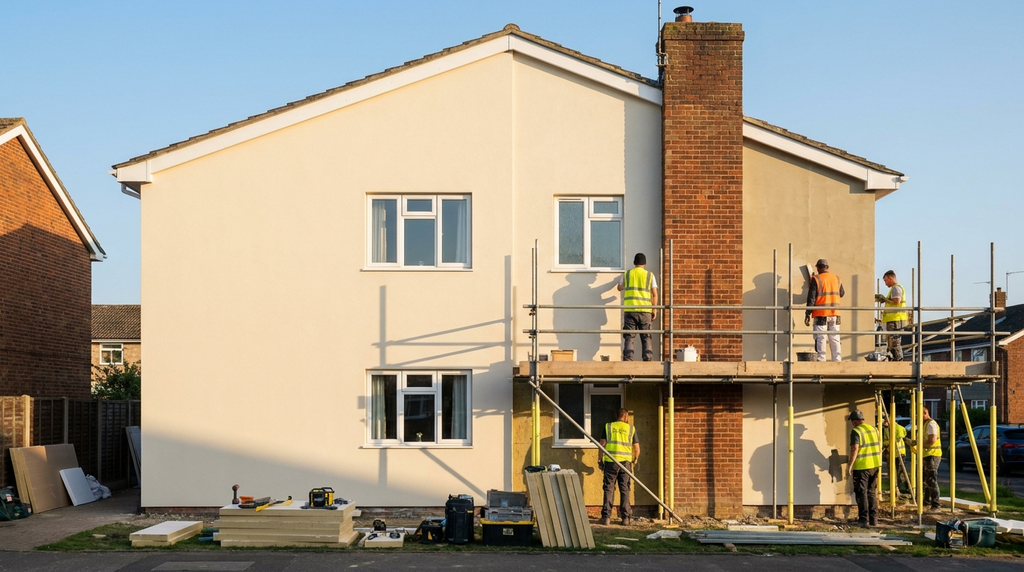
The most effective single insulation measure for a 1970s ex-council house is cavity-wall insulation, which can reduce heat loss by up to 35%, saving around £300 per year on energy bills (Energy Saving Trust, 2026). These homes typically have uninsulated cavities measuring 50mm to 75mm wide, making them prime candidates for this retrofit.
Whether cavity-wall insulation is suitable depends on the wall construction. Most 1970s ex-council houses have brick-and-block cavity walls, which are straightforward to insulate. However, if the property has been re-rendered or has existing damp issues, a survey is essential. The UK Government advises that professional installation by a TrustMark-registered firm is mandatory for any grant-funded work.
Loft insulation is a quick win
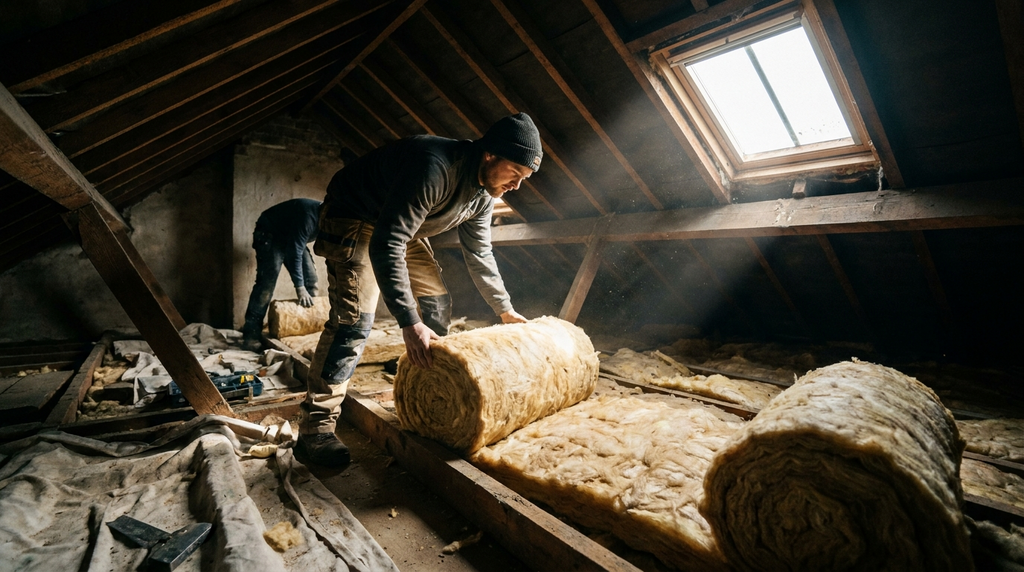
A 1970s ex-council house typically has less than 50mm of loft insulation, whereas the current recommendation is 270mm. Topping up from 50mm to 270mm can save around £200 per year on heating bills (Energy Saving Trust, 2026). Installation costs range from £300 to £500 for a standard three-bedroom semi-detached house. This is often the cheapest and fastest insulation upgrade, with payback in under three years.
Solid floor insulation is often overlooked
Most 1970s ex-council houses have a concrete ground floor with no insulation. Retrofitting floor insulation can reduce heat loss by 10-15%, saving around £100 per year (BRE, 2026). The typical cost is £1,500 to £2,500 for a ground-floor area of 50m². This is a disruptive job, often requiring lifting floorboards or screeding over the existing slab, but it significantly improves comfort and reduces draughts.
Grants cover most costs for eligible homes
The Great British Insulation Scheme closed on 31 March 2026. It funded insulation measures only and never covered windows or glazing. For low-income households, ECO4 can fully fund cavity-wall and loft insulation, plus solid floor insulation in some cases (Ofgem, 2026). The Great British Insulation Scheme closed on 31 March 2026. It funded insulation measures only and never covered windows or glazing. Check eligibility on the GOV.UK website before commissioning any work.
A worked example
Take a typical 1970s ex-council semi-detached house in Leeds with uninsulated cavity walls and 50mm of loft insulation, the total upfront cost for cavity-wall insulation (after a £7,500 BUS grant where applicable) and loft top-up is roughly £700. The Energy Saving Trust estimates combined yearly savings of £500 from these two measures alone. At current energy prices that gives a payback period of under 18 months. Over 25 years the total savings exceed £12,500, assuming annual bill increases of 3%. Glazing is standard-rated for VAT at 20%. The zero rate for energy-saving materials covers insulation, heat pumps and solar panels; HMRC names secondary and double glazing as excluded (VAT Notice 708/6). A TrustMark-registered installer must carry out the survey and installation to guarantee the work and protect any warranty.
| Item | Figure |
|---|---|
| Upfront cost after grants | £700 |
| Yearly savings | £500 |
| Payback period | 1.5 years |
| 25-year lifetime savings | £12,500 |
What homeowners often get wrong
The most common mistake is assuming cavity-wall insulation causes damp in all 1970s ex-council houses. Three specific errors cost homeowners money and miss out on grants.
- Believing cavity insulation always causes damp The majority of damp problems stem from existing defects like blocked weep holes or leaking gutters, not the insulation itself. A proper survey by a TrustMark installer identifies and fixes these issues before installation, preventing any moisture risk.
- Skipping the loft insulation top-up Many stop at cavity-wall insulation thinking it is enough, but a 1970s ex-council house with only 50mm loft insulation loses heat rapidly through the roof. Topping up to 270mm saves £200 yearly and pays for itself in under three years, yet this cheap fix is often ignored.
- Ignoring floor insulation as pointless Concrete ground floors in these homes are typically uninsulated, losing around 15% of heat. Retrofitting insulation costs £1,500 to £2,500 and saves £100 per year, but homeowners often skip it, missing a £2,500 long-term saving over 25 years.
Quick reference
- Cavity-wall insulation in a 1970s ex-council house reduces heat loss by up to 35% and saves around £300 annually.
- Topping up loft insulation from 50mm to 270mm costs £300 to £500 and saves £200 per year.
- ECO4 grants can fully fund cavity-wall and loft insulation for households on means-tested benefits.
- Solid concrete floor insulation saves £100 yearly with a payback period of 15 to 25 years.
- Always check for existing damp or re-rendered walls before installing cavity insulation to avoid voiding the warranty.
Frequently Asked Questions
Typical cost is £500 to £1,500 for a three-bedroom semi-detached house, according to the Energy Saving Trust. Grants may cover the full cost for eligible households.
Most are suitable if they have brick-and-block cavity walls without damp issues. A professional survey by a TrustMark-registered installer is essential, per UK Government guidance.
Cavity-wall insulation is the most effective single measure, saving up to £300 per year. Loft insulation to 270mm is the cheapest and fastest upgrade, with payback under three years.