1960s houses in the UK lose heat faster than modern builds
A 1960s semi-detached house in the UK typically consumes 14,000–16,000 kWh of gas per year for heating, according to DESNZ Energy Consumption in the UK (ECUK) 2025 data tables (DESNZ, 2026). A comparable 2010s build uses 8,000–10,000 kWh, roughly 40–50% less. The difference comes down to insulation standards at the time of construction.
Unfilled cavity walls in 1960s homes have a U-value of roughly 1.5 W/m²K, meaning they lose heat eight times faster than the 0.18 W/m²K required under modern Building Regulations (BRE U-value database, 2026). Loft insulation was often installed at just 50–100 mm, whereas the Energy Saving Trust now recommends 270 mm for optimal performance (Energy Saving Trust, 2026). These two weak points are the primary reason 1960s homes are significantly more expensive to heat.
Cavity-wall insulation is the most cost-effective single measure for a 1960s house
Most 1960s houses have unfilled cavities 50–75 mm wide, unlike older solid-wall homes which require more expensive solutions. The Energy Saving Trust estimates that filling a cavity in a typical 1960s semi-detached house can save £300–£400 per year on heating bills, based on 2026 gas prices (Energy Saving Trust, 2026).
The typical cost for cavity-wall insulation is £800–£1,200 for a semi-detached house, giving a payback period of 2–4 years (Energy Saving Trust cost and savings tables, 2026). This is the single most efficient retrofit measure for a 1960s home, as it addresses the largest area of heat loss at a relatively low upfront cost.
Note that cavity fill is not suitable for all 1960s houses. Properties in areas prone to driving rain, or those with narrow cavities (under 50 mm), may require a different approach. A survey by a CIGA-registered installer is essential before proceeding.
Loft insulation the quickest retrofit with a 2-year payback
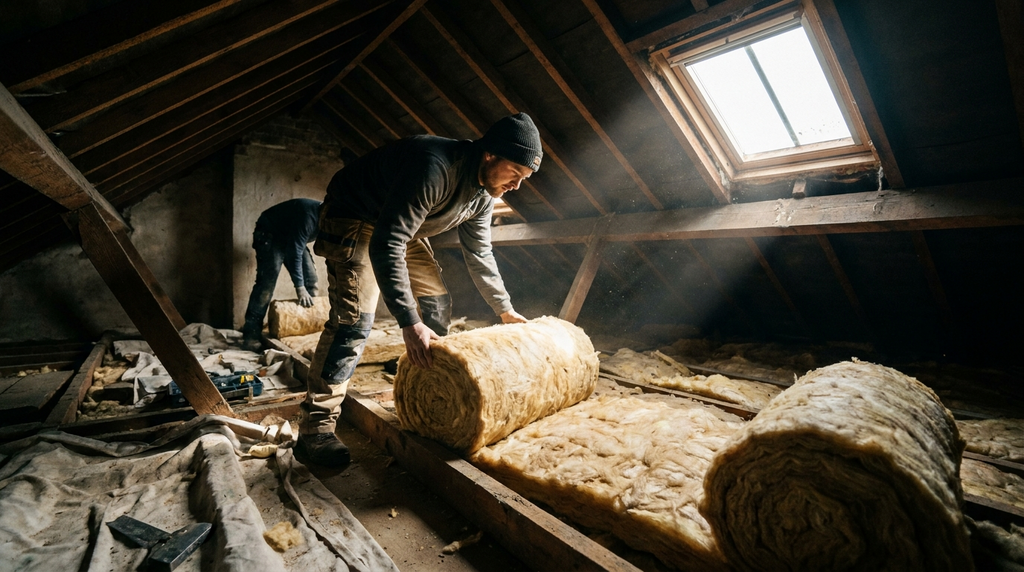
A 1960s house typically has 50–100 mm of loft insulation. Topping this up to the recommended 270 mm can save £200–£300 per year (Energy Saving Trust loft insulation savings table, 2026). The cost to top up from 100 mm to 270 mm is approximately £400–£600 for a typical semi-detached house if done as a DIY project, or £600–£900 if professionally installed (Energy Saving Trust cost guide, 2026).
The payback period is 1.5–3 years, making loft insulation the fastest-return measure available for a 1960s home. However, it is critical to maintain ventilation at the eaves and ensure loft hatches are insulated and draught-proofed. Failure to do so can lead to condensation and damp issues.
If your loft already has 100 mm of insulation, adding another 170 mm is straightforward and can be done without professional help. The material cost alone is roughly £200–£300 for a typical semi, and the savings begin immediately.
Solid-wall insulation (internal or external), when cavity fill isn’t enough
Some 1960s houses cannot have cavity fill. These include timber-frame properties, homes with narrow or obstructed cavities, and those classified as non-standard construction. In these cases, solid-wall insulation is the only option.
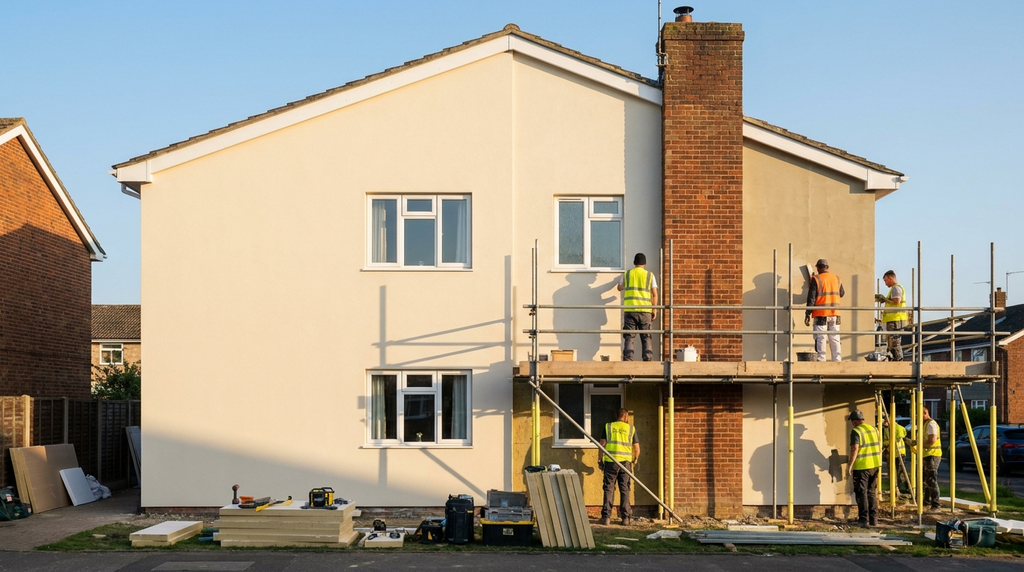
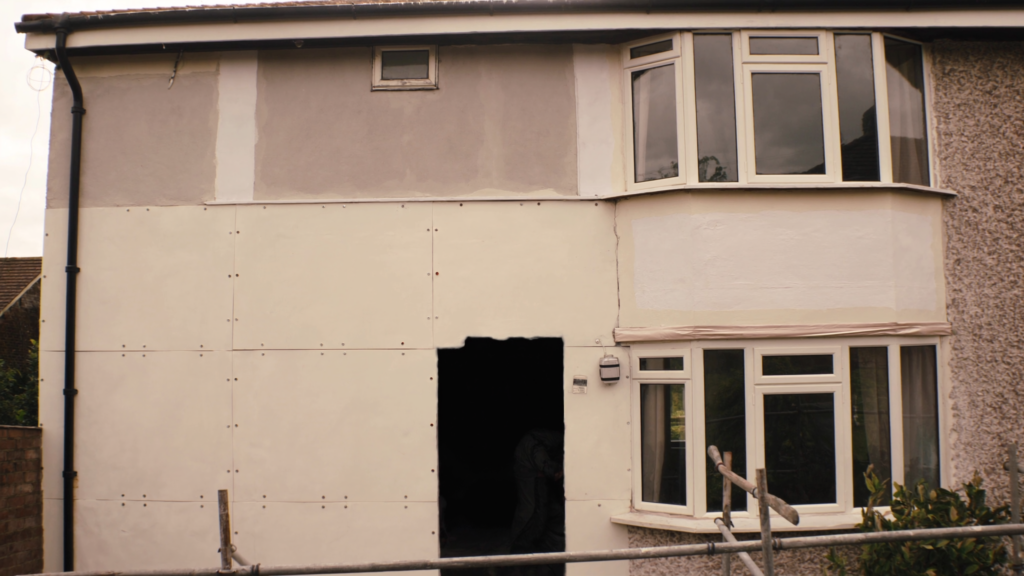
External wall insulation (EWI) costs £8,000–£15,000 for a semi-detached house; internal wall insulation (IWI) costs £5,000–£10,000 (Energy Saving Trust solid wall insulation cost and savings page, 2026). Annual savings from solid-wall insulation are £400–£600 for a typical 1960s semi, meaning payback periods of 13–25 years for EWI and 8–17 years for IWI.
These measures are significantly more expensive than cavity fill or loft top-up. They are best considered only when cavity fill is not possible, or as part of a wider whole-house retrofit. The MCS register lists certified installers for solid-wall insulation, particularly if combined with a heat pump (MCS, 2026).
Quick numbers, cost, savings, and payback for 1960s house insulation
| Measure | Typical cost (semi-detached) | Annual saving (2026 gas prices) | Payback period |
|---|---|---|---|
| Cavity-wall insulation | £800–£1,200 | £300–£400 | 2–4 years |
| Loft insulation (top-up to 270 mm) | £400–£900 | £200–£300 | 1.5–3 years |
| External wall insulation | £8,000–£15,000 | £400–£600 | 13–25 years |
| Internal wall insulation | £5,000–£10,000 | £400–£600 | 8–17 years |
All figures are from the Energy Saving Trust (2026) and DESNZ fuel poverty data (DESNZ, 2026). Costs assume professional installation unless noted; DIY loft insulation is cheaper.
The direct answer the best insulation for a 1960s house is cavity-wall fill plus loft top-up
For the vast majority of 1960s houses with standard cavity walls and existing 50–100 mm loft insulation, the most cost-effective package is cavity fill (£800–£1,200) plus loft top-up to 270 mm (£400–£900). Combined cost: £1,200–£2,100; combined annual saving: £500–£700; combined payback: 2–4 years (Energy Saving Trust whole-house retrofit guide, 2026).
This package reduces heat loss by roughly 40–50% based on Energy Saving Trust modelling. It is the recommended starting point for any 1960s house retrofit. Only after completing these two measures should you consider solid-wall insulation, draught-proofing, or upgrading to double glazing.
If your house has non-standard construction or a cavity that cannot be filled, skip cavity fill and move directly to solid-wall insulation. In that case, the payback is longer, but the energy savings are still significant.
guide to whole-house retrofit costs and grants
How to verify installers, MCS, CIGA, and TrustMark certification
For cavity-wall insulation, installers must be registered with CIGA (Cavity Insulation Guarantee Agency) or BBA-certified and carry TrustMark (CIGA guarantee scheme, 2026). This provides a 10–25 year guarantee on the work. For loft insulation, any certified installer (TrustMark, NICEIC, or FENSA) is acceptable; DIY is common but requires correct ventilation at the eaves.
For solid-wall insulation, installers must be MCS-certified if using renewable heating alongside, or TrustMark for standalone work (TrustMark, 2026). Always check the MCS register (MCS, 2026) or TrustMark website before hiring. Get a written guarantee covering the insulation system and installation.
The Energy Company Obligation (ECO) scheme may provide funding for insulation in 1960s houses, particularly for households on certain benefits or with low incomes. Check eligibility on the GOV.UK ECO page (GOV.UK, 2026). Installers must meet ECO requirements, which include registration with TrustMark.
how to check if your house has cavity walls
Frequently Asked Questions
Cavity wall insulation is the most cost-effective measure, saving £300-£400 per year according to the Energy Saving Trust (2026). Loft insulation to 270 mm is the quickest retrofit with a 2-year payback.
Cavity wall insulation costs £800-£1,200 for a semi-detached house, and loft insulation costs £500-£600, based on Energy Saving Trust 2026 figures. Combined, expect £1,300-£1,800.
Yes, the ECO4 scheme provides free or subsidised insulation for low-income households. The Great British Insulation Scheme closed on 31 March 2026. It funded insulation measures only and never covered windows or glazing. Check eligibility on GOV.UK (2026).
Yes, if installed correctly by a CIGA-registered installer. However, homes in driving rain areas or with cavities under 50 mm may need alternative solutions. A survey is essential.
Topping up from 50-100 mm to 270 mm saves £250-£350 per year, according to the Energy Saving Trust (2026). This gives a payback period of around 2 years.