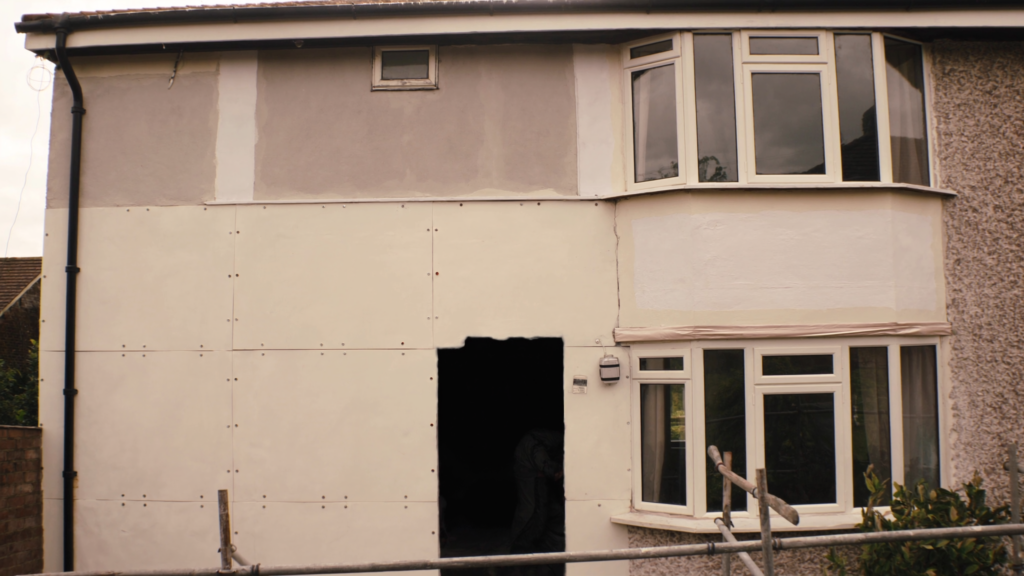
Listed-building insulation costs up to four times more than standard cavity-wall work, but the right approach can still cut heating bills by £300–£600 a year.
Insulating a home in a conservation area or a listed building is considerably more expensive and complex than insulating a standard modern property. The cost of internal wall insulation for a solid-wall home can be up to four times higher than standard cavity-wall insulation, according to Historic England’s “Energy Efficiency and Historic Buildings” guidance series (Historic England, 2026). Despite this higher upfront cost, the potential savings are significant. The Energy Saving Trust estimates that insulating a typical solid-wall home can reduce heating bills by £300 to £600 per year (Energy Saving Trust, 2026).
The direct answer is that internal wall insulation, using vapour-open materials like lime-based products or woodfibre boards, is the most viable and commonly approved method for conservation-area homes. This approach avoids altering the external appearance, which is the primary concern of conservation-area controls, and can deliver substantial energy savings without requiring planning permission for unlisted homes.
Conservation-area rules mean you cannot use standard external or cavity-wall insulation without permission
Conservation areas are designated to protect the character and appearance of a neighbourhood, not just the fabric of individual buildings. This means any insulation work that alters the external appearance of a property requires planning permission. Standard external wall insulation, which adds a thick layer to the outside of a building, is almost always refused. Even cavity-wall insulation, which is injected into the gap between brick leaves, can be problematic if it changes the external finish or creates damp issues in older solid-wall homes that do not have a cavity.
For listed buildings, the rules are stricter. Listed-building consent is a separate and mandatory requirement for any insulation work that affects the historic fabric, even if it is purely internal. This applies to internal wall insulation, floor insulation, and roof insulation. GOV.UK makes clear that any alteration to a listed building that would affect its character as a building of special architectural or historic interest requires consent (GOV.UK, 2026).
Internal wall insulation is the most common approved method for conservation-area homes
Internal wall insulation is the preferred approach for most conservation-area homes because it does not change the external appearance. This method involves fixing insulation boards or applying plaster directly to the inside face of external walls. The most common materials are lime-based plasterboard or woodfibre boards, both of which are vapour-open. This property allows moisture to pass through the insulation, preventing it from being trapped against the original wall, which can cause rot and damp.
However, internal insulation reduces room size by 50 to 100mm per wall, depending on the insulation thickness. This loss of floor space is a key consideration. More critically, solid-wall homes, which are typical of pre-1919 buildings found in conservation areas, lose heat three to four times faster than cavity-wall homes. The Department for Energy Security and Net Zero (DESNZ) data confirms that solid-wall homes are among the least energy-efficient in the UK, making internal insulation the only viable option in many cases (DESNZ, 2026). Historic England’s technical note on internal wall insulation emphasises that vapour-open materials are essential to avoid moisture problems (Historic England, 2026).
Quick numbers, typical costs, savings, and payback for conservation-area insulation
The following table provides typical cost and saving figures for the most common insulation measures in conservation-area homes. These are based on industry benchmarks and government data.
| Insulation type | Cost (£/m²) | Annual saving (£/m²) | Payback (years) | Final U-value (W/m²K) |
|---|---|---|---|---|
| Internal wall insulation (lime-based) | £100–£180 | £15–£25 | 6–10 | 0.30–0.45 |
| Internal wall insulation (woodfibre) | £120–£200 | £18–£30 | 7–11 | 0.25–0.35 |
| Roof insulation (between rafters) | £40–£70 | £8–£15 | 4–6 | 0.20–0.30 |
| Floor insulation (suspended timber) | £60–£100 | £10–£18 | 5–8 | 0.25–0.40 |
Sources: Energy Saving Trust “Cost of insulation measures” (Energy Saving Trust, 2026); MCS register “U-value benchmarks for solid walls” (MCS, 2026); DESNZ “Energy efficiency cost data” (DESNZ, 2026).
Permitted development rights are severely restricted in conservation areas
Permitted development rights allow homeowners to carry out certain works without planning permission. However, these rights are severely restricted in conservation areas. For insulation, any external alteration that changes the appearance of the building requires planning permission. This includes external wall insulation, roof insulation that alters the roofline, and even the installation of new vents or flues that are visible from the outside.
GOV.UK guidance on permitted development rights for householders states that in conservation areas, permitted development rights are more limited, and any work that would affect the external appearance of a dwelling requires planning permission (GOV.UK, 2026). Even internal work that results in an external alteration, such as a new flue for a wood-burning stove, may need permission. It is always safer to check with your local planning authority before starting any work.
Grants and funding for conservation-area insulation are available but rarely cover full costs
Several grant schemes can help fund insulation in conservation areas, though they rarely cover the full cost. The Great British Insulation Scheme closed on 31 March 2026. It funded insulation measures only and never covered windows or glazing. Eligibility is based on benefits, low income, or living in a hard-to-treat home. DESNZ publishes the full ECO4 eligibility criteria (DESNZ, 2026).
For listed-building owners, the Historic England “Heritage and Energy” grant scheme offers up to £10,000 per property for energy efficiency improvements that are sensitive to the building’s historic character (Historic England, 2026). Local authority conservation-area grants also vary widely. Use the GOV.UK “Find energy grants” tool to check what is available in your area (GOV.UK, 2026). guide to ECO4 eligibility and how to apply
How to find a qualified installer for conservation-area insulation work
Finding the right installer is critical for conservation-area work. Installers must hold MCS certification for insulation measures, such as solid-wall insulation, to qualify for grants. The MCS register lists certified installers (MCS, 2026). For listed buildings, look for contractors on the Historic England “Heritage Skills” register, which lists professionals with proven experience in historic building work (Historic England, 2026).
Also, all insulation work should be carried out by a TrustMark-registered tradesperson. TrustMark is the government-endorsed quality scheme for home improvements. Their “Find a tradesperson” tool can help you find a local, vetted installer (TrustMark, 2026). For internal wall insulation in solid-wall homes, PAS 2035/2030 accreditation is also a strong indicator of competence. how to check if an installer is properly certified
Internal wall insulation is the direct answer to insulating a conservation-area home without losing planning permission
Internal wall insulation is the only method that does not alter the external appearance of a building, so it normally does not need planning permission for unlisted homes in conservation areas. For listed buildings, internal insulation still requires listed-building consent, but it is far more likely to be approved than external options, which are almost always refused. The key to success is using vapour-open materials like lime plaster or woodfibre boards, which allow moisture to escape and prevent damp.
Historic England’s guidance on internal wall insulation for historic buildings confirms that vapour-open materials are essential (Historic England, 2026). The Planning Portal also advises that internal insulation is the most acceptable approach for conservation-area and listed buildings (Planning Portal, 2026). If you live in a conservation area, internal wall insulation is the most practical and cost-effective way to reduce heat loss and lower your energy bills without falling foul of planning rules. complete guide to internal wall insulation for solid-wall homes
Frequently Asked Questions
Yes, internal wall insulation using vapour-open materials like lime-based products is usually permitted without planning permission for unlisted homes. Historic England's guidance confirms this approach avoids altering external appearance.
Internal wall insulation for a solid-wall home costs up to four times more than standard cavity-wall insulation, according to Historic England. Expect higher upfront costs, but potential savings of £300-£600 per year from the Energy Saving Trust.
Yes, if the insulation alters the external appearance of your property. Standard external wall insulation is almost always refused. Internal insulation for unlisted homes typically does not require permission, but check with your local council.
Internal wall insulation using vapour-open materials such as lime-based products or woodfibre boards is the most viable method for listed buildings. Listed-building consent is mandatory, and the approach avoids altering external fabric.
Cavity-wall insulation can be problematic in conservation areas because it may change the external finish or cause damp in older solid-wall homes. It is generally not recommended unless the property has a genuine cavity and you obtain planning permission.
