Typical solid wall insulation costs £8,000 to £22,000 for a semi-detached home in 2026
Solid wall insulation is one of the most effective ways to reduce heat loss from older homes, but it also carries a high upfront cost. The question for most UK homeowners is whether the investment makes financial sense.
For a typical three-bedroom semi-detached home with solid walls, internal insulation costs between £4,500 and £14,000, while external wall insulation ranges from £8,000 to £22,000 in 2026.
The wide cost range depends on three main variables: the total wall area to be insulated, the condition of existing walls (whether they need repairs or re-rendering), and whether windows or doors need to be moved or extended to accommodate the new insulation layer (Energy Saving Trust, 2026). External insulation is consistently more expensive because it requires full scaffolding, more materials, and a weatherproof render finish. Internal insulation avoids scaffolding but involves more disruption inside the home, including moving radiators and re-fitting skirting boards.
Internal insulation costs £4,500–£14,000 and reduces heat loss by up to 45%
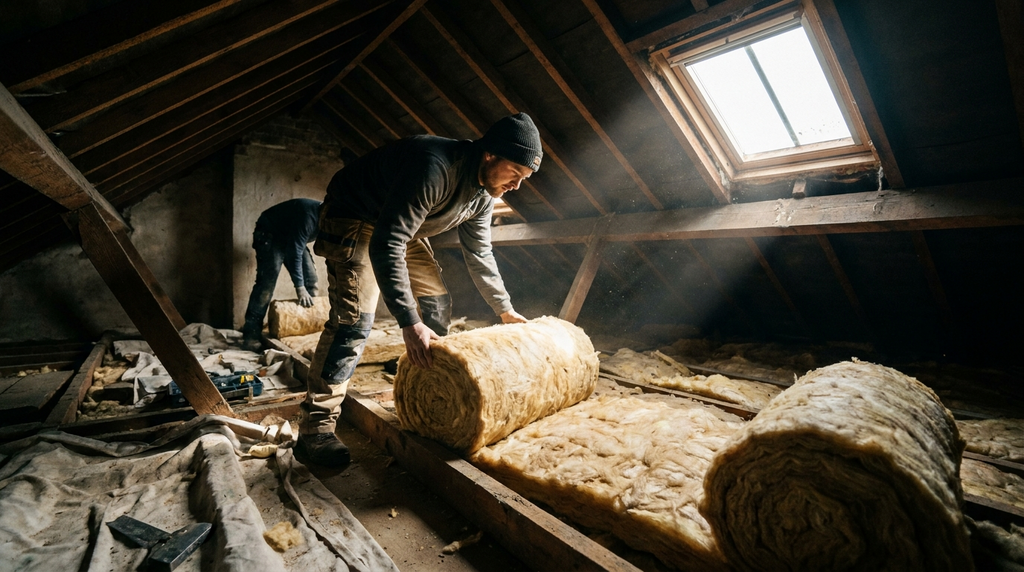
Internal solid wall insulation, also called dry-lining, involves fixing insulating boards to the inside face of external walls. The boards are typically made of rigid foam or mineral wool backed with plasterboard, then skimmed and decorated.
Costs break down to approximately £50–£80 per square metre for installation, plus £15–£30 per square metre for materials (Energy Saving Trust, 2026). For a typical 1930s semi-detached home with around 80–100 square metres of external wall area, this gives a total of £5,000–£11,000. The upper end of the range applies when walls are uneven or require additional timber framing.
The performance gain is substantial. An uninsulated solid wall typically has a U-value of around 2.1 W/m²K, meaning it loses heat quickly. After internal insulation, this drops to 0.45 W/m²K or better (BRE, 2026). Energy Saving Trust modelling shows this reduces heat loss through the walls by 40–45% for a typical 1930s semi-detached home (Energy Saving Trust, 2026). The actual saving on your annual heating bill depends on your fuel type and how much wall area is treated, but the reduction in heat loss is consistent across similar properties.
External insulation costs £8,000–£22,000 and can cut heating bills by £300–£500 annually
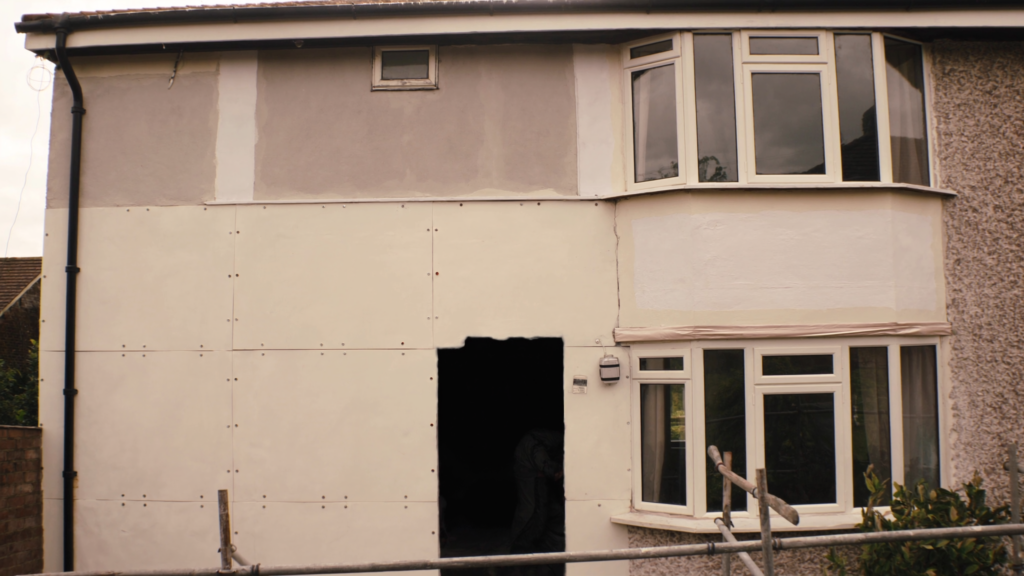
External wall insulation (EWI) wraps the house in a continuous layer of insulation, covered by a weatherproof render or cladding system. It is more expensive than internal insulation but avoids losing internal floor space and reduces thermal bridging at floor and ceiling junctions.
Costs for EWI are £80–£130 per square metre, including the insulation board, fixings, mesh, and render finish, based on quotes from MCS-registered installers in 2026 (MCS, 2026). For a semi-detached home with 80–100 square metres of wall area, this gives a total cost of £8,000–£13,000. The upper end of the range, up to £22,000, applies to larger detached homes or properties requiring extensive scaffolding, window reveals, and decorative finishes.
The annual bill saving for a gas-heated semi-detached home is estimated at £300–£500 (Energy Saving Trust, 2026). Homes heated by oil, LPG, or electric storage heaters will see larger savings because those fuels are more expensive per kWh. An additional benefit of external insulation is that it reduces condensation risk on internal walls and improves the building’s weatherproofing, which can prevent damp issues in older properties.
Quick numbers cost per m², U-value, payback, and grant availability
| Measure | Internal insulation | External insulation |
|---|---|---|
| Cost per m² | £50–£80 | £80–£130 |
| Typical U-value after installation (W/m²K) | 0.45 | 0.30 |
| Annual bill saving (£) | £250–£350 | £300–£500 |
| Payback period (years) | 15–25 | 20–30 |
| Grant eligibility (GBIS / ECO+) | Yes | Yes |
Data from Energy Saving Trust cost tables and DESNZ Great British Insulation Scheme guidance for 2026 (Energy Saving Trust, 2026; DESNZ, 2026).
The typical solid wall insulation payback period is 15–30 years
Payback periods for solid wall insulation are long compared to other energy efficiency measures. Internal insulation typically pays back in 15–25 years, while external insulation takes 20–30 years (Energy Saving Trust, 2026).
The calculation assumes current energy prices under the Ofgem price cap and no future price rises (Ofgem, 2026). Homes heated by expensive fuels such as heating oil, LPG, or electric storage heaters will see shorter payback periods because the annual savings are larger. Larger properties with more wall area will also have higher total costs and longer payback periods, but the annual savings scale proportionally. If energy prices rise above the current cap, payback periods will shorten accordingly.
One important caveat: payback calculations do not account for non-financial benefits, such as improved comfort, reduced draughts, and lower condensation risk. For many homeowners, these factors are as important as the financial return.
The Great British Insulation Scheme closed on 31 March 2026. It funded insulation measures only and never covered windows or glazing.
The Great British Insulation Scheme closed on 31 March 2026. It funded insulation measures only and never covered windows or glazing. In 2026, these schemes remain the primary source of government support for solid wall insulation costs (DESNZ, 2026).
GBIS is targeted at low-income households and those in fuel poverty. ECO+ extends eligibility to households with an Energy Performance Certificate (EPC) rating of D, E, F, or G, and an annual household income below £31,000. The maximum grant amount for solid wall insulation is £5,000–£7,500, depending on property type and location (DESNZ, 2026).
There is no direct government application portal. To apply, you must contact your local authority or a registered installer who participates in the scheme. The installer will assess your eligibility and handle the paperwork. If you are not eligible for a grant, you can still claim the work under the VAT reduction for energy-saving materials, which is currently 0% on installations (GOV.UK, 2026).
You must use an MCS-certified and TrustMark-registered installer to qualify for grants
The Great British Insulation Scheme closed on 31 March 2026. It funded insulation measures only and never covered windows or glazing. MCS (Microgeneration Certification Scheme) ensures the installer meets technical standards for insulation systems, including design, installation, and commissioning (MCS, 2026). TrustMark registration provides consumer protection, including a dispute resolution process if the work is unsatisfactory (TrustMark, 2026).
If you use an installer without MCS and TrustMark certification, you will not qualify for any grant funding, and the installation may not comply with building regulations. Building regulations require that solid wall insulation meets minimum U-value standards (typically 0.30 W/m²K for external insulation and 0.45 W/m²K for internal). A certified installer will ensure compliance and provide the necessary documentation for building control.
To check an installer, use the MCS installer directory at mcscertified.com or the TrustMark find-a-tradesperson tool at trustmark.org.uk. Always verify certification before agreeing to any work.
Solid wall insulation is the only option for most pre-1920s UK homes without cavity walls
Approximately 8 million UK homes have solid walls, the vast majority built before 1920 (DESNZ English Housing Survey, 2026). These properties have no cavity between the inner and outer brickwork, which means cavity wall insulation is not possible. Internal or external solid wall insulation is the only retrofit solution available.
For homeowners in this situation, the choice between internal and external insulation depends on budget, disruption tolerance, and aesthetic preferences. Internal insulation is cheaper but reduces floor space by around 50–100mm on each external wall and requires moving radiators, sockets, and skirting boards. External insulation is more expensive but preserves internal space and improves the building’s weatherproofing and appearance.
An alternative approach is to use insulated plasterboard or internal studwork filled with mineral wool. These methods achieve similar U-values but can be more labour-intensive and may require more careful detailing around windows and doors. Regardless of the method chosen, solid wall insulation remains the only effective way to bring a pre-1920s home up to modern energy efficiency standards (BRE, 2026).
The Great British Insulation Scheme closed on 31 March 2026. It funded insulation measures only and never covered windows or glazing.
Frequently Asked Questions
Internal insulation costs £4,500–£14,000 and external insulation £8,000–£22,000 for a typical 3-bed semi. These figures are based on Energy Saving Trust data for 2026.
Yes, it can reduce heat loss by up to 45% and lower heating bills. According to the Energy Saving Trust, payback depends on your home size and fuel type, typically 10–20 years.
Yes, the ECO4 scheme may cover full or partial costs for eligible low-income households. Check with Ofgem or your energy supplier for current criteria.
Internal insulation costs less (£4,500–£14,000) but disrupts rooms, while external (£8,000–£22,000) requires scaffolding and a weatherproof finish. Both improve U-values to 0.45 W/m²K or better per BRE.
External insulation lasts 30+ years with proper maintenance, internal insulation 25+ years. Both require quality installation to avoid moisture issues, as advised by MCS standards.