Home battery storage installed alongside solar panels now allows UK homeowners to use over 80% of the electricity their panels generate, compared to roughly 30–40% without storage. As of 2026, around 1 in 3 new solar installations in the UK includes a battery, driven by falling battery prices, rising grid electricity costs now averaging 24–27p per kWh, and a growing desire for energy independence. This guide covers everything you need to know about solar panel battery storage, how it works, what it costs, which system to choose, and how to get the best return on your investment.
How Solar Panel Battery Storage Works
A solar battery storage system captures surplus electricity generated by your solar panels during the day and stores it for use when the panels aren’t producing, typically in the evenings, overnight, and on cloudy days. Without a battery, any electricity your panels generate that you don’t use immediately is exported to the national grid, usually at a lower rate than you’d pay to import it back.
The system works in a straightforward sequence. Your solar panels convert sunlight into direct current (DC) electricity. An inverter converts this into alternating current (AC) suitable for your home appliances. Any surplus AC electricity flows into the battery, where it’s stored as DC. When you need power and the panels aren’t generating enough, the battery discharges, and another conversion brings it back to AC for use in your home. Modern hybrid inverters handle both the solar and battery conversion in a single unit, which is the most common setup for new installations.
The key specification to understand is usable capacity, measured in kilowatt-hours (kWh). A typical UK household uses 8–10 kWh per day, and a standard home battery holds between 5 kWh and 16 kWh of usable energy. Most batteries also have a depth of discharge (DoD) rating, the percentage of stored energy you can actually use without damaging the cells. Lithium batteries typically have a DoD of 90–100%, making them highly efficient.
Batteries are either AC-coupled or DC-coupled. DC-coupled systems connect directly to the solar panels before the inverter, meaning fewer energy conversions and slightly higher efficiency. AC-coupled systems connect after the inverter and can be retrofitted to existing solar installations more easily. If you already have solar panels and want to add storage, an AC-coupled battery is usually the simpler and more cost-effective route.
How Much Does Solar Panel Battery Storage Cost in 2026
Battery storage costs have fallen significantly over the past decade. In 2026, a typical home battery installation in the UK costs between £2,500 and £8,000 including installation, depending on the capacity and technology. The price per kWh of usable storage has dropped to around £400–£700, compared to over £1,000 just five years ago.
| Battery Size | Typical Use Case | Supply and Install Cost | Estimated Payback Period |
|---|---|---|---|
| 5–6 kWh | 1–2 person household, smaller solar array | £2,500–£4,000 | 8–11 years |
| 9–10 kWh | 3–4 person household, 4 kWp solar system | £4,500–£6,000 | 8–10 years |
| 13–16 kWh | Larger home, EV charging, high energy use | £6,000–£8,500 | 7–10 years |
| Modular stackable systems | Start small, expand later | £3,000–£12,000+ | Varies by expansion |
Installation labour typically adds £500–£1,500 to the hardware cost, depending on whether it’s a straightforward retrofit or part of a new solar installation. Adding a battery at the same time as solar panels is usually cheaper than retrofitting later, as the installer can use a single hybrid inverter rather than adding a separate battery inverter.
Running costs after installation are minimal. Most lithium batteries require no active maintenance and come with app-based monitoring as standard. The main long-term cost to consider is eventual battery replacement, though most modern systems carry warranties of 10 years or 6,000–10,000 cycles, whichever comes first.
| Battery Type | Chemistry | Typical Cycle Life | Relative Cost | Key Advantage |
|---|---|---|---|---|
| Lithium Iron Phosphate (LFP) | LiFePO4 | 6,000–10,000 cycles | Mid-range | Long lifespan, very safe |
| Nickel Manganese Cobalt (NMC) | Li-NMC | 3,000–6,000 cycles | Lower upfront | Higher energy density |
| Lead-acid (VRLA) | Lead-acid | 500–1,200 cycles | Lowest upfront | Proven technology, low cost |
| Sodium-ion | Na-ion | 4,000–8,000 cycles | Competitive | No lithium dependency |
Lithium Iron Phosphate (LFP) is the dominant chemistry in UK home batteries as of 2026, used in products from Tesla, GivEnergy, SolarEdge, and others. It offers the best combination of lifespan, safety, and value. Lead-acid batteries are largely legacy technology for home storage, they have a fraction of the cycle life and much lower DoD, typically around 50%. Sodium-ion batteries are emerging as a genuine alternative, with early residential products appearing in the UK market.
Benefits of Solar Panel Battery Storage
The financial and practical advantages of adding battery storage to your solar system are substantial, particularly in 2026’s energy price environment.
- Dramatically increased self-consumption, households without storage typically self-consume 30–40% of their solar generation. With a correctly sized battery, this rises to 70–90%, meaning you buy far less from the grid.
- Protection against peak tariff rates, most UK energy tariffs charge more per kWh during peak hours (typically 4–9pm). A battery lets you store cheap solar energy and avoid these peaks entirely.
- Smart tariff optimisation, time-of-use tariffs such as Octopus Intelligent Go, Agile Octopus, and similar products allow you to charge your battery from the grid at off-peak rates (sometimes below 7p/kWh) and discharge during expensive periods, earning savings of £200–£600 per year on top of solar benefits.
- Backup power during outages, most modern batteries with emergency backup (EPS) or islanding capability can power essential circuits if the grid goes down. This is particularly valuable for households with medical equipment, home offices, or in rural areas prone to outages.
- Reduced carbon footprint, by maximising use of your solar generation, you displace more fossil-fuel electricity. A typical 10 kWh battery paired with a 4 kWp solar system can reduce a household’s carbon footprint by an additional 0.5–0.8 tonnes of CO2 per year.
- Potential income from grid services, products like Tesla’s Virtual Power Plant and Octopus’s Powerloop allow your battery to participate in grid balancing services, earning payments of £100–£400 annually in exchange for occasional use of spare capacity.
The financial case is strongest for households with high daytime electricity export, high evening consumption, an EV, or anyone on a time-of-use tariff. A family home spending £2,000 per year on electricity could realistically cut that bill by 40–60% with a combined solar and battery system.
How to Choose the Right Solar Panel Battery Storage
Choosing the right battery comes down to four key factors: capacity, compatibility, features, and the reputation of both the manufacturer and installer.
Sizing Your Battery Correctly
Start with your evening and overnight electricity consumption, that’s the energy a battery needs to cover. Check your smart meter data or energy bills. Most households find that a battery covering 60–80% of their non-solar hours is the practical sweet spot. Going larger than your daily deficit means the battery may not fully charge each day, reducing efficiency. A 9–10 kWh battery suits the majority of UK homes with a 3.5–5 kWp solar array.
Compatibility With Your Solar Setup
If you’re adding a battery to existing solar panels, check whether your current inverter is battery-ready. Some modern inverters can be expanded with a battery module from the same manufacturer. If not, you’ll need an AC-coupled battery with its own battery inverter. If you’re installing solar and battery together from scratch, a hybrid inverter gives you the cleanest, most efficient setup.
Features Worth Paying For
- App-based monitoring, real-time visibility of solar generation, battery state, import, and export. Now standard on quality products.
- Grid-forming or EPS capability, essential if backup power during outages matters to you. Not all batteries offer this; confirm it explicitly.
- Smart tariff integration, the ability to automatically charge from the grid at cheap overnight rates. Look for batteries compatible with your energy supplier’s tariff.
- Scalability, modular systems from brands like GivEnergy, Pylontech, and SolarEdge allow you to add capacity later without replacing the whole system.
- Warranty length and terms, look for at least 10 years or 70% capacity retention at end of warranty. Read the small print on what voids the warranty.
Installer Quality
Your installer should be MCS (Microgeneration Certification Scheme) accredited, which is required to access most government incentives. Ask for case studies of completed battery installations and check reviews independently. Get at least three quotes, as battery pricing varies significantly between installers.
Solar Panel Battery Storage Installation, What to Expect
A home battery installation is typically completed in a single day for a straightforward retrofit, or as part of a 1–2 day solar and battery installation. Here’s what the process looks like in practice.
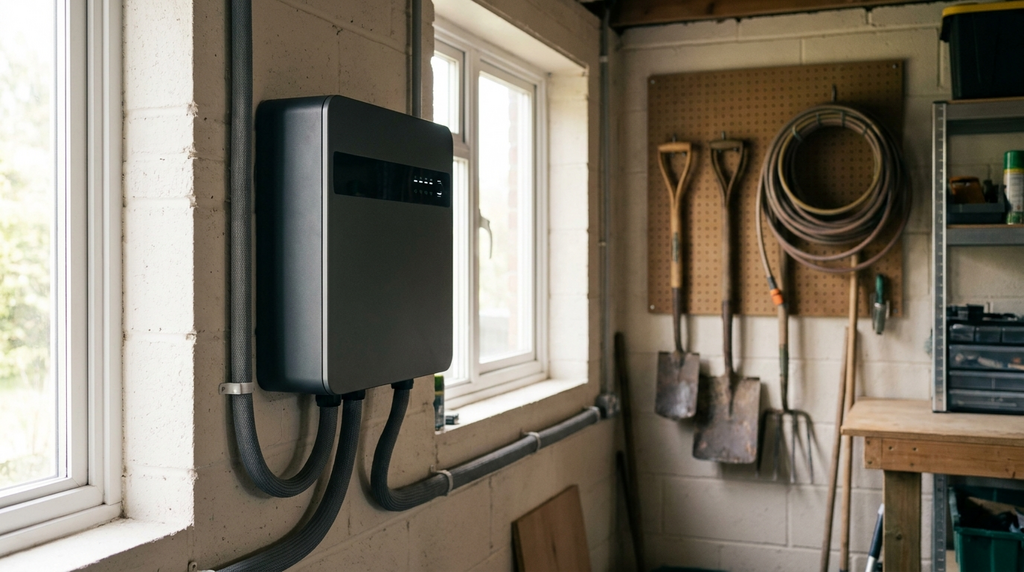
- Pre-installation survey, your installer visits to assess your consumer unit (fuse board), solar system (if existing), and proposed battery location. Most batteries are wall-mounted in a garage, utility room, or on an external wall. They need protection from extreme temperatures, ideal operating range is typically 0°C to 40°C.
- Equipment delivery and setup, the battery unit, any additional inverter equipment, and cabling are delivered. The installer isolates your electrical supply and mounts the battery.
- Electrical connection, the battery is wired into your consumer unit and solar system. If backup power is required, a transfer switch or dedicated backup circuit is installed to isolate selected circuits from the grid during an outage.
- Inverter configuration, the hybrid or battery inverter is configured with your preferred settings: self-consumption priority, time-of-use charging schedules, backup reserve levels.
- DNO notification, your installer notifies your Distribution Network Operator (DNO) under G98 or G99 regulations, as required for energy storage systems above certain thresholds. This is handled by the installer as standard.
- Commissioning and handover, the system is powered up, tested, and you’re walked through the monitoring app. MCS paperwork is completed, which you’ll need for any applicable grants or tariffs.
Disruption is minimal, typically a 1–3 hour power outage to your home during connection. Most homeowners are fully operational by the afternoon of the installation day.
Grants and Funding for Solar Panel Battery Storage in the UK
The funding landscape for battery storage in the UK has evolved considerably, with both national and devolved schemes available in 2026.
Great British Insulation Scheme and ECO4
While primarily focused on insulation and heating, the ECO4 scheme and its successors can in certain circumstances fund solar with storage for low-income households. Eligibility is means-tested and assessed by energy suppliers, contact your supplier directly or use the government’s eligibility checker.
VAT Reduction on Batteries
Since February 2024, battery storage systems installed alongside solar panels, or retrofitted to existing solar, qualify for the 0% VAT rate under HMRC’s energy-saving materials rules. This saves you effectively 20% on the battery and installation cost, and is applied automatically by MCS-accredited installers. A £5,000 battery system that would have cost £6,000 including VAT now costs £5,000, a saving of £1,000. Standalone batteries not connected to renewable generation do not qualify.
Smart Export Guarantee (SEG)
The Smart Export Guarantee requires licensed energy suppliers to pay you for electricity you export to the grid. With a battery, you can strategically export during high-value periods. SEG rates vary between 3p and 15p/kWh depending on supplier and tariff type. Registering for SEG requires MCS certification, another reason to use an accredited installer.
Devolved Schemes
Scotland’s Home Energy Scotland grant and loan scheme offers interest-free loans of up to £15,000 for renewable energy measures including battery storage. Wales has the Nest and Warm Homes programmes with eligibility criteria for renewable measures. Northern Ireland’s Home Energy Scheme provides support for qualifying households. Check the relevant devolved authority’s current criteria, as these schemes are updated annually.
Domestic Renewable Heat Incentive Successor Schemes
While the RHI closed to new applicants in 2022, households in receipt of existing payments should note that adding battery storage to a solar PV system does not affect RHI payments for solar thermal.
Popular Solar Battery Storage Brands in the UK
The UK market has matured significantly, with a core group of proven, well-supported products dominating residential installations.
- Tesla Powerwall 3, 13.5 kWh usable, integrated inverter, strong backup capability, excellent app. Premium price point at approximately £8,000–£10,000 installed.
- GivEnergy All-in-One, UK-based company, excellent customer support, modular from 5 kWh to 23 kWh+, strong smart tariff integration. Mid-range pricing at £4,000–£7,000 installed depending on size.
- SolarEdge Home Battery, integrates smoothly with SolarEdge inverters, DC-coupled efficiency, available in 10 kWh configurations. Good choice if you already have SolarEdge solar.
- Sungrow SBR, stackable LFP system, very competitive pricing, widely available through UK installers. Often the best value-per-kWh option.
- Huawei LUNA2000, modular, DC-coupled, works with Huawei SUN2000 inverters. Strong efficiency credentials and a 10-year warranty.
- Pylontech US series, popular in commercial and larger residential installs, very long cycle life, often paired with third-party inverters for flexible setups.
Brand choice often comes down to which installer you use, most quality installers specialise in 2–3 brands they know well and can support. It’s more important to choose a reputable installer who thoroughly understands their product than to chase a specific brand.
Maximising the Value of Your Battery Storage
Installing a battery is only the start. How you use it determines your actual savings. These strategies consistently deliver the best financial returns.
Switch to a Time-of-Use Tariff
Time-of-use tariffs are the single biggest financial optimisation available to battery owners. Tariffs like Octopus Go (off-peak rate around 7.5p/kWh), Intelligent Octopus, or Agile Octopus allow you to charge your battery from the grid cheaply at night. You store cheap electricity and avoid expensive peak-rate electricity, the arbitrage between a 7p off-peak rate and a 27p peak rate is substantial. A household doing this daily can save an additional £300–£500 per year beyond basic solar self-consumption benefits.
Set a Backup Reserve
Configure your battery management system to retain a minimum reserve, typically 20%, for unexpected outages. Most systems allow you to set this in the app. This means you always have emergency power without significantly affecting daily cycling.
Seasonal Adjustments
In winter, your solar generation will be significantly lower. Increase your overnight grid-charging schedule in the winter months and reduce it in summer when solar can fill the battery naturally. Most modern battery management systems offer season-aware automation, but manually reviewing your settings in October and March takes five minutes and can meaningfully improve performance.
Integrate With EV Charging
If you have an electric vehicle, integrating your solar battery with a smart EV charger creates a powerful energy ecosystem. Surplus solar charges the home battery first, then overflows to the car. Combined with overnight cheap-rate grid charging, households with EVs often achieve effective charging costs below 5p/kWh equivalent.
Common Problems and Maintenance
Modern home batteries are largely maintenance-free, but there are common issues worth knowing about, particularly if you want to protect your warranty and maximise lifespan.
Degradation Over Time
Capacity degradation is the gradual reduction in how much energy your battery can store. All lithium batteries degrade with use. LFP chemistry degrades slower than NMC, expect approximately 70–80% of original capacity after 10 years of daily cycling with a quality LFP battery. To minimise degradation, avoid regularly charging to 100% unless you need it; keeping the battery between 20–90% state of charge significantly extends cycle life. Most battery management systems allow you to set these limits.
Inverter Issues
The inverter (whether standalone battery inverter or hybrid) is more likely to require attention than the battery cells themselves. Common issues include error codes relating to grid voltage, communication faults between components, and firmware that needs updating. Most can be resolved remotely by your installer or the manufacturer’s technical team. Keep your monitoring app up to date and enable remote access, installers can often diagnose and resolve issues without a site visit.
Thermal Management
Batteries should not be installed in locations that experience extreme temperatures. An uninsulated garage in Scotland can reach -10°C in winter; many batteries will refuse to charge below 0°C to protect the cells. Conversely, direct sunlight on a south-facing wall can cause overheating. If your battery regularly reports temperature warnings, consider relocating it or improving ventilation. Indoor locations (utility rooms, hallways) typically offer more stable temperatures year-round.
Firmware and Software Updates
Battery management systems receive regular firmware updates that can improve performance, add smart tariff features, and fix bugs. Most update automatically over Wi-Fi, but it’s worth checking your app every few months to confirm the system is on current firmware. If you lose internet connectivity for an extended period, check for pending updates when you reconnect.
Annual Visual Inspection
Once a year, visually inspect the battery unit and surrounding wiring for any signs of damage, moisture ingress, or discolouration. Check that the mounting is secure. Most manufacturers also recommend a professional electrical inspection every 3–5 years as part of your overall solar system servicing.
Solar Panel Battery Storage and Your Home’s Value
Evidence from the UK property market increasingly supports the view that solar with battery storage adds meaningful value to a home. Research from Rightmove and Savills suggests properties with solar panels command a 4–14% price premium depending on region and property type, with batteries adding further appeal to buyers concerned about energy costs. Estate agents report that Energy Performance Certificate (EPC) ratings, which are required for all property sales, are improved by solar and battery systems, and that buyers increasingly ask specifically about energy generation and storage when viewing properties.
From a practical standpoint, a well-installed, warranted battery system with remaining manufacturer coverage is a tangible asset that transfers to new owners. Ensure all MCS certificates, warranty documents, and monitoring account access details are organised and available, these documents actively support your sale.
For homeowners in flats or properties without suitable roof space for panels, ground-mounted systems are an alternative route to accessing solar generation and pairing it with storage.
Is Solar Panel Battery Storage Worth It in 2026
For most homeowners who already have solar panels, or are planning to install them, adding battery storage in 2026 makes clear financial sense. The combination of 0% VAT, falling hardware costs, high grid electricity prices, and the availability of time-of-use tariffs means payback periods have shortened to 7–11 years on systems expected to last 15–20 years.
The strongest case exists for households that:
- Are away from home during the day and consume most electricity in the evening
- Own or plan to own an electric vehicle
- Are on or willing to switch to a time-of-use electricity tariff
- Live in areas with reliable solar resource (the south and midlands of England, though Scotland and Wales are also viable)
- Value energy independence and resilience against outages
The weakest case is for households already at home all day who can use solar electricity directly as it’s generated, or properties where the upfront investment presents a financial strain. Even in these cases, the 0% VAT reduction and improving technology make the decision more attractive with each passing year.
Battery storage is no longer a niche upgrade for the technology enthusiast. In 2026, it’s a mainstream, well-proven home energy technology that delivers measurable savings, reduces carbon emissions, and gives you genuine control over your energy costs, something that matters more with each passing year of volatile wholesale energy markets.