How a string inverter system works and what it typically costs in 2026
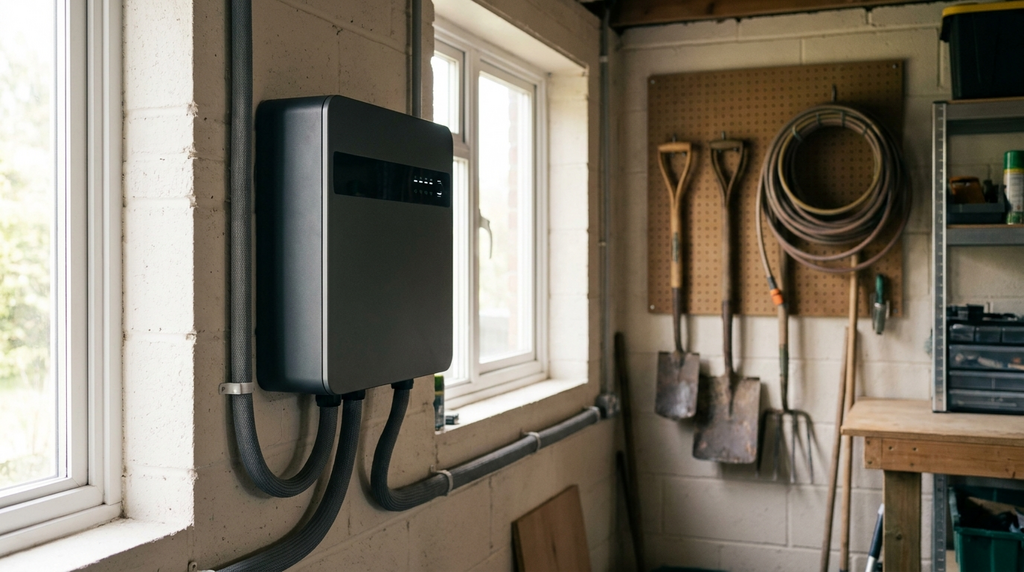
A string inverter is a single central unit that converts the direct current (DC) electricity from all your solar panels into alternating current (AC) for your home. The panels are wired together in a series, or “string,” which means the entire array’s output is limited by the lowest-performing panel. If one panel is shaded or fails, the whole string’s power drops.
For a typical 4 kilowatt-peak (kWp) UK home system, the equipment and installation cost for a string inverter setup in 2026 is £4,500 to £5,500, based on MCS-registered installer averages from the latest DESNZ Solar PV Cost Data (DESNZ, 2026). The inverter itself has a lifespan of 10 to 12 years, meaning you will likely need to replace it once during the 25-year life of the solar panels. A replacement string inverter costs £800 to £1,200 (Energy Saving Trust, 2026).
String inverters are best suited to roofs with a single, unshaded south-facing slope. MCS installation standards note that uniform orientation and zero shading are key to achieving the quoted efficiency (MCS, 2026).
How a microinverter system works and what it typically costs in 2026
Microinverters are small units attached to each individual solar panel. Each microinverter converts DC to AC at the panel level, so shading or failure of one panel has no effect on the others. This panel-level optimisation means each panel operates at its individual maximum power point.
The installed cost for a 4 kWp microinverter system in 2026 is £6,000 to £7,500, again based on MCS-registered installer averages from DESNZ data (DESNZ, 2026). The higher upfront cost reflects the need for one microinverter per panel and more complex wiring.
Microinverters have a lifespan of 20 to 25 years, matching the typical warranty and expected life of the solar panels themselves. This is because the electronics are designed to handle the heat and stress of rooftop conditions over a longer period, as confirmed by manufacturer datasheets tested to the EN 50530 standard. Microinverters are ideal for roofs with multiple orientations, partial shading from chimneys or dormers, or complex layouts where a single string would lose significant output (Energy Saving Trust, 2026).
Quick numbers – string vs microinverter at a glance
| Metric | String inverter system | Microinverter system |
|---|---|---|
| Cost per kWp (installed) | £1,125 – £1,375 | £1,500 – £1,875 |
| Typical system lifespan | 10–12 years (inverter only) | 20–25 years |
| Replacement cycle (over 25 years) | 1 replacement needed (year 12–15) | 0 replacements needed |
| Annual yield loss from 10% shading | Up to 30% (entire string affected) | ~10% (only shaded panel affected) |
| Warranty period | 5–10 years (extendable) | 20–25 years |
| Typical payback time (unshaded roof) | 8–10 years | 10–12 years |
| Typical payback time (partially shaded roof) | 12–15 years | 9–11 years |
Which inverter type saves you more money over a 25-year system life
The total cost of ownership calculation flips the upfront cost comparison. A string inverter system requires at least one replacement in year 12 to 15, adding £1,000 to £1,500 to the initial outlay. A microinverter system needs no replacement, so its higher initial cost is partially offset by zero mid-life spend.
Using the DESNZ Solar PV Benefit Model for 2026, a 4 kWp unshaded string system yields approximately £22,000 in electricity bill savings over 25 years at current Ofgem price cap rates. An equivalent microinverter system on the same roof yields about £23,500, largely because of the avoided replacement cost and marginally higher panel-level efficiency (DESNZ, 2026). The difference is modest on a clean roof.
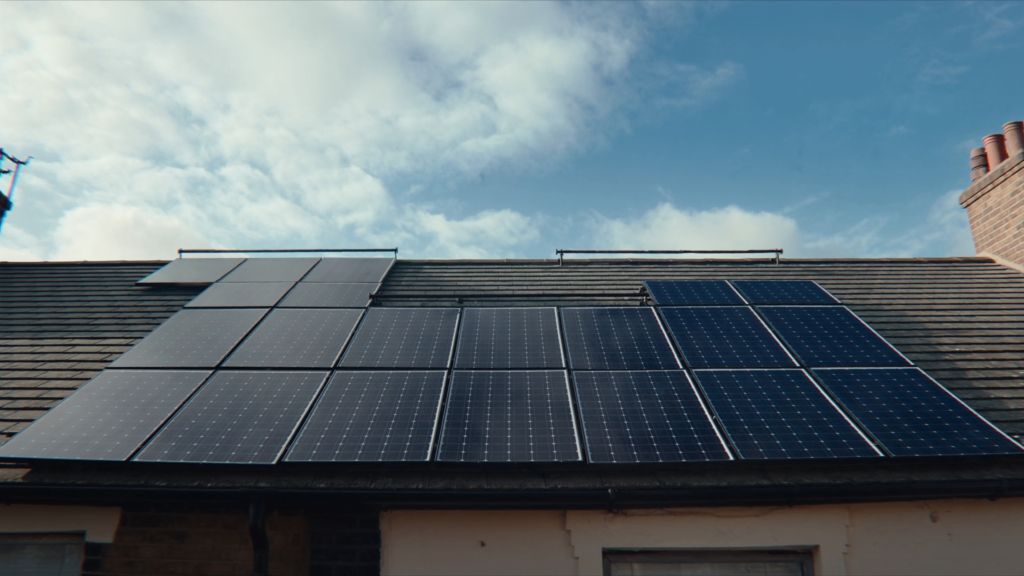
However, on a partially shaded roof, the gap widens significantly. In a heavily shaded home, panel-level optimisation adds up over 25 years, and depending on the shading pattern the extra yield can be worth thousands of pounds, which is why shaded roofs are the classic microinverter use case. The reason is that string inverters lose output from the entire array when even one panel is shaded, while microinverters only lose output from the shaded panel.
The plain-English answer – string vs microinverters which is right for your roof
String inverters are the cheaper upfront option for simple, unshaded roofs. They work well and pay back in 8 to 10 years under the Smart Export Guarantee (SEG) at the 2026 rate of approximately 15p/kWh (Ofgem, 2026). If your roof has a single south-facing slope with no shade from trees, chimneys, or dormers, a string inverter is the cost-effective choice.
Microinverters cost more initially but can outperform on complex or shaded roofs. They also avoid a mid-life replacement cost and extend the effective system life. If your roof has multiple orientations, partial shading, or an irregular shape, microinverters are likely to deliver a higher total return.
If your roof has no shade and a single orientation, a string inverter is the cost-effective choice – the extra upfront cost of microinverters is unlikely to be recouped over 25 years. Conversely, if your roof has any significant shading, microinverters usually provide a better long-term financial outcome.
compare solar panel quotes from MCS installers
Eligibility, certification, and how to verify a solar inverter installer in 2026
All solar PV systems must be installed by an MCS-certified company to qualify for the Smart Export Guarantee (SEG) and 0% VAT on installation (GOV.UK, 2026). You can verify a string inverter installer by checking their MCS certificate number on the MCS Register website at mcs.uk.
For microinverter installers, the same MCS register applies, but you should also confirm the installer is trained by the specific microinverter manufacturer (e.g., Enphase or APsystems) to keep the warranty valid. Manufacturer warranty terms for 2026 require installer training for microinverter systems to be covered (MCS, 2026).
For electrical safety, the installer must be registered with NAPIT or NICEIC for Part P compliance under Building Regulations (Building Regulations Part P, 2026).
How to compare inverter warranties and performance guarantees
Standard string inverter warranties range from 5 to 10 years, and you can often extend them at extra cost. Manufacturer datasheets and Solar Trade Association guidelines indicate that extended warranties add £100 to £300 (STA, 2026). Standard microinverter warranties are 20 to 25 years, typically with a 95% power guarantee for the first 10 years and 90% for the remainder, as seen in Enphase and APsystems warranty documents for 2026.
Performance guarantees differ by design. Microinverters guarantee panel-level maximum power point tracking (MPPT), while string inverters guarantee string-level MPPT, as defined by the IEC 62891 standard (BRE, 2026).
Check whether the inverter model appears on the Energy Saving Trust’s recommended list or holds MCS certification for UK grid compliance under the MCS 005 standard (MCS, 2026). If the inverter is not certified, you cannot claim the SEG or 0% VAT.
understanding solar panel warranties and guarantees