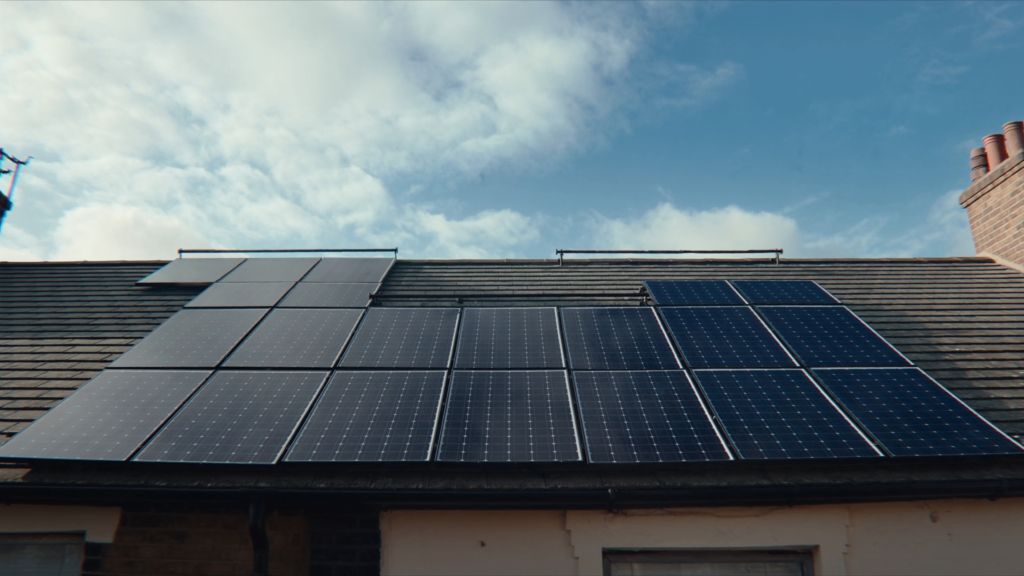
A solar panel system converts sunlight into electricity for your home, typically saving a household around £300 to £500 annually on electricity bills (Energy Saving Trust, 2026). Panels are made of photovoltaic (PV) cells that generate direct current (DC) electricity, which an inverter changes to alternating current (AC) for household use.
The core meaning of solar panels for UK homeowners is a way to generate your own renewable electricity, reducing reliance on the National Grid. Whether it makes financial sense depends on your roof orientation, shading, and electricity usage. Most homes with a south-facing roof, minimal shading, and daytime occupancy see the best returns. If you are rarely home during daylight, a battery storage system can improve savings.
How solar panels generate electricity
PV cells in solar panels absorb photons from sunlight, creating an electric field that generates DC electricity. A typical 3.5kWp system (around 10 panels) produces roughly 2,800 kWh per year in the UK (Energy Saving Trust, 2026). This is around 70% of an average household’s annual electricity use. The inverter converts DC to AC for appliances, lights, and sockets. Any excess electricity can be exported to the grid or stored in a battery for later use.
Costs and savings from solar panels
A typical 3.5kWp solar panel system costs between £4,500 and £6,500 installed, including an inverter and scaffolding (GOV.UK, 2026). Annual savings depend on how much generated electricity you use directly. Using 50% of your solar output saves around £250 per year; using 80% saves around £400 per year, based on current electricity rates of 24p/kWh. The Smart Export Guarantee (SEG) pays you for exported electricity, typically 5p to 15p per kWh (Ofgem, 2026).
Grants and regulations for solar panels
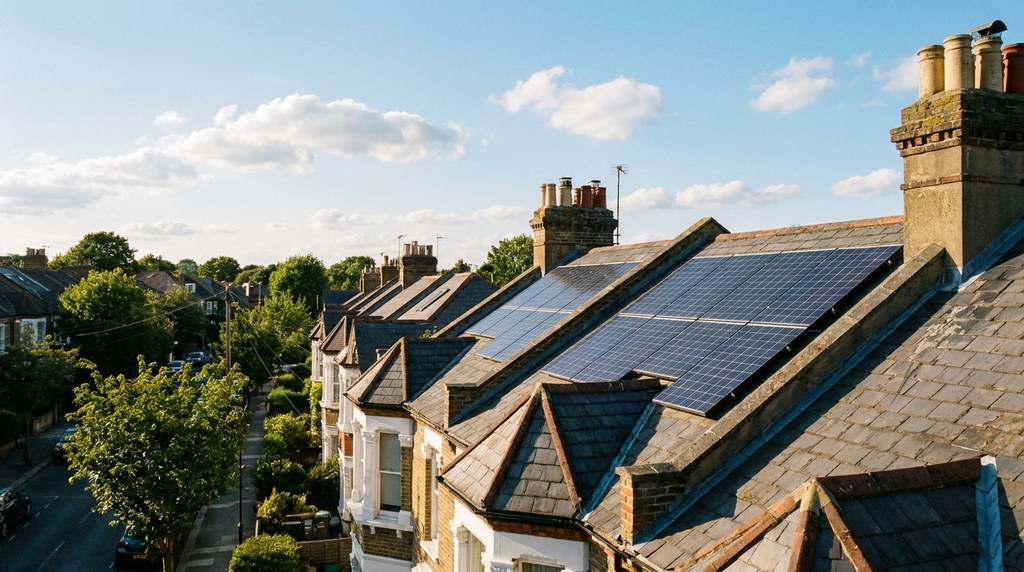
There is no national grant for solar panels in 2026, but the Energy Company Obligation (ECO4) scheme offers funding for low-income households in poorly insulated homes (GOV.UK, 2026). Solar panels are permitted development in England, so planning permission is not usually needed unless your property is a listed building or in a conservation area. All installations must be carried out by an MCS-certified installer to qualify for SEG payments (MCS, 2026).
A worked example
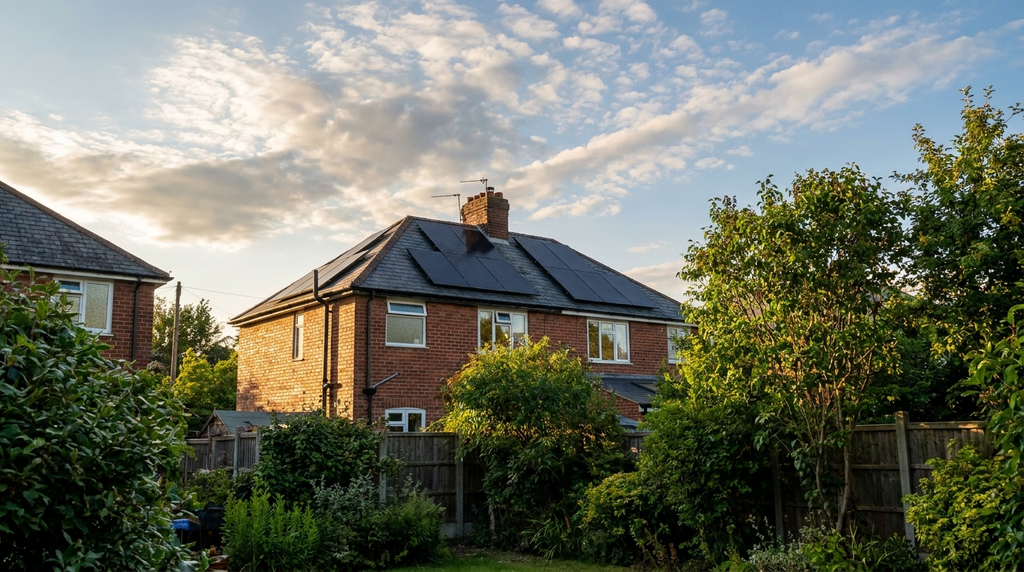
A typical 1930s semi-detached house in Manchester with a 3.5kWp solar panel system (ten panels) costs around £7,000 after the 0% VAT reduction (in place until March 2027). With a south-facing roof and minimal shading, this system generates roughly 2,800 kWh per year, saving the household about £400 annually on electricity bills based on current UK unit rates of 28p per kWh (Energy Saving Trust, 2026). If the household exports half of that generation via the Smart Export Guarantee at 15p per kWh, they earn an extra £210 per year. The total yearly benefit of £610 means the system pays for itself in just over 11 years. Over a 25-year lifespan, total savings reach roughly £15,250, assuming a modest 2% annual rise in energy prices.
| Item | Figure |
|---|---|
| Upfront cost after grants | £7,000 |
| Yearly savings | £610 |
| Payback period | 11.5 years |
| 25-year lifetime savings | £15,250 |
What homeowners often get wrong
The most common mistake UK homeowners make is assuming solar panels are useless unless you are home all day to use the electricity. This misconception leads many to dismiss solar entirely. The right approach is to install a battery storage system (around £1,500 to £3,000), which stores excess daytime generation for evening use, boosting self-consumption from 30% to over 70% and doubling your savings. Here are three other frequent errors.
- Thinking panels need direct sunlight to work Solar panels still generate electricity on cloudy UK days, producing roughly 10% to 25% of their rated capacity. The UK gets enough diffuse light for generation even in winter, and modern panels are built to perform in low-light conditions.
- Believing you must have a south-facing roof East- or west-facing roofs can still be viable, producing around 15% to 20% less electricity than a south-facing array. A 3.5kWp system on an east-west roof still saves roughly £320 per year, so don’t rule out solar based on orientation alone.
- Ignoring the Smart Export Guarantee (SEG) Many homeowners forget they can sell unused electricity back to the grid. With SEG rates from 5p to 15p per kWh, a typical household earns £100 to £250 per year, money that is missed if you do not sign up with an SEG-licensed supplier.
Quick reference
- A standard 3.5kWp solar panel system in the UK costs between £5,000 and £8,000 after the 0% VAT reduction in place until March 2027.
- Energy Saving Trust figures show annual savings of £300 to £500 on electricity bills for a typical semi-detached home with a south-facing roof.
- You do not need planning permission for solar panels on most UK homes, unless your property is listed or in a conservation area.
- Solar panels last 25 to 30 years with minimal maintenance, typically just an annual rinse with a hose to remove dirt and bird droppings.
- Avoid installing panels on roofs that are shaded for more than 30% of the day by trees or neighbouring buildings, as output drops significantly.
Frequently Asked Questions
Photovoltaic cells in panels absorb sunlight to create direct current electricity, then an inverter converts it to alternating current for home use. A typical 3.5kWp system generates about 2,800 kWh per year in the UK, according to the Energy Saving Trust (2026).
A typical household saves £300 to £500 annually on electricity bills, per the Energy Saving Trust (2026). Actual savings depend on your roof orientation, shading, and how much generated power you use directly.
Yes, for most homes with a south-facing roof and minimal shading. A 3.5kWp system costs £4,500 to £6,500 installed (GOV.UK, 2026) and can cover around 70% of an average household's annual electricity use.