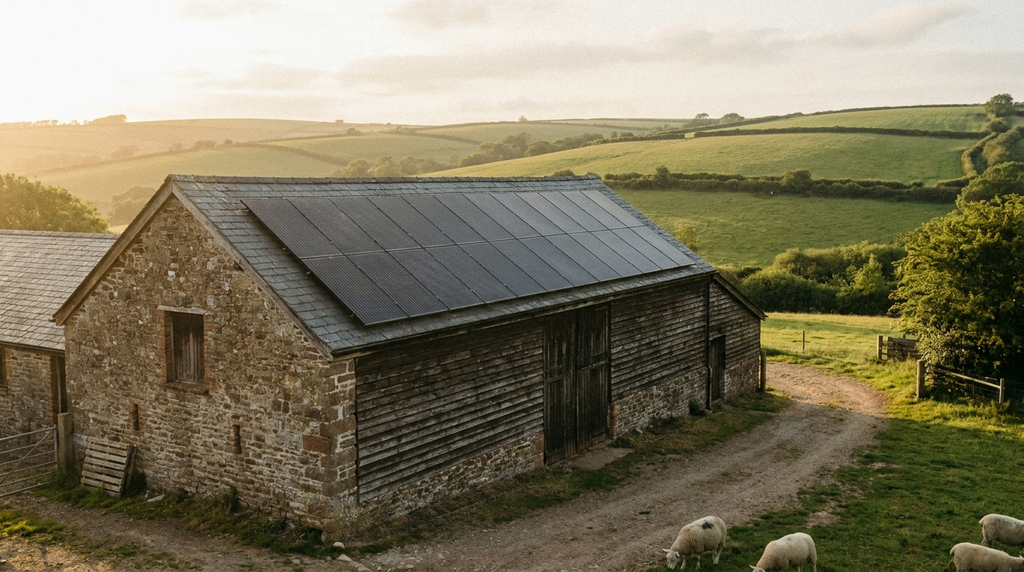
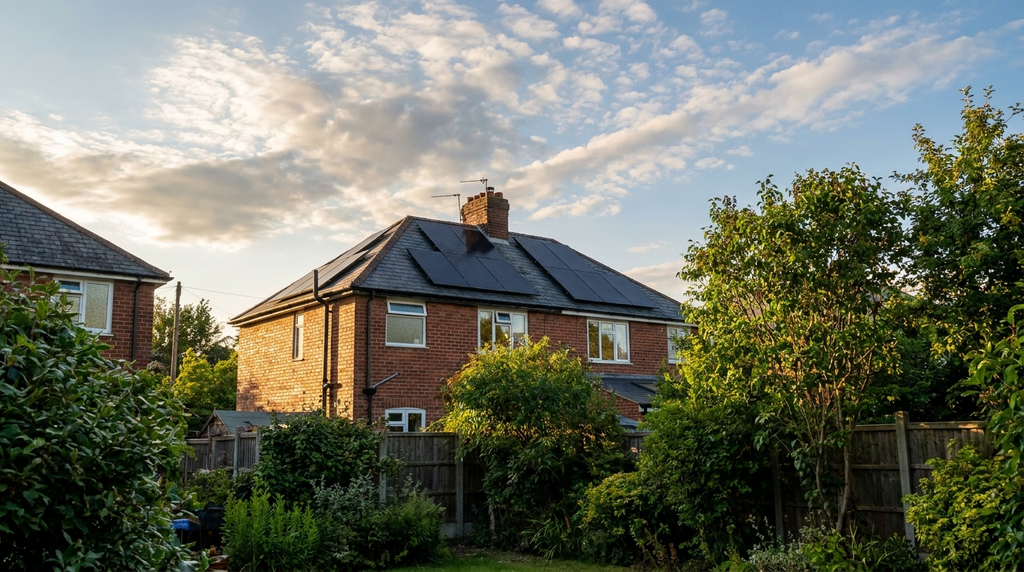
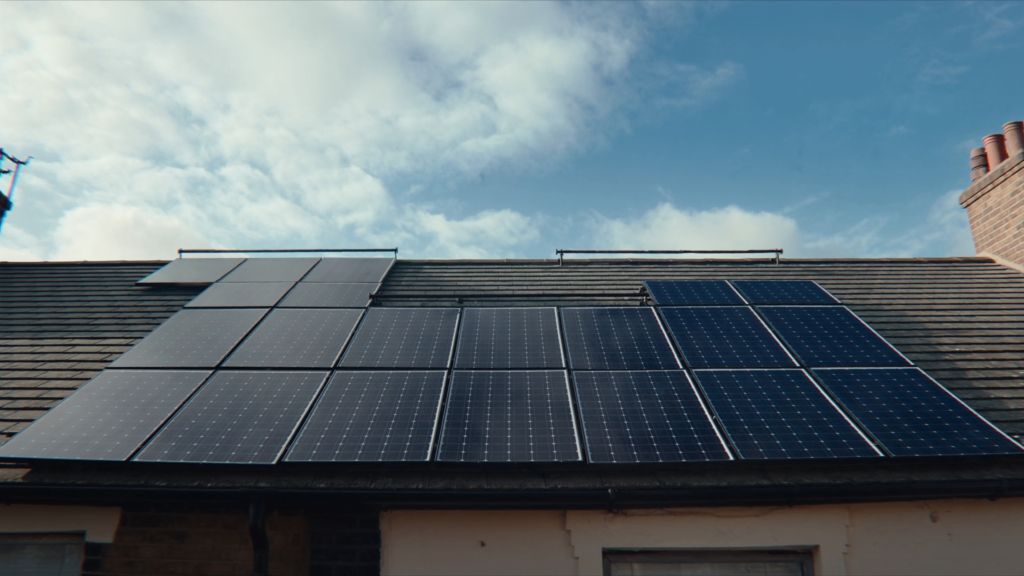
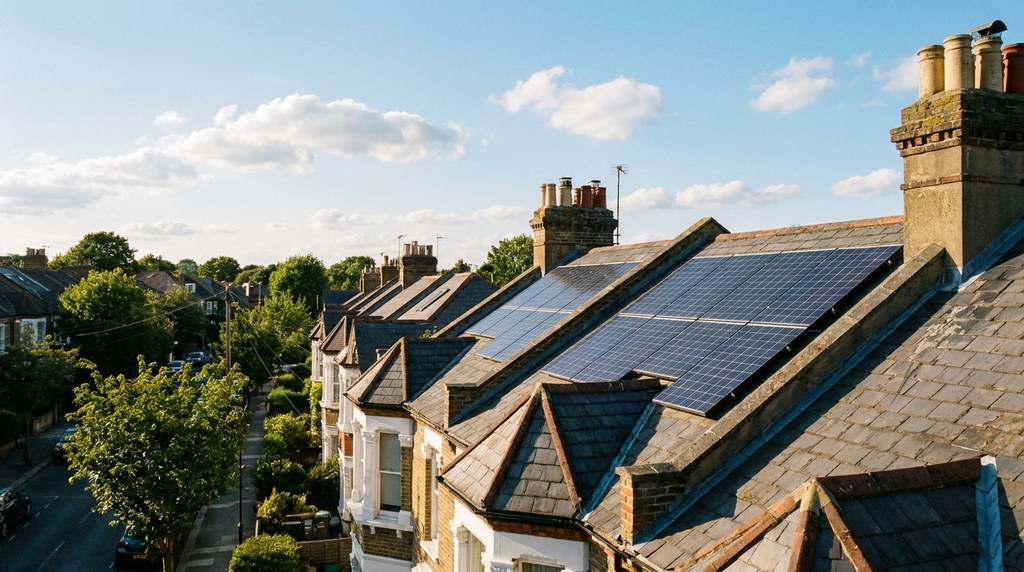
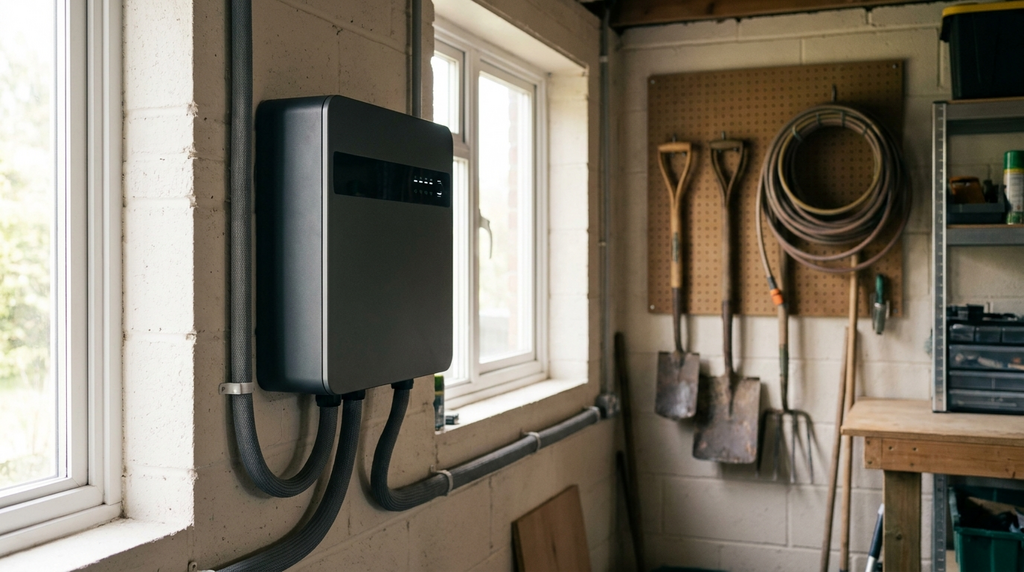
Solar panel installation in the UK has grown by over 400% in the past decade, with more than 1.3 million residential systems now generating clean electricity across British homes. In 2026, a typical 4kWp system covers 70–80% of an average household’s annual electricity needs, reducing energy bills by £600–£1,000 per year depending on usage patterns and export tariff rates. If you’re building a new home or retrofitting an existing property, understanding how solar installation works, from structural surveys to grid connection, is the foundation of making a sound investment.
How Solar Panel Installation Works
Solar panels generate electricity through the photovoltaic (PV) effect, when photons from sunlight strike semiconductor cells, typically made of monocrystalline or polycrystalline silicon, they knock electrons loose and create a direct current (DC). That DC electricity then flows through an inverter, which converts it into alternating current (AC), the type used by your household appliances and the national grid.
A complete domestic solar PV system consists of several key components working together:
- Solar panels, typically 400–430W per panel in 2026, mounted on roof frames or ground structures
- String inverter or microinverters, convert DC to AC electricity; microinverters optimise each panel individually, which is valuable on partially shaded roofs
- Generation meter, measures how much electricity your system produces
- Smart export meter, required to claim payments under the Smart Export Guarantee (SEG) for surplus power sent to the grid
- AC consumer unit connection, integrates the system into your home’s electrical distribution board
- Optional battery storage, stores surplus daytime generation for evening use
Once installed, the system operates automatically. On sunny days your panels generate more than you use, and excess electricity is exported to the grid. On cloudy days or at night, you draw from the grid as normal. A well-designed system needs no manual intervention, it simply starts producing from first light and stops at dusk.
How Much Does Solar Panel Installation Cost in 2026
The total cost of solar panel installation in the UK depends on system size, panel quality, roof complexity, and whether you add battery storage. Prices have stabilised following supply chain normalisation after the post-pandemic surge, with costs broadly flat between 2024 and 2026. The figures below represent the full installed cost including labour, scaffolding, inverter, generation meter, and DNO (distribution network operator) notification, not just the panel hardware.
| System Size | Panels (approx.) | Annual Generation | Typical Installed Cost | Best Suited For |
|---|---|---|---|---|
| 2kWp | 5 panels | 1,700–1,900 kWh/year | £4,500–£6,000 | Small homes, low consumption, limited roof space |
| 3kWp | 7–8 panels | 2,550–2,850 kWh/year | £5,500–£7,500 | Average 2–3 bed homes |
| 4kWp | 9–10 panels | 3,400–3,800 kWh/year | £6,500–£9,000 | Most common UK residential size |
| 6kWp | 13–15 panels | 5,100–5,700 kWh/year | £8,500–£12,000 | Larger homes, EV charging, higher consumption |
| 10kWp | 22–25 panels | 8,500–9,500 kWh/year | £13,000–£18,000 | Large homes, small businesses, maximum generation |
Adding battery storage typically costs an additional £2,500–£5,000 depending on capacity. A 9.5kWh battery, enough to store a full day’s generation from a 4kWp system, is the most common pairing. Guide to Solar Panel Battery Storage costs and sizing Installation labour accounts for roughly 20–25% of the total project cost, with scaffolding adding £400–£800 on top for most standard roof installations.
| Cost Factor | Typical Range | Notes |
|---|---|---|
| Panel hardware (per panel) | £180–£350 | Premium monocrystalline PERC panels at the higher end |
| String inverter | £500–£1,200 | SolarEdge, Fronius, and SMA among leading brands |
| Microinverters (per panel) | £100–£180 | Better for shading, higher upfront cost |
| Scaffolding | £400–£800 | Varies by roof height and complexity |
| Electrical work and DNO notification | £300–£600 | MCS-certified installer typically handles this |
| Battery storage (9.5kWh) | £2,500–£5,000 | Optional but improves self-consumption significantly |
Benefits of Solar Panel Installation
The case for solar installation in 2026 is stronger than at any previous point, driven by persistently high electricity prices, improved panel efficiency, and mature government export tariff schemes. Here are the specific, measurable advantages UK homeowners gain:
- Reduced electricity bills, A 4kWp system self-consuming 50% of its generation saves approximately £700–£900 per year at current electricity rates of around 24–26p/kWh
- Smart Export Guarantee income, Exporting surplus electricity to the grid earns 4–15p/kWh depending on your energy supplier’s SEG tariff, adding £100–£300 per year for a typical system
- Payback period of 7–10 years, After which generation is essentially free for the remaining 15–20 years of the system’s useful life
- Increased property value, Research from Zoopla and the Energy Saving Trust suggests solar panels add 1–4% to property values in most UK regions
- Carbon reduction, A 4kWp system prevents approximately 1.3–1.6 tonnes of CO₂ emissions annually, based on the UK grid average carbon intensity
- Energy independence, Generating your own power insulates you from wholesale electricity price spikes that have destabilised bills since 2021
- EV synergy, Pairing solar with an electric vehicle and a smart charger allows you to charge your car directly from free solar generation, multiplying savings significantly
The combination of bill savings and export income means the typical 4kWp system with no battery has a simple payback of around 8–9 years at 2026 energy prices. Add a battery and self-consumption rises from around 30% to over 60%, improving the financial return despite the higher upfront cost.
Types of Solar Panel Available for UK Installations
Choosing the right panel technology matters for both performance and long-term durability. Three main types are used in UK residential installations, each with different efficiency ratings, aesthetics, and price points.
Monocrystalline panels are the dominant choice in 2026, accounting for over 80% of new UK residential installations. They offer the highest efficiency, typically 20–23% for premium PERC (Passivated Emitter and Rear Cell) models, meaning you get more power from less roof space. Their black or dark blue appearance is also considered more aesthetically acceptable. Polycrystalline panels are cheaper but less efficient (16–18%) and are now largely being phased out in favour of monocrystalline. Thin-film panels have a role in specialist applications, particularly flat roofs and building-integrated installations, but are rarely used in standard pitched-roof residential projects.
Half-cut cell technology is now standard across quality monocrystalline panels, improving shade tolerance and reducing resistive losses. Bifacial panels, which capture reflected light on their rear surface, are increasingly used in ground-mounted systems where rear-side gain is achievable.
How to Choose the Right Solar Panel Installation
The best solar installation isn’t necessarily the biggest or the cheapest, it’s the one correctly matched to your roof, consumption patterns, and financial goals. Work through these decisions systematically before getting quotes:
Assess Your Roof Suitability
South-facing roofs at a pitch of 30–40 degrees deliver optimal generation in the UK, but east-west split arrays can work well for homes with an east-west ridge orientation, and can actually deliver better self-consumption by spreading generation across more of the day. Roofs facing north are not viable. Check for shading from chimney stacks, dormer windows, neighbouring trees, and adjacent buildings, even partial shading can reduce a string inverter’s output significantly. If your roof has unavoidable shading, specify microinverters or optimisers in your quote rather than a standard string inverter.
Size the System to Your Consumption
Oversizing is a common mistake. If you don’t have a battery, and you’re rarely home during the day, a very large system will generate more than you can use and your export income at 4–8p/kWh won’t compensate for the higher capital cost. Review 12 months of electricity bills, identify your daily average usage, and aim for a system that generates roughly 80–100% of your annual consumption. If you’re planning to add an EV or heat pump within 2–3 years, factor that into the sizing now, it’s much cheaper to install a larger system from the outset than to add panels later.
Evaluate Installer Credentials
Only use an installer who is MCS (Microgeneration Certification Scheme) certified. MCS certification is a mandatory requirement to claim payments under the Smart Export Guarantee, and it guarantees the installation meets recognised industry standards. Check the MCS installer database at mcscertified.com. Also look for membership of the Renewable Energy Consumer Code (RECC), which provides additional consumer protections including a 10-year workmanship warranty requirement.
Understand What Your Quote Includes
A complete quote should include scaffolding, all electrical work, DNO notification, generation and export meter installation, MCS certificate, and a building regulation compliance certificate (where applicable). Be wary of quotes that exclude scaffolding or charge it as a separate item, this is a common way to make headline prices look lower. Get at least three quotes for any system over £5,000.
The Solar Panel Installation Process Step by Step
Understanding what the installation process involves helps you prepare your home and know what to expect on the day. A standard residential installation takes one to two days from scaffolding erection to final sign-off, though the full project timeline including survey, design, and DNO notification typically runs four to eight weeks.
- Initial survey and system design, A qualified installer visits to assess your roof structure, electrical consumer unit, loft space, and shading. They measure the roof and design the panel layout, specifying panel model, inverter type, and cable routing. Some installers now use aerial survey data and reduce the need for an in-person survey for straightforward properties.
- DNO notification, For systems up to 3.68kW single-phase, your installer notifies your local Distribution Network Operator as a formality. Larger systems require formal approval, which can take 4–12 weeks, factor this into your timeline if you’re sizing above that threshold.
- Scaffolding erection, Typically erected the day before panel installation to give the scaffolders time to work safely.
- Roof mounting system installation, Installers fix aluminium rail frames to your roof using specialist brackets that hook under roof tiles or fix directly to rafters. Modern mounting systems are built to be waterproof without requiring tile removal in most cases.
- Panel installation and wiring, Panels are clipped onto the rails and wired together. DC cables run from the roof array, typically through the loft, down to the inverter location, usually in the loft, garage, or utility room.
- Inverter and electrical connection, The inverter is mounted and connected to the DC array. An AC connection is made to your consumer unit by a qualified electrician. Generation and export meters are fitted.
- System commissioning and testing, The installer tests all connections, checks that the inverter is reading correctly, confirms grid export is functioning, and sets up monitoring if applicable (most modern inverters include a Wi-Fi monitoring app).
- MCS certificate and documentation, You receive your MCS certificate, which you need to register for the Smart Export Guarantee with your energy supplier.
- Scaffolding removal, Usually the day after installation is complete.
Grants and Funding for Solar Panel Installation
The UK government does not currently offer a universal solar panel grant for all homeowners, but several targeted schemes significantly reduce costs for eligible households in 2026. Understanding which schemes apply to your situation is essential before committing to a purchase.
The Great British Insulation Scheme and ECO4
The Energy Company Obligation (ECO4) scheme requires large energy suppliers to fund energy efficiency measures, including solar panels in some cases, for low-income and fuel-poor households. Eligibility is based on means-tested benefits and property EPC rating. If you’re on qualifying benefits and live in a home with an EPC of D or below, you may be entitled to fully or partially funded solar installation. Contact your energy supplier or use the government’s eligibility checker at gov.uk.
Home Upgrade Grant (HUG2)
The Home Upgrade Grant Phase 2 provides funding for low-income households in England not connected to the gas grid. Solar panels are an eligible measure under this scheme, often combined with heat pumps or insulation. Delivery is managed by local authorities, so availability varies by area. Check with your local council for current availability in your postcode.
The Smart Export Guarantee
While not a grant, the Smart Export Guarantee (SEG) is the ongoing financial mechanism that compensates you for electricity you export to the grid. As of 2026, SEG tariffs from major suppliers range from 4p to 15p per kWh, with some time-of-use tariffs offering higher rates during peak evening demand. You must use an MCS-certified installer to qualify, and you apply directly to your energy supplier after installation.
VAT Reduction
Solar panel installations in the UK benefit from 0% VAT, a reduction from 20% that was made permanent in April 2022. This effectively reduces the cost of a typical 4kWp system by approximately £1,300–£1,800 compared to standard-rated goods, and it applies to both the equipment and installation labour when supplied together as a complete installation package.
Scotland, Wales, and Northern Ireland
Devolved governments operate additional schemes. In Scotland, the Home Energy Scotland programme offers interest-free loans of up to £15,000 for renewable energy measures including solar PV, repaid over 10–12 years. In Wales, the Nest scheme offers support for eligible households. Northern Ireland has historically had different support structures, check with the NI Energy Efficiency Advice Service for current availability.
Planning Permission and Building Regulations
In most cases, solar panel installation on a residential property in England, Scotland, and Wales falls under permitted development rights, meaning you do not need to apply for planning permission. However, there are important exceptions that catch homeowners out:
- Properties in conservation areas or with Article 4 Directions applied may require planning consent, panels must not be visible from a highway in these areas without permission
- Listed buildings almost always require listed building consent, and in many cases approval is refused or restricted to non-visible roof surfaces
- Panels must not protrude more than 200mm from the roof surface and must not be installed above the highest part of the roof (excluding the chimney)
- Flat roof installations on domestic outbuildings are generally permitted, subject to height restrictions
Building regulations approval is typically handled by your MCS-certified installer as part of the notification process for electrical work under Part P. You do not need to submit a separate building regulations application for a standard solar installation, your installer’s notification to a competent person scheme (such as NICEIC or NAPIT) covers this.
Always check with your local planning authority if your property is listed or in a designated area before proceeding.
Common Problems and Maintenance for Solar Panel Installations
Solar PV systems are low maintenance by design, with no moving parts and a design life of 25–30 years. However, they are not entirely set-and-forget. Understanding the common failure points helps you protect your investment and catch problems before they erode your savings.
Panel Soiling and Cleaning
Dust, bird droppings, pollen, and lichen can reduce panel output by 5–15% if left uncleaned. UK rainfall washes most surface dust away naturally, but bird fouling, particularly under panels where pigeons nest, can cause persistent shading losses. Annual or biannual cleaning using a soft brush and deionised water is sufficient for most properties. Do not use abrasive cleaners or pressure washers, which can damage the anti-reflective coating. Professional cleaning services typically charge £4–£8 per panel.
Inverter Faults
The inverter is the component most likely to require replacement during a system’s lifetime. String inverters typically carry a 10–12 year warranty, while microinverters often come with 25-year warranties. If your monitoring app shows zero output on a sunny day, an inverter fault is the first thing to check. Inverter replacement costs £500–£1,200 for a standard string inverter, fitted by an MCS-certified electrician.
Panel Degradation
All solar panels degrade slowly over time, reputable manufacturers guarantee no more than 0.5% annual degradation, meaning a panel generating 420W at installation should still produce around 390W after 20 years. Cheap panels from unknown manufacturers may degrade significantly faster. This is one reason why brand reputation matters when choosing panels: look for manufacturers offering a 25-year product warranty and a 25–30 year linear performance guarantee.
Roof Penetrations and Weatherproofing
Poorly installed mounting brackets are the leading cause of roof leaks associated with solar installations. Ensure your installer uses proprietary mounting systems with manufacturer-approved waterproofing components, not DIY solutions. After a storm or severe weather event, it’s good practice to visually inspect your roof from ground level for any displaced panels or disturbed tiles. Have an installer conduct a formal inspection every 5 years as a minimum.
Monitoring and Spotting Underperformance
All modern inverters include Wi-Fi monitoring accessible via a smartphone app. Set a benchmark for expected daily generation at different times of year, a 4kWp south-facing system in the south of England should generate around 16–20 kWh on a clear June day and 2–4 kWh on a clear December day. If your system consistently underperforms these benchmarks, investigate before the problem compounds. Some monitoring platforms allow automated alerts if generation drops below expected thresholds.
Maximising the Return on Your Solar Installation
Installing panels is only the first step. How you use the electricity your system generates makes a substantial difference to the financial return. These practical steps help you get the most from your investment:
- Shift energy-intensive appliances to daytime, Run your dishwasher, washing machine, and tumble dryer during peak solar hours (10am–3pm). Smart plugs and appliance timers make this easy to automate.
- Consider a hot water diverter, Devices like the iBoost or Eddi divert surplus solar generation to your hot water cylinder, displacing gas or electricity heating. This typically adds £300–£600 to the installation but can save an additional £150–£300 per year.
- Review your energy tariff, Some suppliers offer solar-specific tariffs or time-of-use rates that better reward export or offer cheap overnight electricity for battery charging. Switching tariff after installation can meaningfully improve your economics.
- Register for the SEG promptly, You start earning export payments from the date you register, not the date of installation. There’s no backdating, so register with your energy supplier as soon as you receive your MCS certificate.
- Plan for battery storage, Even if you don’t install a battery immediately, ask your installer to run battery-ready cabling from the inverter location. This typically adds only £200–£400 and saves significant cost if you add a battery later.
The combination of optimised self-consumption, SEG export income, and smart tariff management can push the financial return on a 4kWp system with battery to a simple payback of 7–8 years, with 15–20 years of net-positive generation following that. For homeowners planning to stay in their property long-term, the economics are compelling at 2026 energy prices.