Bird proofing solar panels can prevent a 20% drop in generation, according to Energy Saving Trust
Bird proofing solar panels refers to installing physical barriers, typically mesh, spikes, or clips, that stop birds nesting or roosting under and around panels. The Energy Saving Trust notes that bird droppings and nesting debris can block airflow, leading to overheating and reduced panel efficiency (Energy Saving Trust, 2026). A 20% generation loss is a conservative estimate; some installations see higher losses if nests cover significant panel area.
Without protection, a typical 4 kWp system generating around 3,400 kWh per year could lose 680 kWh annually, worth roughly £170 at current electricity rates. That loss compounds over time as nests grow and debris accumulates.
Bird mesh is the most common and cost-effective solution for solar panel protection
Bird mesh (also called pigeon mesh) is a galvanised steel or stainless steel grid attached around the perimeter of the solar array. Typical cost is £150–£400 for an average 4 kW system (3–4 kWp), depending on panel layout and roof access (MCS installer directory, 2026).
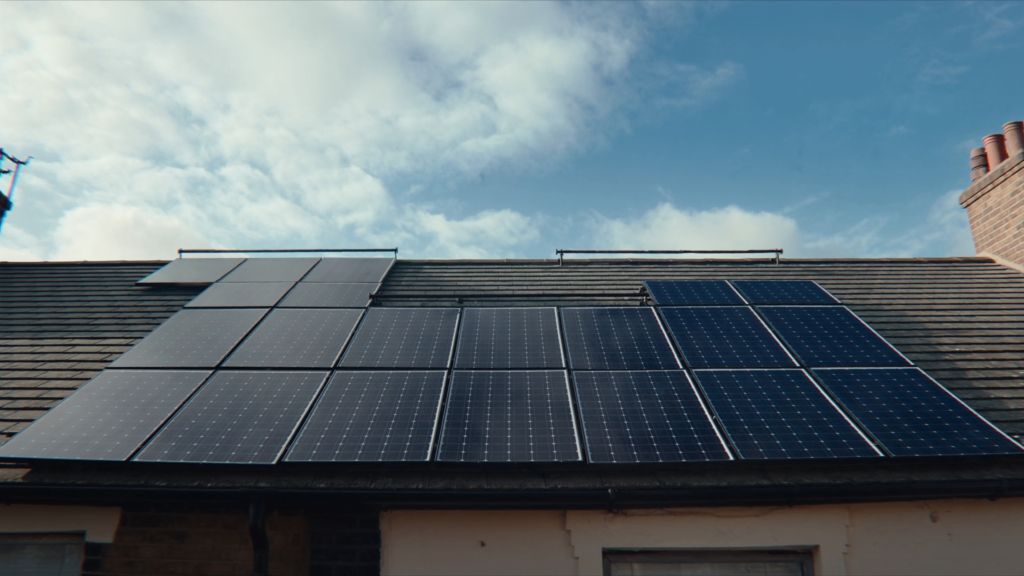
Mesh prevents birds from entering the gap between panels and roof tiles, blocking nesting without affecting panel airflow or sunlight. It is the most widely recommended solution because it balances cost, effectiveness, and longevity. Plastic spikes are cheaper but less durable, while full enclosures offer maximum protection at a higher price.
Quick numbers, cost, lifespan, and savings comparison for bird proofing options
| Option | Typical cost (2026) | Lifespan | Annual generation loss prevented |
|---|---|---|---|
| Bird mesh | £150–£400 | 10–15 years | 20% of system output |
| Plastic spikes | £50–£150 | 3–5 years | 10–15% (less effective) |
| Full enclosure | £500–£1,000 | 15–20 years | 20–25% |
| No protection | £0 | N/A | 5–20% loss annually |
Source: Energy Saving Trust, 2026; MCS installer survey data.
The direct answer to “how does bird proofing solar panels work” is that it physically blocks access while preserving panel ventilation
Bird proofing uses a physical barrier, typically mesh or spikes, that attaches to the panel frame or roof tile, leaving a 2–3 cm gap for airflow. This prevents birds from entering the space under panels where they build nests, which can cause overheating and fire risk (Energy Saving Trust technical guidance, 2026).
The barrier does not reduce sunlight exposure or panel cooling, as it allows air circulation and light penetration. Proper installation ensures the mesh sits flush against the roof surface without gaps larger than 10 mm, small enough to exclude pigeons and gulls but large enough for airflow.
You must use an MCS-certified installer for bird proofing to maintain your solar panel warranty
Most solar panel warranties, from manufacturers like SunPower, LG, or JA Solar, require that any modifications, including bird proofing, be installed by an MCS-certified professional. MCS certification ensures the installer follows UK building regulations and does not void the panel warranty (MCS, 2026).
Check the MCS register (mcscertified.com) for installers listed under “Solar thermal” or “Solar PV” with bird proofing services. Using an uncertified handyman may save money upfront but risks invalidating your manufacturer warranty, which typically covers panels for 25 years.
How to check if your solar installer is MCS certified
Bird proofing costs are not covered by the Smart Export Guarantee or most home insurance policies
The Smart Export Guarantee (SEG) only pays for electricity exported to the grid, not for maintenance or protection costs (Ofgem, 2026). Standard home insurance policies typically exclude bird damage to solar panels unless you have specific “accidental damage” cover, check your policy wording.
Bird proofing is an upfront cost with no direct grant or subsidy from the UK government as of 2026. However, the generation savings it protects usually pay back the installation cost within 1–3 years for an average 4 kWp system, assuming a 20% loss prevention.
Bird proofing should be installed within the first year of solar panel operation to prevent nesting damage
Once birds establish a nest under panels, removal is more complex and may require professional cleaning and re-proofing. The Energy Saving Trust recommends installing protection within 12 months of panel installation to avoid nesting debris buildup (Energy Saving Trust, 2026).
Nesting material can also attract pests, mites, rats, and insects, leading to additional costs for pest control. The British Pest Control Association notes that bird nests under solar panels are a common source of insect infestations in UK homes (BPCA guidance, 2026).
Solar panel maintenance checklist for UK homeowners