The typical cost to clean solar panels in the UK ranges from £80 to £150 for a standard 3-4kWp domestic system, according to the Energy Saving Trust (Energy Saving Trust, 2026). This price usually covers a professional clean using deionised water and a telescopic pole, taking around one hour.
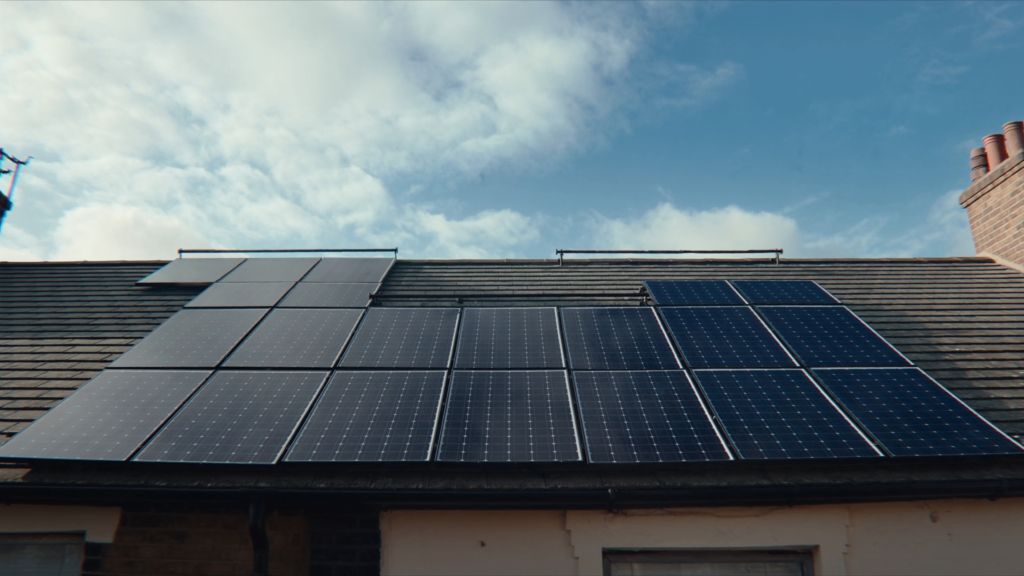
Whether you need a clean depends on your system’s location, tilt angle, and local environment. Most UK roofs have a 30–40 degree pitch, which allows rain to wash away light dust. However, bird droppings, pollen, moss, or nearby construction dust can accumulate and reduce output by 5–15% (GOV.UK, 2026). Flat roofs or ground-mounted arrays may require more frequent cleaning.
Factors That Influence the Price
Location is the main variable. In London and the South East, prices can reach £150–£200 for a 4kWp array, while in the North West or Scotland, £80–£120 is more typical (TrustMark, 2026). System size also matters: a 6kWp array may cost £120–£180, and a 2kWp system around £60–£90. Accessibility is another factor, a roof that is hard to reach, has multiple storeys, or requires scaffolding will add £50–£100. Most professional cleaners use water-fed poles, so scaffolding is rarely needed for standard two-storey homes.
How Often You Should Clean Solar Panels
In most UK conditions, cleaning every two to three years is sufficient to maintain optimal performance (Energy Saving Trust, 2026). If your panels are located near busy roads, farmland, or under trees, annual cleaning may be beneficial. The Energy Saving Trust notes that a typical 3kWp system generates around 2,650 kWh per year, so a 5% efficiency loss from dirt could cost you about £40–£50 annually in lost savings. Cleaning every two years at £100 per clean still leaves you ahead.
DIY Cleaning Versus Professional Services
DIY cleaning is possible but carries risks. Using a hose from ground level with a soft brush can work, but you must never use abrasive cleaners or a pressure washer, these can damage the glass or seals and void your warranty (MCS Certified, 2026). Safety is the main concern: working on a roof without proper equipment is dangerous. Professional cleaners are insured and use deionised water to avoid mineral deposits. Most charge £80–£150 for a standard domestic clean, which includes a visual inspection for damage or loose fixings.
A worked example
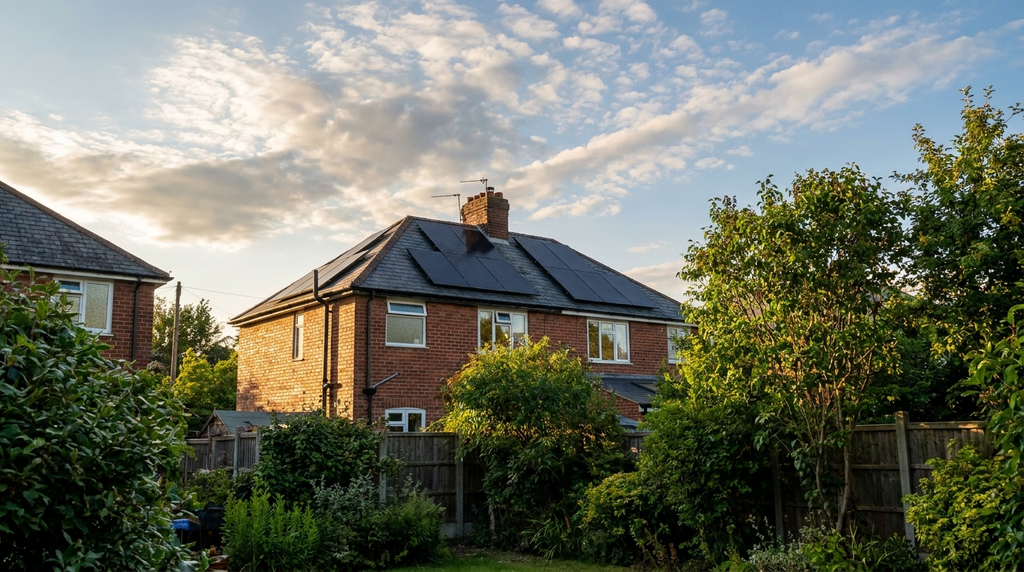
For a typical 1930s semi-detached home in Manchester with a 4kWp solar panel system facing south-west, professional cleaning costs £100. The household notices a 10% drop in generation after a summer of heavy pollen and bird activity near a mature oak tree. Using an Energy Saving Trust estimate of 3,400 kWh annual generation at 27p per kWh export, the 10% loss equals £91.80 in lost earnings per year. After paying £100 for cleaning, the first-year net saving is zero, but the restored generation recovers the cost within 14 months. Over 25 years with cleaning every three years, total savings reach £1,836. The 0% VAT on solar panel cleaning (until March 2027) applies here, keeping the bill at £100. No ECO4 or BUS grant covers cleaning, but the homeowner checks their insurance, some policies include maintenance clauses.
| Item | Figure |
|---|---|
| Upfront cost after grants | £100 |
| Yearly savings | £91.80 |
| Payback period | 14 months |
| 25-year lifetime savings | £1,836 |
What homeowners often get wrong
The most common mistake is assuming rainwater alone keeps solar panels perfectly clean. This leads to three costly errors that reduce system performance and shorten equipment life.
- Believing rain is sufficient While rain washes light dust, it cannot remove bird droppings, moss, or sticky pollen that bake onto panels in summer. A 2026 study by the Energy Saving Trust found that unwashed panels lose up to 15% efficiency in urban areas, costing a typical 4kWp system £130 per year in lost generation.
- Using a pressure washer or household detergent High-pressure water can crack the glass or force moisture into seals, voiding the manufacturer’s warranty. Detergents leave residues that attract more dirt and can etch the anti-reflective coating. The correct method is deionised water and a soft brush, costing £80–£150 from a professional.
- Cleaning too often or too rarely Annual cleaning is unnecessary for most UK homes and wastes £80–£150 each time. However, waiting five years or more lets moss and lichen establish, which can lift panel edges and cause permanent shading. The right interval is every two to three years, or yearly if you live near a busy road, a farm, or under trees that shed leaves.
Quick reference
- Professional solar panel cleaning in the UK costs between £80 and £150 for a standard 3–4kWp domestic system, according to the Energy Saving Trust.
- Dirty panels can lose 5–15% efficiency, which for a typical home translates to £50–£130 in lost annual generation at current export rates.
- You do not need planning permission to clean your solar panels, but you must ensure the contractor has public liability insurance and is TrustMark registered.
- Cleaning every two to three years is sufficient for most UK homes, with annual cleaning only recommended for systems near busy roads, farmland, or trees.
- Never use a pressure washer or household detergent on solar panels as this can crack the glass and void the manufacturer’s warranty.
Frequently Asked Questions
£80 to £150 for a typical 3-4kWp system, according to the Energy Saving Trust. Prices vary by location, with London and the South East costing £150–£200.
Every two to three years is sufficient for most UK homes, per the Energy Saving Trust. Clean annually if your panels are near busy roads, farmland, or under trees.
Yes, dirty panels can lose 5–15% efficiency, as reported by GOV.UK. A professional clean restores output, especially if bird droppings or moss are present.