Regular solar panel maintenance keeps your system generating at peak efficiency, and neglected panels can lose up to 25% of their output through dirt, debris and undetected faults. For the average UK home with a 4kWp system generating around 3,400 kWh annually, that is a significant financial loss. The good news is that solar panels are among the lowest-maintenance home energy systems available, and a simple annual care routine protects your investment for the full 25-year lifespan most manufacturers guarantee.
How Solar Panel Maintenance Works
Solar panels are solid-state technology, they have no moving parts, which is why they require so little attention compared to boilers or heat pumps. Maintenance falls into two broad categories: passive monitoring through your inverter’s data output, and active intervention when cleaning or repairs are needed.
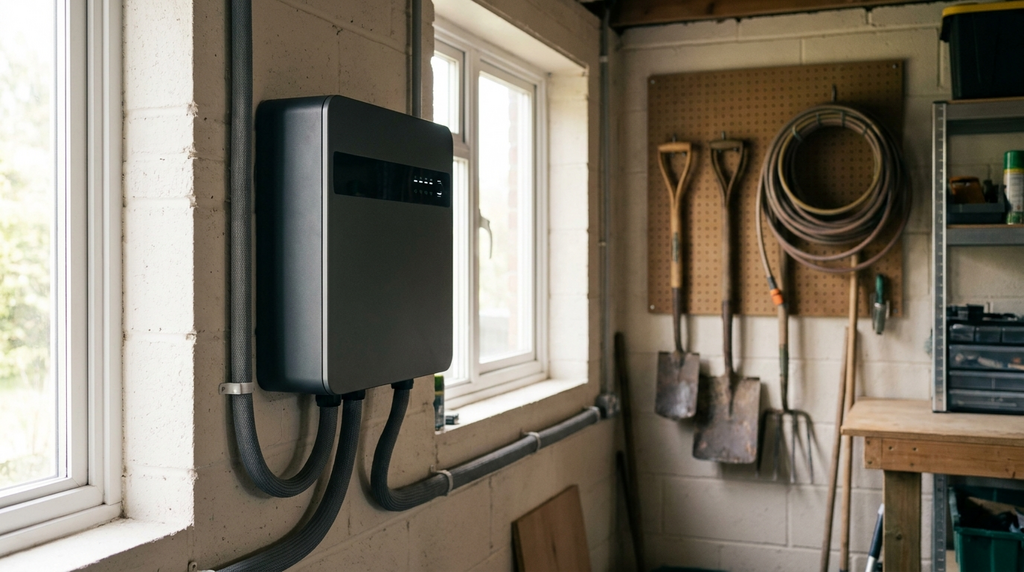
Your inverter is the central diagnostic tool. It converts DC electricity from your panels into usable AC power for your home, and most modern inverters track daily and cumulative generation figures. By comparing your actual output against expected figures for your system size and location, you can identify performance drops that suggest a maintenance issue. A well-functioning 4kWp system in the south of England should generate roughly 850–950 kWh per kWp per year; systems in Scotland typically produce 750–850 kWh per kWp.
Physical maintenance involves inspecting the panels themselves for soiling, damage, shading from new tree growth, and checking that mounting brackets, cables and roof flashings remain secure. Most of this work is straightforward and some of it, particularly ground-level monitoring and basic cleaning, can be done by a competent homeowner. Roof access and electrical checks should always be handled by a professional.
The Key Components That Need Regular Attention
Understanding which parts of your system need monitoring helps you prioritise your maintenance schedule.
Solar Panels and Glass Surfaces
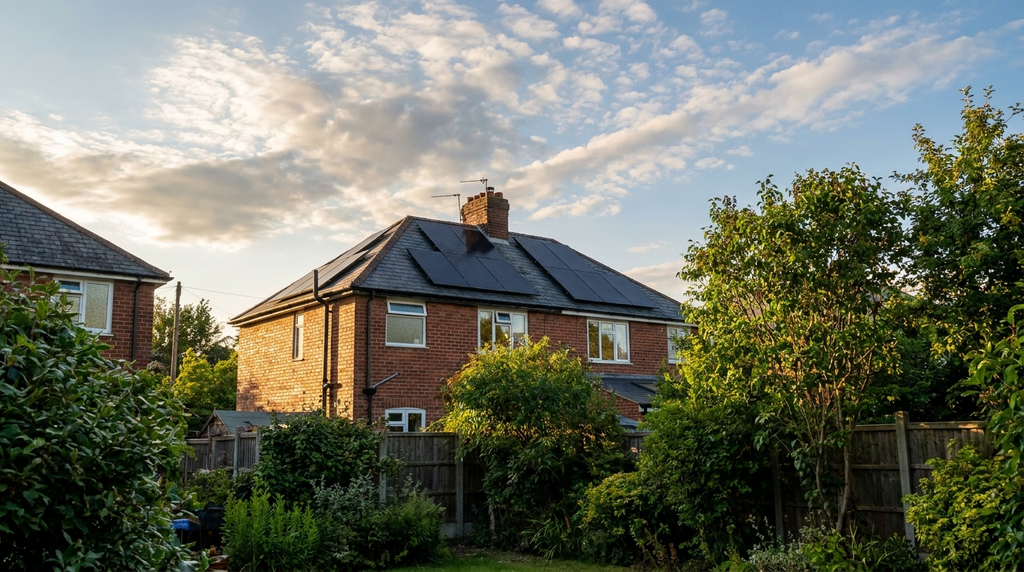
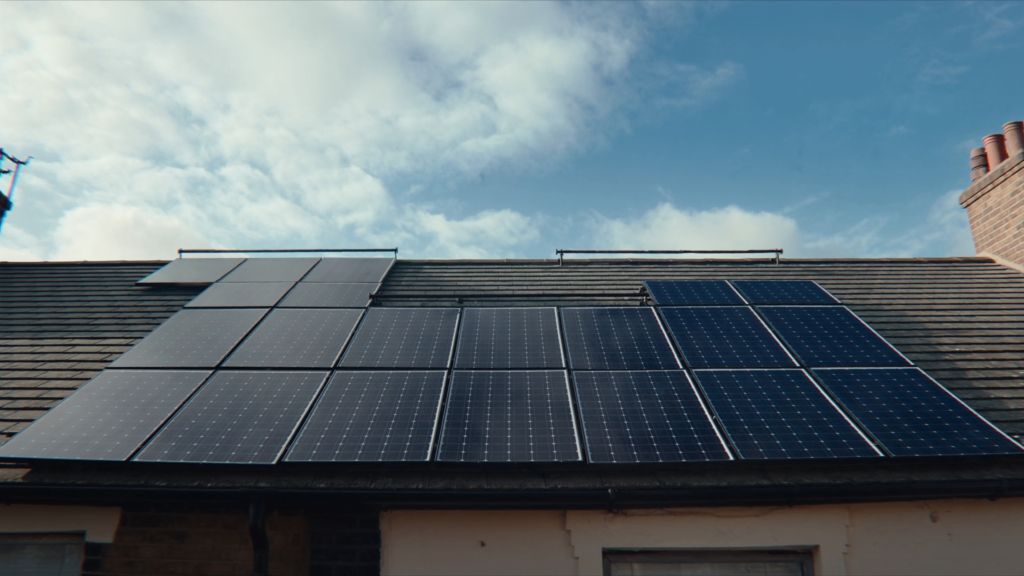
The anti-reflective glass surface on each panel accumulates dust, bird droppings, lichen and general pollution over time. In UK conditions, rainfall handles much of this naturally, panels installed at an angle of 15 degrees or more are largely self-cleaning. However, flat or low-angle installations and properties near agricultural land, busy roads or coastal areas accumulate soiling faster and need more frequent cleaning.
The Inverter
String inverters typically last 10–15 years, meaning you will likely need one replacement during your panels’ 25-year life. Microinverters, fitted to each individual panel, often carry 25-year warranties matching the panels themselves. Your inverter should be inspected annually for error codes, unusual sounds or overheating. Most modern inverters connect to your home Wi-Fi and send alerts when performance drops.
Mounting and Fixings
Roof-mounted aluminium racking is highly durable, but it should be checked every few years for corrosion, loose bolts and integrity of the roof flashings where fixings penetrate tiles. A compromised fixing can allow water ingress, a problem that has nothing to do with the panels themselves but everything to do with your roof’s long-term condition.
Cables and Junction Boxes
DC cabling runs from your panels to the inverter and can be degraded by UV exposure, rodent damage or poor initial installation. Annual visual checks for cracked insulation, loose connections and signs of burning around junction boxes are essential for both performance and fire safety.
How Much Does Solar Panel Maintenance Cost in 2026
One of the strongest arguments for solar panels is that ongoing costs are genuinely low. Most years, your maintenance expenditure will be nothing more than the cost of a professional inspection, or nothing at all if you monitor your own system. The table below sets out typical annual costs for UK homeowners in 2026.
| Service Type | Who Performs It | Typical Cost (2026) | Frequency |
|---|---|---|---|
| Professional annual inspection | MCS-accredited installer | £100–£200 | Annually |
| Professional panel cleaning (4–6 panels) | Specialist cleaning company | £50–£100 | Every 1–2 years |
| Professional panel cleaning (10–16 panels) | Specialist cleaning company | £100–£200 | Every 1–2 years |
| Inverter replacement (string inverter) | Qualified electrician | £500–£1,500 | Once, after 10–15 years |
| Inverter replacement (microinverter, per unit) | Qualified electrician | £150–£250 | Rarely (25-year warranty common) |
| Wiring repairs or cable replacement | Qualified electrician | £150–£400 | As required |
| Roof fixing re-sealing | Roofer or solar installer | £200–£500 | As required |
| Monitoring system subscription (optional) | Remote monitoring provider | £0–£100/year | Annual |
Spread across a 25-year system life, average annual maintenance costs for most UK homeowners work out to £100–£200 per year, a small fraction of the £800–£1,400 in annual savings a typical household achieves through solar generation and Smart Export Guarantee (SEG) payments.
DIY Maintenance Versus Professional Servicing
Some maintenance tasks are safe and straightforward for homeowners to carry out themselves; others require qualified professionals. Understanding the boundary protects both your safety and your warranty.
| Task | DIY Suitable | Professional Required | Notes |
|---|---|---|---|
| Monitoring generation output | Yes | No | Use inverter app or display |
| Cleaning panels from ground (hose) | Yes (low pitch only) | No | Use low-pressure water only |
| Roof-level panel cleaning | No | Yes | Working at height regulations apply |
| Checking inverter error codes | Yes | No | Consult manufacturer manual |
| Electrical testing and repairs | No | Yes | Must be Part P certified electrician |
| Roof fixing inspection | Visual from ground only | Yes for physical check | Binoculars useful for ground survey |
Benefits of Regular Solar Panel Maintenance
The case for consistent maintenance goes well beyond keeping your panels clean. Properly maintained systems deliver measurable financial and practical advantages throughout their working life.
- Protecting energy yield: Studies by the Solar Energy Industries Association found that soiled panels in typical climates lose between 15% and 25% of their output. In monetary terms, on a system saving £1,000 per year, that could mean losing £150–£250 annually, easily wiped out by a £50–£100 annual clean.
- Preserving manufacturer warranties: Most panel manufacturers require evidence of reasonable maintenance to honour their 25-year performance warranties. A paper trail of annual inspections protects your ability to make a claim.
- Early fault detection: Microcracking, potential-induced degradation (PID) and hotspots can develop silently without affecting obvious visual appearance. Annual thermal imaging inspections, available as an add-on from many installers for around £50–£80, can catch these faults before they cause lasting damage.
- Extended inverter life: Keeping the area around your inverter clear of obstructions and dust-free can extend its operational life by several years, delaying that £500–£1,500 replacement cost.
- Maintaining roof integrity: Periodic checks of roof flashings and fixings prevent the small issue of a loose bolt from becoming an expensive roof repair.
- Maximising Smart Export Guarantee earnings: A system running at full efficiency exports more surplus electricity to the grid, increasing your SEG payments from your energy supplier.
How to Choose the Right Solar Panel Maintenance Approach
There is no single correct maintenance strategy, the right approach depends on your system type, roof pitch, local environment and personal confidence with DIY tasks.
System Age and Warranty Status
For systems under five years old and still within the installer’s workmanship warranty period, using the original installer for annual checks makes sense. They know your specific setup, and using third parties for repairs may complicate warranty claims. For older systems, any MCS-accredited solar installer can carry out servicing.
Your Local Environment
Consider how quickly your panels are likely to soil. If your property is surrounded by trees, you may need cleaning twice yearly in autumn and spring. Coastal properties face salt deposition, which is more damaging than ordinary dust and requires more regular rinsing. Rural properties near arable farmland face seasonal dust and crop residue that spikes at harvest time.
Monitoring Capability
If your system includes smart monitoring, either through a dedicated monitoring platform or a smart energy monitor like those offered by some battery storage systems, you can track daily generation remotely and receive automatic alerts for underperformance. This dramatically reduces the need for routine physical inspections.
Maintenance Contract Options
Several UK solar companies offer annual maintenance contracts covering inspection, cleaning and priority response to faults, typically priced at £150–£300 per year. For homeowners who want complete peace of mind, these contracts offer good value. For those comfortable with basic monitoring and willing to book tradespeople reactively, a pay-as-you-go approach costs less over the long term.
What to Expect from a Professional Solar Panel Maintenance Visit
Booking a professional maintenance visit for the first time can feel uncertain, knowing what a thorough service includes helps you assess whether you are getting value for money.
- Pre-visit review: A good technician will ask you to share generation data from your inverter for the past 6–12 months before attending. This allows them to identify any performance anomalies in advance.
- Visual panel inspection: The technician inspects each panel for physical damage, soiling, shading issues and signs of delamination or discolouration. On a 16-panel system, this typically takes 20–30 minutes.
- Cleaning: Panels are cleaned using purified, deionised water and soft-bristle brushes. Ordinary tap water leaves mineral deposits and is not recommended. No abrasive materials, detergents or high-pressure washers should be used, as these can damage the anti-reflective coating.
- Inverter check: The inverter is inspected for error codes, unusual heat, firmware update requirements and secure cable connections. The technician should confirm the inverter is logging data correctly.
- Electrical safety check: DC and AC wiring is inspected for visible damage, secure terminations and signs of arcing or burning around junction boxes and isolators.
- Roof and mounting check: Fixing points, brackets and roof flashings are physically inspected for corrosion, loosening or water ingress. Any tiles disturbed by the original installation are checked for displacement.
- Performance report: A written report documenting the inspection findings, any recommendations and the post-clean generation baseline should be provided. Keep these reports as part of your home documentation, they are valuable evidence for warranty claims and when selling your home.
A thorough professional maintenance visit on a standard domestic system takes 2–3 hours. If a company is offering to complete it in 30 minutes, the scope of work is likely inadequate.
Common Problems and How to Address Them
Most solar panel issues fall into a small number of well-understood categories. Knowing the symptoms helps you respond quickly and avoid unnecessary costs.
Reduced Generation Output
The most common cause is soiling, followed by shading from new growth and inverter faults. Before calling an engineer, check your inverter display or app, visually inspect your panels from the ground and check whether any new obstructions, a neighbour’s extension or a tree that has grown significantly, are casting shade across your array. A 10% drop in output over a year that cannot be explained by weather variation warrants a professional investigation.
Inverter Faults and Error Codes
Modern inverters display fault codes that correspond to specific issues described in the manufacturer’s manual. Common codes relate to grid connection issues, isolation faults and temperature overloads. Many can be resolved by a simple restart; persistent codes require a qualified engineer. In winter, some inverters enter protection mode during very cold snaps, this is normal behaviour, not a fault.
Hotspots
A hotspot occurs when one cell within a panel operates at a significantly higher temperature than its neighbours, usually caused by partial shading, cell damage or a manufacturing defect. Over time, hotspots cause permanent cell damage and reduce the panel’s output. They are invisible to the naked eye but detectable with a thermal imaging camera during a professional inspection. Panels with confirmed hotspot damage may need replacing.
Bird and Pest Damage
Pigeons and other birds frequently nest under roof-mounted solar panels, attracted by the warmth and shelter. Bird droppings concentrate soiling on panels and are highly acidic, causing long-term surface damage. Nesting materials can trap moisture against the roof and cables can be pecked or gnawed. Bird-proofing mesh, a low-profile wire mesh installed around the panel perimeter, costs £150–£400 depending on array size and completely solves this problem. It is worth fitting proactively rather than reactively.
Delamination and Discolouration
Over many years, the encapsulant layer bonding the cells to the glass can degrade. This allows moisture infiltration that causes visible yellowing or browning of cells. This is more common in older panels and those from lower-quality manufacturers. Delamination reduces output and cannot be reversed, affected panels require replacement. Buying panels from reputable manufacturers with strong warranty support reduces this risk significantly.
Grants and Funding for Solar Panel Maintenance in the UK
Direct grant funding specifically for solar panel maintenance is limited, but several UK government schemes and financial mechanisms help offset the costs of keeping your system in good condition.
Smart Export Guarantee
While the Smart Export Guarantee (SEG) is not a maintenance grant, it is directly relevant to maintenance economics. The SEG requires licensed energy suppliers to pay households for surplus solar electricity exported to the grid. In 2026, the best SEG tariffs offer 15–20p per kWh for exported electricity. A well-maintained system that generates its full potential maximises your SEG income, making maintenance directly financially rewarding.
ECO4 and the Great British Insulation Scheme
The ECO4 scheme, running until March 2026, and its successor programmes provide funding for energy efficiency upgrades in lower-income households. Solar panel installation, and in some cases reinstatement of faulty systems, has been funded through ECO for eligible households. Eligibility is means-tested and based on benefits entitlement and property EPC rating. Contact your energy supplier or local council to check eligibility.
0% VAT on Solar Panels and Repairs
Since April 2022, solar panel installation has attracted zero-rate VAT in Great Britain, a change from the previous 5% rate. This applies to new installations and to qualifying repair and maintenance work carried out as part of a system reinstatement. The saving is modest on a maintenance call but meaningful on a full inverter replacement.
Home Upgrade Grant
The Home Upgrade Grant (HUG2) programme, delivered through local authorities in England, provides funding for low-income households in properties not connected to the gas grid. Solar panels form part of eligible technology packages under this scheme. Contact your local council to find the local administrator.
Northern Ireland and Scotland Specific Support
Scottish homeowners may access support through Home Energy Scotland, which offers interest-free loans for energy improvements including solar systems and associated maintenance. Northern Ireland has the Affordable Warmth Scheme for lower-income households. Both programmes are subject to periodic review; checking current eligibility criteria directly with the relevant body is recommended.
Maintaining Ground-Mounted and Flat-Roof Solar Systems
Most UK solar installations are roof-mounted at an angle, but ground-mounted systems and flat-roof configurations require some specific maintenance considerations.
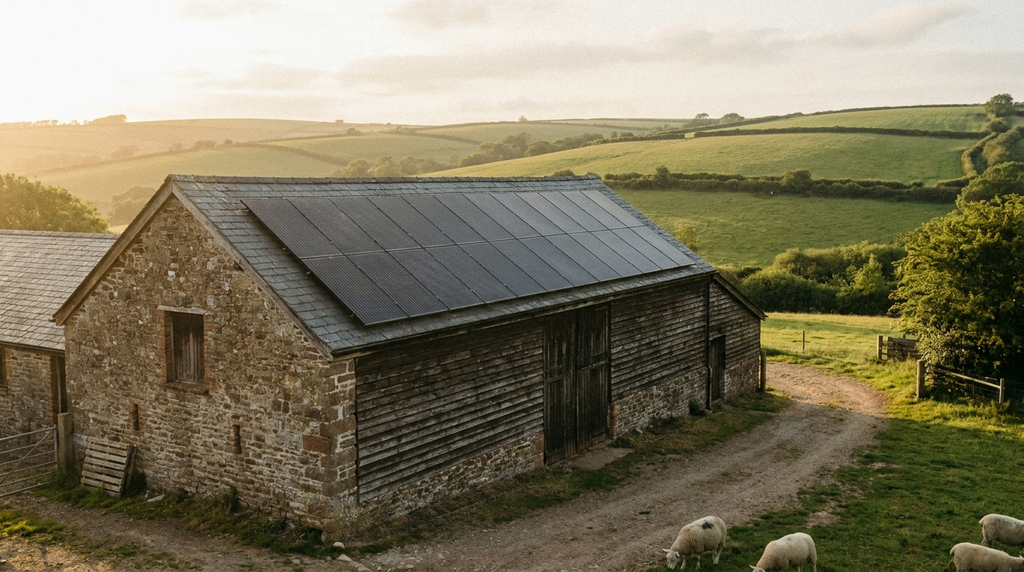
Ground-mounted panels are in many ways easier to maintain, cleaning requires no roof access, visual inspection is straightforward, and wiring and fixings are more accessible. However, they face greater exposure to vegetation growth beneath and around the array, which can cause shading and provide nesting habitat for animals. Quarterly checks on vegetation clearance are particularly important for ground-mounted installations.
Panels installed on flat roofs are typically set on tilted frames to achieve the 10–30 degree angle needed for reasonable UK performance. The flat roof membrane around the fixings should be checked annually for signs of lifting, cracking or pooling water. Flat roofs accumulate debris more readily than pitched roofs, and panels may need cleaning more frequently as rainfall runoff is less effective at clearing soiling.
Building a Long-Term Maintenance Schedule
Consistency is the key to trouble-free solar ownership. The following schedule covers a complete annual cycle for a typical UK domestic installation.
- Monthly: Check your inverter generation figures against the same month in the previous year. Note any significant drops and investigate causes before the next professional visit.
- Spring (March–April): Book your annual professional inspection and cleaning after the worst of the winter weather. Check the inverter area is clear of dust and obstruction. Inspect cables and junction boxes for any frost damage.
- Summer (June–July): Peak generation season, monitor closely for any performance anomalies. Check for shading from trees at full leaf. Ensure bird-proofing mesh is intact.
- Autumn (September–October): Clear fallen leaves from around panels and check drainage around ground-mounted systems. A second clean may be beneficial if near trees.
- Winter (November–February): After heavy snowfall, snow can be gently removed from accessible panels using a soft roof rake, never use a metal tool or climb onto a snow-covered roof. In most UK winters, snow melts quickly and removal is unnecessary. Monitor inverter behaviour during cold snaps.
Every three years, consider commissioning a thermal imaging survey to check for hotspots and cell degradation invisible to standard inspection. This is particularly worthwhile for systems over ten years old.
Keeping a simple maintenance log, a dated record of inspections, cleaning dates, generation readings and any repairs, takes minutes to maintain and is invaluable if you ever need to make a warranty claim, sell your property or demonstrate compliance with insurance requirements.
Solar panels installed on flats and apartment buildings have additional ownership and access considerations that affect how maintenance is organised and funded.
The lifetime economics of solar ownership are compelling precisely because maintenance costs are so low relative to the returns. A system that costs £6,000–£8,000 to install and generates £1,000–£1,400 in annual savings has a payback period of around 5–8 years, and that calculation only holds if the system is kept in good working order throughout its 25-year life. The small investment in regular maintenance is what turns a promising technology into a genuinely excellent financial decision for UK homeowners.