The most important thing to know about solar payback by region
Solar panel payback periods vary significantly across the UK, ranging from roughly 8 years in the sunniest areas to 14 years in the cloudiest. The three main factors driving regional differences are annual solar irradiance (sunlight hours), local electricity unit rates, and the Smart Export Guarantee (SEG) tariff available in your area. Your property’s orientation, roof pitch, and shading matter more than your region alone, a south-facing roof in Manchester can outperform a north-facing one in Cornwall. Payback is calculated as total system cost (after any grant) divided by annual savings plus export income, you must use your specific local figures (Energy Saving Trust, 2026).
Which UK regions have the shortest and longest solar payback periods
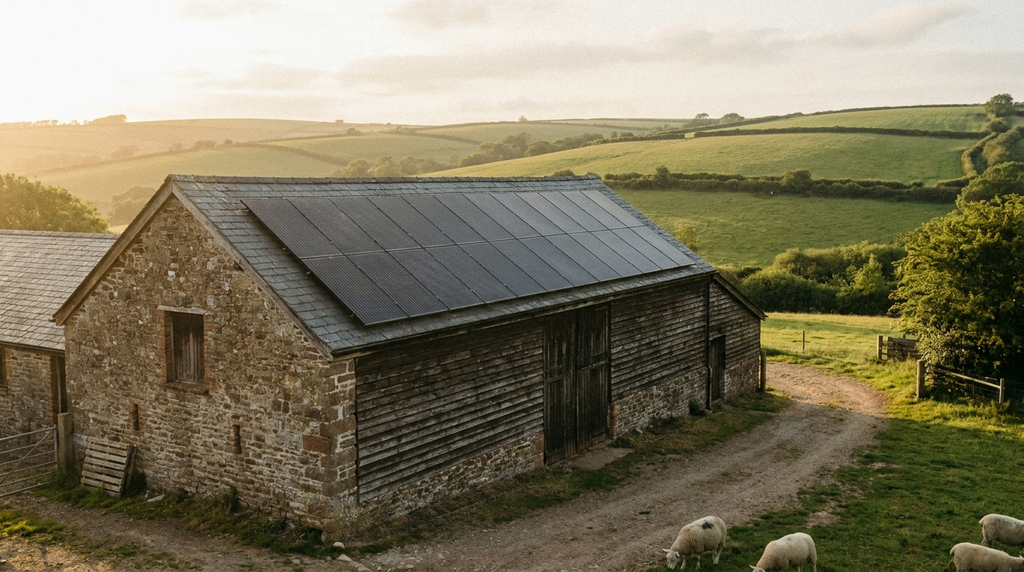
South West England (Cornwall, Devon, Somerset) typically sees payback in 8–10 years due to highest annual irradiance, approximately 1,100–1,200 kWh per kWp installed (DESNZ, 2026). South East England and East Anglia follow at 9–11 years, with irradiance around 1,000–1,100 kWh per kWp. Scotland, Northern Ireland, and northern England (Northumberland, Cumbria) see payback of 12–14 years, with irradiance as low as 800–950 kWh per kWp. London and the Midlands sit in the middle at 10–12 years, benefiting from higher electricity unit rates that offset lower sunlight (Ofgem, 2026). Wales and the West Midlands are similar to northern England, with payback around 11–13 years.
Quick numbers, regional payback comparison table
| Region | Typical annual generation (kWh per 4kWp system) | Average electricity unit rate (p/kWh, 2026) | Estimated annual savings (£) | Estimated payback period (years) |
|---|---|---|---|---|
| South West England | 4,400–4,800 | 28.5 | £1,254–£1,368 | 8–10 |
| South East England | 4,000–4,400 | 28.5 | £1,140–£1,254 | 9–11 |
| London | 3,800–4,200 | 29.5 | £1,121–£1,239 | 10–12 |
| Midlands | 3,600–4,000 | 28.0 | £1,008–£1,120 | 10–12 |
| Northern England | 3,200–3,800 | 27.5 | £880–£1,045 | 12–14 |
| Scotland | 3,000–3,600 | 27.0 | £810–£972 | 12–14 |
| Wales | 3,200–3,800 | 27.5 | £880–£1,045 | 11–13 |
| Northern Ireland | 3,000–3,500 | 26.5 | £795–£928 | 13–14 |
All figures assume a 4kWp south-facing system with no shading, installed cost of £10,000–£11,000 (2026 average), and SEG export at 15p/kWh (national average 2026). Your figures will vary (DESNZ, 2026; Ofgem, 2026; MCS, 2026).
Solar payback by region, the direct answer to “how long until I break even?”
The direct answer: solar payback in the UK ranges from 8 years (South West) to 14 years (Northern Ireland and parts of Scotland), with the national average at 11–12 years for a typical 4kWp system. This assumes you use 50% of generated electricity on-site and export the other half at the average SEG rate; if you use more on-site, payback shortens by 1–2 years (Energy Saving Trust, 2026). The Great British Insulation Scheme closed on 31 March 2026. It funded insulation measures only and never covered windows or glazing. To get your personal figure, use the EST’s online payback calculator (free) or ask your MCS-certified installer for a site-specific estimate. How to use the Energy Saving Trust solar calculator
How electricity unit rates in your region affect payback more than sunlight
Regional electricity unit rates vary by up to 3p/kWh across the UK, London and the South East pay the most (29.5p/kWh average), while Northern Ireland pays the least (26.5p/kWh) (Ofgem, 2026). A 1p/kWh difference in unit rate changes annual savings by approximately £40–£50 for a 4kWp system, which can shift payback by 6–12 months. Regions with lower sunlight but higher electricity rates (e.g., London) can have shorter payback than sunnier but cheaper-rate regions (e.g., parts of Scotland). Your local SEG tariff also matters, the national average is 15p/kWh, but some suppliers offer 20p+ in certain postcodes, cutting payback by up to 2 years (Ofgem, 2026).
Who qualifies for solar grants and how to check eligibility by region
The Great British Insulation Scheme closed on 31 March 2026. It funded insulation measures only and never covered windows or glazing. As of 2026, households earning under £31,000 (England and Wales) or £26,000 (Scotland and Northern Ireland) may qualify for up to £1,500 toward solar panel installation; this is not means-tested in all areas, so check your local authority’s scheme (Ofgem, 2026). To confirm eligibility, visit the GOV.UK “Find energy grants” tool (England and Wales), Home Energy Scotland (Scotland), or NI Energy Advice (Northern Ireland), these are the only official sources. You must use an MCS-certified installer to access any grant, check the MCS installer database (mcsinstallers.com) to verify your chosen company is registered (MCS, 2026). Installers must also be registered with TrustMark for government-funded schemes; verify this via TrustMark’s online register (TrustMark, 2026). Complete guide to solar panel grants in 2026
How to verify your solar installer is certified and eligible for grants
Every installer you use for a grant-funded solar system must hold MCS certification, check their MCS certificate number on the official MCS installer database (mcsinstallers.com) before signing any contract (MCS, 2026). For government schemes like GBIS or ECO+, the installer must also be registered with TrustMark, search the TrustMark website for your installer’s membership status (TrustMark, 2026). If you are in Scotland, check that your installer is listed on the Home Energy Scotland approved installer list; for Northern Ireland, use the NI Energy Advice approved trader list (GOV.UK, 2026). Ask for written confirmation that the installer will handle all grant paperwork and that the system meets the scheme’s minimum efficiency standards (typically a minimum of 3.5kWp for solar PV). Never pay a deposit before seeing the MCS and TrustMark certificates, if the installer cannot provide them, they are not eligible for grant work.