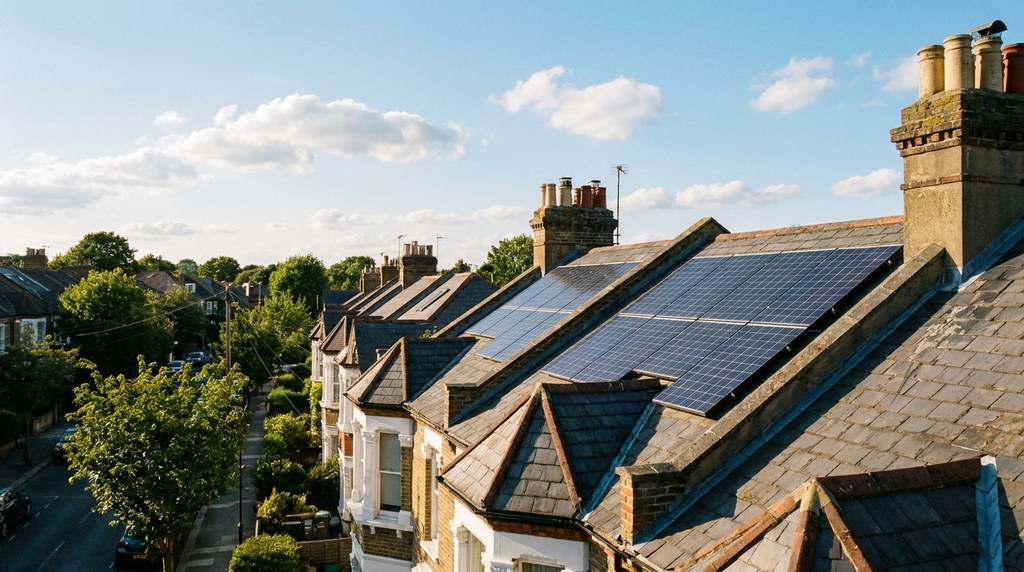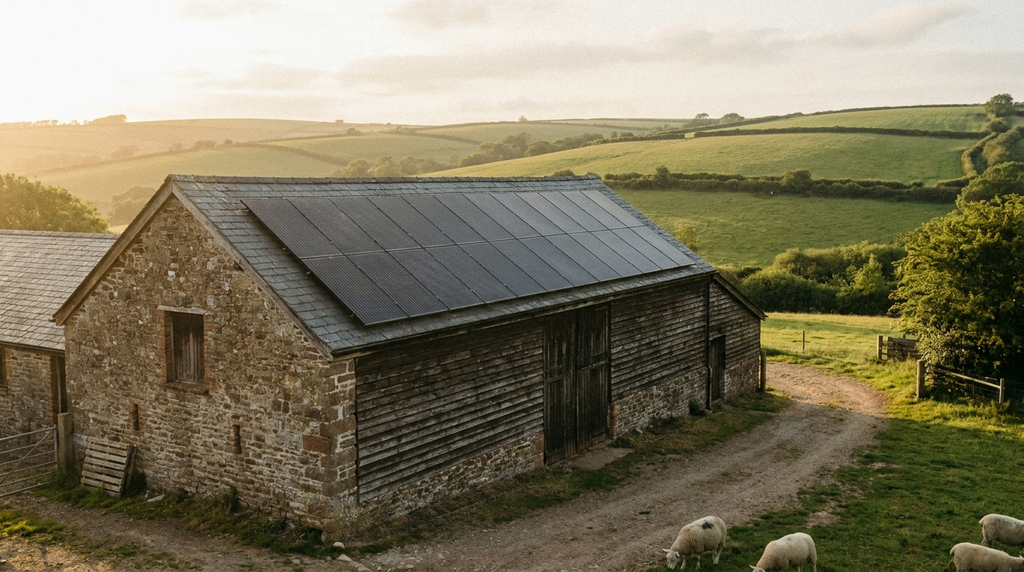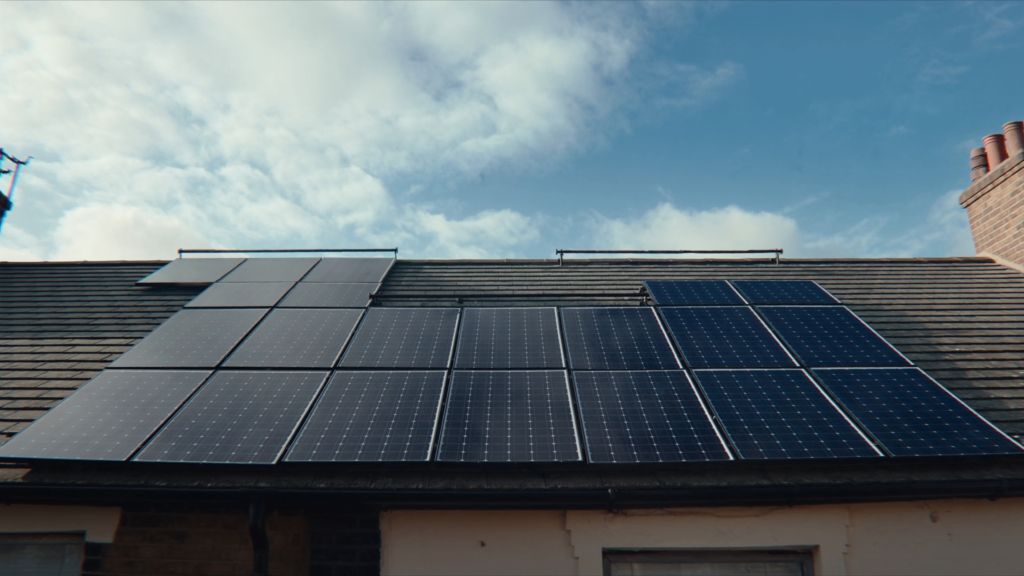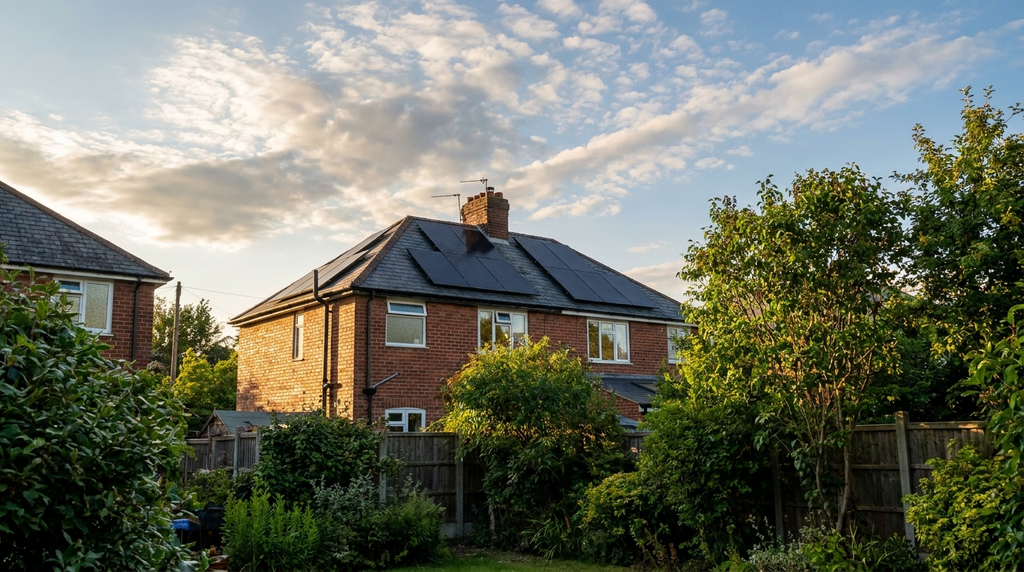
Yes, you can install solar panels on a north-facing roof in the UK, but they will generate roughly 15–20% less electricity than a south-facing installation. According to the Energy Saving Trust, a south-facing system in the UK typically produces around 2,650 kWh per year for a 3kWp array, while a north-facing equivalent would yield approximately 2,120–2,250 kWh annually (Energy Saving Trust, 2026).
The key variable is the roof’s tilt and orientation relative to the sun. In the UK, the sun is always in the southern half of the sky, so north-facing panels receive less direct sunlight, especially during winter months. However, modern solar panels are more efficient in low-light conditions than older models. This makes north-facing arrays viable for homes with limited south-facing roof space, provided the roof pitch is between 30° and 45° and there is no significant overshadowing from trees or buildings.
Lower but still useful generation
A north-facing 3kWp system in the UK will generate roughly 2,150 kWh per year, compared to 2,650 kWh for a south-facing array (Energy Saving Trust, 2026). This is equivalent to about 80–85% of the output of a south-facing system. For a typical three-bedroom home, 2,150 kWh covers around 60–70% of annual electricity use, depending on household habits. The lower output means a longer payback period, typically 12–15 years for north-facing versus 8–10 years for south-facing, but the system still reduces your electricity bills and carbon footprint.
Smart meter and battery storage help
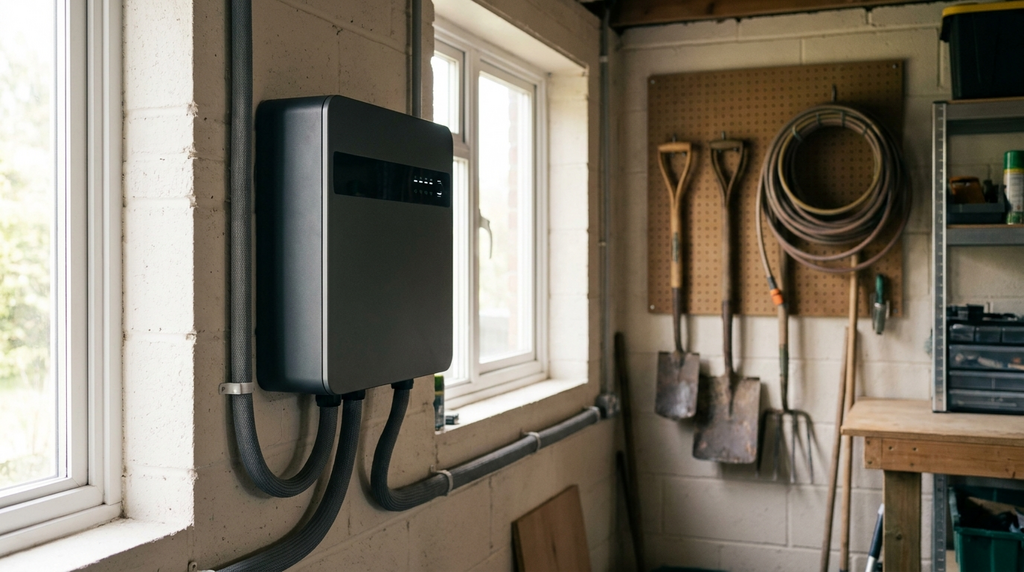
Pairing north-facing panels with a battery storage system can offset the lower generation by capturing surplus energy during peak sunlight hours for use later. The Smart Export Guarantee (SEG) pays you for excess electricity exported to the grid, with rates typically around 4–6p per kWh in 2026 (Ofgem, 2026). A battery also smooths out the flatter generation curve of north-facing panels, which produce less midday spike but more consistent output in early morning and late afternoon.
Planning permission is usually not needed
In England, solar panels on a north-facing roof are considered permitted development, provided they do not project more than 200mm from the roof plane and are not on a listed building or in a conservation area (GOV.UK, 2026). Scotland, Wales, and Northern Ireland have similar rules, though always check with your local authority. If your roof pitch is below 15° or above 60°, output drops further, making north-facing panels less cost-effective. A certified installer from the Microgeneration Certification Scheme (MCS) can assess your specific roof and provide a generation estimate.
A worked example
A north-facing 3.5kWp solar panel system on a 1930s semi-detached house in Manchester will cost around £5,600 after the 0% VAT saving (in place until March 2027) and a typical installation quote. The Energy Saving Trust estimates this setup generates roughly 2,500 kWh per year, which covers about 70% of a typical household’s annual electricity use. With a smart export tariff paying 15p per kWh for surplus power, the yearly saving on bills and export income totals approximately £560. The upfront cost pays back in roughly 10 years, and over the system’s 25-year lifespan the total saving reaches about £14,000, assuming a 2.5% annual rise in electricity prices. This makes north-facing panels a solid financial choice even without the full output of a south-facing array.
| Item | Figure |
|---|---|
| Upfront cost after grants | £5,600 |
| Yearly savings | £560 |
| Payback period | 10 years |
| 25-year lifetime savings | £14,000 |
What homeowners often get wrong
The most common mistake is assuming north-facing panels are not worth installing at all. Many homeowners overlook three key pitfalls that can turn a viable system into a disappointing investment.
- Ignoring roof pitch A flat or shallow north-facing roof below 20° will produce far less than expected, often dropping output below 60% of a south-facing system. The right answer is to check your pitch is between 30° and 45° or the payback period can stretch beyond 15 years, wiping out the financial case.
- Skipping a shading survey North-facing roofs are more vulnerable to overshadowing from chimneys, trees or neighbouring buildings, especially in winter. A single shaded panel can cut total system output by 30% or more, so always commission a full shading analysis from an MCS-certified installer before buying.
- Forgetting battery storage Many homeowners install panels without a battery, missing the chance to use cheap daytime generation in the evening. A north-facing system produces more power in summer afternoons, so a 5kWh battery can capture that energy and save an extra £200 per year compared to exporting it at low rates.
Quick reference
- North-facing panels in the UK produce 15–20% less electricity than south-facing ones, with a typical 3.5kWp system generating around 2,500 kWh per year.
- Optimal roof pitch for north-facing panels is 30–45°, and anything below 20° will reduce annual output by another 10–15%.
- You are still eligible for the Smart Export Guarantee (SEG) with north-facing panels, paying 5–15p per kWh for exported electricity from most suppliers.
- Payback on a north-facing system is typically 8–12 years, compared to 6–10 years for south-facing, but total lifetime savings still reach £12,000–£16,000 on a 25-year system life.
- Do not assume north-facing panels are a bad investment, check your roof pitch and shading first, as many UK homes with good north-facing roofs achieve a solid return.
Frequently Asked Questions
A 3kWp north-facing system in the UK produces roughly 2,150 kWh per year, according to the Energy Saving Trust. That's about 80–85% of a south-facing array's output.
Yes, it can be worth it if south-facing roof space is limited. The payback period is longer (12–15 years vs 8–10 years), but you still cut bills and carbon emissions.
The best pitch for north-facing solar panels in the UK is between 30° and 45°. This angle helps capture the most light given the lower sun position.