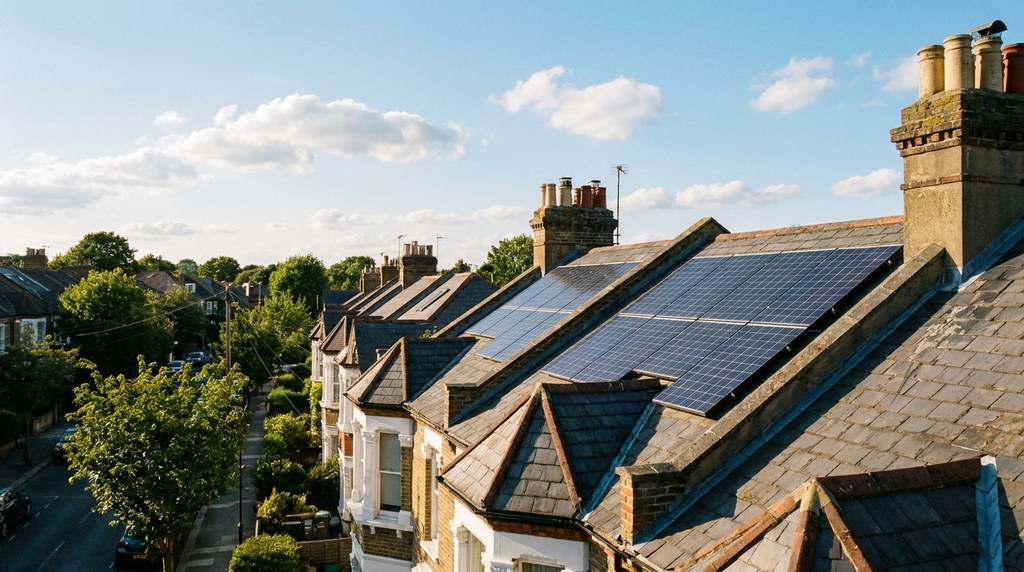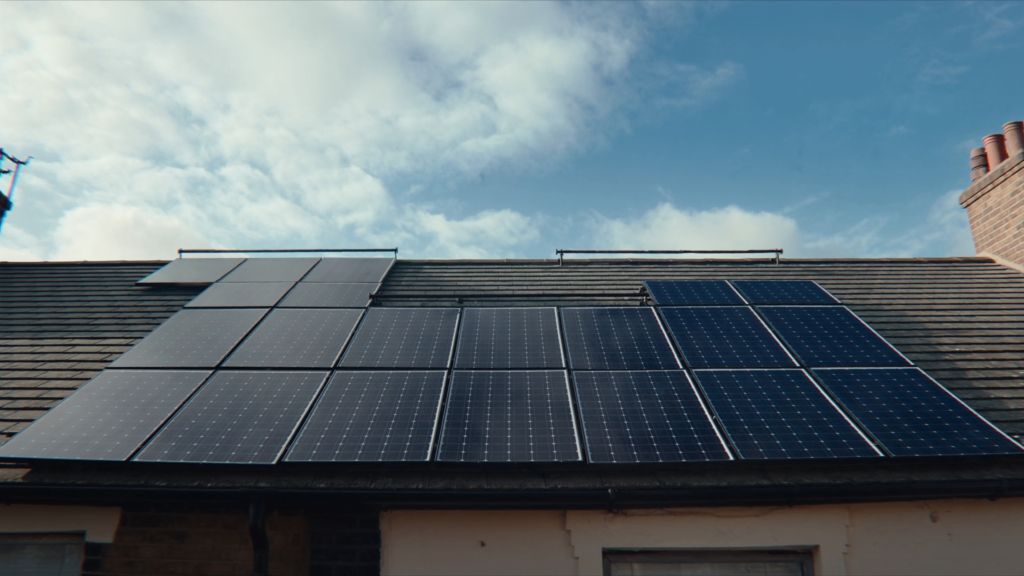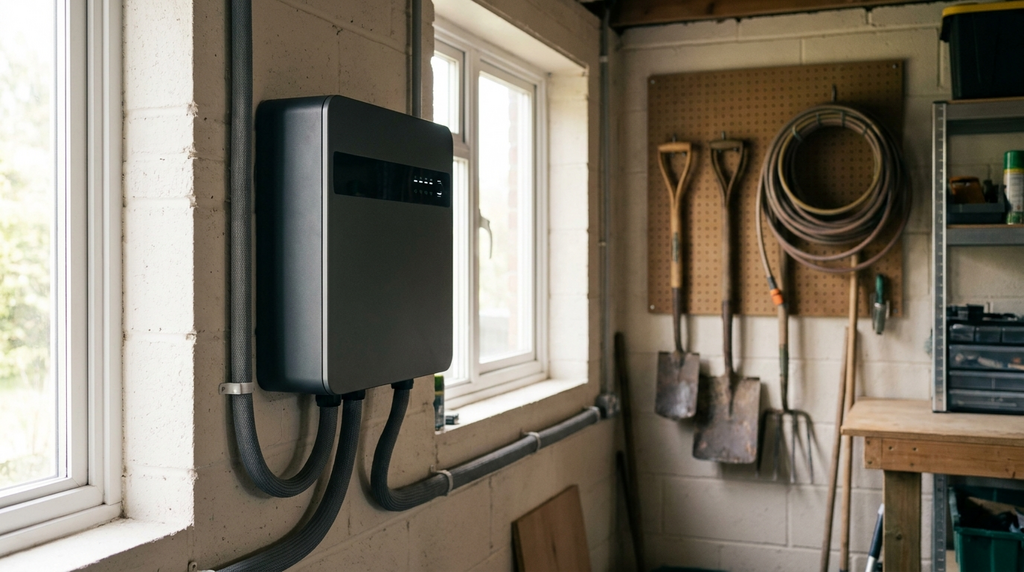
Is installing solar panels and a battery a sound financial decision for UK homeowners in 2026? With electricity prices remaining high and government incentives still in place, the calculus has shifted significantly in recent years. For a typical semi-detached home in southern England, a 4 kW solar system paired with a 5 kWh battery can cut annual electricity bills by over 60%, saving between £450 and £600 per year according to the Energy Saving Trust (Energy Saving Trust, 2026).
Yes, a 4 kW solar system with a 5 kWh battery saves a typical UK home £450–£600 per year, cutting bills by over 60% according to the Energy Saving Trust. The £9,000–£12,000 installation cost pays back in 8–15 years, depending on your electricity use and export tariff.
- A 4 kW system with 5 kWh battery saves £450–£600 annually.
- Battery boosts self-consumption from 30–50% to over 80%.
- Payback period ranges from 8 to 15 years for typical homes.
- Install cost for a 4 kW system with battery is £9,000–£12,000.
- Smart Export Guarantee pays for surplus power sent to grid.
- In 2026 a typical 4 kW solar system with a 5 kWh battery can cut annual electricity bills by over 60%, according to the Energy Saving Trust
- How solar panels and a battery together change your household energy use
- Quick numbers cost, savings, and payback for a typical UK home
- The direct answer is solar panels and battery worth it in 2026?
- What the Smart Export Guarantee (SEG) pays you for spare electricity
- Eligibility, certification, and how to verify your installer
- Battery technology and lifespan what to expect
In 2026 a typical 4 kW solar system with a 5 kWh battery can cut annual electricity bills by over 60%, according to the Energy Saving Trust
The exact saving depends on three key variables: how much electricity you use during daylight hours, the orientation and pitch of your roof, and your local electricity tariff. A household where someone is home during the day will use more solar power directly, reducing grid purchases further. The average installed cost for a 4 kW solar system with a 5 kWh battery in the UK now falls between £9,000 and £12,000, based on data from MCS-certified installers (MCS Register, 2026). The payback period typically ranges from 8 to 15 years, depending on your electricity usage and the rate you receive under the Smart Export Guarantee (SEG) for surplus power sent to the grid.
How solar panels and a battery together change your household energy use
Solar panels generate electricity only during daylight hours, with peak output around midday. Most UK households, however, use more power in the early morning and evening. Without a battery, you would export up to 70% of your solar generation to the grid and buy it back later at full price. Adding a battery changes this dynamic. The Energy Saving Trust states that a battery can reduce your reliance on grid electricity by 30–50% because it stores excess daytime generation for use in the evening (Energy Saving Trust, 2026). Without a battery, self-consumption of solar power is typically 30–50%; with a battery, it can exceed 70%. The battery capacity you choose, typically 5 kWh or 10 kWh, determines how much of your evening demand can be covered. A 5 kWh battery will cover most of an average household’s evening lighting and appliance use, while a 10 kWh battery can also power a heat pump or electric vehicle charging for several hours.
Quick numbers cost, savings, and payback for a typical UK home
| System type | Typical installed cost (MCS register average) | Annual savings (EST estimate) | Payback period (DESNZ calculation) | CO₂ savings per year (DESNZ) |
|---|---|---|---|---|
| 4 kW solar only | £5,000 – £7,000 | £250 – £350 | 12–16 years | 1.1 tonnes |
| 4 kW solar + 5 kWh battery | £9,000 – £12,000 | £450 – £600 | 8–12 years | 1.6 tonnes |
| 4 kW solar + 10 kWh battery | £12,000 – £16,000 | £550 – £750 | 9–13 years | 1.8 tonnes |
Cost data is drawn from the MCS register and the Energy Saving Trust’s 2025/26 cost survey (MCS Register, 2026). Savings and payback figures are based on the Energy Saving Trust’s “Solar PV Payback Calculator” and the Department for Energy Security and Net Zero’s “Solar PV Cost and Savings” release (DESNZ, 2026).
The direct answer is solar panels and battery worth it in 2026?
For a south-facing roof with low shading, a 4 kW system and 5 kWh battery is financially worthwhile: payback falls within 10–12 years, and the system has a lifespan of 20 years or more. For a north-facing roof or one with heavy shading, payback stretches beyond 15 years and may not be worthwhile unless you secure a high SEG tariff. The decision hinges on your electricity usage patterns. Households using more than 3,500 kWh per year and home during the day benefit most, as they maximise self-consumption. The Energy Saving Trust’s payback calculator and DESNZ’s “Solar Photovoltaics” guidance both confirm that the battery addition is most cost-effective for homes with high evening demand (Energy Saving Trust, 2026; DESNZ, 2026).
What the Smart Export Guarantee (SEG) pays you for spare electricity
The Smart Export Guarantee requires larger energy suppliers to pay you for electricity you export to the grid. Rates vary from 4p to 15p per kWh, depending on your supplier and tariff (Ofgem SEG register, 2026). A battery allows you to store surplus generation and export it later when time-of-use tariffs offer higher rates. SEG income is tax-free for most households under the £1,000 trading allowance from HMRC (HMRC Trading allowance, 2026). This means your export earnings are not subject to income tax unless they exceed that threshold.
Eligibility, certification, and how to verify your installer
All solar and battery systems must be installed by an MCS-certified installer to qualify for SEG payments. You can check the MCS register online to confirm an installer’s certification before signing a contract (MCS Register, 2026). Installers should also be registered with TrustMark for consumer protection and with NICEIC or NAPIT for electrical safety compliance. Solar panels do not normally require planning permission in England, but listed buildings or properties in conservation areas may need consent (GOV.UK planning portal, 2026). Always confirm with your local planning authority before proceeding.
Battery technology and lifespan what to expect
Most home batteries use lithium-ion (LFP) chemistry, with a lifespan of 10–15 years or 6,000–10,000 cycles (Energy Saving Trust battery guide, 2026). Degradation is roughly 2–3% per year, meaning 70–80% usable capacity after 10 years. Warranties typically guarantee 60–70% capacity retention after 10 years, based on manufacturer data for MCS-certified products. Battery efficiency, or round-trip efficiency, is 85–95%; this means 5–15% of the energy stored is lost during charging and discharging. solar battery storage options compared MCS certified installer checklist
Frequently Asked Questions
A 4 kW solar system with a 5 kWh battery saves a typical semi-detached home £450–£600 per year, according to the Energy Saving Trust (2026). The exact amount depends on your daytime electricity use and roof orientation.
The payback period typically ranges from 8 to 15 years for a 4 kW system with a 5 kWh battery, based on Energy Saving Trust data. This depends on your electricity usage, tariff, and the Smart Export Guarantee rate you receive.
The average installed cost for a 4 kW solar system with a 5 kWh battery in the UK is £9,000–£12,000, according to MCS-certified installer data (MCS Register, 2026). Prices vary by roof complexity and installer.
Yes, if you use more than 30% of your electricity in the evening, a battery increases self-consumption from 30–50% to over 80%, cutting grid purchases significantly. The Energy Saving Trust confirms a battery reduces grid reliance by 30–50%.
The Smart Export Guarantee (SEG) pays you for surplus solar power exported to the grid. Rates vary by supplier, typically ranging from 3p to 15p per kWh in 2026, as set by Ofgem regulations.