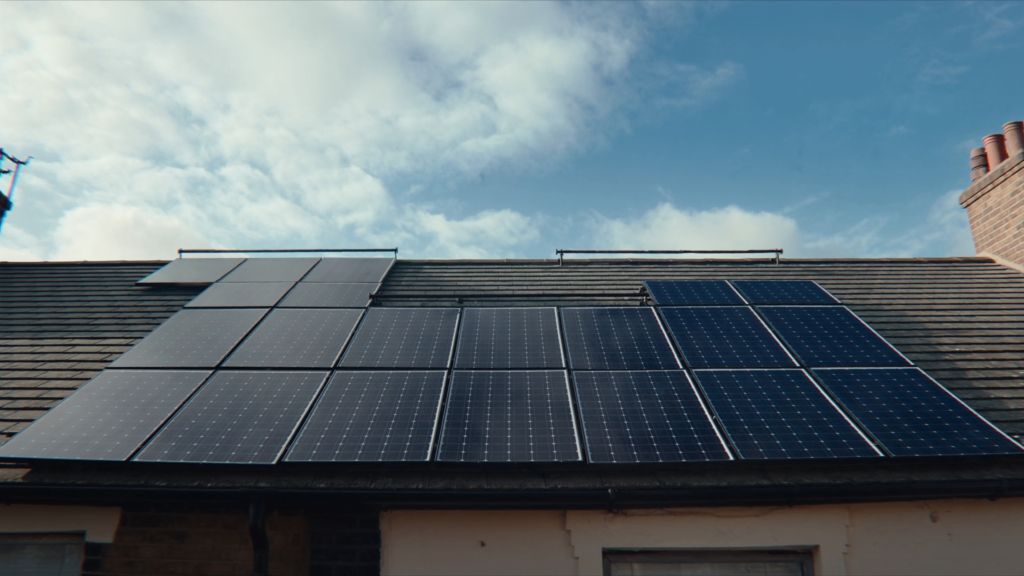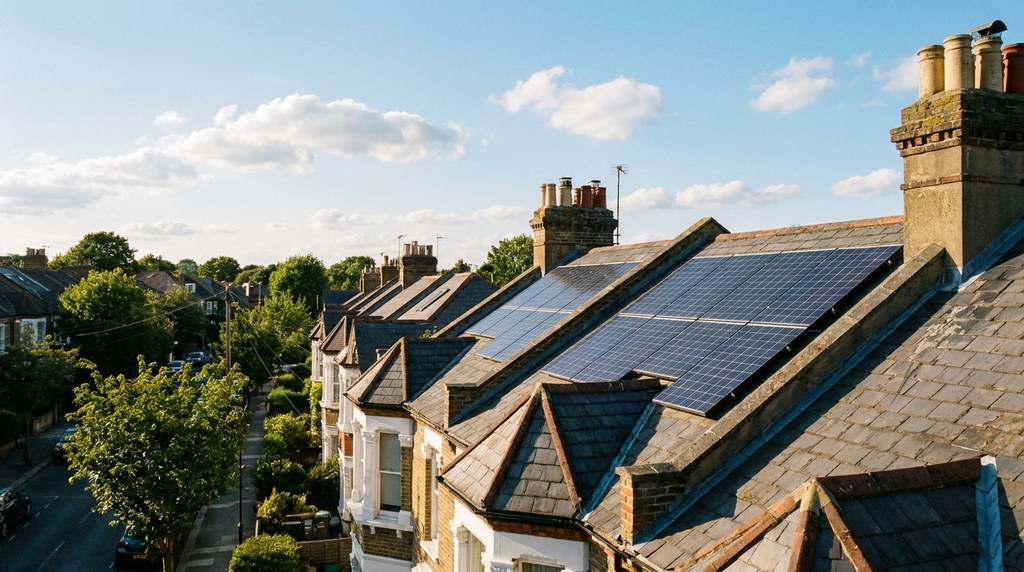
You will typically need between 12 and 16 solar panels to achieve a 5kW system, depending on the power rating of each panel. A 5kW array is the most common domestic size in the UK, and the Energy Saving Trust states it can generate around 4,300 kWh per year, covering about 60-70% of a typical household’s electricity needs (Energy Saving Trust, 2026).
The exact number of panels depends on their wattage. Most modern residential panels range from 350W to 420W. For a 5kW (5,000W) system, divide 5,000 by the panel wattage. With 350W panels you need 15 panels; with 400W panels you need 13; and with 420W panels you need 12. Your roof size, orientation, and shading also affect the final count, but the panel wattage is the primary variable.
Panel wattage determines the exact count
If you choose 350W panels, you will need 15 panels to reach 5,250W (slightly over 5kW). With 400W panels, 13 panels give you 5,200W. High-efficiency 420W panels require only 12 panels for 5,040W. The UK Microgeneration Certification Scheme (MCS) requires that your system’s total capacity is within 10% of 5kW for standard domestic installations (MCS Certified, 2026). Always confirm the exact panel power rating with your installer before ordering.
Roof space needed for a 5kW system
A single solar panel measures roughly 1.7m by 1.0m, covering about 1.7 square metres. For 12 panels you need around 20 square metres of clear, south-facing roof space. For 15 panels you need about 25 square metres. The Energy Saving Trust recommends at least 20 square metres for a 5kW system (Energy Saving Trust, 2026). If your roof has obstructions like chimneys or skylights, you may need more panels or a higher wattage per panel to fit the available area.
Grants and costs for a 5kW array in 2026
The average cost of a 5kW solar panel system in the UK is £6,000 to £8,000 including installation. The Boiler Upgrade Scheme (BUS) does not cover solar panels, but you can benefit from 0% VAT on installations until 2027 (GOV.UK, 2026). Under the Smart Export Guarantee (SEG), you can earn about £100-£200 per year for excess electricity exported to the grid, based on typical export rates of 4-6p per kWh (Ofgem, 2026).
A worked example
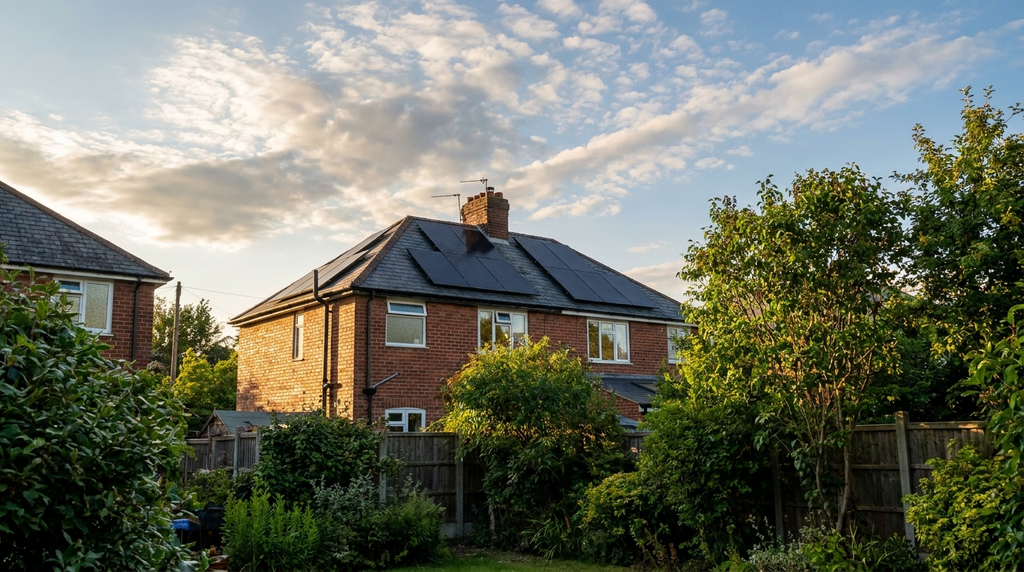
A typical UK semi-detached home in Manchester aiming for a 5kW solar PV system with 400W panels would need 13 panels and cost roughly £5,000 after the 0% VAT reduction (in place until March 2027). The Energy Saving Trust estimates this array generates about 4,300 kWh per year, saving a household around £600 annually on electricity bills. A south-facing roof of roughly 22 square metres is required. Without a battery, the payback period is around 8 to 9 years, but with a 5kWh battery (costing an extra £2,000) you can store excess generation and increase self-consumption, cutting bills further. The BUS grant no longer applies to solar-only installations, but if you pair panels with a heat pump you may qualify for the £7,500 heat pump grant via the Boiler Upgrade Scheme. Over 25 years, total savings could reach £15,000 to £18,000, assuming typical energy price rises.
| Item | Figure |
|---|---|
| Upfront cost after grants | £5,000 |
| Yearly savings | £600 |
| Payback period | 8.3 years |
| 25-year lifetime savings | £15,000 |
What homeowners often get wrong
The most common mistake is assuming all 5kW systems use the same number of panels regardless of panel wattage. This leads to three frequent errors that cost homeowners money and miss out on savings.
- Buying the cheapest panels without checking wattage Low-wattage panels (e.g. 350W) require 15 panels, taking up more roof space and often needing a larger inverter. Choosing 420W panels instead means 12 panels, freeing up roof area for future expansion or avoiding planning issues on smaller roofs.
- Ignoring orientation and assuming south-facing is the only option Many homeowners think east or west roofs are useless, but they generate about 15-20% less than south-facing arrays. A 5kW system on an east-west roof can still produce 3,400-3,600 kWh per year, saving roughly £480 annually and still paying back within 10 years.
- Forgetting to check MCS certification before buying Without MCS certification, you cannot access the Smart Export Guarantee (SEG) payments, which pay around 5-15p per kWh exported. A typical 5kW system exports about 2,500 kWh per year, meaning you could miss out on £125-£375 annually by choosing an uncertified installer.
Quick reference
- A 5kW system with 400W panels needs exactly 13 panels and covers roughly 22 square metres of roof space.
- The Energy Saving Trust says a well-sited 5kW array in the UK generates about 4,300 kWh per year, enough for 60-70% of a typical household’s electricity.
- You qualify for 0% VAT on solar panels and installation until March 2027, saving you £400-£600 on a typical 5kW system.
- Payback on a 5kW system without a battery is typically 8-10 years, but can drop to 6-7 years with a battery if you use over 70% of the generated power.
- Installing more than 16 panels for a 5kW system usually means you have chosen low-wattage panels, which may not fit on a standard semi-detached roof without planning permission.
Frequently Asked Questions
You need between 12 and 16 panels. For example, 13 panels of 400W each will give you a 5.2kW system, which the Energy Saving Trust says is the most common domestic size in the UK.
A 3-4kW system with 10–12 panels is typical for a 3-bedroom house, according to the Energy Saving Trust. A 5kW system is better suited to a 4-bedroom home with higher electricity use.
You need about 20 square metres of clear, south-facing roof space for 12 panels. Each panel is roughly 1.7m by 1.0m, according to MCS Certified guidelines.