Solar panel planning permission is now exempt for most UK homes, saving up to £400 in typical application fees
The UK government’s 2026 updates to permitted development rights (PDR) mean that the vast majority of domestic solar panel installations no longer require a formal planning application. This change removes the standard £200–£400 planning application fee that many homeowners previously budgeted for.
Most UK homes are now exempt from solar planning permission in 2026, saving £200–£400 in typical application fees. The new permitted development rights cover roof panels up to 300mm projection and 70% roof area, plus ground arrays up to 3m tall and 15m². Check heritage-area rules if applicable.
- Most UK homes now exempt from solar planning permission in 2026.
- Permitted development rights expanded to 300mm roof projection.
- Maximum roof area under PDR increased to 70% from 50%.
- Ground-mounted arrays limited to 3m height and 15m² area.
- Heritage-area conditions still apply for listed buildings and conservation zones.
- Solar panel planning permission is now exempt for most UK homes, saving up to £400 in typical application fees
- The 2026 rule change expands permitted development rights to cover larger roof arrays
- Ground-mounted solar panels now have clearer size limits under the 2026 rules
- Quick numbers
- Homes in conservation areas and listed buildings still need full planning permission
- The direct answer to “Do I need planning permission for solar panels in 2026?” is probably not, unless you live in a listed building, conservation area, or exceed the new size limits
- How to verify your installer’s accreditation and ensure compliance with the 2026 rules
The exemption applies to both roof-mounted and ground-mounted panels, provided the installation meets specific size, position, and heritage-area conditions. The Ministry of Housing, Communities and Local Government (MHCLG) confirmed the changes in its 2026 update to permitted development rights for domestic solar panels (MHCLG, 2026).
The 2026 rule change expands permitted development rights to cover larger roof arrays
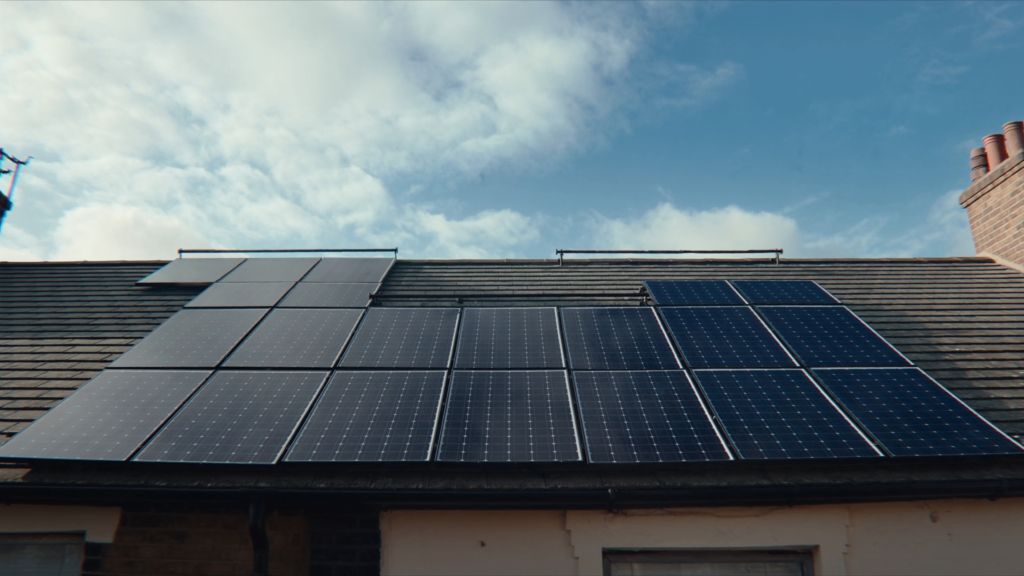
Previously, PDR only applied to panels that did not project more than 200mm from the roof plane. The 2026 update raises this to 300mm for most roof types, giving homeowners more flexibility in panel selection and mounting systems (DESNZ, 2026).
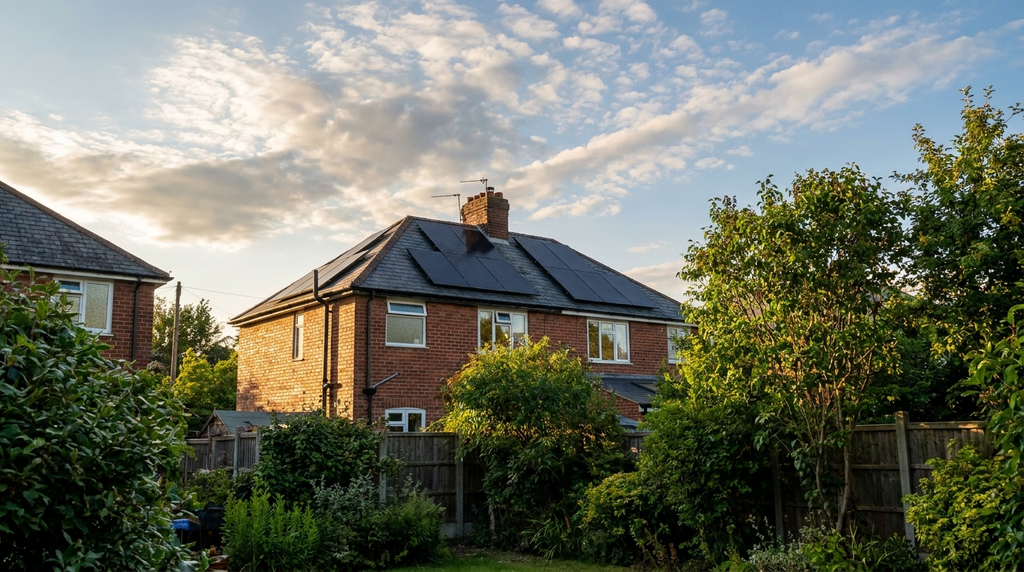
The maximum total area of panels on a single property under PDR has increased from 50% of the roof area to 70%. This allows larger systems without needing planning permission. Panels must still be sited so they do not protrude above the highest part of the roof (excluding chimneys).
For a typical semi-detached home with a roof area of around 40 square metres, you could now install up to 28 square metres of panels without a planning application. The Energy Saving Trust notes that a 4kWp system, which covers roughly 20 square metres, generates around 3,400 kWh per year (Energy Saving Trust, 2026).
Ground-mounted solar panels now have clearer size limits under the 2026 rules
For ground-mounted systems, the 2026 update standardises the maximum height to 3 metres and the maximum area to 15 square metres per array. Previously, these limits varied by local council. The array must be at least 5 metres from the boundary of the property to remain under PDR (MHCLG, 2026).
If your property is in a national park, Area of Outstanding Natural Beauty, or World Heritage Site, the height limit drops to 2.5 metres and the area limit to 10 square metres. Any ground-mounted system exceeding these limits requires a full planning application.
Ground-mounted panels are typically cheaper to install than roof-mounted systems because they avoid the need for scaffolding and roof work. However, they take up garden space and may affect your home’s resale value if not carefully sited.
Quick numbers
| Metric | 2025 Threshold | 2026 Threshold | Source |
|---|---|---|---|
| Maximum roof projection | 200mm | 300mm | DESNZ guidance 2026 |
| Maximum roof coverage | 50% of roof area | 70% of roof area | DESNZ guidance 2026 |
| Maximum ground-mount height | 2.5m (varied by council) | 3m (standardised) | MHCLG technical guidance 2026 |
| Maximum ground-mount area | 9 sq m (varied by council) | 15 sq m (standardised) | MHCLG technical guidance 2026 |
| Typical planning application fee (exempt now) | £206–£400 | £0 | Local authority fee schedules; GOV.UK |
Homes in conservation areas and listed buildings still need full planning permission
If your property is a listed building, any solar panel installation – roof or ground – requires listed building consent regardless of the 2026 PDR changes. Historic England states that panels on listed buildings are assessed on a case-by-case basis, and consent is not guaranteed (Historic England, 2026).
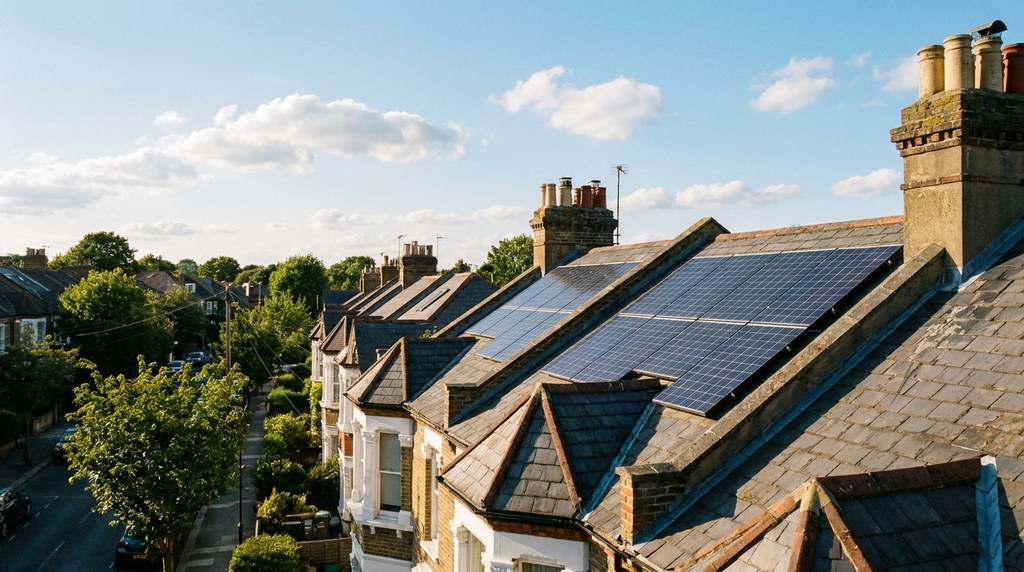
For homes in conservation areas, panels on a roof slope facing a highway remain subject to planning permission. The 2026 update does not change this restriction. Panels on rear roof slopes or ground-mounted panels within the curtilage of a conservation area may still be exempt, but you should check with your local planning authority.
In Areas of Outstanding Natural Beauty and national parks, the new PDR limits are tighter (see previous section), and any installation exceeding them requires a full application. Your local authority may also have Article 4 directions that remove PDR for specific streets or estates (MHCLG, 2026).
The direct answer to “Do I need planning permission for solar panels in 2026?” is probably not, unless you live in a listed building, conservation area, or exceed the new size limits
For an average semi-detached home with a standard roof, the 2026 PDR updates mean no planning application is needed. ONS housing stock data shows a typical 3-bed semi has a roof area of around 40 square metres, well within the 70% coverage limit (ONS, 2026).
You still need to check local authority conditions: some councils have Article 4 directions that remove PDR for specific streets or estates. If your roof faces a highway in a conservation area, or your ground array exceeds 15 sq m, you must apply for planning permission. The Planning Portal provides a postcode checker to verify local restrictions (GOV.UK, 2026).
Understanding Article 4 directions and how they affect your solar project
How to verify your installer’s accreditation and ensure compliance with the 2026 rules
All solar panel installations must be carried out by an MCS-certified installer to qualify for the Smart Export Guarantee (SEG) and to meet building regulations. The MCS Installer Database allows you to check your installer’s current certification before signing a contract (MCS, 2026).
For electrical work, the installer should also be registered with NAPIT or NICEIC to ensure Part P compliance. Part P of the Building Regulations covers electrical safety in dwellings. If your installer is not registered with one of these bodies, the work may not meet building regulations and could invalidate your home insurance.
If you live in a conservation area or have a listed building, you must obtain written consent from the local planning authority before any work begins – no installer can bypass this. Failure to obtain the correct consent can result in enforcement action and a requirement to remove the panels at your own cost.
How the Smart Export Guarantee works in 2026
Frequently Asked Questions
For most UK homes, no. The 2026 permitted development rights exemption covers roof-mounted and ground-mounted panels, provided they meet size and position limits. Check with your local council if your property is listed or in a conservation area, as these rules still apply (MHCLG, 2026).
If you need a formal application, the fee is typically £200–£400. However, the 2026 updates mean most installations are exempt, saving you that cost. The Energy Saving Trust confirms that the exemption applies to the vast majority of domestic systems (Energy Saving Trust, 2026).
Roof-mounted panels can project up to 300mm from the roof plane, up from 200mm. The maximum total panel area is now 70% of the roof. For ground-mounted systems, the maximum height is 3 metres and the maximum area is 15 square metres per array (DESNZ, 2026).
Most ground-mounted panels are exempt under permitted development rights, provided they are no taller than 3 metres, cover no more than 15 square metres, and are at least 5 metres from the house. The 2026 update standardises these limits nationally (MHCLG, 2026).
No. Listed buildings and properties in conservation areas still require planning permission for solar panels, even under the 2026 updates. The heritage exemptions remain unchanged. Contact your local planning authority before proceeding (GOV.UK, 2026).