Air source heat pumps now heat over 400,000 UK homes, and that number is growing rapidly as the government pushes toward its target of 600,000 installations per year by 2028. Unlike traditional boilers that burn fuel to generate heat, an air source heat pump extracts thermal energy from the outside air, even at temperatures as low as -20°C, and transfers it into your home. For every 1 unit of electricity they consume, modern units typically deliver 2.5 to 4 units of heat, making them one of the most efficient heating technologies available to UK homeowners today.
How Air Source Heat Pumps Work
The operating principle behind an air source heat pump is the same physics that keeps your fridge cold, just running in reverse. A refrigerant fluid circulates through the system, absorbing heat from outdoor air and releasing it inside your home.
Here is the process broken down into four stages:
- Evaporation, Outdoor air is drawn across a network of fins containing refrigerant fluid. Even in cold weather, there is enough thermal energy in the air to cause the refrigerant to evaporate into a gas.
- Compression, An electric compressor increases the pressure of the refrigerant gas, which dramatically raises its temperature, typically to 50–70°C in modern units.
- Heat exchange, The hot, pressurised gas passes through a heat exchanger, transferring its energy into your home’s water-based central heating and hot water system.
- Expansion, The refrigerant cools, condenses back into liquid, and the cycle begins again.
The key performance metric is the Coefficient of Performance (COP), the ratio of heat output to electrical input. A COP of 3.5 means the pump produces 3.5 kWh of heat for every 1 kWh of electricity used. In real-world UK conditions, well-installed systems from reputable brands regularly achieve a Seasonal COP (SCOP) of 3.0 to 3.8 over a full heating season.
Most residential units are air-to-water heat pumps, which feed heat into a wet central heating system, radiators, underfloor heating, or both. There are also air-to-air systems that blow warm air directly into rooms, but these cannot heat water for domestic use and are less common in UK homes.
How Much Do Air Source Heat Pumps Cost in 2026
The total cost of an air source heat pump installation in 2026 depends on your home’s size, heat demand, the brand you choose, and whether you need additional work such as upgraded radiators or a new hot water cylinder. Before the Boiler Upgrade Scheme grant is applied, installed costs typically range from £8,000 to £18,000.
| Home Size | Recommended Heat Pump Output | Typical Installed Cost (Before Grant) | Typical Installed Cost (After £7,500 Grant) |
|---|---|---|---|
| 1–2 bedroom flat or small terraced house | 5–7 kW | £8,000 – £11,000 | £500 – £3,500 |
| 3 bedroom semi-detached house | 8–10 kW | £10,000 – £14,000 | £2,500 – £6,500 |
| 4 bedroom detached house | 12–14 kW | £13,000 – £17,000 | £5,500 – £9,500 |
| Large detached house (5+ bedrooms) | 16–20 kW | £15,000 – £22,000 | £7,500 – £14,500 |
What Drives the Cost Up
The unit price is only part of the story. Several factors can push your total installation cost higher:
- Radiator upgrades, Heat pumps run at lower flow temperatures (35–55°C) than gas boilers (70–80°C). If your existing radiators are undersized, you may need larger ones to deliver the same heat output. Budget £150–£400 per radiator.
- Hot water cylinder, Most homes switching from a combi boiler will need a new unvented cylinder. Expect to add £800–£1,500.
- Electrical upgrades, A heat pump needs a dedicated 16–32 amp circuit. Older properties may need a consumer unit upgrade, adding £500–£1,500.
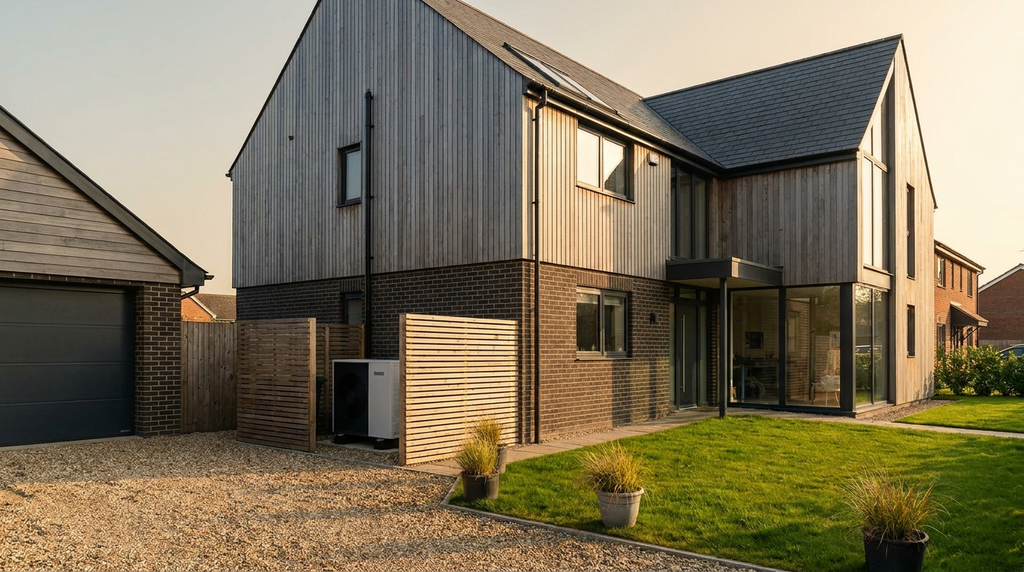
- Ground works and siting, The outdoor unit needs a firm base (concrete pad or purpose-built frame) and adequate clearance from fences and walls.
- Insulation improvements, Not mandatory, but highly recommended. A well-insulated home requires a smaller, cheaper unit and runs at lower cost.
Running Costs in 2026
With the current UK electricity rate averaging around 24p per kWh and gas at approximately 6p per kWh, running costs depend heavily on your system’s efficiency. A well-designed 10 kW system in a 3-bedroom house typically uses 3,500–4,500 kWh of electricity per year for heating, costing roughly £840–£1,080 annually. Adding domestic hot water brings total consumption to approximately 4,500–6,000 kWh per year.
Benefits of Air Source Heat Pumps
The case for air source heat pumps in a UK home goes beyond environmental credentials. Here are the practical advantages backed by performance data:
- High seasonal efficiency, A well-specified system achieves an SCOP of 3.0–3.8, meaning you get 3 to 3.8 times more heat per unit of energy than a direct electric heater, and roughly equivalent running costs to a gas boiler in an insulated home (depending on tariff).
- Lower carbon emissions, The UK grid’s carbon intensity has fallen to around 180–200g CO₂/kWh in 2026, down from 450g in 2010. Heat pumps produce 2–3 times fewer carbon emissions than a gas boiler in most UK homes today, and that figure improves each year as the grid gets cleaner.
- Longevity, Quality units from brands like Mitsubishi, Vaillant, and Daikin have a rated lifespan of 20–25 years, significantly longer than the typical 12–15 year lifespan of a gas boiler.
- Dual function, Many modern air-to-water units can operate in reverse to provide cooling during summer months, adding year-round value.
- Consistent comfort, Heat pumps deliver steady, gentle warmth rather than the sharp heat-and-cool cycles of a boiler, which many homeowners find more comfortable.
- Future-proof technology, With the Future Homes Standard requiring new-build homes to use low-carbon heating from 2025 onwards, heat pumps are the established, proven option for compliant installations.
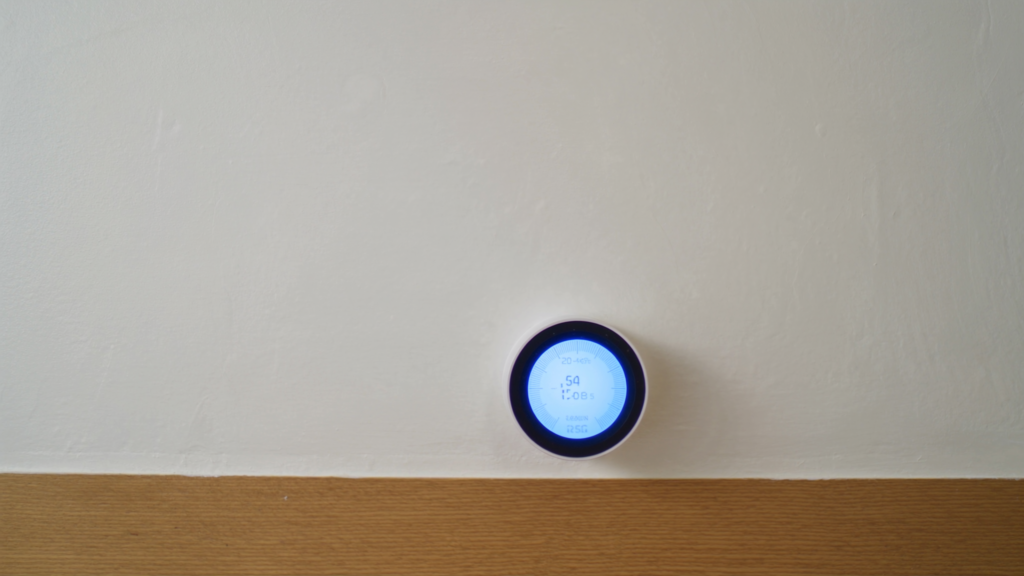
- Smart integration, Modern units connect smoothly with smart thermostat systems, enabling weather-compensated control that automatically adjusts output based on outdoor temperature.
Grants and Funding for Air Source Heat Pumps
The UK government has put significant financial support behind heat pump adoption. Understanding which schemes apply to your situation can dramatically reduce your upfront outlay.
The Boiler Upgrade Scheme
The Boiler Upgrade Scheme (BUS), administered by Ofgem, provides a £7,500 grant toward the cost of a new air source heat pump. The grant is paid directly to your MCS-certified installer, who deducts it from your invoice, you never handle the money yourself. To qualify:
- Your property must be in England or Wales.
- You must have a valid Energy Performance Certificate (EPC) with no outstanding recommendations for loft or cavity wall insulation.
- The installation must be carried out by an MCS-certified installer.
- You cannot combine BUS with other government heat pump grants on the same property.
The scheme was extended through to March 2028 in the 2024 Autumn Statement, giving homeowners a firm window to plan their installation.
The Great British Insulation Scheme
The Great British Insulation Scheme closed on 31 March 2026. It funded insulation measures only and never covered windows or glazing. Eligibility is income-based, targeting homes in Council Tax bands A–D with an EPC rating of D or below.
ECO4 Scheme
The Energy Company Obligation (ECO4) scheme, running until March 2026, may fund a heat pump installation for low-income households or those receiving certain benefits. It is worth checking eligibility even if you do not consider yourself low-income, as the criteria are broader than many people expect.
VAT on Heat Pumps
Since April 2022, the installation of heat pumps in residential properties in the UK has attracted 0% VAT, saving you the 20% that would previously have applied. This is a permanent measure, not a temporary relief, and applies to both the unit and the installation labour.
Smart Export Guarantee
If you pair your heat pump with solar panels, the Smart Export Guarantee (SEG) allows you to sell surplus electricity back to the grid. Running your heat pump primarily on self-generated solar power can push effective running costs down by 30–50% in summer months.
How to Choose the Right Air Source Heat Pump
Selecting the correct heat pump involves more than brand preference. Getting the sizing and specification wrong is the single most common cause of underperformance. Here is a practical decision framework.
Step 1, Calculate Your Heat Loss
A proper heat loss calculation (carried out to BS EN 12831 standards) determines exactly how many kilowatts your home needs on the coldest design day. Do not allow any installer to size your system based solely on floor area or the output of your old boiler, both methods are unreliable. An MCS-certified installer is required to carry out a heat loss calculation before specifying equipment.
Step 2, Choose Your Flow Temperature
Heat pumps operate most efficiently at lower flow temperatures. If your home is well-insulated and you have adequate radiators or underfloor heating, a unit optimised for 35–45°C flow temperatures will deliver significantly better efficiency than one running at 55–60°C.
Step 3, Evaluate Key Technical Specifications
| Specification | What to Look For | Why It Matters |
|---|---|---|
| SCOP (Seasonal COP) | 3.2 or above at A7/W35 | Determines real-world running costs over a full year |
| Refrigerant type | R32 or R290 (propane) | R290 has a global warming potential of just 3; R32 is 675. Both are preferred over older R410A (GWP 2,088) |
| Operating range | Rated to -20°C or below | Ensures reliable performance through UK winters |
| Noise level | Below 45 dB(A) at 1 metre | Relevant if the unit sits near a boundary or bedroom window |
| Modulation range | 10–100% capacity | Wide modulation avoids short-cycling and improves efficiency |
| MCS listing | Confirmed on MCS product database | Required for Boiler Upgrade Scheme eligibility |
Step 4, Assess Your Installer
Your installer matters as much as the unit itself. Look for MCS certification (mandatory for grant eligibility), membership of a trade body such as the Heat Pump Association or HIES, and a track record of installations in homes similar to yours. Ask to speak to previous customers and request to see their heat loss calculations before any contract is signed.
Air Source Heat Pump Installation, What to Expect
A standard residential air source heat pump installation typically takes two to three days for an experienced team. Here is what the process looks like from start to finish.
- Pre-installation survey, Your installer visits to assess heat loss, review your existing heating system, check electrical supply, and identify the best location for the outdoor unit. This should happen weeks before installation day.
- Permissions and notifications, In most cases, air source heat pumps fall under Permitted Development Rights in England and Wales, meaning you do not need planning permission. Exceptions include listed buildings, flats, and some conservation areas. Your installer should confirm this.
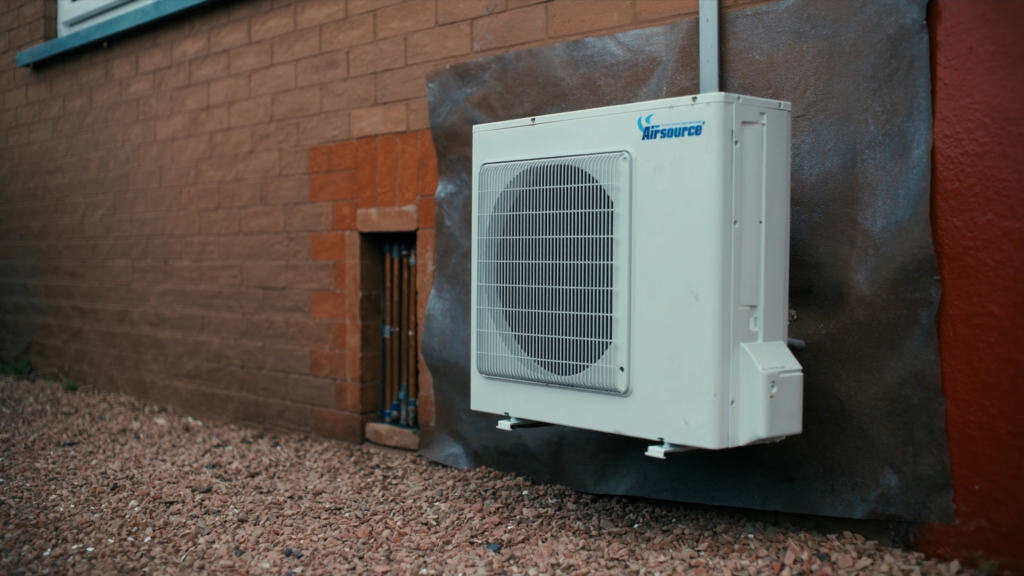
- Day 1, Outdoor unit installation, The outdoor unit is secured to its pad or wall bracket, refrigerant lines are run through the wall, and the electrical connection is made. The refrigerant circuit is pressure-tested and vacuumed before charging.
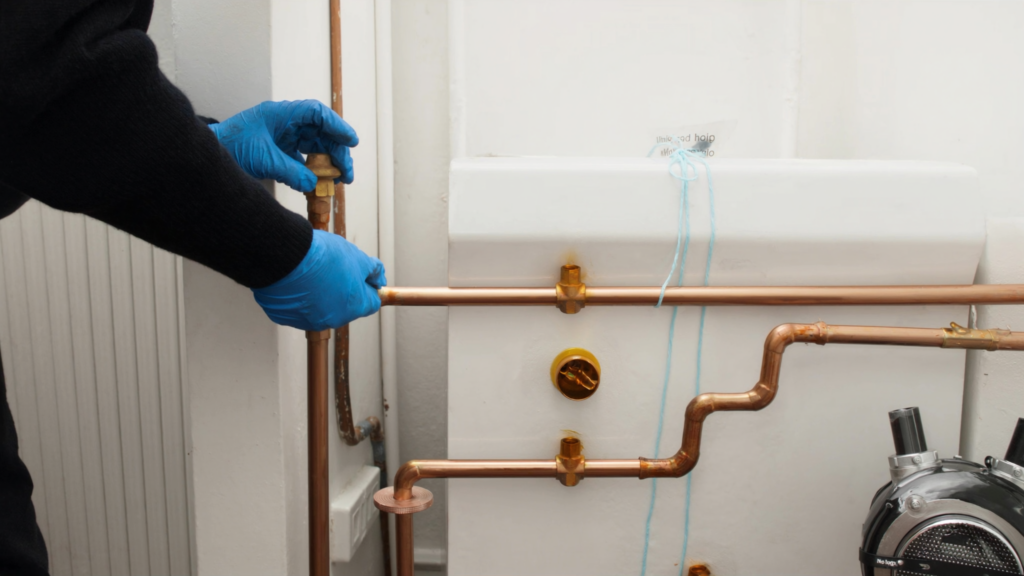
- Day 1–2, Indoor installation, The indoor components (buffer vessel, hot water cylinder if required, controls) are installed and connected to your existing pipework. Radiators are assessed and upgraded if necessary.
- Day 2–3, Commissioning, The system is filled, bled, and powered up. The installer sets flow temperatures, programs weather compensation curves, and calibrates controls. This stage is critical, a poorly commissioned heat pump will underperform regardless of how good the hardware is.
- Handover, You receive a full demonstration of the controls, an MCS certificate (required for your BUS grant claim), and documentation including the refrigerant handling certificate and building regulations compliance certificate (usually via the Competent Person Scheme).
Typical installation timelines from enquiry to completion currently run at 4–12 weeks, depending on installer availability in your area. Supply chain constraints have eased since 2023, so lead times are now more predictable than they were during the peak demand period of 2022–2023.
Common Problems and How to Avoid Them
Air source heat pumps are highly reliable when correctly specified and installed, but there are recurring issues that stem almost entirely from poor installation or setup rather than equipment failure.
Undersized Radiators
This is the most common complaint. If your radiators were sized for a boiler running at 70°C and your heat pump runs at 45°C, the same radiators will deliver significantly less heat. The fix is upsizing affected radiators, a relatively straightforward job, but one that should ideally be assessed before installation rather than after.
Incorrect Flow Temperatures
Some installers set flow temperatures too high to compensate for undersized radiators or inadequate insulation. Running at 60°C instead of 45°C can drop your SCOP from 3.5 to below 2.5, dramatically increasing running costs. If your bills are higher than expected, ask your installer to check and optimise your weather compensation settings.
Legionella Cylinder Temperature Cycles
Hot water cylinders require a weekly Legionella pasteurisation cycle to 60°C to prevent bacterial growth. Some systems run this cycle via an immersion heater (less efficient) rather than the heat pump itself. Ensure your installer programmes this cycle to run primarily off the heat pump where possible, typically using a higher-capacity unit or a dedicated pasteurisation mode.
Noise Complaints
Modern units are quiet, typically 40–48 dB(A), but incorrect siting can amplify noise through reflection off walls or fences. The outdoor unit should be positioned at least 1 metre from any solid boundary and away from bedroom windows. UK permitted development rules require the unit to be at least 1 metre from the property boundary.
Maintenance Schedule
Air source heat pumps require less maintenance than gas boilers, no annual gas safety check is required, but annual servicing is still recommended and often required to maintain your manufacturer warranty. A typical service includes:
- Cleaning the outdoor coil and checking for debris obstruction
- Checking refrigerant pressure and system operation
- Inspecting electrical connections and controls
- Checking water pressure, inhibitor levels, and filter condition
- Reviewing and adjusting controls and weather compensation settings
Annual servicing costs typically run to £100–£200, depending on your location and the engineer’s rates. Many installers offer service contracts that also cover call-outs, which can be worth considering given that heat pump engineers are less universally available than gas boiler engineers, though this is changing rapidly as the industry grows.
Air Source Heat Pumps and Home Insulation
A heat pump does not require a perfectly insulated home to operate effectively, but insulation quality directly affects the size of unit you need, your running costs, and your overall satisfaction. The relationship is straightforward: a better-insulated home loses heat more slowly, which means a smaller heat pump running at lower output, and therefore higher efficiency, can keep you comfortable.
As a practical benchmark, a poorly insulated 1980s semi-detached house might have a heat loss of 12–14 kW, requiring a larger unit with higher running costs. The same house with loft insulation topped up to 300mm and cavity walls filled might have a heat loss of 7–9 kW, a unit size reduction that could save £1,000–£2,000 on the purchase price and meaningfully reduce annual bills.
You do not need to bring your home to Passivhaus standards before installing a heat pump. EPC ratings of D or above are generally workable for a cost-effective heat pump installation. Ratings of E or below warrant serious consideration of insulation improvements first.
Air Source Heat Pumps in Older and Hard-to-Insulate Properties
One of the persistent myths about heat pumps is that they only work in new-build or heavily insulated homes. In practice, well-engineered modern units can work effectively in Victorian terraces, solid-wall properties, and older housing stock, provided the system is correctly specified.
In solid-wall properties where cavity insulation is not an option, internal or external wall insulation can significantly reduce heat loss. Where this is cost-prohibitive, the installer can specify a slightly larger heat pump and ensure radiators are adequately sized to compensate. Some installers use hybrid systems, pairing a heat pump with a retained gas or oil boiler, to handle peak demand on the coldest days, which can make the economics work in properties where full heat pump operation would otherwise require major fabric improvements.
Rural off-gas-grid properties are often excellent candidates for air source heat pumps, as they are currently heating with oil or LPG at significantly higher running costs than mains gas users. Switching from oil heating to a heat pump with a seasonal COP of 3.2 can reduce heating bills by 40–60% in a typical off-grid rural home.
What to Expect from Your Heat Pump Day to Day
Living with a heat pump is different from living with a gas boiler, and understanding these differences helps you get the best from the technology.
Heat pumps work best when run at lower temperatures for longer periods rather than blasting heat on demand. Rather than setting the thermostat to 20°C and turning it off overnight, many heat pump owners find better results leaving the system running continuously at a steady temperature, or using gentle setback periods (dropping to 17–18°C overnight rather than switching off entirely). This approach suits the way heat pumps operate and often delivers better efficiency figures.
Weather compensation, where the flow temperature automatically adjusts based on how cold it is outside, is one of the most effective ways to improve efficiency. On a mild autumn day, the system might run at 35°C flow temperature. On the coldest January day, it steps up to 50°C. This automatic modulation keeps the system in its most efficient operating zone year-round.
Most modern heat pumps come with manufacturer apps that show you real-time performance data, COP readings, and energy consumption breakdowns. Monitoring this data in the first heating season is genuinely useful, it helps you spot if settings need adjusting and gives you confidence that the system is performing as it should.
Choosing an Installer and Avoiding Poor Installations
The heat pump industry has grown rapidly, and installer quality varies significantly. A low tender price from an inexperienced installer can result in a poorly performing system that costs you more to run and requires expensive remediation work. Here is how to protect yourself.
- Verify MCS certification independently, Check the MCS installer database at mcscertified.com, not just the installer’s word.
- Request a detailed heat loss calculation, Any installer who cannot provide or explain this document before quoting should not be trusted to size your system correctly.
- Get three quotes, Not to find the cheapest, but to compare specifications, system designs, and the quality of explanation each installer provides.
- Check for consumer protection, Look for HIES or RECC membership, which provides dispute resolution and protection if something goes wrong.
- Ask about the warranty, Reputable manufacturers offer 5–7 year warranties on parts, but some require annual servicing by an approved engineer to maintain validity. Understand the terms before you sign.
The quality of your installer’s commissioning work, the setup and calibration of the system once physically installed, can make the difference between a system achieving a SCOP of 2.5 and one achieving 3.5. That difference translates to a 40% difference in running costs over the life of the system. It is worth paying for an installer with a demonstrable track record of efficient, well-performing installations rather than choosing on price alone.