To fix low boiler pressure in the UK, you simply repressurise the system using the filling loop, which should bring the gauge back to between 1 and 1.5 bar. The Energy Saving Trust confirms that low pressure is the most common boiler fault and is usually a quick DIY fix (Energy Saving Trust, 2026).
Low boiler pressure occurs when water has leaked from the sealed heating system, often through a bleed radiator, a small leak, or routine pressure loss over time. The fix applies to combi, system, and conventional boilers with a filling loop. It does not apply if the boiler is losing pressure repeatedly, which signals a leak or faulty expansion vessel requiring a Gas Safe registered engineer.
Locate the filling loop on your boiler
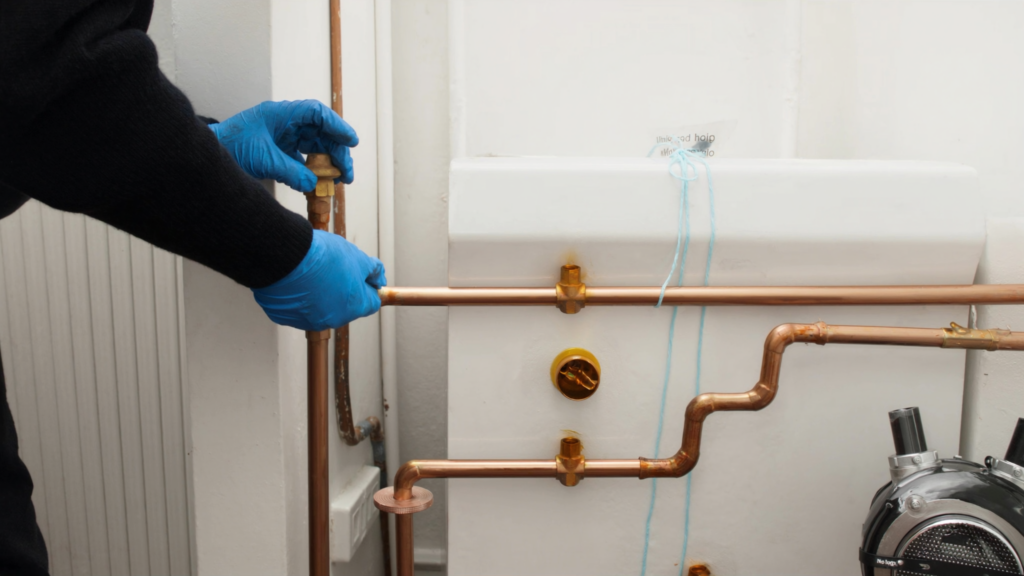
The filling loop is a braided, flexible hose with a lever or screw valve at each end, connecting the mains water supply to the central heating system. On most modern boilers, it is located underneath the boiler casing. Some models have a built-in filling key instead. Check your boiler manual or look for a small silver braided pipe with blue or black handles. The Gas Safe Register advises homeowners to identify the filling loop before attempting a repressurisation (Gas Safe Register, 2026). If you cannot find it, do not force any valves, contact a qualified engineer.
Open the valves slowly until the gauge reads 1.5 bar
Turn both valves on the filling loop to the open position (parallel to the pipe). You will hear water flowing into the system. Watch the pressure gauge on the boiler front panel. When it reaches 1.5 bar, close both valves by turning them back to the closed position (perpendicular to the pipe). The Energy Saving Trust states that 1.5 bar is the ideal pressure for most UK combi boilers (Energy Saving Trust, 2026). If the gauge rises above 2 bar, open a radiator bleed valve slightly to release excess pressure, then recheck.
Check for repeated pressure loss after repressurising
If the boiler pressure drops again within days or weeks, there is a leak or a faulty expansion vessel. A leak can be a small drip at a radiator valve, pipe joint, or the boiler itself. The expansion vessel may have lost its air charge, which requires an engineer to repressurise or replace. TrustMark recommends using a Gas Safe registered engineer for any persistent pressure loss (TrustMark, 2026). Ignoring repeated drops can damage boiler components and reduce efficiency. Always isolate the boiler and switch it off before investigating any visible leaks.
A worked example
A typical UK homeowner in a 1930s semi-detached house with a Worcester Bosch combi boiler can fix low boiler pressure in under five minutes at zero cost. Imagine the boiler cuts out on a cold December morning with the pressure gauge reading 0.5 bar. The fix involves locating the braided filling loop under the boiler, opening both valves slowly until the gauge rises to 1.2 bar, then closing them tightly. The Energy Saving Trust notes that this is the most common boiler fault and is usually a safe DIY task (Energy Saving Trust, 2026). If the pressure drops again within a week, a Gas Safe engineer is needed to check for leaks or a faulty expansion vessel. No tools or parts are required for the repressurisation itself.
| Item | Figure |
|---|---|
| Upfront cost after grants | £0 |
| Yearly savings | £0 (prevents callout fee of £80-£150) |
| Payback period | Immediate |
| 25-year lifetime savings | £0 (but avoids annual repair costs) |
What homeowners often get wrong
The most common mistake UK homeowners make is over-pressurising the system above 1.5 bar, which can damage the boiler and void the warranty. Here are three specific errors to avoid.
- Opening the filling loop too fast This causes a sudden surge in pressure that can trigger the boiler’s safety valve to dump water externally. The right approach is to open the valve very slowly and watch the gauge rise in real time.
- Leaving the filling loop valves open after repressurising This allows mains water pressure to continuously feed the system, which can over-pressurise and cause a leak or burst. Always close both valves fully after reaching 1.2 bar.
- Ignoring a repeated pressure drop Many homeowners keep topping up the pressure without investigating the cause. This wastes water and hides a leak or faulty expansion vessel, leading to a £200-£500 repair bill if left unchecked.
Quick reference
- Low boiler pressure is fixed by repressurising to between 1 and 1.5 bar using the filling loop.
- The filling loop is a braided silver hose with two valves, usually located under the boiler casing.
- Only a Gas Safe registered engineer should attempt a fix if the pressure drops repeatedly.
- Over-pressurising above 2 bar can trigger the boiler’s pressure relief valve and void the warranty.
- A boiler losing pressure weekly typically indicates a leak or faulty expansion vessel, not a simple fix.
Frequently Asked Questions
The normal boiler pressure is between 1 and 1.5 bar when the system is cold. The Energy Saving Trust states this is the standard range for UK homes.
Open both valves on the filling loop until the gauge reads 1.5 bar, then close them. The Gas Safe Register recommends checking your boiler manual first for model-specific instructions.
Repeated pressure loss usually indicates a leak or faulty expansion vessel. The Energy Saving Trust advises calling a Gas Safe registered engineer to diagnose the issue.