Worcester’s Housing Story, And Why Now Is a Good Time to Act
Worcester sits in one of England’s most historically layered landscapes, with the River Severn running right through the city centre and the Malvern Hills visible on the western horizon on a clear day. That geography shapes everything, from the flood-prone lower-lying streets near the riverbank to the slightly elevated suburban estates in areas like St John’s, Warndon Villages, and Ronkswood, where thousands of families live in exactly the kind of semi-detached and terraced homes that respond brilliantly to eco upgrades.
Most of Worcester’s housing stock was built in waves. You’ll find dense Victorian and Edwardian terraces in areas like St Paul’s, Arboretum, and Blockhouse, followed by the interwar and 1950s semis that fill much of the suburban spread towards Tolladine and Dines Green. Then there are the newer estates at Warndon Villages, built largely from the 1980s onwards, which are already better insulated but still benefit from solar panels and heat pump upgrades.
What this means for you as a homeowner is simple, there’s a huge range of upgrade opportunities depending on where you live, and Worcester’s mild climate and strong southern sunshine hours make it one of the better-placed West Midlands towns for solar investment. If you’ve been putting off home improvements, the combination of current grant funding, falling technology costs, and rising energy bills makes right now a genuinely sensible moment to act.
Worcester City Council handles planning applications within the city boundary, while properties in the surrounding rural fringe fall under Wychavon District Council or Malvern Hills District Council, worth knowing before you apply for anything that might need permitted development checks. You can find the full picture on eco improvements across the county on our eco homes in Worcestershire overview.
How Energy Efficient Are Worcester Homes Really
The average Worcester home sits at EPC Band D, exactly at the national average for England and Wales. That sounds reassuring until you work out what it means for your bills.
A Band D home typically loses heat faster than it should, relies heavily on gas central heating, and costs considerably more to run than a Band B or C equivalent. Based on current energy prices, a typical Worcester household spending 11,000 kWh on gas and 3,100 kWh on electricity per year is looking at annual energy bills in the region of £1,650 to £1,900 depending on tariff and usage patterns.
Compared to the wider West Midlands, Worcester is in a slightly more fortunate position. Areas like parts of Birmingham and the Black Country have higher rates of fuel poverty and a greater proportion of pre-1919 solid-wall terraces, which are much more expensive to insulate than the cavity-wall semis common in Worcester’s suburban estates. Worcester’s housing mix means a larger share of properties have unfilled or partially filled cavity walls, which is genuinely good news because cavity wall insulation is one of the cheapest and most impactful upgrades you can make.
If your home is Band D right now, reaching Band B or C is realistic for most Worcester properties, and at that point, your energy bills could drop by £500 to £900 per year depending on what upgrades you make. That’s money that stays in your pocket every year, not just once.
Solar Panels Work Better in Worcester Than Most People Expect
Here’s something that surprises many Worcester homeowners, the city gets between 1,200 and 1,500 sunshine hours per year, with solar irradiance in the region of 1,100 to 1,200 kWh per square metre annually. That puts Worcester well ahead of northern England and Scotland, and competitive with much of the East Midlands. The broad, south-facing rooflines on Worcester’s typical 1950s and 1960s semis are almost ideal for solar panel installation.
If you’re in a Victorian terrace in the Arboretum area or near Croft Road, it’s worth getting a survey to check your roof pitch and orientation, some north-facing rear roofs won’t generate enough to be worthwhile, but east-west split systems have become much more common and effective in recent years.
Here’s how the numbers stack up for a typical Worcester home in 2026:
| System Size | Installed Cost | Annual Generation | Annual Saving (inc. export) | Payback Period |
|---|---|---|---|---|
| 3kW | £5,500 – £6,500 | ~2,700 kWh | £500 – £620 | 9 – 11 years |
| 4kW | £6,800 – £8,000 | ~3,600 kWh | £660 – £800 | 9 – 11 years |
| 6kW | £9,500 – £11,500 | ~5,400 kWh | £950 – £1,150 | 9 – 11 years |
These figures assume a south-facing roof at 30–40 degrees pitch and include Smart Export Guarantee payments for electricity you export to the grid. Adding a battery storage system (typically £3,000 – £5,000 extra) can push your self-consumption up significantly and improve payback times, particularly if your household uses a lot of electricity in the evenings.
One important note, if your home is in one of Worcester’s conservation areas (St John’s, the Cathedral area, or parts of Sidbury), you may need to check with Worcester City Council before installing panels on a street-facing roof. Permitted development rights don’t always apply in these zones.
Heating Choices That Actually Make Sense for Worcester’s Streets
Worcester’s winters are milder than much of England, the city sits in a sheltered inland basin with around 1,200 to 1,500 heating degree days per year. That actually works in favour of heat pumps, which perform better when outdoor temperatures don’t drop too sharply for too long.
Here’s an honest comparison of the main heating options for Worcester’s typical semis and terraces:
- Modern condensing gas boiler, Still the most common choice, and replacing an old inefficient boiler with a new A-rated condensing model can cut your gas bill by 15–20%. Typical installed cost is £2,000 – £3,500. Running costs on current tariffs sit around £900 – £1,100 per year for a typical Worcester semi. A sensible short-term move if your boiler is ageing, but gas isn’t a long-term solution as the grid decarbonises.
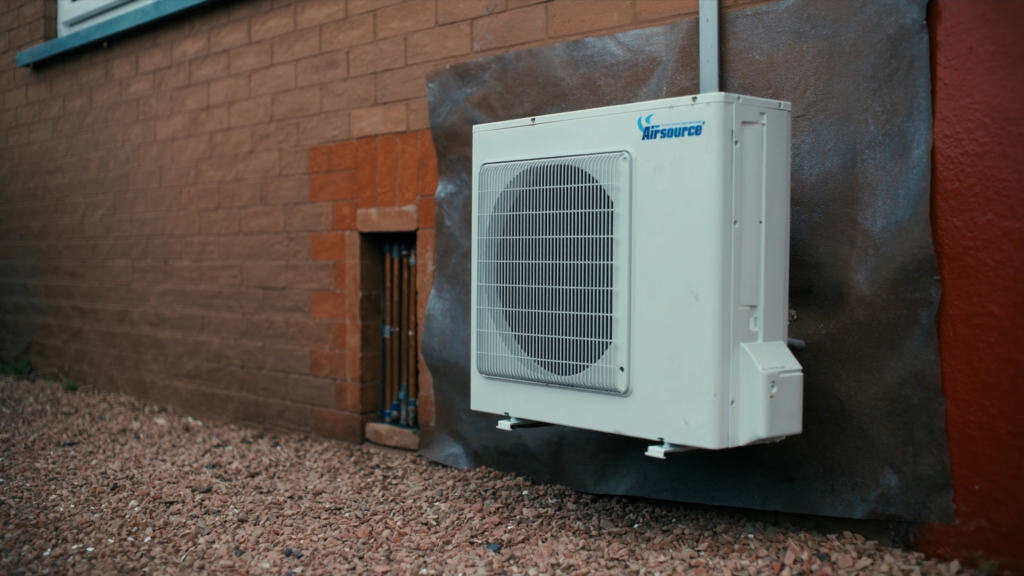
- Air source heat pump (ASHP), These work by extracting warmth from outdoor air, even in winter. In Worcester’s relatively mild climate, a well-installed ASHP can achieve a coefficient of performance (COP) of 3 or above, meaning for every £1 of electricity used, you get £3 of heat. Installed cost is typically £10,000 – £14,000 before the Boiler Upgrade Scheme grant. Running costs depend heavily on insulation levels, in a well-insulated home, expect around £700 – £950 per year. For terraced homes in St Paul’s or Tallow Hill with limited outdoor space, a compact ASHP unit can usually still be accommodated on a side wall or in a small rear garden.
- Ground source heat pump (GSHP), More efficient but significantly more disruptive and expensive to install, typically £20,000 – £30,000. Most practical for larger detached homes on bigger plots, less relevant for the terraces and semis that make up most of Worcester’s housing stock.
The honest advice, if your home is already reasonably well insulated (or you’re planning to insulate it), an ASHP makes strong financial and environmental sense in Worcester. If you’re in a poorly insulated older terrace, prioritise insulation first and revisit the heat pump question afterwards.
Where to Start With Insulation in Worcester
For the typical Worcester semi or terrace, insulation is almost always the best first investment. Here’s a prioritised list based on cost-effectiveness for local property types:
- Cavity wall insulation, The vast majority of Worcester’s 1930s–1980s semis and estates like Warndon, Tolladine, and Nunnery have unfilled or partially filled cavity walls. Getting them properly filled costs £500 – £1,500 for a typical semi, and can save £200 – £350 per year on heating bills. Check first, a surveyor can confirm whether your cavity is suitable and whether any previous fill has settled or failed.
- Loft insulation, If you have less than 270mm of insulation in your loft, topping it up is one of the cheapest upgrades available. Cost is typically £300 – £600 and can save £150 – £250 per year. Many Worcester homes built before the 1990s are still under-insulated here.
- Underfloor insulation, Suspended timber floors in Worcester’s Victorian and Edwardian terraces near the city centre can be draughty and cold. Insulating beneath them costs around £800 – £1,500 and saves approximately £100 – £180 per year.
- Solid wall insulation (external or internal), Pre-1920s terraces in Arboretum, St Paul’s, and Blockhouse tend to have solid brick walls, which are harder and more expensive to insulate. External wall insulation costs £8,000 – £16,000 for a typical terrace and saves £300 – £500 per year. A bigger upfront investment, but there are grants available that can dramatically reduce what you pay (see below).
- Double or triple glazing, If you still have single glazing, upgrading to A-rated double glazing costs roughly £4,000 – £8,000 for a full house and saves around £80 – £130 per year. The comfort gains are often as valuable as the financial savings, Worcester winters might be mild, but cold draughty windows are miserable.
Grants and Funding Worcester Residents Can Actually Get in 2026
This is where things get genuinely exciting, there’s more money available right now than at almost any point in the past decade.
- The Great British Insulation Scheme closed on 31 March 2026. It funded insulation measures only and never covered windows or glazing. Worcester City Council works with registered delivery partners on this scheme. You could receive free or heavily subsidised loft or cavity wall insulation, worth £500 to £1,500 in real terms.
- Energy Company Obligation (ECO4), Aimed at lower-income households and those on certain benefits. Can cover a much wider range of measures including solid wall insulation and heating upgrades. Worth checking even if you think you might not qualify, the eligibility criteria are broader than many people realise.
- Boiler Upgrade Scheme (BUS), Provides a £7,500 grant towards an air source heat pump and £7,500 towards a ground source heat pump. Applied for by your MCS-certified installer, not by you directly, a good installer will handle the paperwork. This scheme has made heat pumps financially viable for many Worcester homeowners who previously couldn’t consider them.
- West Midlands Combined Authority Retrofit Programme, The WMCA has its own retrofit funding stream aimed at improving homes across the region, including Worcestershire’s urban fringe. Funding availability and eligibility changes regularly, so it’s worth contacting Worcester City Council’s housing team or checking the WMCA website directly.
- 0% VAT on energy-saving materials, Solar panels, heat pumps, insulation, and heat pump-ready controls all qualify for zero-rated VAT. This effectively gives you an instant saving of 20% compared to what you’d have paid a few years ago.
Practical tip, before approaching any installer, get a free EPC assessment to confirm your current rating and identify which measures will have the most impact. This also helps establish your eligibility for the schemes above.
Finding Good Installers Around Worcester
Worcester is well served by local installers, the city’s size and central Worcestershire location means tradespeople also regularly work across nearby towns including Pershore, Upton upon Severn, Stourport-on-Severn, and Bromsgrove. Competition is healthy, which generally keeps prices and waiting times reasonable compared to London or the South East.
Here’s what to look for and watch out for:
- MCS certification is essential for solar and heat pump installers, it’s required to access the Boiler Upgrade Scheme and Smart Export Guarantee. Don’t accept anything less.
- TrustMark registration is the key quality mark for insulation installers. Check the TrustMark directory online before signing anything.
- Always get at least three quotes, prices for the same job can vary by 20–30% across Worcester installers, particularly for solar.
- Be cautious of installers who cold-call or doorstep you offering grants, legitimate grant schemes don’t work this way.
- Ask specifically whether the installer has experience with homes in Worcester’s conservation areas if your property is in one, navigating the planning implications requires local knowledge.
- Current waiting times for heat pump installation in the Worcester area are typically 6 to 12 weeks from survey to installation, plan ahead, especially before winter.
Your Step-by-Step Upgrade Plan for a Typical Worcester Home
If you’re starting from a Band D EPC in a typical Worcester semi or terrace, here’s the order that makes the most financial sense:
- Get a current EPC assessment, Costs around £60–£120 and tells you exactly where your home is losing heat and which measures qualify you for grants. This is your starting point for everything else.
- Fill the cavity walls and top up loft insulation, Do these together if you can. The Great British Insulation Scheme closed on 31 March 2026. It funded insulation measures only and never covered windows or glazing.
- Install solar panels, Once your home is better insulated and your energy demand profile is clearer, a 4kW system makes excellent sense for most Worcester semis. The Severn-facing slopes and east-west roof options in estates like Warndon and Nunnery make