Bromsgrove’s Housing Story and Why Eco Upgrades Make Real Sense Here
Bromsgrove sits on a ridge at the northern edge of the Worcestershire countryside, with the Lickey Hills rising to the north and the Arrow Valley stretching out to the south. It’s a town that grew steadily through the Victorian era and then again in the postwar decades, and that housing history matters enormously when you’re thinking about energy efficiency.
Most of the residential streets you’ll find around Charford, Sidemoor, and Finstall were built between the 1930s and 1970s, solid brick semis and detached houses that were built to last but were never designed with insulation in mind. Further out, newer estates like Aston Fields and Stoke Heath have more modern construction, while the older town centre streets and villages like Catshill and Lickey End include a mix of Victorian terraces and pre-war semis that can be trickier to upgrade.
The good news is that Bromsgrove’s position in the southern Midlands gives it a genuinely favourable climate for renewable energy. You get more sunshine than you might expect this far inland, and winters are noticeably milder than towns further north. That combination means solar panels perform well and heating systems don’t have to work as hard, which makes the financial case for upgrading your home stronger here than in many parts of the UK.
How Energy Efficient Are Bromsgrove Homes in Reality
The average home in Bromsgrove sits at EPC Band D, which puts it right at the national average, but that headline figure hides quite a range. A Band D rating typically means your home is losing heat through uninsulated walls, a draughty loft, or an ageing boiler that’s working harder than it needs to.
In practical terms, a Band D semi-detached home in Bromsgrove is likely costing its owner somewhere between £1,600 and £2,200 a year in combined gas and electricity bills, depending on the size of the property and how it’s used. Homes in Charford and Sidemoor, where you get a lot of 1950s and 60s cavity-wall semis, often have unfilled cavities that are straightforward and cheap to sort. That single measure alone can drop a Band D to Band C.
Compared to nearby Redditch (8km away) and Kidderminster (14km), Bromsgrove’s housing stock is broadly similar in age and type, so energy performance across this cluster of towns is quite comparable. What gives Bromsgrove a slight edge is its slightly more southerly aspect and the sheltered terrain around the town, which reduces wind-driven heat loss compared to more exposed settlements up on the Clent Hills or along the Severn valley near Stourport-on-Severn.
Moving from Band D to Band C through targeted upgrades could realistically save a typical Bromsgrove household £400 to £700 per year, with further savings available if you go further up the scale.
Solar Panels on Bromsgrove Rooftops, The Numbers That Actually Matter
Bromsgrove receives around 1,200 to 1,400 sunshine hours per year and benefits from solar irradiance of roughly 1,100 to 1,200 kWh per square metre annually, figures that put it among the better-performing locations in the Midlands. The town’s position away from heavy urban air pollution (unlike central Birmingham, 25km to the north) also means panels stay cleaner and more efficient for longer.
The typical semi-detached and detached homes around Finstall, Aston Fields, and Catshill generally have good south or south-west facing roof pitches, which are ideal for solar. Victorian properties in the older town centre streets may have steeper pitches and occasional shading from mature trees, so it’s always worth a site survey before committing.
| System Size | Typical Install Cost (2026) | Annual Generation (Bromsgrove) | Estimated Annual Saving | Simple Payback Period |
|---|---|---|---|---|
| 3kW | £5,500 – £6,500 | 2,550 – 2,850 kWh | £520 – £680 | 9 – 12 years |
| 4kW | £6,800 – £8,200 | 3,400 – 3,800 kWh | £680 – £860 | 8 – 11 years |
| 6kW | £9,500 – £11,500 | 5,100 – 5,700 kWh | £980 – £1,200 | 8 – 10 years |
Savings assume a blended electricity rate of around 26p per kWh, combining self-consumption and Smart Export Guarantee export payments. Adding a battery storage system (typically £2,500 – £4,000 extra for a 5–10kWh unit) pushes self-consumption rates higher and improves the return, particularly for households that are out during the day.
Planning permission is not normally required for solar panels, but if you live in one of Bromsgrove’s conservation areas, such as parts of the town centre around the High Street or in villages like Belbroughton nearby, you’ll need to check with Bromsgrove District Council before installing. Listed buildings always require consent. The council’s planning portal is your first stop.
Heating Choices That Actually Work for Bromsgrove’s Housing Stock
Bromsgrove’s relatively mild winters, with heating degree days running at roughly 1,200 to 1,500 per year, mean your heating system genuinely doesn’t have to work as hard as it would in, say, Shropshire or the Peak District. That matters for heat pump performance in particular.
Modern condensing gas boilers remain a sensible choice for many Bromsgrove homes, particularly older semis that haven’t yet been fully insulated. A well-maintained A-rated boiler costs around £2,000 – £3,000 installed and can cut fuel bills by 15–20% compared to an older G-rated unit. If you’re on a tight budget and not yet ready for a full retrofit, a new boiler is a reasonable short-term move.
Air source heat pumps (ASHPs) are increasingly viable for detached homes in areas like Stoke Heath and Lickey End, particularly where there’s outdoor space for the unit and the home is reasonably well insulated. In Bromsgrove’s climate, a well-specified ASHP will operate at a coefficient of performance (COP) of around 2.8 to 3.5, meaning you get £2.80 to £3.50 of heat for every £1 of electricity you spend. Installation typically costs £10,000 – £14,000, though the Boiler Upgrade Scheme (see the grants section below) brings this down meaningfully.
Ground source heat pumps (GSHPs) are the most efficient option but require significant outdoor space for ground loops, making them better suited to the larger detached properties on the rural fringes of the Bromsgrove district rather than typical town centre semis. Costs start at around £18,000 – £25,000 but the running costs are lower over the long term.
- For a typical 3-bed semi in Charford, an ASHP could cut annual heating costs from roughly £900 to around £600 once the home is properly insulated
- Underfloor heating works particularly well with heat pumps in newer Aston Fields properties where it can be retrofitted more easily
- Hydrogen-ready boilers are available but the timeline for hydrogen grid rollout in this area remains very uncertain, don’t let that be the main reason you choose one
Where to Start with Insulation in Bromsgrove
If you want the biggest bang for your pound, insulation is almost always where you start. Here’s how to prioritise it for the typical Bromsgrove semi or detached house.
Loft Insulation
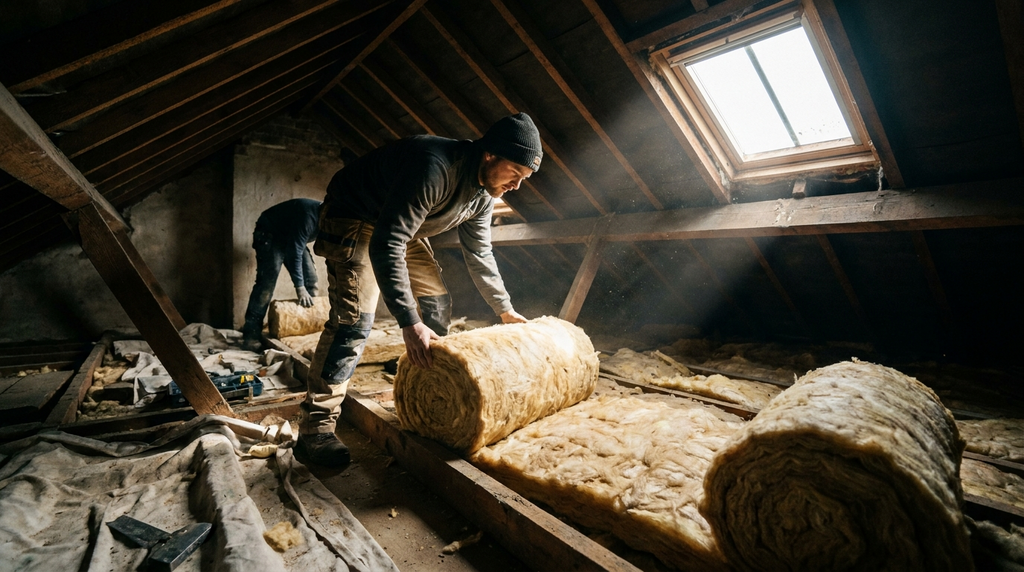
For the many 1950s–70s homes in Sidemoor, Charford and Finstall with little or no loft insulation, topping up to the recommended 270mm of mineral wool is the single most cost-effective measure available. Cost is typically £300 – £500 for a standard semi and annual savings can reach £200 – £300. Payback in under two years, it’s a no-brainer.
Cavity Wall Insulation
The West Midlands has one of the highest proportions of unfilled cavity walls in England, and Bromsgrove’s postwar estates are no exception. A typical cavity wall fill costs £500 – £800 and saves £150 – £250 per year. A simple borescope survey (often free from installers) confirms whether your walls are suitable.
Solid Wall Insulation
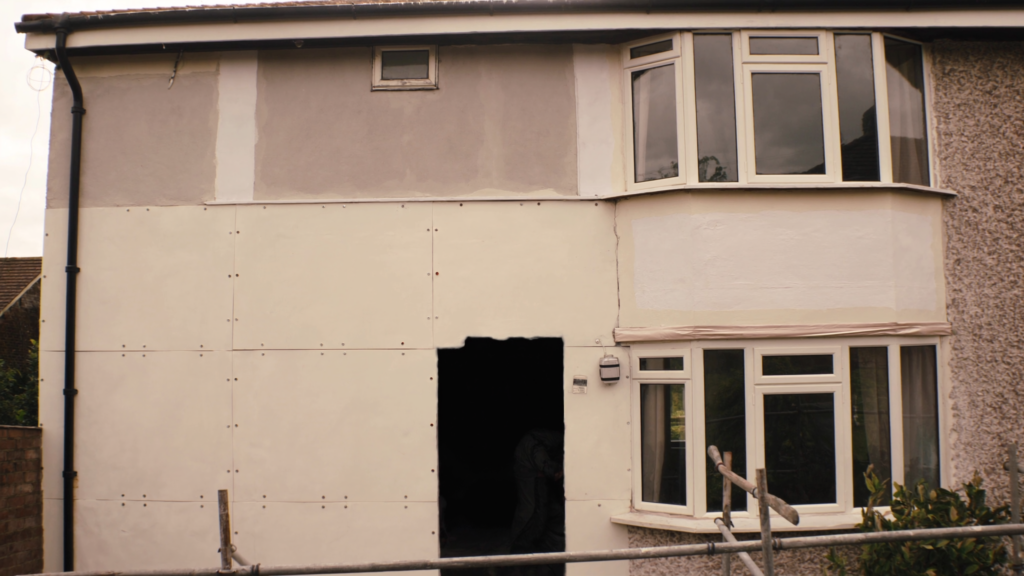
Victorian and Edwardian properties around the town centre and in older Bromsgrove villages have solid brick walls that require either external or internal insulation. This is more disruptive and expensive, £8,000 – £18,000 depending on the approach, but savings of £300 – £500 per year are achievable. External wall insulation can also refresh the look of a tired facade.
Floor and Window Upgrades
Draught-proofing and fitting double or triple glazing (if you’re still on single glazing) typically costs £400 – £600 per window for double glazing and saves around £30 – £60 per window per year. Floor insulation for suspended timber floors, common in Bromsgrove’s older semis, costs around £1,000 – £2,000 and saves £50 – £100 per year.
Grants and Funding Bromsgrove Residents Can Actually Get in 2026
This is the area where a lot of homeowners get confused, so let’s be clear about what’s actually available and who qualifies.
The Warm Homes Plan (Great British Insulation Scheme)
This is the main national scheme for insulation upgrades. You may qualify if your home is EPC Band D or below, which covers the majority of Bromsgrove homes, and if your household income is below £36,000 or you receive certain benefits. Grants cover a significant portion of insulation costs, sometimes the full amount for the lowest-income households. Apply through the government’s Simple Energy Advice service or ask Bromsgrove District Council’s housing team to point you toward the local delivery agent.
The Boiler Upgrade Scheme
If you’re switching from a gas boiler to a heat pump, you can claim £7,500 off the cost of an air source heat pump or £7,500 off a ground source heat pump. This is paid directly to your MCS-certified installer, so you just pay the net amount. Given that Bromsgrove’s mild climate makes heat pumps perform well here, this grant genuinely changes the maths for many households.
ECO4 Scheme
Energy Company Obligation 4 is delivered through the big energy suppliers and targets fuel-poor households. If you’re on means-tested benefits or have a low household income, you could get a full package of insulation measures, sometimes including a new heating system, at no cost to you. Installers serving Bromsgrove also cover Redditch, Kidderminster and Stourport-on-Severn as a cluster, which means there’s reasonable local competition keeping standards up.
West Midlands Combined Authority Retrofit Programme
The WMCA has its own retrofit funding strand that can supplement national schemes, particularly for households in or near fuel poverty. This is worth asking about specifically through Bromsgrove District Council or Worcestershire County Council’s energy advice line, the funding is sometimes available in addition to ECO4 rather than instead of it.
VAT on Energy-Saving Materials
Since the VAT exemption was made permanent, you pay no VAT on most insulation, solar panels, heat pumps, and related measures. This isn’t a grant, but it’s worth knowing because it is a saving of up to 20% on some job costs.
Finding Good Installers Around Bromsgrove
The good news for Bromsgrove homeowners is that the local installer market is reasonably competitive. Companies based in or near the town also tend to serve Redditch, Kidderminster, Bewdley, and Stourport-on-Severn as a natural cluster, which means there are usually several firms chasing the same work, helpful for getting fair quotes.
Here’s what to look for and watch out for.
- MCS certification is mandatory for solar, heat pumps, and battery storage if you want to access the Boiler Upgrade Scheme or Smart Export Guarantee payments, always check the MCS installer database at mcscertified.com before signing anything
- CIGA-registered installers are the ones to use for cavity wall insulation, they provide a 25-year guarantee backed by the Cavity Insulation Guarantee Agency
- For insulation under the government grant schemes, your installer must be PAS 2030 certified and work under a TrustMark-registered framework, if they can’t confirm this, walk away
- Get at least three written quotes for any significant work, prices vary considerably in the Bromsgrove area and a quick ring-around is always worth doing
- Be cautious of door-to-door salespeople claiming you qualify for “free” work, legitimate grant-funded installers do exist, but high-pressure cold calls are a common warning sign in this area
Waiting times for solar and heat pump installations in the Bromsgrove area are currently running at roughly 6 to 12 weeks from survey to installation with most reputable firms. Insulation work is generally quicker.
Your Step-by-Step Upgrade Roadmap for a Typical Bromsgrove Home
If you’ve got a Band D semi or detached house, say, a 1960s three-bedroom in Charford or a 1970s detached in Aston Fields, here’s the order we’d suggest tackling things.
- Get a proper EPC assessment first, not just the summary but the full recommendation report. This costs around £80–£120 and tells you exactly what measures are recommended for your specific home. Bromsgrove District Council