What Makes Bay Windows a Defining Feature of British Homes
Bay windows project outward from the main wall of a building, creating an alcove or recess inside the room and adding significant floor space, natural light, and architectural character. Approximately 30% of UK period properties, particularly Victorian and Edwardian terraced and semi-detached houses, feature original bay windows as a central design element. Even in new-build homes, bay windows remain one of the most requested upgrades, with the UK window market valuing bay window installations at an estimated £450 million annually. If you’re replacing tired originals, upgrading to modern glazing, or adding a bay window to an extension, understanding the full picture helps you make a decision that adds lasting value to your home.
How Bay Windows Work
A bay window is not a single pane of glass, it is a structural assembly that cantilevers or is supported beyond the external wall line of a building. The fundamental principle is that the window unit projects outward at an angle or in a square configuration, held in place by a combination of a bay roof (often a small lead-flashed or tiled canopy above), a structural cill or fascia board beneath, and, in modern installations, a bay pole or structural lintel spanning across the opening inside.
The glazed panels within a bay window are typically casement or sash window units set into the angled or squared frame. Each panel can open independently for ventilation, while the overall structure creates a thermally complex envelope because heat loss occurs not just through the glass but also through the bay roof, the cill, and any side cheeks (the side walls of the bay below the window line). Modern bay window systems address this with continuous insulated frames, thermally broken aluminium profiles, or timber frames with cavity insulation in the structural cheeks.
The three main configurations work as follows:
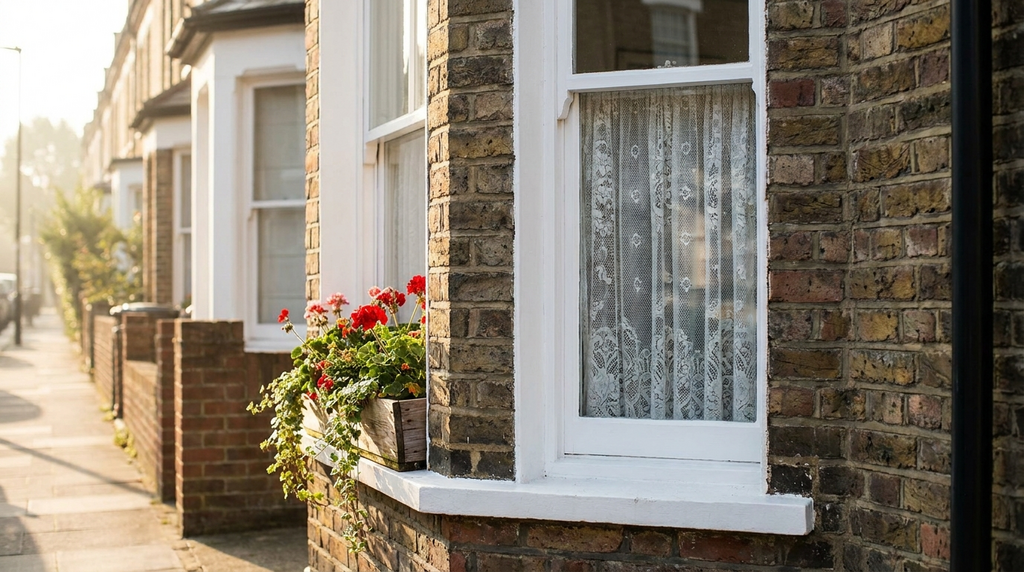
- Angled (canted) bays, the most common UK style, with two angled side panels typically set at 45° or 30° flanking a larger central panel. The 45° version is characteristic of Victorian housing.
- Square (box) bays, side panels run at 90° to the front face, creating a rectangular projection. Common in 1930s semi-detached homes and modern new-builds.
- Curved (bow) bays, multiple panels arranged in a gentle arc, requiring specially curved frame sections or multiple narrow flat panels. Less common but highly desirable in period conversions.
Types of Bay Windows Available in 2026
The UK market in 2026 offers bay windows in four principal frame materials, each with distinct thermal, aesthetic, and maintenance characteristics. uPVC bay windows dominate the replacement market, accounting for roughly 70% of installations, due to their low maintenance requirements and competitive pricing. Timber bay windows are preferred for conservation areas and period property restorations where local planning authorities require material authenticity. Aluminium bay windows have grown substantially in popularity, now accounting for approximately 15% of the premium replacement market, valued for their slim sightlines and contemporary aesthetic. Composite (timber-aluminium) bay windows combine a timber interior with an aluminium exterior cladding, offering the warmth of wood inside with weather resistance outside.
Glazing configuration matters as much as frame material. Most bay window installations in 2026 use double glazing as standard, with argon-filled units and warm-edge spacer bars achieving U-values of around 1.2 W/m²K. Upgrading to triple glazing within a bay window frame reduces the centre-pane U-value to approximately 0.6–0.8 W/m²K, though the added weight, triple glazed units can weigh 40% more than double, requires careful assessment of the bay’s structural support.
How Much Do Bay Windows Cost in 2026
Bay window prices vary substantially based on size, configuration, material, glazing specification, and whether the bay roof and structural elements need replacement alongside the window units. The figures below represent typical installed costs from reputable UK installers, including VAT at 20%, removal of existing windows, and standard fitting. Structural repairs, bay roof replacement, or listed building work will add to these figures.
| Bay Window Type | Frame Material | Typical Size | Installed Cost Range (2026) |
|---|---|---|---|
| Small angled (canted) bay | uPVC | 1.8m wide × 1.2m high | £1,400 – £2,200 |
| Medium angled (canted) bay | uPVC | 2.4m wide × 1.4m high | £2,000 – £3,200 |
| Large angled (canted) bay | uPVC | 3.0m wide × 1.5m high | £2,800 – £4,500 |
| Square (box) bay | uPVC | 2.4m wide × 1.4m high | £2,200 – £3,800 |
| Curved (bow) bay | uPVC | 2.4m wide × 1.2m high | £3,500 – £5,500 |
| Angled bay | Timber | 2.4m wide × 1.4m high | £3,500 – £6,000 |
| Angled bay | Aluminium | 2.4m wide × 1.4m high | £4,000 – £7,500 |
| Angled bay | Composite (timber-aluminium) | 2.4m wide × 1.4m high | £5,000 – £9,000 |
| Bay roof replacement (lead) | N/A | Standard small–medium bay | £600 – £1,800 |
Additional costs that frequently arise during bay window projects include:
- Structural lintel or bay pole installation, £300–£800 if the existing support is inadequate or corroded
- Internal plastering and decoration, £200–£600 depending on the extent of making good required
- External rendering or brickwork repairs, £150–£500 for minor repairs around the perimeter
- FENSA or CERTASS registration certificate, usually included in installer quotes but confirm before signing
Benefits of Bay Windows
Bay windows deliver a combination of practical, aesthetic, and financial advantages that few other window styles can match. Understanding the specific gains helps you justify the premium over a standard flat window replacement.
Increased Natural Light
Because a bay window projects beyond the wall line, it allows light to enter the room from multiple angles simultaneously. A well-designed angled bay can increase daylight levels in a front reception room by 25–40% compared to a flat window of similar total glazed area. This is particularly valuable in north-facing rooms or terraced houses where the front elevation is the primary source of daylight.
Usable Additional Floor Space
Even a modestly sized angled bay projects 300–600mm beyond the external wall, creating a small alcove that can be fitted with a window seat, bookshelves, or a small desk. A typical medium bay window adds approximately 0.5–1.2 square metres of usable floor area, not insignificant in compact UK terraced homes.
Property Value Addition
Kerb appeal has a measurable effect on UK property valuations. Estate agents consistently report that well-maintained, attractive bay windows, particularly in Victorian and Edwardian properties where they are architecturally expected, contribute positively to asking prices. While precise figures vary by location, replacing failed or ugly replacement windows with sympathetic bay windows in period properties can recover 80–100% of the installation cost in added value.
Thermal Performance Improvements
Replacing single-glazed or failed double-glazed bay windows with modern A-rated units can reduce heat loss through that elevation by up to 70%. A typical Victorian front bay with three single-glazed panels might lose 350–500 kWh of energy per heating season; a well-specified modern double-glazed replacement can reduce that figure to 100–150 kWh, generating meaningful savings on annual heating bills.
Acoustic Performance
Modern bay window units with acoustic laminated glazing can achieve sound reduction values of 32–42 dB, making them particularly effective for homes on busy roads, a common scenario for Victorian terrace bay windows that face directly onto streets.
How to Choose the Right Bay Windows for Your Home
Making the right bay window choice means balancing aesthetics, thermal performance, durability, planning requirements, and budget. Work through these considerations systematically.
Check Planning and Listed Building Requirements First
Like-for-like bay window replacements on most UK properties are covered by Permitted Development rights and do not require planning permission. However, if your property is in a Conservation Area, an Article 4 Direction area, or is itself listed, you will need consent before making changes, even replacing existing bay windows. Unapproved alterations in these areas can result in enforcement action and costly reversal. Contact your local planning authority before ordering anything.
Match the Frame Material to Your Property Age and Style
For Victorian and Edwardian properties, timber or high-quality timber-effect uPVC with slim sightlines and appropriate moulding profiles respects the original character. For 1930s semis, square bay profiles in white uPVC or painted timber are period-appropriate. For contemporary extensions or new-builds, slim-section aluminium frames with large glass areas are architecturally coherent. Mismatched profiles and materials are the most common aesthetic mistake in bay window replacement projects.
Understand Energy Performance Ratings
Windows are rated under the BFRC Window Energy Rating scheme from A++ to E. For bay windows, which by their projecting nature have more exposed surface area than flat windows, specifying at least an A-rated unit is strongly recommended. The U-value of the whole window (not just the centre pane) is the most meaningful thermal performance metric for a bay; target a whole-window U-value of 1.4 W/m²K or better for double glazing.
Assess the Bay Roof Condition
The bay roof, whether lead-flashed, EPDM rubber, or tiled, is integral to the weathertightness of the whole assembly. Many installation quotes cover only the window frames and glazing, not the bay roof above. Inspect the bay roof carefully before commissioning work; replacing windows while leaving a failing lead bay roof guarantees water ingress problems within a few years.
Select Opening Configurations Carefully
Consider which panels you want to open for ventilation. In most angled bays, the two side panels are casement openers and the central panel is fixed, this is the most cost-effective configuration and works well for most homes. However, if the bay is the primary ventilation source for the room, you may want all three panels to open, which adds cost but improves liveability.
Get Multiple Quotes and Check Credentials
The FENSA and CERTASS schemes regulate window installation in England and Wales. This ensures that installers self-certify compliance with Building Regulations. Always use a registered installer, this protects you legally and is required for the installation to be compliant for Building Control purposes. Get at least three written quotes, and ensure each quote specifies frame material, glazing unit specification, U-values, and what happens to the bay roof.
Bay Window Installation, What to Expect
Understanding the installation process helps you prepare your home, set realistic expectations, and identify if something is going wrong. A standard bay window replacement takes one to two days for an experienced team; structural repairs or bay roof work can extend this to three or four days.
- Survey and measurement, A precise technical survey is carried out before manufacture. Bay windows are almost never standard sizes; they are made to measure based on the exact dimensions and angles of your existing bay opening.
- Manufacturing lead time, Custom bay window units typically take four to eight weeks from order to delivery, depending on the manufacturer and specification. Timber units can take longer.
- Preparation and protection, On the day of installation, the team will protect your flooring and furniture. External scaffolding or platforms may be needed for first-floor bays.
- Removal of existing windows, Old frames are carefully cut out and removed. At this point, the structural condition of the bay lintel, cill, and surrounding masonry is assessed and any necessary repairs made before the new frame goes in.
- New frame installation, The new bay frame assembly is positioned, levelled, and secured. Bay windows are typically fixed using frame fixings into the surrounding masonry at regular intervals, with the bay pole or structural support positioned inside.
- Glazing and sealing, Glazed units are fitted into the frame. All joints between the frame and masonry are sealed with low-expansion foam from inside and with silicone sealant externally. Correctly specified and applied sealant is critical to long-term weathertightness.
- Bay roof inspection or replacement, If included in the scope, the bay roof is inspected, re-leaded, or recovered at this stage.
- Internal making good, Plasterwork, window boards (internal cills), and any disturbed décor are made good. Some installers include basic plastering; others will leave this to your own decorator.
- Certificate and documentation, Your installer provides a FENSA or CERTASS certificate, which you will need when you sell your home to demonstrate Building Regulations compliance.
Bay Window Energy Performance and Thermal Considerations
Bay windows present a more complex thermal challenge than flat window replacements. Because they project from the wall, they have a greater external surface area relative to their glazed area, the bay roof, the side cheeks, and the extended cill all become additional pathways for heat loss if not properly insulated.
Modern installations address this in several ways. Thermally broken frames, whether aluminium, uPVC, or composite, interrupt the conductive path between inside and outside surfaces, preventing cold bridging at the frame perimeter. The cavity within the structural cheeks (the side walls beneath the window units) should be insulated during any major bay refurbishment; uninsulated cheek walls in Victorian bays are a significant source of heat loss that replacing the glass alone will not solve.
The glazing itself should use warm-edge spacer bars (typically made from foam, silicone, or stainless steel rather than standard aluminium) to minimise condensation risk at the glass edge and improve the overall U-value. Low-emissivity (Low-E) coatings, applied to the inner face of the outer glass pane in a double-glazed unit, reflect long-wave heat radiation back into the room, reducing heat loss by up to 35% compared to uncoated glass.
In terms of solar gain, south and west-facing bay windows can contribute meaningfully to passive solar heating in winter, but may cause overheating in summer. Specifying glazing with an appropriate Solar Heat Gain Coefficient (SHGC), typically 0.35–0.55 for UK conditions, balances winter solar benefit against summer overheating risk.
Bay Window Grants and Funding in 2026
Several UK government schemes can contribute to the cost of bay window replacement, particularly where energy efficiency improvement is the primary driver. Eligibility criteria and funding levels change periodically; always verify current terms directly with the relevant scheme administrator.
| Scheme | Who Qualifies | What It Covers | Potential Contribution |
|---|---|---|---|
| Great British Insulation Scheme (GBIS) | Owner-occupiers and private renters in properties with EPC rating D–G; some income-based eligibility | Primarily insulation measures; windows may qualify as part of a wider retrofit package in some cases | Variable, up to full cost for lowest-income households |
| ECO4 (Energy Company Obligation) | Households receiving qualifying benefits or with low EPC ratings | Glazing upgrades including bay windows may qualify as part of a whole-house retrofit plan | Up to 100% of measure cost in eligible households |
| Local Authority Flexibility (LAFlex) | Determined by local council, may extend ECO4 to non-benefit households in fuel poverty | Window upgrades as part of energy improvement package | Partial to full, council-dependent |
| Historic England Repair Grants | Listed buildings and buildings in Conservation Areas | Repair or reinstatement of historic windows, including bay windows, using traditional materials | Typically 25–50% of eligible costs |
| VAT Reduced Rate (5%) | Properties that have been empty for 2+ years, or installations qualifying as energy-saving materials | Glazing is standard-rated for VAT at 20%. The zero rate for energy-saving materials covers insulation, heat pumps and solar panels; HMRC names secondary and double glazing as excluded (VAT Notice 708/6). | Reduction of 15 percentage points on VAT portion |
For most homeowners replacing bay windows primarily for aesthetic or maintenance reasons, direct government grant support is limited. The strongest financial case for grant support applies when you have a low EPC rating (D or below), receive qualifying benefits, and are undertaking bay window replacement as part of a broader energy efficiency improvement programme. Contact your energy supplier or local council’s energy efficiency team to establish your eligibility before approaching installers, some grant-funded installers offer end-to-end help with the application process.
Common Bay Window Problems and How to Maintain Them
Bay windows, by virtue of their projecting nature and complex junction points, are prone to specific failure modes that flat windows rarely encounter. Understanding these helps you identify issues early and maintain your windows effectively.
Bay Roof Leaks
The junction between the bay roof covering (lead, EPDM, or felt) and the main house wall above is the most common source of water ingress in bay window assemblies. Lead flashings typically last 50–70 years if well-installed, but can fail earlier if incorrectly lapped, if the lead is too thin (below Code 4, approximately 1.8mm), or if movement in the structure has cracked the joints. Inspect your bay roof annually from a ladder; look for lifted or cracked flashing, standing water, or moss growth indicating poor drainage. Have any suspect areas re-leaded promptly, a small flashing repair costs £150–£400; left unchecked, the resulting damp can require thousands in structural remediation.
Failed Sealed Units
Misting or condensation between the panes of a double-glazed unit indicates that the hermetic seal has failed. This allows moisture-laden air into the cavity. This is particularly common in bay windows because the angled joints and multiple frames create more potential weak points. Failed units cannot be repaired, the entire sealed unit must be replaced. In a uPVC bay window under 10 years old, the unit itself is usually still under the manufacturer’s guarantee; the installation labour may not be. Individual sealed unit replacements typically cost £80–£250 per pane.
Frame Distortion and Drooping
uPVC frames in large bay windows can distort over time if inadequately supported, a particular risk in wide angled bays where the central mullion carries significant load. Bay poles, vertical steel posts installed inside the room, concealed behind a decorative pole and curtain, are the standard solution for providing structural support to the frame from below. If your bay window is showing signs of the central section dropping or the corner joints opening up, have a structural assessment carried out; the fix is usually straightforward if caught early.
Cold Bridging at Junctions
Where the bay frame meets the surrounding wall, poorly installed windows with inadequate insulation at the perimeter can create cold bridges, areas where heat is conducted rapidly to the outside, causing condensation and mould on the internal reveal. Correct installation uses continuous insulation at all frame-to-wall junctions, covered with an appropriate sealant. If you notice damp patches or mould on the internal plasterwork at the edges of your bay window, this is the likely cause.
Routine Maintenance Schedule
- Every 6 months, clean frames with warm soapy water; inspect and lubricate all hinges, handles, and locking mechanisms with a light oil or dedicated window lubricant
- Annually, inspect the bay roof and flashings; check all external silicone sealant for cracking or separation and replace any failed sections; test all opening lights for smooth operation and correct weather seal compression
- Every 5–10 years (timber frames), repaint or restain all timber surfaces; inspect for paint failure, rot, or joint movement; treat any bare timber promptly with appropriate preservative primer before repainting
- Every 10–15 years, have the entire bay roof professionally inspected and consider proactive re-leading if the original covering is approaching 40–50 years old
Bay Windows and Building Regulations
In England and Wales, replacing bay windows triggers compliance with Part L of the Building Regulations (conservation of fuel and power), which sets minimum energy performance standards for replacement windows. The current requirement is that replacement windows must achieve a whole-window U-value of no more than 1.6 W/m²K, or achieve a minimum Window Energy Rating of Band C. In practice, most 2026 specifications exceed this comfortably.
Bay windows that are part of a new extension must also comply with Part A (structure) if the bay is a structural element, and Part C (resistance to moisture) in terms of weathertightness detailing. Work carried out by a FENSA or CERTASS-registered installer is self-certified, meaning the installer takes responsibility for Building Regulations compliance and notifies the local authority on your behalf. If you use an unregistered contractor, you must apply for a Building Regulations application through your local authority Building Control department before work begins, failure to do so can complicate property sales.
For bay windows in Scotland, equivalent standards are set by the Scottish Building Standards, with slightly different U-value thresholds. Northern Ireland follows its own Building Regulations (Northern Ireland) framework. In all cases, the principle is the same: replacement windows must meet or exceed current energy efficiency standards, and the installation must be certified.
Finding a Reliable Bay Window Installer
The bay window market includes both highly professional national companies and smaller local specialists, as well as a minority of poor-quality operators who undercut on price by cutting corners on specification and installation. Protecting yourself requires straightforward due diligence.
Verify that any installer you consider is registered with FENSA (Fenestration Self-Assessment Scheme) or CERTASS, both maintain online registers you can search by postcode. Check independently for reviews on platforms like Trustpilot or Checkatrade, paying particular attention to reviews that mention bay windows specifically, as this is a more complex installation than a simple flat casement replacement. Ask to see examples of previous bay window installations, ideally on similar property types to your own.
Request detailed written specifications in every quote, including frame material and manufacturer, glazing unit specification (thickness, gas fill, spacer bar type), U-values for the whole window, what work is included regarding the bay roof, and the precise warranty terms for both the product and the installation labour. A company unwilling to provide this level of detail in writing is a company to avoid.
The cheapest quote is rarely the best value for bay windows. Given that a quality bay window installation should last 25–35 years with proper maintenance, the difference between a £2,500 and a £3,200 quote is often the difference between a product that performs and one that fails prematurely, and the full cost of replacement is always greater than the cost of getting it right first time.