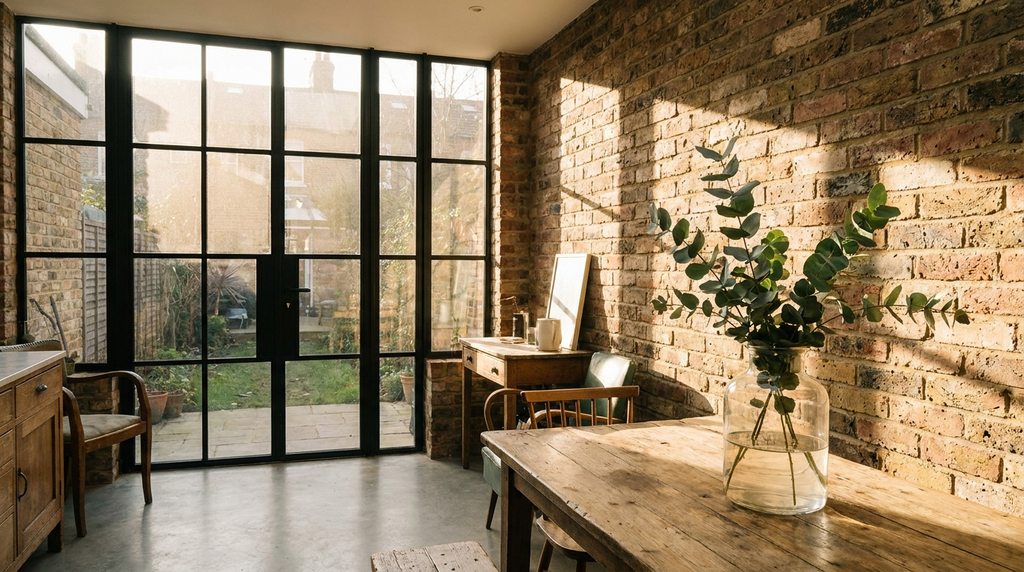
What you need to know about replacement windows and doors
Replacing windows and doors on a typical three-bedroom semi-detached house costs between £6,000 and £12,000 for the windows, with a new front door adding £1,500–£3,500 supply-and-fit (Energy Saving Trust). This is often one of the most effective single improvements for cutting heat loss, reducing noise and increasing property value. Whether the investment makes sense depends on your home’s current condition, your heating costs and your long-term plans.
When replacement windows and doors is worth it
- Your existing frames are single-glazed or early double-glazed (pre-2002), with U-values above 2.0 W/m²K, modern replacements cut heat loss by roughly half.
- You feel noticeable draughts around frames, or condensation forms between panes (failed seals).
- Your energy bills are high and you are not planning to move for at least five years, the savings on heating can offset a significant portion of the cost.
- Your home is a standard modern build (post-1990) where planning permission is not needed and fitting is straightforward.
- You want to improve security: modern doors and windows meet PAS 24 standards and have multi-point locking systems.
When it might not be
- Your current frames are in good condition and less than 15 years old, the energy saving from upgrading may take decades to recoup.
- You live in a listed building or a conservation area, permission requirements can make the project expensive and restrictive (gov.uk).
- You plan to sell within two to three years, you may not recover the full cost in the sale price.
- Your property has solid walls and no other insulation, windows alone will not solve the overall heat loss problem.
The sections below cover the costs per window type, the building regulations you must meet, and the grants and finance available in 2026.
How replacement windows and doors works
Most UK homes have either windows that are quietly leaking heat, and money, or windows that aren’t. Figuring out which group you’re in is the first job of this guide. A full set of replacement windows on a 3-bed semi costs £6,000–£12,000 supply-and-fit. A new composite front door adds £1,500–£3,500. The investment pays back through warmer rooms, lower bills, and a higher sale price, or it doesn’t, depending on what’s already in your walls. This guide walks through how to make that call, what to ask three installers, where the FENSA / Building Regs admin actually matters, and how to read a quote that’s been padded.
Key components and sub-systems
| Component | Function | Why it matters |
|---|---|---|
| Frame (uPVC, aluminium, timber, composite) | Holds the glazing and attaches to the building structure | Determines durability, insulation value, and maintenance requirements (Energy Saving Trust) |
| Double or triple glazing (sealed unit) | Two or three panes of glass with an insulating gas layer between | Reduces heat loss; triple glazing can lower U-values to 0.8 W/m²K or below (gov.uk) |
| Low-emissivity (low-E) coating | Microscopic metallic layer on the glass | Reflects heat back into the room while letting light through |
| Warm-edge spacer bar | Separates the glass panes at the edge | Reduces condensation and heat loss at the frame edge |
| Weather seals and gaskets | Rubber or silicone strips around the opening parts | Prevents draughts and water ingress; critical for airtightness |
| Multi-point locking system | Locking mechanism with several engagement points | Improves security; meets Part Q of Building Regulations (gov.uk) |
| Trickle vents (or background ventilators) | Small slots in the frame that can be opened or closed | Provides controlled ventilation to prevent condensation and mould |
Critical performance principles in plain English
The most important measure of a window or door is its U-value, the rate at which heat passes through the unit. Lower U-values mean better insulation. For replacement windows, Building Regulations in England and Wales require a U-value of 1.4 W/m²K or lower for the whole window (gov.uk). Doors must achieve a U-value of 1.8 W/m²K or lower.
Air leakage is the second key principle. Even a well-insulated window performs poorly if air can leak around the frame. Installers should use expanding foam and tape to seal gaps, and weatherstripping must fit tightly.
Solar gain matters too. South-facing windows can let in free heat from the sun, reducing heating demand in winter. Overheating in summer is a risk, so some homes benefit from solar-control glass or external shading.
Installations must comply with Building Regulations Part L (conservation of fuel and power) and Part F (ventilation). Most installers registered with FENSA or Certass can self-certify compliance, meaning you do not need separate building control approval.
Comparison with alternatives
| Option | Typical cost (supply and fit) | U-value (W/m²K) | Lifespan | Key trade-off |
|---|---|---|---|---|
| Replacement double-glazed windows and doors | £6,000–£12,000 (3-bed semi) | 1.2–1.4 | 20–25 years | Best balance of cost and performance for most homes |
| Triple-glazed windows | £8,000–£16,000 (3-bed semi) | 0.8 |
Types of replacement windows and doors and which suits your home
uPVC (unplasticised polyvinyl chloride) is a rigid plastic material that has become the most common window frame choice in the UK. The frames are extruded into hollow profiles, often reinforced with metal, and welded at the corners to create a strong, sealed unit. Modern uPVC windows can be made to look like timber through woodgrain foils, though the finish is still clearly plastic on close inspection.
Pros
- Very low maintenance – no painting or staining required, just occasional cleaning
- Good thermal performance, with standard double-glazed units achieving U-values around 1.2-1.4 W/m²K (Energy Saving Trust)
- Typically the cheapest option for new windows
- Widely available with many colour options and finishes
Cons
- Can look cheap or “plastic” in period properties
- Limited colour stability – white uPVC can yellow over time, and dark colours can warp in direct sun
- Less rigid than timber or aluminium, so larger openings may need thicker frames
A typical 3-bed semi project using uPVC windows costs £6,000-£12,000 supplied and fitted. Lifespan is 20-30 years before seals and gaskets typically need replacement. Best suited to modern homes, new builds, and properties where budget is the primary concern.
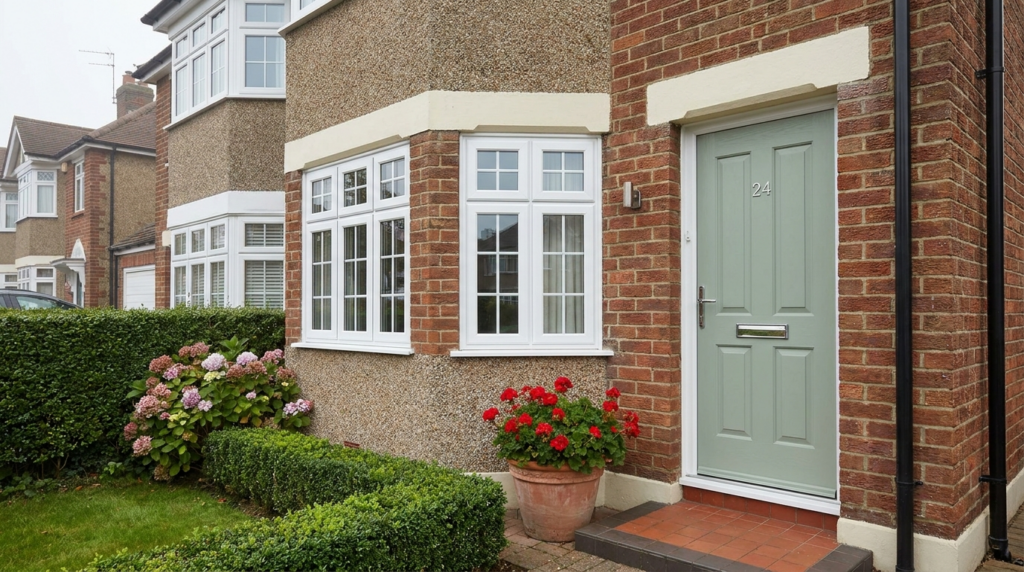
Timber windows
Timber window frames are made from hardwoods such as oak, mahogany, or engineered softwoods like Accoya. They are traditionally constructed with mortise-and-tenon joints or modern laminated sections. Timber windows offer a natural, warm appearance that many homeowners prefer for period or listed properties.
Pros
- Excellent aesthetic appeal, especially in older or listed buildings (gov.uk)
- Good insulator naturally – wood has lower thermal conductivity than aluminium
- Repairable – damaged sections can be spliced rather than replacing the whole frame
- Can last 40-60 years with proper maintenance
Cons
- High maintenance – needs repainting or re-staining every 4-6 years
- More expensive than uPVC – a 3-bed semi timber project typically costs £10,000-£18,000
- Susceptible to rot and insect damage if not properly sealed and maintained
Lifespan can reach 60 years or more with regular care. Best for period homes, conservation areas, and listed buildings where authentic appearance matters more than upfront cost.
Aluminium windows
Aluminium window frames are made from extruded aluminium sections, typically powder-coated for colour and durability. Modern aluminium windows often use a “thermal break” – a plastic strip between the inner and outer sections of the frame – to reduce heat loss. They are slim, strong, and allow larger glass areas than other materials.
Pros
- Very strong and rigid. This allows slim sightlines and large panes of glass
- Extremely durable – powder-coated finishes last 20-30 years without repainting
- Low maintenance – no painting, just occasional cleaning
- Good thermal performance when fitted with a thermal break (U-values from 1.0-1.4 W/m²K)
Cons
- Higher cost than uPVC – a 3-bed semi aluminium project typically costs £9,000-£16,000
- Can feel cold to the touch in winter, though thermal breaks help
- Not repairable in the same way as timber – dents or damage usually mean full replacement
Lifespan is typically 30-45 years. Best for modern or contemporary homes, properties with large glazing, and coastal areas where corrosion resistance is important.
Composite (aluclad) windows
Composite windows, often called aluclad, combine an aluminium outer shell with a timber inner frame. The aluminium provides weather protection and low maintenance externally, while the timber offers warmth and natural appearance inside. The two materials are mechanically bonded, not just glued, to prevent separation over time.
Pros
- Best of both worlds – timber interior appearance with aluminium exterior durability
- Very low external maintenance – no painting needed on the aluminium cladding
- High thermal performance, typically achieving U-values of 0.8-1.2 W/m²K
- Can be painted in any RAL colour externally, with natural wood finish inside
Cons
- Most expensive option – a 3-bed semi project typically costs £12,000-£20,000
- Heavier than single-material frames, needing stronger hinges and fittings
- If the bond between materials fails, replacement is usually the only option
Lifespan is around 40-50 years. Best for homeowners who want timber’s interior look without the external painting, and for high-end projects where budget is less of a constraint.
| Type | Typical install cost (3-bed semi) | Lifespan | Best for |
|---|

replacement windows and doors cost, UK 2026 pricing
Prices vary significantly by frame material and glazing specification. All figures are supply-and-fit averages for a standard opening, excluding structural alterations. Energy-efficient double or triple glazing is assumed throughout.
| Frame material | Casement window (standard) | Tilt-and-turn | Front door | Patio door (sliding) | Bifold door (3-pane) |
|---|---|---|---|---|---|
| uPVC | £400–£800 | £500–£1,000 | £1,500–£2,500 | £2,500–£4,000 | £3,500–£5,500 |
| Timber (hardwood) | £800–£1,600 | £1,000–£2,000 | £2,500–£3,500 | £4,000–£6,000 | £5,000–£8,000 |
| Aluminium | £700–£1,400 | £900–£1,800 | £2,000–£3,200 | £3,500–£5,500 | £4,500–£7,500 |
| Composite (aluclad) | £900–£1,800 | £1,200–£2,200 | £2,800–£3,500 | £4,500–£6,500 | £5,500–£8,000 |
These ranges reflect 2026 market data from the Energy Saving Trust and major UK installers (energysavingtrust.org.uk). uPVC remains the most common choice; timber and aluminium typically cost 50–100% more per unit.
Whole-property cost guide
Most homeowners replace all windows and at least one external door in a single project. The total depends on the number of openings, property size, and any period-feature requirements.
- Flat or small maisonette (3–5 openings), £3,000–£6,000. uPVC is typical; listed-building consent may double the cost.
- 3-bed semi-detached (6–9 openings plus front door), £7,500–£12,000. The most common project size in England and Wales.
- 4-bed detached (10–14 openings plus front and back doors), £12,000–£18,000. Aluminium or timber options push toward the upper end.
- Large detached / period property (15+ openings, sash windows), £18,000–£30,000+. Timber sliding sash windows cost roughly twice as much as standard casements.
Period or listed properties often require bespoke joinery, draught-proofing that matches original profiles, and planning consent from the local authority (gov.uk). Budget an additional 25–40% for heritage-compliant work.
Regional UK pricing
Labour costs and installer overheads vary by region. The table below shows typical whole-project ranges for a 3-bed semi (8 windows + front door) in 2026.
| Region | Typical per project (3-bed semi) | Notes |
|---|---|---|
| London | £9,000–£14,000 | Highest labour rates; travel charges in congestion zone |
| South East | £8,500–£13,000 | Strong demand; premium for timber and aluminium |
| South West | £7,500–£11,500 | Moderate; higher in Cornwall and Devon for remote sites |
| North West | £7,000–£10,500 | Competitive market; many local fabricators |
| North East | £6,500–£9,500 | Lowest labour costs in England |
| Midlands | £7,000–£10,000 | Broadly average; urban areas slightly higher |
| Scotland | £7,000–£11,000 | Higher transport costs in rural areas; Home Energy Scotland grants available (homeenergyscotland.org) |
| Wales | £6,500–£10,000 | Nest scheme may offset costs (nest.gov.wales) |
| Northern Ireland | £6,000–£9,500 | VAT at 20% applies; no devolved energy-efficiency grants (nidirect.gov.uk) |
Regional figures are based on installer pricing surveys and TrustMark-registered tradespeople data (trustmark.org.uk). Always obtain quotes from at least three local firms.

Hidden costs to budget for
Several items are often left out of initial quotes. The table below covers the most common additional costs.
| Item | Typical cost | When it applies |
|---|---|---|
| Scaffolding | £800–£2,500 | First-floor windows or above; listed buildings often require full scaffold |
| Structural alterations (lintels, brickwork) | £500–£2,000 per opening | Enlarging openings, installing bifolds or sliding doors in load-bearing walls |
| Asbestos testing and removal | £300–£1,500 | Pre-2000 properties with textured coatings, soffits, or old window panels |
| Removal and disposal of old windows | £200–£500 total | Included by most installers; confirm before signing |
| Plastering and redecorating |
Performance, savings and payback
What is a U-value and what do UK regulations require?
The key performance measure for windows and doors is the U-value, expressed in watts per square metre per kelvin (W/m²K). It tells you how much heat passes through the product. A lower U-value means better insulation, less heat escapes your home in winter.
Under current Building Regulations (Approved Document L, 2021 edition as amended), replacement windows must achieve a centre-pane U-value of 1.4 W/m²K or lower. Replacement doors must also reach 1.4 W/m²K (gov.uk). Most modern double-glazed units with low-E glass and argon gas fill comfortably meet this standard. Triple glazing can achieve U-values around 0.8–1.0 W/m²K, but the extra cost is rarely justified for the small additional saving.
How much energy and money can you save per year?
The Energy Saving Trust estimates that replacing single-glazed windows with A-rated double glazing saves a typical semi-detached home approximately £195 per year on heating bills (energysavingtrust.org.uk). If you currently have old double glazing (fitted before 2002) with U-values around 2.8–3.0 W/m²K, upgrading to modern 1.4 W/m²K units saves roughly £90–£120 per year.
For doors, replacing an uninsulated solid timber front door (U-value ~3.0 W/m²K) with a modern composite door (U-value ~1.4 W/m²K) saves about £40–£60 per year. A full set of windows plus a front door on a typical 3-bed semi saves in the region of £140–£250 annually.
Payback period, worked examples for three UK homes
Payback depends on installation cost, current glazing condition, and local climate. The table below shows realistic scenarios based on 2026 prices.
| Property type | Install cost (£) | Annual saving (£) | Payback years |
|---|---|---|---|
| 3-bed semi, Manchester (replacing 1990s double glazing) |
£9,500 | £110 | 86 |
| 4-bed detached, Edinburgh (replacing single glazing) |
£14,000 | £240 | 58 |
| Mid-terrace, Bristol (replacing 1980s double glazing) |
£7,000 | £95 | 74 |
These figures assume the full project cost (supply and fit) and use Energy Saving Trust saving estimates adjusted for regional climate differences. Even in the best case, replacing single glazing in a cold area, payback takes over 50 years. That is much longer than the typical 20–25 year lifespan of modern double glazing (gov.uk).
EPC band improvement potential
Replacing windows and doors can improve your Energy Performance Certificate rating, but the effect is modest. For a typical 3-bed semi with single glazing, upgrading to 1.4 W/m²K double glazing raises the EPC score by roughly 5–8 points, enough to move from band D to band C in some cases. For homes with already adequate double glazing, the improvement is 1–3 points (energysavingtrust.org.uk).
Loft insulation (up to £30/year saving) and cavity wall insulation (up to £195/year saving) offer far bigger EPC gains per pound spent. Windows and doors should be a later priority after fabric insulation is optimised.
When replacement does not pay back fast
There are several situations where replacing windows and doors makes little financial sense:
- Existing double glazing fitted after 2005, These units typically have U-values of 1.6–2.0 W/m²K. The upgrade to 1.4 W/m²K saves only £30–£60 per year, meaning payback of 100+ years (ofgem.gov.uk).
- Listed buildings or conservation areas, You may be required to use slim-profile double glazing or secondary glazing, which costs 30–50% more than standard units, making payback even longer (gov.uk).
- Homes with poor loft or wall insulation, Heat loss through uninsulated walls (up to 35% of total heat loss) dwarfs window losses (10–15%). Fix the fabric first, then consider windows.
- Rental properties where you plan to sell within 10 years, The EPC improvement may help meet minimum standards, but the upfront cost will not be recovered through higher rent or sale price alone (<a href="https://www.gov.uk/consumer-prot
UK regulations, country by country
Replacement windows and doors in the UK must meet building regulations that cover energy efficiency, security, ventilation, safety, and fire escape. The rules differ across England, Scotland, Wales, and Northern Ireland. Below is a summary of the key documents and requirements for each nation, followed by detailed guidance on each regulation.
Four-nation overview: replacement windows and doors
| Country | Document/regulation | Key requirement for replacement windows and doors | Source URL |
|---|---|---|---|
| England | Approved Document L (conservation of fuel and power) | Maximum U-value of 1.4 W/m²K for windows and glazed doors | gov.uk |
| Scotland | Scottish Technical Handbook Section 6 (energy) | Maximum U-value of 1.4 W/m²K for windows and glazed doors; compliance with fabric energy efficiency standard | legislation.gov.uk |
| Wales | Approved Document L (Wales) – Part L1B | Maximum U-value of 1.4 W/m²K for windows and glazed doors; must meet target fabric energy efficiency | gov.wales |
| Northern Ireland | Technical Booklet F (conservation of fuel and power) | Maximum U-value of 1.4 W/m²K for windows and glazed doors | nidirect.gov.uk |
All four nations also require that replacement windows and doors are installed by a certified installer registered with a competent person scheme, or that the work is approved by the local building control body. For England, the main schemes are FENSA and CERTASS (fensa.org.uk; certass.co.uk).
Approved Document L: energy efficiency
Approved Document L sets minimum energy performance standards for replacement windows and doors. In England, Scotland, Wales, and Northern Ireland, the maximum U-value for replacement windows and glazed doors is 1.4 W/m²K (gov.uk). This applies to all new glazing, including double or triple glazing. For solid timber or composite doors, the maximum U-value is typically 1.8 W/m²K, though specific product standards vary. The requirement applies to the whole window or door unit, not just the glass. If you replace a window or door, the whole unit must meet the standard. If you only replace the glass (a sealed unit), the glass alone must achieve a U-value of 1.2 W/m²K or lower.
Approved Document Q: security
Approved Document Q applies only to new-build homes in England, not to replacement windows and doors in existing homes (gov.uk). For replacement installations, there is no legal requirement to meet Document Q standards. However, many installers offer PAS 24 or Secured by Design certified products as a best-practice option. If you want enhanced security, look for windows or doors tested to PAS 24:2016 or LPS 1175. These products typically have multi-point locking systems, toughened glass, and reinforced frames.
Approved Document F: ventilation
Approved Document F (ventilation) applies to replacement windows and doors in England when the installation reduces the natural ventilation of a room. If you replace windows with a more airtight design, you may need to install trickle vents or other background ventilation to maintain adequate fresh air supply (gov.uk). Trickle vents are small slots in the window frame that allow controlled airflow. In practice, most replacement windows include trickle vents as standard. If your home has an existing continuous mechanical extract system, trickle vents may not be required. Check with your installer whether the new windows meet the minimum ventilation rates for the room.
Approved Document K: protection from falling
Approved Document K sets safety requirements for glazing at low levels. For replacement windows and doors in England, any glazing within 800mm of the floor or within 300mm of a door must be safety glass (toughened or laminated) (gov.uk). This applies to windows, glass doors, and side panels. Safety glass must be marked with a British Standard (BS 6206) or European equivalent. If you install a patio door or bifold door, all glass panels must meet this standard. For ground-floor windows, the requirement is the same. For upper-floor windows, the same rule applies, but there is no additional requirement for restrictors unless the window opening is less than 800mm above the floor.

Planning permission for replacement windows and doors
Most replacement windows and doors in England are considered permitted development, meaning you do not need to apply for planning permission before starting work. This applies provided the new installations are of a similar appearance to the originals and do not project beyond the plane of the existing wall. The same principle generally applies to doors, including front doors, patio doors and bifold doors, as long as the opening is not enlarged. You should always check with your local planning authority before placing an order, as local rules can vary (planningportal.co.uk).
When you do need planning permission
You must apply for planning permission for replacement windows or doors in any of the following situations:
- Your home is a listed building, any change to windows or doors, including like-for-like replacements, normally requires listed building consent (gov.uk).
- Your property is in a conservation area, planning permission is usually needed if you change the design, materials or glazing pattern of windows or doors that face a highway, waterway or open space.
- An Article 4 direction is in place, this removes permitted development rights for specific streets, estates or villages, often to protect historic character.
- Your home is in a National Park, Area of Outstanding Natural Beauty (AONB) or World Heritage Site, permitted development rights are more restricted, and planning permission may be required for any changes to the external appearance.
- You are enlarging an opening, for example, replacing a window with a wider bifold door or a larger patio door.
Specific complications for replacement windows and doors
Even where planning permission is not required, other regulations can affect your choice of replacement windows and doors.
Conservation areas and listed buildings. In conservation areas, double or triple glazing may be refused if the frames or glazing bars do not match the original style. For listed buildings, you may be required to use slim-profile double glazing or secondary glazing to preserve historic fabric. Planning officers can insist on timber frames rather than uPVC or aluminium (gov.uk).
Heat pump siting. If you are also installing an air source heat pump, the outdoor unit must be at least one metre from the boundary of your property. In conservation areas, it must not be sited on a wall or roof that fronts a highway. This can affect where you can position new windows or doors to maintain adequate spacing (gov.uk).
Solar panels on or near windows. Solar panels on a roof slope that faces a highway may require planning permission in conservation areas or World Heritage Sites. Panels must not project more than 200mm beyond the roof plane, which can limit options if you are replacing windows at the same time.
Insulation in listed buildings. Adding insulation to walls as part of a window replacement project can affect the building’s breathability. Listed building consent may be required if the insulation alters the internal appearance or causes moisture problems.
Five-step decision flow for homeowners
- Check your property status. Find out if your home is listed, in a conservation area, National Park, AONB or World Heritage Site. Use the gov.uk council finder to contact your local planning department.
- Check for Article 4 directions. Ask your local council whether an Article 4 direction covers your street. If it does, you will need full planning permission even for like-for-like replacements.
- Check building regulations. Replacement windows and doors must meet thermal performance standards (U-value of 1.4 W/m²K or lower
Installer certification and finding the right one
When you replace windows or doors in England and Wales, the work must comply with Building Regulations. Using a certified installer registered with a competent person scheme means they can self-certify the work and issue a Building Regulations Compliance Certificate. Without this certificate, you may face problems when selling your home, as solicitors typically request it during the conveyancing process (gov.uk). It also provides legal proof that your installation meets thermal performance, safety, and structural standards.
| Scheme | Run by | What it certifies | Issues a Certificate of Compliance | Source URL |
|---|---|---|---|---|
| FENSA | Fensa Ltd | Replacement windows, doors, roof windows, and glazing compliance with Building Regulations | Yes | fensa.org.uk |
| Certass | Certass Ltd | Replacement windows, doors, and conservatories – covers thermal, structural, and safety standards | Yes | certass.co.uk |
| GGF (Glass and Glazing Federation) | GGF Ltd | Member companies follow a code of practice for installation and customer service; not a self-certification scheme | No | bfrc.org |
| PAS 24 | British Standards Institution (BSI) | Security performance of windows and doors – tests resistance to forced entry | No (product test, not installation) | gov.uk |
| Secured by Design | Police Crime Prevention Initiatives | Security standards for doors and windows – products must pass PAS 24 or equivalent tests | No (product accreditation) | gov.uk |
FENSA and Certass are the two main competent person schemes for replacement windows and doors. GGF membership indicates a commitment to industry standards but does not replace the legal requirement for a Building Regulations Compliance Certificate. PAS 24 and Secured by Design are product security standards, not installation certification (gov.uk).
The 3-quote rule: what to compare
Getting three written quotes from certified installers is standard practice. When comparing them, check these points:
- Price – total cost including VAT, delivery, and removal of old frames
- Exact specification – frame material (uPVC, aluminium, timber), glazing type (double or triple), and opening style
- Performance metrics – U-value (target 1.4 W/m²K or lower for windows), energy rating (A++ or A+), and acoustic rating if needed
- Certification number – the installer’s FENSA or Certass registration number, which you can check on the scheme’s website
- Payment terms – deposit amount, stage payments, and final payment on completion
- Guarantees – product warranty (typically 10 years) and any insurance-backed guarantee
Make sure all quotes are itemised and in writing. Verbal promises have little legal weight (gov.uk).
Red flags
- High-pressure sales tactics, especially same-day pricing or “discount if you sign now”
- Deposit demand above 25% of the total price
- No written specification or contract before work starts
- No insurance-backed guarantee offered
- Installer cannot provide a valid FENSA or Certass registration number
- Quotes that are significantly lower than others without explanation
- Requests for cash payment only, with no receipt
- No public liability insurance or proof
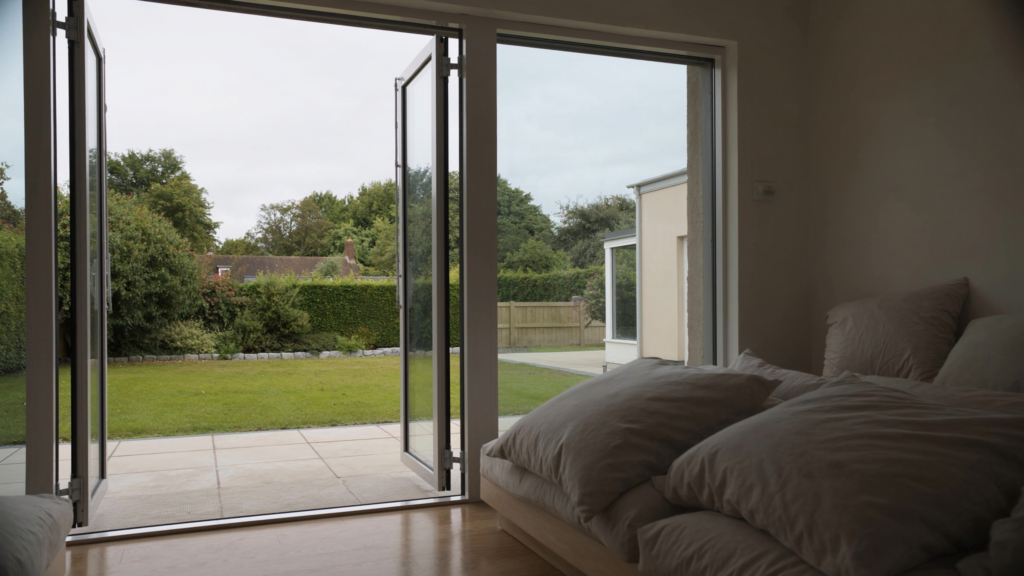
Grants and funding for replacement windows and doors in 2026
Government funding for home energy upgrades is available across the UK, but replacement windows and doors are rarely covered as a standalone measure. Most schemes require you to combine them with primary insulation improvements such as cavity wall or loft insulation. Eligibility depends on your property type, existing energy efficiency, household income, and where you live in the UK. The table below summarises the main schemes for 2026.
| Scheme | Region | Eligible for replacement windows and doors? | Typical max grant | How to apply | Source URL |
|---|---|---|---|---|---|
| Energy Company Obligation (ECO4) | England, Scotland, Wales | Yes, but only as part of a whole-house package that includes primary insulation (e.g. loft or cavity wall insulation) | No fixed cap; varies by energy supplier. Average window/door contribution typically £2,000–£5,000 | Contact your energy supplier or an Ofgem-authorised installer. You must be on a means-tested benefit or have a low income | ofgem.gov.uk |
| Great British Insulation Scheme (GBIS) | England, Scotland, Wales | Not eligible. The scheme covers cavity wall, loft, and solid wall insulation only | N/A – windows and doors not covered | N/A | gov.uk |
| Boiler Upgrade Scheme (BUS) | England, Wales | Not eligible. The scheme covers heat pumps and biomass boilers only | N/A – windows and doors not covered | N/A | gov.uk |
| Home Energy Scotland Loan | Scotland | Yes – windows and doors are eligible as a standalone measure | Up to £7,500 (interest-free loan, repayable over up to 10 years). Cashback of up to 75% of the loan may be available for some households | Apply online via Home Energy Scotland. You must own your home and have a valid Energy Performance Certificate (EPC) recommendation | homeenergyscotland.org |
| Warm Homes Scotland (Warmer Homes Scotland) | Scotland | Yes, but only as part of a whole-house package that includes primary insulation | Up to £7,500 (grant, not a loan). Income-assessed; you must be a homeowner or private tenant receiving certain benefits | Apply online via Warmer Homes Scotland. An assessor will visit your home to recommend a package of measures | warmerhomesscotland.com |
| Nest scheme | Wales | Yes, but only as part of a whole-house package that includes primary insulation. Not available as a standalone measure | No fixed cap; typically up to £6,000 for windows and doors combined when part of a full package | Call Nest or apply online. You must own your home, be on a means-tested benefit, and have an EPC rating of E, F, or G | nest.gov.wales |
| NI Sustainable Energy Programme | Northern Ireland | Yes, but only as part of a whole-house package that includes primary insulation. Not available as a standalone measure | No fixed cap; typically up to £5,000 for windows and doors when part of a full package. Means-tested | Apply via your local energy advice centre or the NI Energy Advice Service. You must be a homeowner on a low income | nidirect.gov.uk |
VAT on energy-saving materials in 2026
Replacement windows and doors that meet energy-saving criteria are subject to reduced VAT of 5% in Great Britain (England, Scotland, Wales) when installed by a registered business. This applies to products with a U-value of 1.4 W/m²K or lower for windows and 1.6 W/m²K or lower for doors. The reduced rate also covers installation labour. You do not need to claim this – your installer should apply it automatically on the invoice. For full details, see the government guidance on energy-saving materials (gov.uk). In Northern Ireland, the standard VAT rate of 20% applies unless you qualify for a specific energy-efficiency grant that covers VAT.
Listed
The buying process, survey to install
- Initial research, confirm what you need. Start by measuring your existing windows and doors and noting the frame material, glazing type, and opening style. Replacement windows for a typical three-bed semi cost between £6,000 and £12,000, while a new front door supply-and-fit ranges from £1,500 to £3,500 (Energy Saving Trust). Check the energy performance you require: new windows should achieve a U-value of 1.4 W/m²K or lower, and doors should be draught-proofed to Building Regulations standards (gov.uk). Look for products carrying the BFRC energy rating (A++ to C) and security certifications such as PAS 24 or Secured by Design (BFRC).
- Get three quotes from certified installers. Use scheme registers to find approved tradespeople. FENSA-registered installers can self-certify compliance with Building Regulations (FENSA). Certass offers a similar registration for competent persons (Certass). For security-rated products, check the Secured by Design database. The Glass and Glazing Federation (GGF) also lists members who follow a code of practice. Always verify that the installer holds public liability insurance and is registered with TrustMark (TrustMark).
- Compare quotes on full specification, not just price. A cheaper quote may use lower-grade frames, thinner glass, or omit trickle vents. Check that each quote lists the frame material (uPVC, aluminium, timber), glass type (double or triple glazing), U-value, security rating, and warranty length, typically 10 years for the sealed unit and 10 years for the frame. Ask whether the price includes removal of old windows, making good to brickwork, and disposal of waste. If one quote is significantly lower, ask the installer to explain the difference in materials or labour.
- Survey visit, what to expect and what to ask. The installer will measure each opening, check the condition of the brickwork and lintels, and note access requirements. Ask them to confirm the method of fixing, whether they will install new cavity closers, and how they will handle condensation drainage. Request a written survey report with exact dimensions and a revised quotation if any issues are found. If you live in a listed building or conservation area, confirm that the installer has experience working within planning restrictions (gov.uk).
- Contract, understand your cooling-off rights. Under the Consumer Contracts Regulations, you have a 14-day cooling-off period for contracts concluded away from the trader’s business premises (e.g. in your home). The installer must provide a written cancellation notice. If they do not, the cooling-off period extends to 12 months and 14 days (legislation.gov.uk). The contract should clearly state the total price, payment schedule, start and completion dates, and any conditions for cancellation.
- Deposit, typically a maximum of 25%. A reputable installer will ask for a deposit of no more than 25% of the total contract value. Pay by credit card if possible, as this gives you additional protection under Section 75 of the Consumer Credit Act for purchases between £100 and £30,000. Avoid paying the full amount upfront. If the installer demands a deposit above 50%, consider it a warning sign.
- Survey-to-install lead time. Lead times vary by season and manufacturer. In 2026, expect 4 to 8 weeks for standard uPVC windows and doors, and 8 to 12 weeks for aluminium or timber. Custom colours, heritage styles, or unusual sizes can add 2 to 4 weeks. Ask the installer to confirm the estimated lead time in writing and to update you if delays occur.
- Installation day, what to expect. The team will remove old frames, clean the openings, and fit the new units. Expect noise, dust, and some disruption, usually one to two days for a typical house. The installer should protect floors and furniture with dust sheets. Check that they use expanding foam and silicone sealant to fill gaps, and that they fit trickle vents if required. They should also demonstrate that all windows and doors open, close, and lock correctly before they leave.
- Sign-off and compliance certificate. After installation, the installer must provide a Building Regulations Compliance Certificate if they are FENSA or Certass registered. This certificate proves the work meets thermal performance and safety standards. Without it, you may face issues when selling your home. Keep the certificate with your property documents. If the installer is not registered with a competent person scheme, you will need to apply for Building Regulations approval separately from your local council (<a href="https://www
Maintenance, common problems and lifespan
Regular cleaning and inspection can extend the life of your windows and doors. You should clean frames and glass with warm water and mild detergent at least twice a year, avoid abrasive cleaners that can damage uPVC or powder-coated aluminium surfaces (Energy Saving Trust). Check weather seals and gaskets for cracks or shrinkage every spring and autumn. Lubricate hinges, locks and friction stays annually with a silicone-based spray, never use oil-based lubricants on uPVC. Clear drainage channels at the bottom of frames using a thin brush or pipe cleaner to prevent water pooling. Inspect trickle vents for blockages from dust or cobwebs. A full inspection checklist every 12 months should include: operation of all handles and locks, condition of glazing beads, and signs of condensation between panes.
Common problems and diagnosis
| Problem | Likely cause | Solution |
|---|---|---|
| Sticking or stiff operation | Dirt in tracks, swollen timber, or hinge sag | Clean tracks; plane timber (painted frames only); adjust hinge screws |
| Draughts around frame | Worn weather seal or compression gasket | Replace seal with same profile, typically £10-£30 per door |
| Condensation between glass panes | Failed sealed unit (broken edge seal) | Replace sealed unit only (not whole frame), £150-£400 per pane |
| Handle loose or stiff | Worn gearbox or loose fixings | Tighten screws; replace handle or gearbox (£20-£60) |
| Misting inside double glazing | Failed desiccant or seal | Unit replacement required, not repairable |
| uPVC frame discolouration (yellowing) | UV degradation over 10+ years | Clean with specialist uPVC cleaner; paint only with uPVC-compatible paint |
If you notice a sudden increase in your energy bills or condensation on internal walls near a window, check the frame-to-wall seal, this often indicates the frame has pulled away from the masonry (gov.uk).
Lifespan by material type
Typical lifespans for replacement windows and doors vary significantly by material:
- uPVC, 20 to 35 years. Colour fading and seal failure usually occur after year 20.
- Timber, 30 to 60 years with regular repainting (every 4-6 years). Rot in sills is the most common failure point.
- Aluminium, 30 to 45 years. Thermal break failure and corrosion at coastal properties can shorten lifespan.
- Composite, 35 to 50 years. GRP (glass-reinforced plastic) doors are particularly durable.
These figures are based on industry guidance from the British Fenestration Rating Council and manufacturer data. Actual lifespan depends on installation quality, exposure to weather, and maintenance frequency.
When to repair versus replace
Repair is usually the better option when only one component has failed, for example, a broken handle, a single sealed unit, or a worn weather strip. Replacing a sealed unit costs roughly £150-£400, compared to £6,000-£12