Why Edinburgh Homeowners Are Rushing to Upgrade Their Windows Right Now
If you live in Edinburgh and your windows are still single glazed, or even an ageing first-generation double glazed unit from the 1990s, you’re almost certainly losing a significant chunk of your heating bill straight through the glass. With the average Edinburgh home consuming around 13,000 kWh of gas per year and sitting on a Band D EPC rating, the city’s housing stock is crying out for better thermal performance.
But there’s something bigger driving demand right now. The Scottish Government’s Heat in Buildings Strategy is pushing hard toward decarbonising home heating by 2045, and EPC ratings are increasingly tied to mortgage conditions, rental licensing, and resale value. Edinburgh City Council has been active in its own retrofit agenda, and local homeowners are starting to connect the dots, better glazing now means lower bills, a stronger EPC rating, and a home that’s ready for the heat pump era.
Edinburgh also has a unique problem that other Scottish cities don’t face quite so acutely. The sheer density of Georgian and Victorian tenement buildings in areas like Leith Walk, Marchmont, Bruntsfield, and Gorgie means that thousands of flats are operating on thermal envelopes that were designed when coal was cheap and draughts were considered ventilation. Modern life demands better, and double glazing is often the most impactful single upgrade you can make.
What Double Glazing Actually Involves When Your Home Is a Tenement Flat or a Stone Terrace
Edinburgh’s housing stock is genuinely unlike most of the rest of the UK. The dominant property types here are tenement flats and stone-built terraced homes, most of which were constructed between 1840 and 1930. That matters enormously when you’re planning a glazing upgrade.
Tenement buildings introduce a particular complication, the windows aren’t just yours. In a typical Edinburgh stone tenement, the common stair, shared roof, and often the window openings themselves may be covered by the title deeds and factor arrangements. Before you start calling installers, check with your property factor and co-owners. Some Edinburgh tenement blocks have successfully organised building-wide window replacements, which can actually bring costs down significantly through bulk ordering.
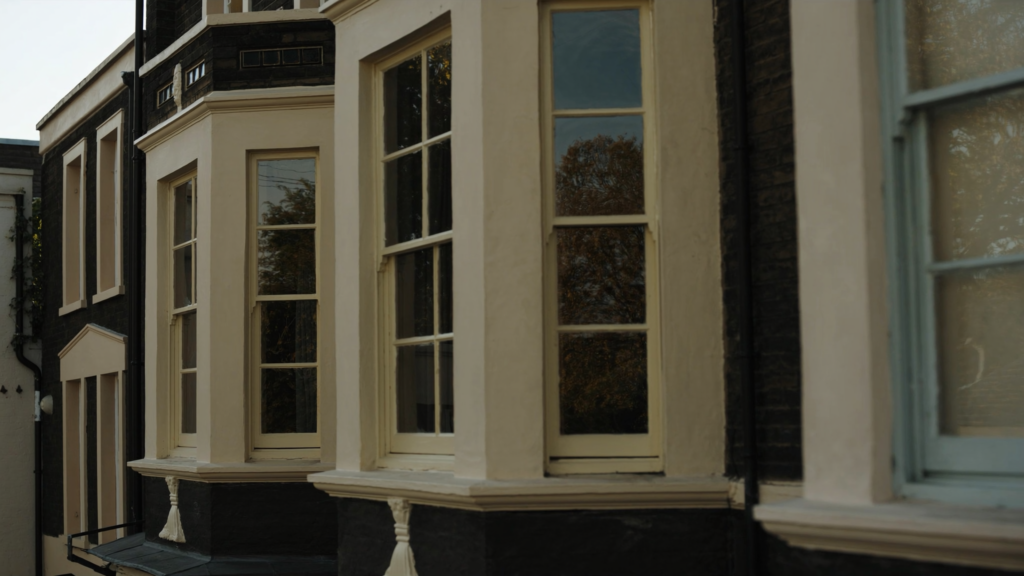
For terraced homes in areas like Corstorphine, Morningside, or Liberton, the challenges are different. These properties often have original timber sash and case windows, a genuine feature of the streetscape that some residents want to preserve. The good news is that high-performance slim-profile double glazed units can now be fitted into original timber sash frames, giving you the thermal benefit without losing the character.
Key practical considerations for Edinburgh homes include:
- Solid stone walls, Edinburgh’s sandstone and whinstone tenements have walls 450–600mm thick. Window reveals can be deep, meaning standard frames may not fit without specialist adaptations
- Sash and case windows, Very common in pre-war Edinburgh homes. Replacement needs to respect the original mechanism and proportions, especially in conservation areas
- Shared ownership complications, Tenement flats may require majority or unanimous owner agreement for external changes
- Access for scaffolding, Upper-floor flats in Leith or the New Town often require scaffold on narrow streets or shared internal close access, adding cost
- Listed building status, More common in Edinburgh than almost anywhere else in Scotland
How Much Double Glazing Costs in Edinburgh and the Wider Central Scotland Area in 2026
Edinburgh consistently runs 10–15% above the Scotland national average for home improvement labour costs, largely because of higher wages, parking and access challenges in the city centre and inner suburbs, and the specialist knowledge required for working on traditional stone buildings. Here’s a realistic breakdown of what you’re likely to pay:
| Property Type | Number of Windows | Edinburgh Cost (A-rated uPVC) | Scotland Average | Notes |
|---|---|---|---|---|
| 1-bed tenement flat | 3–5 | £2,800 – £4,200 | £2,400 – £3,600 | Add £400–£600 if sash and case |
| 2-bed tenement flat | 5–8 | £4,200 – £6,800 | £3,600 – £5,800 | Upper floor may need scaffold |
| Mid-terrace house | 8–12 | £6,500 – £9,500 | £5,500 – £8,200 | Conservation area adds 15–20% |
| End-terrace or semi-detached | 10–14 | £8,000 – £12,500 | £6,800 – £10,500 | Timber frame option adds £1,500+ |
| Triple glazing upgrade | Any | Add 20–30% to above | Add 18–25% | Recommended for north-facing Edinburgh flats |
Installers covering Edinburgh typically also serve Musselburgh, Kirkcaldy, Dunfermline, and Livingston, so if you’re getting quotes, it’s worth asking whether they cover those areas, companies doing volume work across this central Scotland cluster sometimes offer better pricing than purely city-based firms. Conversely, if an installer is travelling in from Livingston or Kirkcaldy specifically for your job, factor in potential call-out premiums.
Parking restrictions in areas like the New Town, Canongate, and Stockbridge regularly add £150–£300 to installation costs because installers need to arrange suspension of parking bays. It sounds minor but it catches people out.
How Edinburgh’s Weather Actually Shapes What Glass and Frames You Should Buy
Edinburgh has a climate that often surprises people who think of Scotland as simply cold and wet. The city actually sits in one of Scotland’s drier pockets thanks to the sheltering effect of the Pentland Hills to the south and the Moorfoot Hills to the southeast. Annual rainfall typically runs between 700–800mm, lower than Glasgow, much lower than the west Highlands.
However, Edinburgh has a different challenge, persistent cold and grey winters with heating degree days running between 1,800 and 2,200, meaning your boiler is working harder for longer than homes in the Midlands or the South. It’s wind chill rather than raw rainfall that drives Edinburgh’s energy bills upward. The city is notoriously exposed to cold northeasterly winds coming off the Firth of Forth, which can make Leith, Portobello, and Newhaven feel significantly colder than temperature readings suggest.
What this means practically for your glazing choices:
- Low-emissivity (Low-E) glass is non-negotiable here, It reflects heat back into the room and makes a measurable difference on those long Edinburgh winters
- Argon gas filling is standard, krypton filling is worth considering for north or northeast-facing windows on exposed Leith or Portobello properties
- Warm-edge spacer bars reduce condensation on the inner pane, which matters in Edinburgh’s damp autumn months
- Wind resistance ratings matter more here than in sheltered English towns, Look for frames tested to Class 3 or Class 4 wind exposure
- Solar gain is lower than the UK average at roughly 850–1,000 sunshine hours per year, so prioritise thermal retention over solar gain in your glass specification
Triple glazing deserves serious consideration for Edinburgh homes in a way it doesn’t for, say, a home in Bristol. The additional cost of around 25% over double glazing pays back faster in Edinburgh’s climate, particularly for any room facing north toward the Forth.
The Products That Actually Perform Well in Edinburgh’s Housing Stock
Based on what works across Edinburgh’s specific combination of stone buildings, cold winds, and conservation constraints, here are the options worth taking seriously:
For Most Tenement Flats and Victorian Terraces
A uPVC double glazed unit with A++ energy rating, argon-filled, Low-E coated glass, and warm-edge spacer bars. The frame colour matters in Edinburgh, white uPVC is increasingly accepted even in some conservation areas where it wasn’t ten years ago, but check before ordering. A U-value of 1.2 W/m²K or lower is the target for Edinburgh’s climate.
For Conservation Area Properties (New Town, Stockbridge, Marchmont)
Timber or composite sash and case windows with slim double glazed units. Several Edinburgh-based joiners and specialist window companies now offer factory-glazed timber sash units that perform to modern standards while passing planning scrutiny. They’re expensive, expect to add 40–60% over uPVC, but they’re often the only compliant option and they genuinely look right in a Georgian context.
For Exposed North-Facing or Forth-Facing Properties
Triple glazed uPVC or aluminium frames with a U-value targeting 0.8 W/m²K. Aluminium frames have improved dramatically in thermal performance, modern thermally-broken aluminium is a legitimate choice for contemporary extensions or any situation where slim sightlines matter more than absolute cost.
Specifications to Ask For
- U-value of 1.2 W/m²K or better for standard double glazing
- Energy rating of at least Band A (BFRC rated)
- Argon or krypton gas fill
- Warm-edge spacer technology
- Multi-point locking for security (Edinburgh city centre burglary rates make this worth prioritising)
- BS 6375 weather performance tested frames
Finding an Installer You Can Actually Trust in Edinburgh
Edinburgh has dozens of glazing companies operating across the city and into the surrounding towns. The volume of choice is genuinely helpful, but it also means there are operators who will quote cheap, use inferior units, and be difficult to reach when problems arise.
Look for these certifications without exception:
- FENSA registration, This is the self-certification scheme for replacement windows in Scotland. A FENSA-registered installer can self-certify compliance with Building Regulations Section 6 (Scotland’s energy efficiency standard), saving you the cost of a separate building warrant in most cases
- TrustMark registration, Government-endorsed quality scheme. Especially important if you’re using any grant funding
- Certass, An alternative to FENSA, equally valid in Scotland
- Which? Trusted Trader or similar, Not mandatory but a useful signal
Questions worth asking every installer before committing:
- Are you FENSA or Certass registered and will you handle the self-certification paperwork
- What U-value will the completed installation achieve and can you show me the BFRC certificate for the unit
- Have you worked on Edinburgh tenement properties or conservation area buildings before
- How do you handle access and parking in restricted city-centre streets
- What is your guarantee, and who backs it if your company ceases trading
Red flags include pressure to sign same-day, reluctance to provide the installation’s U-value in writing, and vague answers about their certification status. Lead times in 2026 for Edinburgh are typically 4–8 weeks from order to installation for standard residential work.
Many Edinburgh installers serve the wider central Scotland corridor including Musselburgh, Dunfermline, Kirkcaldy, and Livingston, so a company based in Livingston with strong local reviews can be just as viable as one headquartered in the city.
Grants and Funding Available to Edinburgh Homeowners in 2026
Scotland’s funding landscape for home energy improvements is more generous than England’s in several respects, and Edinburgh residents have access to multiple overlapping schemes.
Home Energy Scotland Loan
Administered by Energy Saving Trust on behalf of the Scottish Government, this provides interest-free loans of up to £15,000 for energy efficiency improvements including double and triple glazing. There is no income threshold, this is open to all Scottish homeowners. You apply through Home Energy Scotland and repayment terms are flexible. For most Edinburgh homeowners, this is the first port of call.
Warmer Homes Scotland
This provides free energy efficiency measures, including glazing in some cases, for households on qualifying benefits or with low incomes. If you’re on Universal Credit, Pension Credit, or certain disability benefits, it’s worth checking eligibility. Installation is arranged through approved contractors rather than your own choice of installer.
Energy Company Obligation (ECO4)
The UK-wide scheme applies in Edinburgh and can fund glazing improvements for eligible households, typically those in lower income brackets or with the lowest EPC ratings. Your energy supplier is the starting point, or you can go through a local ECO4 broker.
Great British Insulation Scheme (GBIS)
The Great British Insulation Scheme closed on 31 March 2026. It funded insulation measures only and never covered windows or glazing. Worth exploring if you’re planning a broader retrofit.
Edinburgh City Council Programmes
Edinburgh City Council periodically runs area-based schemes targeting specific neighbourhoods, often focusing on traditional stone tenements, where multiple measures can be funded together. These tend to be announced through the council’s housing pages and can move quickly, so signing up for updates from the council’s energy efficiency team is worthwhile.
One important note, grants for double glazing specifically are harder to secure than for insulation or heat pumps, because windows are sometimes classified as a comfort measure rather than a primary energy efficiency intervention. The interest-free Home Energy Scotland loan is often the most practical route for Edinburgh homeowners who don’t qualify for means-tested grants.
Planning Permission and Edinburgh City Council Rules You Need to Know
Planning permission for replacement windows is a topic where Edinburgh is genuinely more complicated than almost any other UK city. Here’s the honest picture.
For standard double glazing replacement in a non-listed, non-conservation area property, you do not need planning permission under Permitted Development rights, provided you’re replacing like-for-like in terms of material appearance and you’re not on a flat roof or in a specially designated area. The installation still needs to comply with Building Regulations Section 6 (Scotland), which a FENSA-registered installer handles automatically.
However, Edinburgh has an exceptionally high proportion of properties that fall into restricted categories:
- Edinburgh World Heritage Site, Covers much of the Old Town and New Town. Any external change to windows requires Listed Building Consent or planning permission
- Conservation Areas, Edinburgh has more conservation areas per square kilometre than virtually any other Scottish city. Gorgie, Morningside, Duddingston, Trinity, and many more areas have restrictions on window