Why Kirkcaldy Homeowners Are Looking at Double Glazing Right Now
If you’ve spent a winter in Kirkcaldy, you already know the answer. The wind off the Firth of Forth cuts through poorly insulated windows like they’re not even there, and heating bills in this part of Fife consistently run above the Scottish average. With the town’s housing stock dominated by older semi-detached and terraced properties, many built between the 1920s and 1970s, single glazing and tired original frames are still surprisingly common in streets across Pathhead, Dysart, and the residential areas stretching up toward Kirkcaldy West.
There’s also something bigger driving things right now. Energy costs in Scotland remain stubbornly high, and Kirkcaldy’s average EPC Band D rating tells you that most homes here have real room for improvement. Double glazing is one of the most impactful upgrades you can make without a major structural project, and it’s one of the few improvements that pays you back in comfort, noise reduction, and lower bills simultaneously.
Kirkcaldy also sits in an interesting position geographically. At roughly 18km from both Edinburgh and Dunfermline, and with good road links across the Forth Road Bridge, the town attracts a healthy pool of installers who serve this cluster of Fife towns. That competition helps keep prices reasonable compared to more rural parts of the region, which is good news for you.
What Double Glazing Actually Involves for a Typical Kirkcaldy Home
Let’s talk about what happens in practice, because your home in Kirkcaldy isn’t the same as a detached new-build in Edinburgh’s suburbs. The most common property types here, the interwar terraces in areas like Sinclairtown and the post-war semis in Templehall and Gallatown, present their own specific installation realities.
Older terraced properties in Kirkcaldy, particularly those from the 1930s and 1940s, often have non-standard window openings. That matters because modern sealed double-glazed units are manufactured to standard metric sizes, and your original frames might be imperial measurements or simply irregular. A good installer will always survey before quoting, measuring every opening individually rather than assuming standard sizes apply.
Here’s what the installation process typically looks like for a mid-terrace or semi-detached Kirkcaldy home:
- A surveyor visits to measure every window and assess frame condition, access, and any specialist requirements
- Units are manufactured to your specific measurements, this usually takes two to four weeks in the Scotland area
- Installation for a typical three-bedroom semi takes one to two days
- Old frames and units are removed and disposed of (check your quote includes this)
- New frames are fitted, sealed, and tested for draught exclusion
- Final snagging visit is arranged if any issues arise
One challenge specific to older Kirkcaldy terraces is access. Many properties in the town centre and older residential streets have narrow rear lanes or small rear gardens that make manoeuvring large window units tricky. In some cases, installers may need to bring units through the house, so clear a path on installation day and mention any access quirks when you get your survey.
Stone-built properties in areas like Dysart (which has significant conservation area status) require extra attention. Traditional sandstone surrounds can be fragile, and your installer needs experience working around them without causing damage to the surrounding masonry.
How Much Double Glazing Costs in Kirkcaldy and the Fife Area in 2026
Pricing is where a lot of homeowners get caught out, either by eye-wateringly high quotes or by suspiciously cheap ones that don’t deliver. Here’s an honest breakdown of what you can expect to pay in Kirkcaldy right now, based on typical 2026 market rates for this part of Scotland.
| Property Type | Number of Windows | Standard uPVC Double Glazing | Premium uPVC or Composite | Aluminium Frames |
|---|---|---|---|---|
| Two-bedroom terrace | 6–8 | £3,200 – £4,500 | £4,800 – £6,200 | £6,500 – £8,000 |
| Three-bedroom semi-detached | 8–10 | £4,200 – £5,800 | £6,000 – £7,800 | £8,000 – £10,500 |
| Four-bedroom detached | 10–14 | £5,500 – £7,500 | £7,500 – £10,000 | £10,500 – £14,000 |
| Bay window (per unit) | 1 | £900 – £1,400 | £1,400 – £2,000 | £2,000 – £3,200 |
Kirkcaldy prices sit broadly in line with the Scottish average, which is typically 5–8% higher than England’s national average due to higher labour costs and longer supply chains for specialist materials. Compared to Edinburgh, you’ll often find quotes 10–15% lower in Kirkcaldy, a genuine advantage of being in Fife rather than the capital itself. Dunfermline prices are broadly comparable.
Factors that push your quote higher in this area specifically include conservation area requirements in Dysart, difficult access in older terraced streets, and any need for scaffolding on higher storeys. Always get three quotes and make sure they’re like-for-like, check whether VAT, disposal of old units, and building warranty are all included.
How Kirkcaldy’s Weather and Location Affect Your Double Glazing Choices
This is where living on the east coast of Scotland really changes the conversation. Kirkcaldy sits right on the Firth of Forth, and while the town itself is reasonably sheltered compared to exposed headlands further north, the prevailing south-westerly winds still bring consistent moisture, occasional driving rain, and temperatures that make heating demand in Fife around 20–30% above the UK national average.
What that means for your windows is this, thermal performance matters more here than almost anywhere else in Scotland. You want double-glazed units with the best possible U-value (the lower the number, the better the insulation). Standard double glazing achieves around 1.4 W/m²K, but specifying A-rated or A+-rated units can bring that down to 1.0–1.1 W/m²K. Over a Kirkcaldy winter, that difference is genuinely noticeable on your thermostat.
Wind-driven rain is also worth thinking about. Kirkcaldy’s seafront-facing properties and any home on an exposed elevation should specifically ask about weather-rated seals and drainage systems within the frame. Cheaper frames can allow water ingress over time if not properly specified for exposed Scottish conditions.
There’s a condensation consideration too. With Kirkcaldy’s cold winters and relatively high outdoor humidity from the Forth, internal condensation on window glass is a common complaint in older homes with poor ventilation. Good double glazing dramatically reduces this by keeping the inner pane closer to room temperature, but make sure your installer also discusses trickle vents, which are now required under Building Regulations Section 6 in Scotland to maintain adequate background ventilation.
The Products and Options That Work Best in Kirkcaldy’s Conditions
Based on the local climate and housing stock, here’s genuinely what works well in this part of Fife rather than a generic list of window types.
For most Kirkcaldy semis and terraces, white uPVC frames with argon-filled double-glazed units and warm-edge spacer bars are the sweet spot. They deliver excellent thermal performance, require minimal maintenance in Fife’s wet winters, and don’t corrode or discolour the way older aluminium frames can. Look for units with a U-value of 1.2 or lower and an energy rating of at least A.
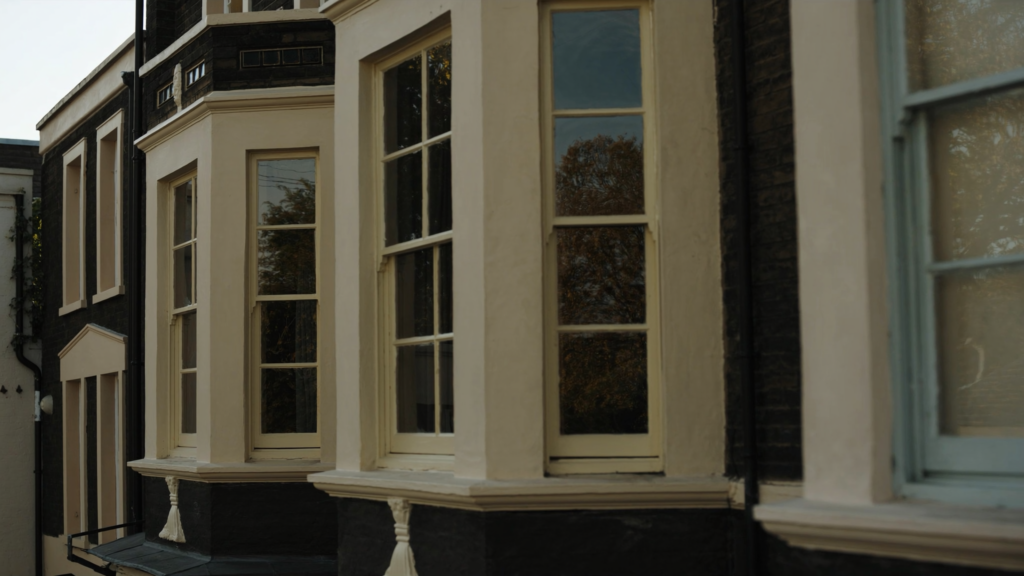
For properties in Dysart conservation area or older stone-built homes, the appearance of the frame matters as much as performance. Flush sash uPVC windows, built to mimic traditional timber sash-and-case windows, are increasingly popular in historic Fife towns and can satisfy Fife Council’s aesthetic requirements while still delivering modern thermal performance. Some homeowners opt for slim-profile aluminium frames which offer a sleeker, more period-appropriate look.
Key specifications to request when getting quotes in Kirkcaldy:
- Argon gas fill between panes (standard, but always confirm)
- Low-E (low emissivity) glass coating, essential for Scottish winters
- Warm-edge spacer bars rather than aluminium spacers (reduces cold bridging at the edge)
- U-value of 1.2 W/m²K or lower for the whole window unit
- Window energy rating of A or above (BFRC rating scale)
- Trickle vents compliant with Scottish Building Regulations Section 6
- Multi-point locking mechanisms, standard on most modern units but worth confirming
One upgrade genuinely worth considering for Kirkcaldy homes facing busy roads, particularly on the A921 corridor or near Kirkcaldy town centre, is acoustic glazing. Specifying a slightly thicker laminated pane on the outer layer (typically 6.4mm laminated rather than standard 4mm) makes a significant difference to road noise without a dramatic cost increase. Expect to add around £60–£100 per window for this upgrade.
How to Find a Trustworthy Double Glazing Installer Near Kirkcaldy
The double glazing industry has a long history of high-pressure sales tactics and misleading pricing, so knowing what to look for in Kirkcaldy’s installer market genuinely protects you.
The most important certification for double glazing in Scotland is FENSA (Fenestration Self-Assessment Scheme) or CERTASS registration. These schemes mean your installer is authorised to self-certify that the work complies with Scottish Building Regulations, without them, you’ll need to apply for building warrant approval separately through Fife Council, which adds cost and delay. Always ask for FENSA or CERTASS registration before accepting a quote.
Other things to look for:
- TrustMark registration, a government-endorsed quality scheme that covers window installers
- Membership of the Glass and Glazing Federation (GGF)
- A deposit protection or insurance-backed guarantee, critical in case the company closes before or after installation
- A minimum 10-year guarantee on frames and sealed units
Kirkcaldy is well-served by installers who cover the Edinburgh, Dunfermline, and Fife cluster. Many Edinburgh-based firms regularly work in Kirkcaldy given the straightforward A92 route across the Forth Road Bridge. Don’t limit yourself to installers with a local office, some of the best-value quotes in this area come from Dunfermline or Edinburgh firms who are already working in Fife regularly. Even so, a local surveyor who knows Dysart’s conservation requirements or the quirks of Templehall’s post-war housing stock is worth their weight in gold.
Red flags to watch for include pressure to sign on the day, discounts that expire immediately, and quotes that don’t include a detailed written specification. Any legitimate installer will be happy to give you time to compare.
Grants and Funding That Could Reduce Your Costs in 2026
Scotland has some of the most generous home energy improvement funding in the UK, and Kirkcaldy homeowners are well-placed to access several of these schemes.
Home Energy Scotland Loan, This is the first port of call for most Kirkcaldy homeowners. Home Energy Scotland offers interest-free loans of up to £15,000 for energy efficiency improvements including double glazing. Importantly, this is available to owner-occupiers regardless of income, you don’t need to be on benefits or low income to qualify. Apply through Home Energy Scotland’s free advice service before getting installer quotes, as they can also signpost you to additional support.
Warmer Homes Scotland, If you’re on certain qualifying benefits (including Universal Credit, Pension Credit, or Child Tax Credit), you may qualify for free energy efficiency improvements under the Warmer Homes Scotland programme. Double glazing can be included as part of a wider package of improvements. Fife Council can help identify eligible households.
ECO4 (Energy Company Obligation), This UK-wide scheme, delivered through energy suppliers, funds insulation and heating upgrades for lower-income households. Double glazing can sometimes be included within an ECO4 package, particularly where it’s part of a broader retrofit alongside insulation. Contact your energy supplier or a registered ECO4 installer to assess eligibility.
The Great British Insulation Scheme closed on 31 March 2026. It funded insulation measures only and never covered windows or glazing. With Kirkcaldy’s average Band D rating, many homes will be eligible to at least have an assessment done.
One important point, the Scottish Government’s Heat in Buildings Strategy is pushing hard on fabric-first improvements (windows, insulation, draught-proofing) as the foundation for the eventual transition away from gas boilers toward heat pumps. Getting your windows upgraded now puts you in a stronger position when that transition comes, and may make future grant applications easier as your EPC rating improves.
Planning Permission and Building Regulations in Kirkcaldy
For most Kirkcaldy homeowners, double glazing falls under permitted development rights, meaning you don’t need planning permission as long as the replacement windows are of a similar appearance to the originals. This applies to the majority of semi-detached and terraced homes in areas like Templehall, Gallatown, Beveridge Park, and Kirkcaldy West.
However, there are important exceptions specific to this area that you need to know about.
Dysart Conservation Area, Dysart, to the east of Kirkcaldy, is one of the most characterful parts of the town and carries conservation area status under Fife Council. If your property is within this designation, you will need planning permission before replacing windows. The key requirement is that replacement windows must match the character of the original, this typically means flush-fitting designs that replicate timber sashes rather than standard uPVC casements. Fife Council’s planning department can advise specifically on what’s acceptable for your street. Don’t start work without checking this first, as non-compliant windows can result in enforcement action requiring removal.
Listed Buildings, A small number of properties in Kirkcaldy and Dysart are Listed Buildings. If yours is Category A, B, or C listed, you’ll need Listed Building Consent before changing any windows. Contact Fife Council’s planning team early, this process can take several weeks and may restrict your choice of products significantly.
Regardless of planning permission, double glazing work in Scotland must comply with Building Regulations Section 6 (Energy). FENSA or CERTASS-registered installers self-certify compliance, if you use a non-registered installer, you’ll need a building warrant from Fife Council before work starts. Section 6 requires replacement windows to