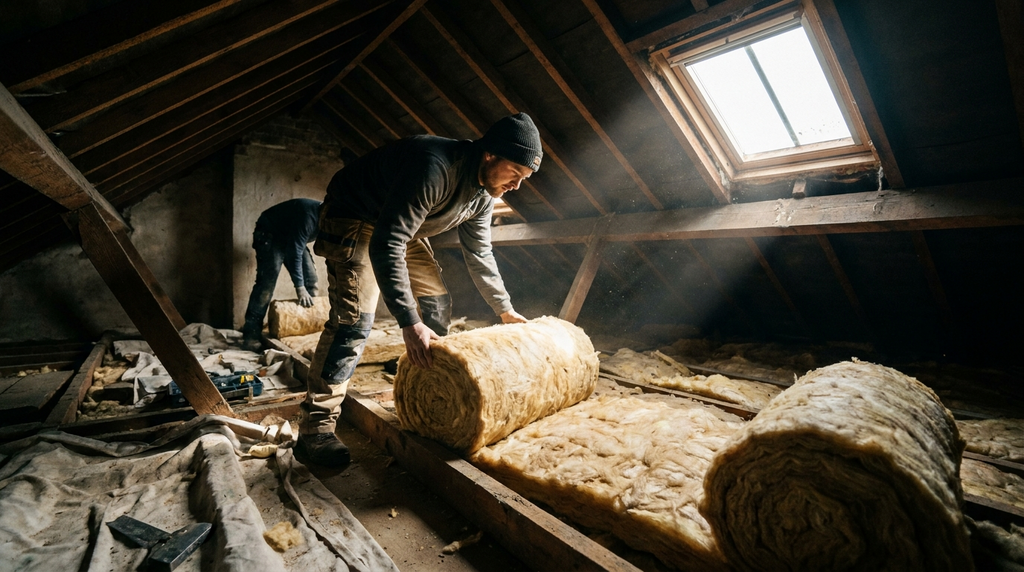
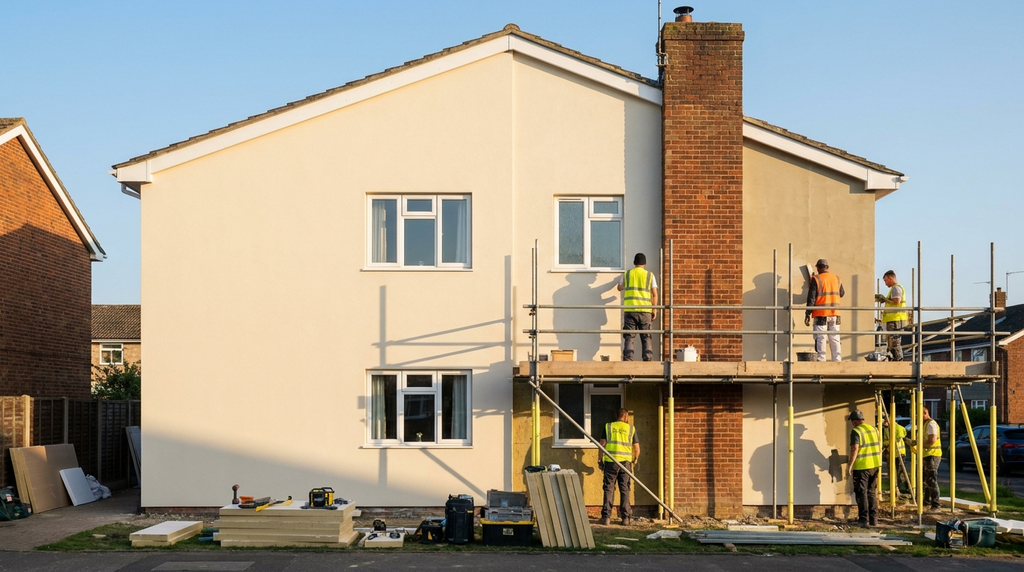
What you need to know about cavity wall insulation
If your home was built between 1920 and 1995, there’s a good chance you have unfilled cavity walls, and that’s where about a third of your heating money is quietly escaping. Cavity wall insulation (CWI) is the fix: contractors drill small holes through the mortar, blow in mineral wool or polystyrene beads, and reseal. The Great British Insulation Scheme closed on 31 March 2026. It funded insulation measures only and never covered windows or glazing. But CWI isn’t right for every property, homes exposed to driving rain, with timber-frame walls, or with existing damp need a different approach. This guide covers when CWI works, when it doesn’t, and the installer red flags that mean walking away.
When cavity wall insulation is worth it
- Your external walls are unfilled and your home was built after 1920 but before 2000, when cavity widths are typically suitable for standard insulation.
- Your property has a cavity width of at least 50mm, a surveyor can confirm this during a borescope inspection (£50-£120).
- Your walls are in good condition with no signs of damp, cracks, or defective pointing, and the cavity is clean of debris.
- Your home is in a moderate exposure zone for driving rain (most of central and eastern England), check with your installer using the NHBC or BBA exposure maps.
- The Great British Insulation Scheme closed on 31 March 2026. It funded insulation measures only and never covered windows or glazing.
When it might not be
- Your property is in a high-exposure area for wind-driven rain, such as the west coast of Scotland or exposed coastal regions, where moisture bridging the cavity can cause damp issues.
- Your walls have existing damp problems, cracks, or poor pointing, these must be fixed first, and insulation may not be recommended until they are resolved.
- The cavity is very narrow (under 50mm), which can make installation difficult and increase the risk of thermal bridging.
- Your home is listed or in a conservation area, cavity wall insulation may require planning permission and specialist materials (gov.uk).
The sections below cover the full cost breakdown, grant eligibility, property suitability checks, and installer regulations you need to know before proceeding.
How cavity wall insulation works
Cavity wall insulation fills the gap between the two layers of brick or block that make up the external walls of most UK homes built after the 1920s. That gap, typically 50mm to 100mm wide, is called the cavity. Before insulation was common, the cavity acted as a barrier to stop moisture crossing from the outer wall to the inner wall. Adding insulation to that space slows the movement of heat from your warm rooms to the cold outside air, reducing the amount of energy your heating system needs to maintain a comfortable temperature (Energy Saving Trust).
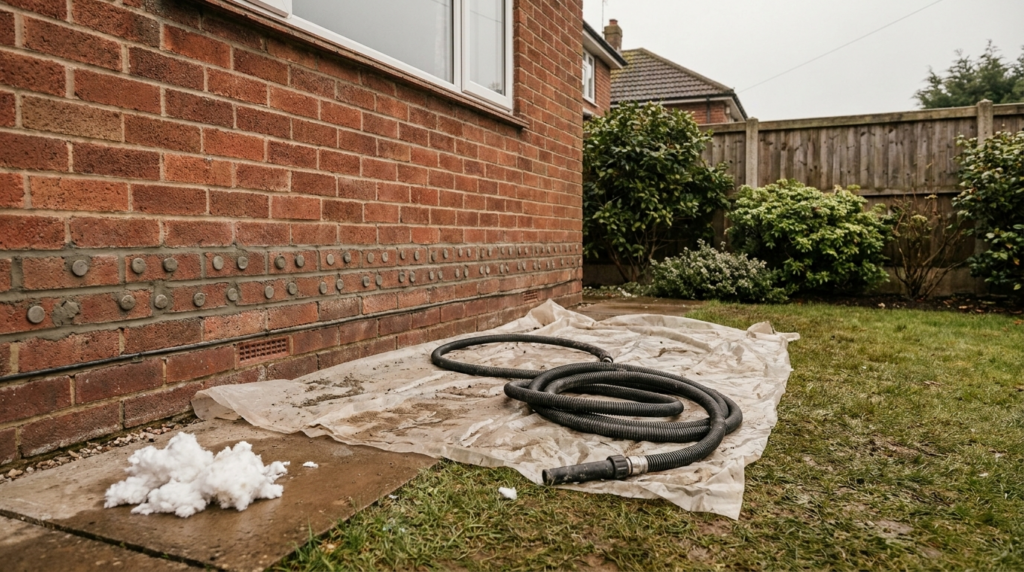
The insulation material is injected through small holes drilled into the mortar joints of the outer wall, usually from outside the house. Once the material is in place, the holes are filled with mortar to match the existing finish. The insulation remains inside the cavity, invisible and undisturbed, for the life of the property if installed correctly (gov.uk).
Key components and how they work
| Component | Function | Why it matters |
|---|---|---|
| Insulation material (mineral wool, EPS beads, or polyurethane foam) | Fills the cavity with a material that traps air in tiny pockets, limiting heat transfer through conduction and convection | The material must be compatible with your wall type and exposure to wind-driven rain; wrong choice can cause damp (Energy Saving Trust) |
| Borescope inspection | A camera survey of the cavity before installation to check for debris, old mortar droppings, or existing damp | If the cavity is blocked or contains rubble, the insulation cannot fill evenly, leaving cold spots and risking damp bridging |
| Injection holes (drilled in mortar joints) | Allow the installer to blow or pour insulation into the cavity at regular intervals | Spacing must follow the manufacturer’s specification; too few holes leaves gaps, too many weakens the wall |
| Ventilation paths (weep vents, air bricks) | Must be kept clear of insulation to allow moisture vapour to escape from the cavity | Blocked ventilation can trap moisture, leading to rot in timber joists and floorboards |
| Damp-proof course (DPC) | A plastic or slate barrier near ground level that stops moisture rising from the ground | Insulation must stop above the DPC; bridging the DPC with insulation can draw moisture up into the wall (gov.uk) |
Critical performance principles in plain English
For cavity wall insulation to work properly, three things must be true. First, the cavity must be clear of rubble, old mortar, and other debris. If there is a blockage, the insulation cannot fill the whole gap, and heat will escape through the empty sections. A borescope survey before installation checks for this (gov.uk).
Second, the outer wall must be in good condition. If the brickwork has cracks or the mortar is crumbling, rainwater can reach the insulation and stay there, reducing its effectiveness and potentially causing damp inside the house. Installers should inspect the wall surface before drilling.
Third, the insulation must not bridge the damp-proof course. If insulation sits below the DPC or touches it, moisture can travel from the ground up into the wall fabric, leading to damp patches on internal walls. Installers measure the DPC height and stop the insulation at least 150mm below it.
How cavity wall insulation compares to alternatives
| Insulation type | Typical cost (3-bed semi, 2026) | Typical U-value achieved | Key considerations |
|---|---|---|---|
| Cavity wall insulation (retrofit) | £1,000 – £2,500 (Energy Saving Trust) | 0.55 – 0.70 W/m²K | Quick to install (half a day); requires suitable cavity width (50mm+) and good wall condition; CIGA 25-year guarantee included</td |
Types of cavity wall insulation and which suits your home
Blown mineral wool is a loose-fill insulation made from spun glass or rock fibres. It is installed by drilling small holes (typically 50mm diameter) into your external walls and blowing the material into the cavity using a specialised machine. The holes are then filled and repointed to match your existing mortar.
Pros
- Lower cost than most other cavity wall insulation options
- Non-combustible, rated as Euroclass A1 for fire safety (gov.uk)
- Good thermal performance, typical installed U-value of 0.30–0.35 W/m²K for a standard 100mm cavity
- Widely available and installed by most accredited contractors
Cons
- Can settle over time, reducing effectiveness at the top of the wall
- Vulnerable to moisture, if your cavity is exposed to driving rain, mineral wool can become damp and lose insulating value
- Not suitable for very narrow cavities (under 50mm)
Typical cost for a 3-bed semi-detached home is £1,000–£2,500. Lifespan is 25–30 years if installed correctly in a suitable cavity. Best for homes in sheltered locations with standard-width cavities and no history of damp issues (Energy Saving Trust).
EPS bead
Expanded polystyrene (EPS) beads are small, lightweight foam balls that are blown into the cavity with a bonding agent. The beads are coated with a resin that makes them water-repellent, and the bonding agent ensures they remain in place even if the outer leaf is breached. This system is sometimes called “bonded bead” insulation.
Pros
- Water-repellent, EPS beads do not absorb moisture, reducing the risk of damp bridging
- No settling, the bonded beads stay in position, maintaining consistent performance over time
- Higher thermal performance than mineral wool, typical installed U-value of 0.28–0.32 W/m²K
- Can be installed in narrower cavities (down to 50mm)
Cons
- Higher material cost than blown mineral wool
- If the bonding agent fails, beads can escape through weep holes or gaps, visible as small white pellets on the ground outside your home
- Harder to remove than mineral wool if you later need to access the cavity
Typical cost for a 3-bed semi-detached home is £1,500–£3,000. Lifespan is 30–40 years. Best for homes in exposed or wet locations, narrow cavities, or where previous mineral wool has failed due to damp (Energy Saving Trust).

PU foam (rare)
Polyurethane (PU) foam cavity wall insulation is a two-part liquid that is injected into the cavity and expands to form a rigid, closed-cell foam. It is rarely used for standard cavity walls today because of cost and installation risks. Most modern installations use EPS bead instead.
Pros
- Highest thermal performance, typical installed U-value of 0.20–0.25 W/m²K, significantly better than mineral wool or EPS bead
- Excellent air-sealing, the expanding foam fills every gap, reducing draughts
- Very long lifespan, 40–50 years with no settling or moisture absorption
Cons
- High cost, typically £2,000–£3,500 for a 3-bed semi-detached home
- Difficult to remove, if the foam is poorly installed, it can cause structural issues or be impossible to extract without damaging the masonry
- Requires specialist installers with MCS certification, fewer contractors offer this service (mcscertified.com)
- Expansion pressure can crack or bow walls if the cavity is narrow or the wall is weak, a detailed structural survey is essential before installation
Typical cost for a 3-bed semi-detached home is £2,000–£3,500. Lifespan is 40–50 years. Best for homes with wide cavities (100mm+) where maximum thermal performance is required and the wall structure has been professionally assessed as suitable (gov.uk).
Comparison table
| Type | Typical install cost (3-bed semi) | Lifespan | Best for |
|---|---|---|---|
| Blown mineral wool | £1,000–£2,500 | 25–30 years | Sheltered locations, standard-width cavities, budget-conscious homes |
| EPS bead | £1,500–£3,000 | 30–40 years | Exposed or wet locations, narrow cavities, replacement after failed mineral wool |
| PU foam |
cavity wall insulation cost, UK 2026 pricing
Per-unit cost matrix by insulation type
The table below shows typical 2026 costs per square metre for the three main cavity wall insulation materials, based on industry data. Prices assume a straightforward installation with no major complications.
| Insulation type | Cost per m² (materials and labour) | Notes |
|---|---|---|
| Blown mineral wool | £18–£30 | Most common type; suitable for most cavity widths |
| Expanded polystyrene (EPS) beads | £20–£35 | Better performance in exposed locations; less prone to settling |
| Polyurethane (PU) foam | £35–£55 | Rarely used now; higher cost and stricter installation requirements |
These ranges come from published installer guides and energy-saving advice sites (Energy Saving Trust). Actual prices depend on cavity width, wall condition, and access.
Whole-property cost guide
Most homeowners pay a flat project price, not a per-square-metre rate. The figures below cover materials, labour, and the CIGA 25-year guarantee fee for a typical installation.
| Property type | Typical cost range (2026) | Period-property premium |
|---|---|---|
| Flat (ground or mid-floor with cavity walls) | £400–£900 | +20–40% for 1930s–1950s builds with narrow cavities |
| 2-bed terrace | £600–£1,400 | +15–30% for Victorian/Edwardian terraces with partial fill |
| 3-bed semi-detached | £1,000–£2,500 | +25–50% for solid-wall or non-standard cavity construction |
| 4-bed detached | £1,800–£3,500 | +30–60% for homes built before 1920 with mixed wall types |
Period properties (pre-1919) often have narrower cavities or solid walls that require specialist survey and alternative systems. The premium reflects additional survey work and bespoke materials (gov.uk).
Regional UK pricing
Labour rates vary significantly across the UK. The table below shows typical 2026 costs for a 3-bed semi-detached house, based on regional installer surveys.
| Region | Typical cost for 3-bed semi | Notes |
|---|---|---|
| London | £1,500–£2,800 | Higher labour rates; travel charges for outer zones |
| South East | £1,300–£2,500 | Premium for rural access and narrow cavities |
| South West | £1,200–£2,300 | Lower labour costs but higher travel in remote areas |
| North West | £1,000–£2,000 | Competitive market; many accredited installers |
| North East | £900–£1,800 | Lowest labour rates nationally |
| Midlands | £1,000–£2,100 | Mid-range; variation between urban and rural |
| Scotland | £1,100–£2,200 | Higher transport costs; exposed locations may need EPS beads |
| Wales | £1,000–£2,000 | Similar to North West; fewer installers in rural counties |
| Northern Ireland | £900–£1,900 | Limited installer pool; longer lead times |
Regional data is drawn from published installer directories and trade body reports (FENSA, TrustMark). Prices include the CIGA guarantee fee unless otherwise noted.
Hidden costs to budget for
Several additional costs can arise during a cavity wall project. The table below itemises the most common ones.
| Item | Typical cost (2026) | When it applies |
|---|---|---|
| Scaffolding (two-storey house) | £800–£1,500 | If access equipment is needed for gable ends or upper walls |
| Structural alterations (e.g. lintel repairs) | £200–£800 per opening | If existing lintels are corroded or missing above windows/doors |
| Asbestos removal (pre-2000 properties) | £500–£2,500 | If asbestos-containing material is found in wall cavities or soffits |
| Removal of existing insulation | £1,500–£3,500 | If old insulation has failed, settled, or become damp |
| Plastering touch-up | £150–£400 per room | If injection holes need professional making good |
| Certification fee (CIGA guarantee) | Included in quoted price | Always required for accredited installations |
| Borescope suitability inspection | £50–£120 | If a pre-installation survey is needed to check cavity condition |
| VAT (20% on labour and materials) | Varies | Standard rate applies unless installer operates a reduced-rate scheme |
VAT at 20% is chargeable on most cavity wall installations. Some installers may offer a reduced rate of 5% if the work qualifies under the government’s energy-saving materials scheme (gov.uk). Check the VAT treatment with your installer before agreeing a price.
The three-quote rule for cost comparison</
Performance, savings and payback
Cavity wall insulation works by filling the gap between your home’s inner and outer brick walls with material that slows heat transfer. The key performance metric is the reduction in annual heat loss, measured in kilowatt-hours (kWh) per year, and the resulting saving on your energy bills. For a typical gas-heated three-bedroom semi-detached home, installing cavity wall insulation cuts annual heat loss by around 3,000–4,000 kWh, which translates to a saving of roughly £250–£350 per year on heating costs (Energy Saving Trust). Current UK building regulations for new homes require cavity walls to achieve a U-value of 0.30 W/m²K or better, but existing homes with uninsulated cavities typically have U-values above 1.0 W/m²K (gov.uk). The Great British Insulation Scheme closed on 31 March 2026. It funded insulation measures only and never covered windows or glazing.
Annual energy and cost savings: worked numbers
The table below shows typical annual savings for common UK home types, based on gas central heating at 2026 average prices of 6.5p/kWh. The figures assume the whole cavity is filled to current standards and the home has no other major insulation measures.
| Home type | Wall area (m²) | Heat loss saved (kWh/year) | Annual saving (£) |
|---|---|---|---|
| 2-bed terrace | 50 | 2,000 | £130 |
| 3-bed semi | 70 | 3,500 | £228 |
| 4-bed detached | 100 | 5,000 | £325 |
These savings assume the cavity is suitable for insulation and no other heat-loss issues exist. The Energy Saving Trust estimates a typical three-bed semi saves £250–£350 a year after installation (Energy Saving Trust). Actual savings depend on your heating system, thermostat settings, and local climate.
Payback period: three example homes
Payback is the time it takes for energy savings to cover the installation cost. The table below uses 2026 typical installation prices and the annual savings from the section above. The payback period assumes no grant funding.
| Home and location | Install cost (£) | Annual saving (£) | Payback (years) |
|---|---|---|---|
| 3-bed semi, Manchester | £1,500 | £280 | 5.4 |
| 4-bed detached, Edinburgh | £2,500 | £325 | 7.7 |
| Mid-terrace, Bristol | £1,000 | £180 | 5.6 |
Payback under 8 years is considered good for cavity wall insulation, which has a lifespan of 30–40 years if installed correctly. The Great British Insulation Scheme closed on 31 March 2026. It funded insulation measures only and never covered windows or glazing.
EPC band improvement potential
Cavity wall insulation can lift your Energy Performance Certificate (EPC) rating by one to two full bands in many cases. For example, an uninsulated EPC band D home may move to band C or even low B after installation (Energy Saving Trust). The improvement depends on your current wall U-value, other insulation measures, and heating system efficiency. Homes with solid walls (no cavity) do not benefit from this measure and need solid-wall insulation instead.
When cavity wall insulation does not pay back fast
Cavity wall insulation is not a quick win for every home. Payback is slower or negative in these situations:
- Homes with narrow cavities (less than 50mm): The insulation value achieved is lower, and the saving may be only £50–£100 per year, pushing payback beyond 10 years.
- Properties in exposed, wind-driven rain zones: Filling the cavity can increase the risk of moisture penetration if the wall is not properly sealed, leading to damp problems that are expensive to fix (gov.uk).
- Homes with existing partial or failed insulation: If previous insulation has slumped or left gaps, removal and reinstallation can cost £1,500–£3,500, wiping out any near-term
Cavity wall suitability check, is your wall actually cavity?
Before installation can begin, your property must pass a suitability check. This determines whether your walls are suitable for cavity wall insulation and whether any pre-existing issues could cause problems after installation.
Identifying a cavity wall
The age and construction of your home are the first indicators. Most UK homes built after 1920 have cavity walls, but the type varies:
| Property age | Typical wall construction |
|---|---|
| Pre-1920 | Solid wall (no cavity) – usually 9 inches thick, no visible cavity |
| 1920–1976 | Standard cavity wall – two leaves with a gap of 50mm–100mm, unfilled |
| Post-1976 | Cavity wall with partial fill – insulation may already be present in new builds |
To check your own home, look at the brick pattern on an external wall. If all bricks are laid lengthways (stretcher bond), you likely have a cavity wall. If you see some bricks laid end-on (header bond), the wall is probably solid. You can also measure the wall thickness at a window or door opening: cavity walls are typically 250mm–300mm thick, while solid walls are around 220mm (Energy Saving Trust).
The borescope inspection
A professional installer will carry out a borescope inspection before any work begins. This involves drilling a small hole (about the size of a 10p coin) through the outer brick and inserting a tiny camera to inspect the cavity. The inspection checks for:
- existing insulation (which would mean the cavity is already filled)
- debris, mortar droppings, or rubble inside the cavity
- the width of the cavity (must be at least 50mm)
- damp or penetrating moisture
The inspection typically costs between £50 and £120, though many installers include it as part of their quote. If the cavity is unsuitable, you will not be charged for the full installation (gov.uk).
What disqualifies a cavity
Several conditions will make your cavity unsuitable for standard insulation:
- Existing fill: If the cavity already contains insulation (e
Damp risk, exposure rating and PAS 2035
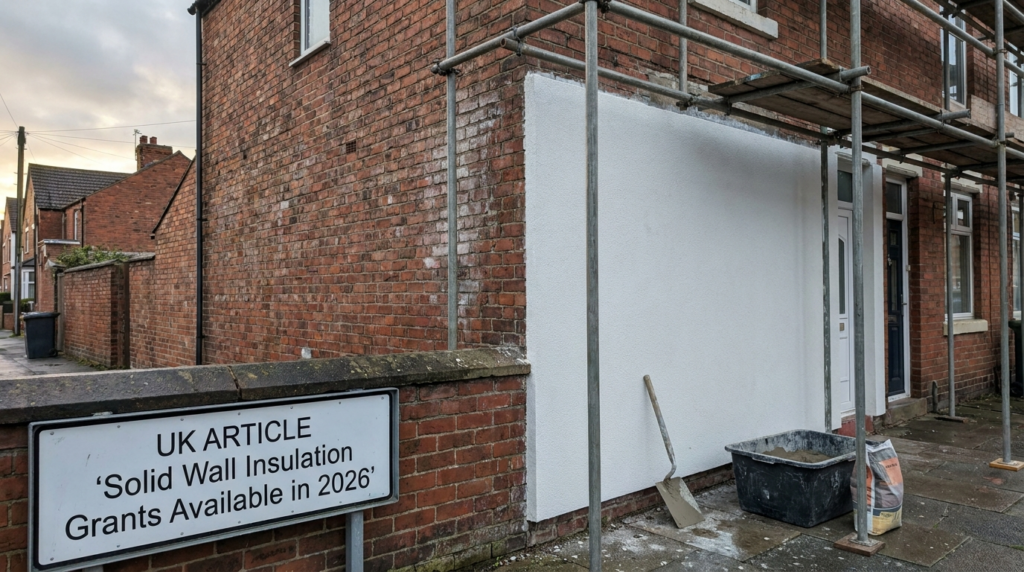
Injecting insulation into a cavity wall changes how the structure handles moisture. If the work is not matched to the property’s exposure to wind-driven rain, damp problems can follow. The British Research Establishment (BRE) publishes a wind-driven rain map that rates every UK postcode as sheltered, moderate, severe or very severe (gov.uk). Installers should check this rating before any work starts.
| Exposure rating | Typical UK regions | Risk level for CWI |
|---|---|---|
| Sheltered | Inland valleys, city centres | Low |
| Moderate | Most suburban and rural areas | Low to moderate |
| Severe | Coastal strips, exposed hills | High |
| Very severe | West-facing coasts, high ground | Very high |
Why severe-exposure properties need extra care
In severe and very severe zones, wind drives rain against the outer leaf of the wall. If the cavity is then filled, the insulation can hold that moisture against the inner leaf. This increases the risk of damp patches on internal walls, mould growth and damage to plaster or decoration (energysavingtrust.org.uk). Homes rated severe or very severe should only be considered for cavity wall insulation if a full retrofit assessment under the PAS 2035 standard is carried out first.
The PAS 2035 retrofit coordinator role
Since 2021, publicly funded cavity wall insulation in England must follow the PAS 2035 framework. A qualified retrofit coordinator visits the property before installation. They assess the wall construction, exposure rating, existing damp issues and ventilation. If the coordinator decides the cavity is unsuitable, for example, because of severe exposure or a narrow gap, they must refuse the measure (trustmark.org.uk). This is not optional. For privately funded work, a similar assessment is strongly recommended.
Common damp problems after CWI and how to avoid them
Three damp issues appear most often after cavity wall insulation:
- Bridging of the cavity, mortar droppings or debris left inside the cavity can allow moisture to cross from the outer to the inner leaf. A pre-installation borescope survey (cost £50-£120) checks for debris (gov.uk).
- Inadequate ventilation, filling the cavity reduces air movement through the wall. Existing trick
When cavity insulation fails, extraction and remediation
Cavity wall insulation (CWI) that was installed poorly or with unsuitable materials can cause problems rather than savings. When insulation slumps, gaps appear, or moisture gets trapped, the energy efficiency benefit disappears and structural issues may follow. This section explains how to spot failed CWI, what extraction costs, and when you can claim under the CIGA guarantee.
Signs of failed cavity wall insulation
The most common signs of failed CWI are cold spots on internal walls, damp patches, and visible mould. You may also notice:
- Cold internal walls, even when the heating is on, certain areas feel noticeably colder than others (Energy Saving Trust).
- Damp patches, usually appear on the inner leaf of the wall, often after heavy rain (gov.uk).
- Slumped material, insulation that has settled at the bottom of the cavity, leaving the top half uninsulated (TrustMark).
- Penetrating damp, water tracking through the wall from outside, often because the insulation is bridging the cavity (BFRC).
If you notice any of these, a borescope inspection (costing £50–£120) can confirm the condition of the insulation before you decide on extraction (TrustMark).
Extraction cost: £1,500–£3,500
Removing failed cavity wall insulation is labour-intensive and typically costs between £1,500 and £3,500 for a standard 3-bed semi-detached home (gov.uk). The price depends on:
| Factor | Typical cost impact |
|---|---|
| Home size (2-bed terrace) | £1,000 |
UK regulations, country by country
Cavity wall insulation is covered by building regulations that set minimum standards for thermal performance, moisture control, and installation quality. The rules differ across England, Scotland, Wales and Northern Ireland, though the technical requirements are broadly similar. These regulations apply whether you are installing insulation in an existing home or as part of a new build.
| Nation | Document or regulation | Key requirement for cavity wall insulation | Source |
|---|---|---|---|
| England | Approved Document L (conservation of fuel and power) | Insulation must achieve a U-value of 0.30 W/m²K or lower for existing walls, 0.18 W/m²K for new build walls | gov.uk |
| Scotland | Scottish Technical Handbook Section 6 (energy) | U-value of 0.22 W/m²K or lower for new dwellings; 0.30 W/m²K for existing walls when upgrading | legislation.gov.uk |
| Wales | Approved Document L (Welsh version) | U-value of 0.30 W/m²K for existing walls, 0.18 W/m²K for new build walls (same as England) | gov.wales |
| Northern Ireland | Technical Booklet F (conservation of fuel and power) | U-value of 0.30 W/m²K for existing walls, 0.20 W/m²K for new build walls | nidirect.gov.uk |
Approved Document L, thermal performance
Approved Document L sets the minimum thermal efficiency for cavity wall insulation in England and Wales. For existing homes, the target U-value is 0.30 W/m²K. For new builds, the target is 0.18 W/m²K (gov.uk). A U-value measures how quickly heat passes through a wall, lower numbers mean better insulation.
In practice, if you are installing cavity wall insulation as part of a larger renovation, building control may require you to meet these standards. Most modern cavity wall insulation products, such as bead or foam systems, achieve U-values between 0.28 and 0.35 W/m²K depending on cavity width and wall construction. Your installer should provide a calculation of the expected U-value before work begins.
Scotland’s equivalent is Section 6 of the Scottish Technical Handbook, which requires 0.22 W/m²K for new dwellings and 0.30 W/m²K for existing walls when upgrading (legislation.gov.uk). Northern Ireland’s Technical Booklet F uses 0.30 W/m²K for existing walls and 0.20 W/m²K for new build walls (nidirect.gov.uk).
Approved Document C, resistance to moisture
Approved Document C covers resistance to moisture, including the risk of damp bridging through cavity walls. When cavity wall insulation is installed, the insulation must not create a path for moisture to travel from the outer leaf to the inner leaf of the wall (gov.uk).
This is relevant if your home is in an exposed location or has a narrow cavity (less than 50mm). In such cases, the installer must check that the cavity is wide enough and that the wall construction prevents moisture penetration. If the cavity is too narrow or the wall is in poor condition, the installer may refuse to proceed. A borescope inspection, costing £50-£120, is often used to check cavity condition before work starts.
In Scotland, Section 3 of the Scottish Technical Handbook covers moisture resistance with similar requirements. In Wales and Northern Ireland, the equivalent documents are Approved Document C (Welsh) and Technical Booklet C respectively.
PAS 2035 retrofit assessment
The Great British Insulation Scheme closed on 31 March 2026. It funded insulation measures only and never covered windows or glazing. It applies in England, Scotland and Wales. PAS 2035 requires a whole-house assessment before any cavity wall insulation is installed (gov.uk).
The assessment must be carried out by a qualified retrofit coordinator who inspects the property for damp, ventilation and structural issues. If the assessment identifies risks, such as a narrow cavity, existing damp, or poor wall ties, the coordinator may recommend a different insulation type or decide that cavity wall insulation is unsuitable altogether.
For non-grant-funded work, PAS 2035 is not a legal requirement, but many industry bodies recommend following it as best practice. Installers registered with TrustMark
Planning permission for cavity wall insulation
Cavity wall insulation is almost always classified as permitted development for homes in England. This means you do not need to submit a planning application before installing it. The work is treated as a minor improvement to the energy efficiency of an existing dwelling, provided it does not alter the external appearance of the building in a way that requires consent (planningportal.co.uk).
The default, permitted development
Under the Town and Country Planning (General Permitted Development) Order 2015, cavity wall insulation is allowed without express planning permission for most detached, semi-detached and terraced houses. The key condition is that the insulation must not project beyond the plane of the existing wall by more than 150mm. For standard cavity walls, injected insulation sits flush within the cavity, so this condition is automatically met (planningportal.co.uk).
When you do need permission
Planning permission is required in several specific situations. You must check your local authority’s rules before proceeding if your property falls into any of these categories:
- Conservation areas, any external alteration that changes the appearance of a building may require consent. Cavity wall insulation that affects the external finish (e.g. drilling holes visible from the street) is likely to need permission.
- Listed buildings, listed building consent is almost always needed for any work that affects the character of a listed structure. Cavity wall insulation is rarely appropriate for historic fabric and may cause damp issues (gov.uk).
- Article 4 directions, some local authorities have removed permitted development rights in specific streets or neighbourhoods. Check your local council’s planning portal for any Article 4 directions covering your property (gov.uk).
- National Parks, Areas of Outstanding Natural Beauty (AONB), and World Heritage Sites, permitted development rights are more restricted in these designated areas. You may need planning permission even for minor external changes.
Specific complications for cavity wall insulation
Even when planning permission is not needed for the insulation itself, other energy-efficiency measures you install alongside it may trigger consent requirements:
- Heat pump siting, if you install an air-source heat pump as part of your heating upgrade, the outdoor unit must meet permitted development conditions. It must be at least 1 metre from the property boundary and not be sited on a wall fronting a highway. In conservation areas, the unit must be at the rear of the property or out of sight from the street (planningportal.co.uk).
- Solar panels, solar photovoltaic panels on a roof facing a highway in a conservation area require planning permission. If you are insulating your cavity walls and adding solar at the same time, check the combined visual impact.
- Listed buildings and insulation, cavity wall insulation is generally not recommended for listed buildings. The cavity (if one exists) may be part of the historic ventilation strategy. Filling it can trap moisture against the inner leaf, leading to timber decay and damp. Listed building consent is mandatory before any work begins (gov.uk).
Decision-flow for homeowners
Follow these five steps to determine whether you need planning permission for cavity wall insulation:
- Check your property’s status, is your home a listed building? Is it in a conservation area, National Park, AONB, or World Heritage Site? Check your title deeds and the local council’s online mapping.
- Check for Article 4 directions, search your local planning authority’s website for Article 4 directions that remove permitted development rights for external alterations in your street.
Installer certification and finding the right one
Cavity wall insulation is a building work that falls under UK Building Regulations. Using a certified installer is not optional, it is a legal requirement. Without proper certification, you may not receive a Compliance Certificate, which can cause problems when you sell your home. Uncertified work may also void your building insurance and leave you liable for costly repairs if the insulation fails (gov.uk).
| Scheme | Run by | What it certifies | Issues a Certificate of Compliance | Source URL |
|---|---|---|---|---|
| CIGA | Cavity Insulation Guarantee Agency | 25-year guarantee on cavity wall insulation installations by registered installers | Yes | gov.uk |
| PAS 2030 | UKAS-accredited certification bodies (e.g. BSI, NICEIC) | Installer competency to install energy-efficiency measures under ECO and GBIS schemes | Yes (part of ECO/GBIS process) | gov.uk |
| TrustMark | TrustMark (government-endorsed) | Trade quality, customer service, and consumer protection standards | Yes (via registered installer) | trustmark.org.uk |
| BBA | British Board of Agrément | Product performance and suitability for cavity wall insulation (materials only) | No (product certificate) | gov.uk |
All installers working under ECO4 or the Great British Insulation Scheme must be PAS 2030 certified and registered with TrustMark (ofgem.gov.uk). For private work, CIGA registration provides the industry-standard 25-year guarantee. Always check the installer’s certification number directly with the scheme’s registry.
The three-quote rule
When comparing quotes for cavity wall insulation, look beyond the total price. Use these five points to compare each quote:
- Price: For a typical 3-bed semi-detached home, expect £1,000–£2,500. A quote significantly lower or higher should be questioned.
- Exact specification: The type of insulation material (e.g. blown mineral fibre, EPS beads, polyurethane foam) and its thickness.
- Performance metric: The target U-value after installation. Building Regulations require a U-value of 0.30 W/m²K or better for cavity walls (gov.uk).
- Certification number: The installer’s CIGA, PAS 2030, or TrustMark registration number. Verify it online before agreeing.
- Payment terms: Deposit amount, stage payments, and final payment schedule. Never pay the full amount upfront.
Obtain at least three written quotes from different certified installers. This helps you spot unusually low prices that may indicate poor materials or rushed work (energysavingtrust.org.uk).
Red flags
- High-pressure sales tactics, especially “same-day discount” or “price valid only today” offers
- Deposit demand exceeding 25% of the total quote
- No written contract or specification provided before work starts
- Refusal to show CIGA, PAS 2030, or TrustMark certification documents
- No insurance-backed guarantee offered (or claiming the statutory guarantee is sufficient)
- Quoting a price far below the typical range for your property type
- Demanding full payment in cash or before completion
- No borescope survey carried out before installation (or charging less than £50 for it)
Grants and funding for cavity wall insulation in 2026
Cavity wall insulation is one of the most cost-effective home energy improvements you can make. In 2026, several government-backed schemes cover the full cost for eligible households. The table below shows which programmes apply and how to access them.
| Scheme | Region | Eligible for cavity wall insulation? | Typical max grant | How to apply | Source URL |
|---|---|---|---|---|---|
| Energy Company Obligation (ECO4) | England, Scotland, Wales | Yes – fully covered for qualifying low-income or low-EPC households | £0 (full cost covered) | Contact your energy supplier or a TrustMark-registered installer | ofgem.gov.uk/eco |
| Great British Insulation Scheme (GBIS) | England, Scotland, Wales | Yes – fully covered for EPC D–G homes and lower council-tax bands | £0 (full cost covered) | Apply via gov.uk/apply-great-british-insulation-scheme | gov.uk |
| Boiler Upgrade Scheme (BUS) | England, Wales | No – this scheme covers heat pumps and biomass boilers only | Not applicable | N/A | gov.uk/apply-boiler-upgrade-scheme |
| Home Energy Scotland Loan | Scotland | Yes – interest-free loan or grant for eligible households | Up to £7,500 (loan); grant available for fuel-poor homes | Apply via homeenergyscotland.org | homeenergyscotland.org |
| Warm Homes Scotland | Scotland | Yes – for households receiving certain benefits or tax credits | £0 (full cost covered) | Apply via warmerhomesscotland.com | warmerhomesscotland.com |
| NEST (Welsh Government Warm Homes Programme) | Wales | Yes – for fuel-poor households with low income | £0 (full cost covered) | Apply via nest.gov.wales | nest.gov.wales |
| NI Affordable Warmth Scheme | Northern Ireland | Yes – for households receiving certain income-related benefits | £0 (full cost covered) | Apply via nidirect.gov.uk | nidirect.gov.uk |
VAT on energy-saving materials in 2026
Cavity wall insulation is classed as an energy-saving material under UK VAT rules. As of 2026, the installation of cavity wall insulation in a residential property is subject to 0% VAT when installed by a registered contractor. This zero rate applies to the labour and materials for the installation itself (gov.uk). The reduced rate does not apply to the cost of any associated structural repairs or preparatory work, such as repointing brickwork or removing existing insulation.
Listed buildings VAT
If your property is a listed building, the standard 20% VAT rate usually applies to cavity wall insulation work. However, if the insulation is a “like-for-like” replacement of an existing material that is historic or traditional, you may qualify for the zero rate. This is a complex area and you should check with your installer and HMRC before work begins (gov.uk). Listed building consent may also be required before any insulation work can proceed (gov.uk</a
The buying process, survey to install
- Initial research, confirm what you need
Cavity wall insulation is suitable only for homes with unfilled masonry cavity walls at least 50mm wide and in good condition. You can check your wall type by looking at the brick pattern, if all bricks are laid lengthways (stretcher bond) the cavity is likely unfilled. The key performance metric is the U-value, which for a typical unfilled cavity wall of around 1.5 W/m²K should improve to approximately 0.5 W/m²K after installation (Energy Saving Trust). Look for installers and products certified to PAS 2030:2023 and registered with the Cavity Insulation Guarantee Agency (CIGA), which provides a 25-year guarantee. Products should also hold BBA (British Board of Agrément) certification. - Get 3 quotes from certified installers
Use the TrustMark website to find installers who are registered with CIGA and certified to PAS 2030 (TrustMark). Ask each installer for their CIGA registration number and confirm they hold a current BBA certificate for the insulation material they intend to use. Quotes should include a site survey, full installation, and the CIGA guarantee fee. Do not accept a quote from any installer who cannot provide these credentials. - Compare quotes on full specification, not just price
A lower price may mean a thinner insulation layer, a shorter guarantee, or a product without BBA certification. Compare the proposed U-value after installation, the insulation material (mineral wool, EPS beads, or polyurethane foam), the number of vents to be retained, and the scope of the CIGA guarantee. The cheapest quote may not be the best value if it does not meet building regulations or your long-term warranty needs. - Survey visit, what to expect, what to ask
A certified surveyor will inspect your cavity using a borescope to confirm it is clear and suitable. They will check for damp, structural defects, and that all vents and flues are unobstructed. Ask the surveyor: “Will you provide a written report of the inspection, including photos?” and “What happens if the cavity is unsuitable?” A borescope inspection typically costs £50-£120 and is often included in the quote. If the survey finds problems, the installer should explain the options before proceeding (BFRC). - Contract, Consumer Contracts Regulations cooling-off period
Under the Consumer Contracts (Information, Cancellation and Additional Charges) Regulations 2013, you have a 14-day cooling-off period for contracts signed away from the seller’s premises (e.g., at your home). The installer must provide a written cancellation form. You can cancel for any reason within this period without penalty (legislation.gov.uk). Check that your contract includes this right. - Deposit, typically maximum 25%
Most reputable installers ask for a deposit of no more than 25% of the total cost, with the balance due on completion. Pay by credit card for additional protection under Section 75 of the Consumer Credit Act, or by debit card for Chargeback protection. Never pay the full amount upfront. - Survey-to-install lead time
After the survey and contract are signed, installation is usually scheduled within 2 to 6 weeks, depending on installer workload and weather conditions. The installer should confirm the date in writing at least 48 hours before the work begins. - Installation day, what to expect
The team will drill small holes (about 25mm diameter) in the external wall at regular intervals, inject the insulation material under pressure, then fill and seal the holes to match the existing brickwork. The process for a typical 3-bed semi-detached house takes 2 to 4 hours. All vents, flues, and airbricks must remain uncovered. The installer should leave the site clean and tidy. - Sign-off and Building Regs Compliance Certificate
After installation, the installer must provide a CIGA 25-year guarantee certificate and, if required by your local authority, a Building Regulations Compliance Certificate. The guarantee is transferable to future owners. Keep these documents with your property deeds. The Great British Insulation Scheme closed on 31 March 2026. It funded insulation measures only and never covered windows or glazing. - Snagging, common minor issues and warranty rights
After installation, check for: poorly matched mortar repairs, drill holes left unsealed, insulation debris on the ground, or blocked airbricks. Any of these should be reported to the installer immediately. The CIGA guarantee covers defects in materials or workmanship for 25 years. If the installer does not resolve snags within a reasonable time, contact CIGA directly.
Red flags, when to walk away</h
Maintenance, common problems and lifespan
Cavity wall insulation requires very little day-to-day attention. Once installed, you do not need to clean or service the material itself. The main task is to keep an eye on the outside of your home for signs that the insulation is performing correctly.
Check the external walls once or twice a year, especially after heavy rain or high winds. Look for damp patches, moss growth, or staining that was not there before. Inside, watch for cold spots on internal walls or condensation that appears in the same place each winter. The Energy Saving Trust recommends checking for any unusual dampness as part of your general home maintenance routine (energysavingtrust.org.uk).
If you have vents in your external walls, keep them clear. Cavity wall insulation should not block existing air bricks, but debris or overgrown plants can restrict airflow and cause moisture problems.
Common problems, diagnosis and solutions
Problems with cavity wall insulation are uncommon when the installation is done correctly, but they can happen. The table below lists the most frequent issues, how to spot them, and what to do.
| Problem | Signs | Likely cause | Solution |
|---|---|---|---|
| Damp patches on internal walls | Dark or wet marks that appear after rain | Bridging, insulation touching the outer leaf. This allows moisture to travel across | Borescope inspection (£50-£120) to confirm; removal of affected insulation (£1,500-£3,500) and re-installation |
| Cold spots or drafts | Areas of wall that feel noticeably colder in winter | Gaps or settlement in the insulation material | Top-up installation by a CIGA-registered installer |
| Condensation on walls | Water droplets forming on interior surfaces | Poor ventilation combined with insulation that is too airtight | Improve ventilation (extractor fans, trickle vents); check insulation type is suitable |
| Mould growth | Black or green patches, often in corners or behind furniture | Moisture trapped because insulation is blocking the cavity | Remove affected insulation and address moisture source before reinstalling |
If you suspect a problem, contact your original installer first. If they are no longer trading, the Cavity Insulation Guarantee Agency (CIGA) can help locate a registered installer to inspect the work.
Lifespan by type
Most cavity wall insulation materials are built to last 40 years or more if left undisturbed and kept dry. The CIGA guarantee covers the insulation for 25 years against defects and material failure (fensa.org.uk). The table below shows typical lifespans by material type.
| Material | Typical lifespan | Notes |
|---|---|---|
| Mineral wool (fibre) | 40+ years | Most common; can settle over time but rarely fails if installed correctly |
| Polystyrene beads | 40+ years | No settlement; moisture-resistant |
| Polyurethane foam | 40+ years | High insulating value; must be professionally installed |
The Energy Saving Trust notes that insulation performance can degrade if the material becomes damp, so keeping the cavity dry is the main factor in lifespan (<a
More on cavity wall insulation
- How to Check If Your Home Already Has Cavity Wall Insulation
- What does cavity wall insulation look like?
- Cavity wall insulation problems and solutions
- How to check cavity wall insulation
- How is cavity wall insulation removed?
- How does cavity wall insulation reduce unwanted energy transfers?
- Cavity Wall Insulation Grants, Walkthrough (UK, 2026)
- Cavity wall insulation problems and fixes