External wall insulation costs £8,000 to £22,000 for a typical three-bedroom semi-detached home (2026)
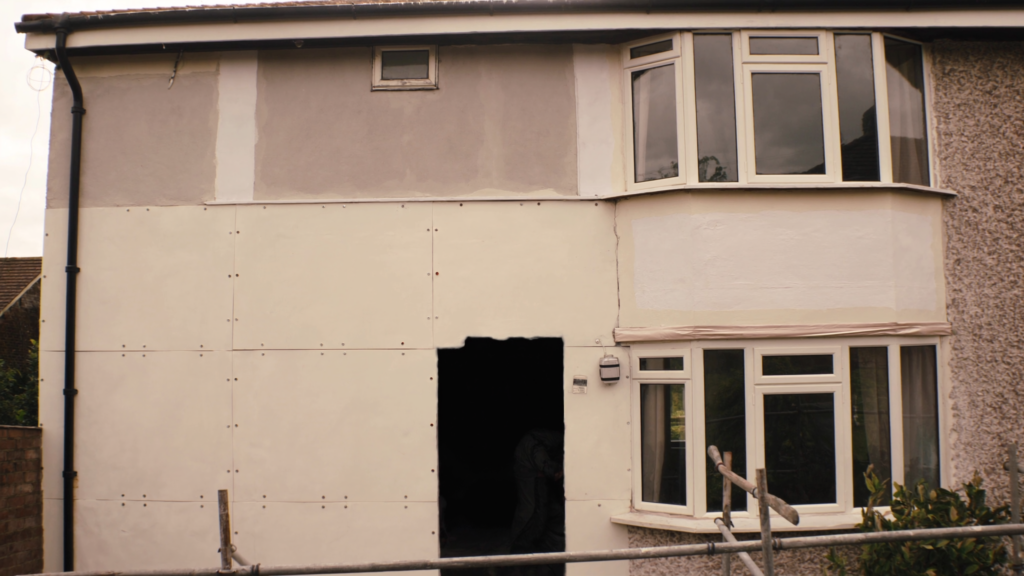
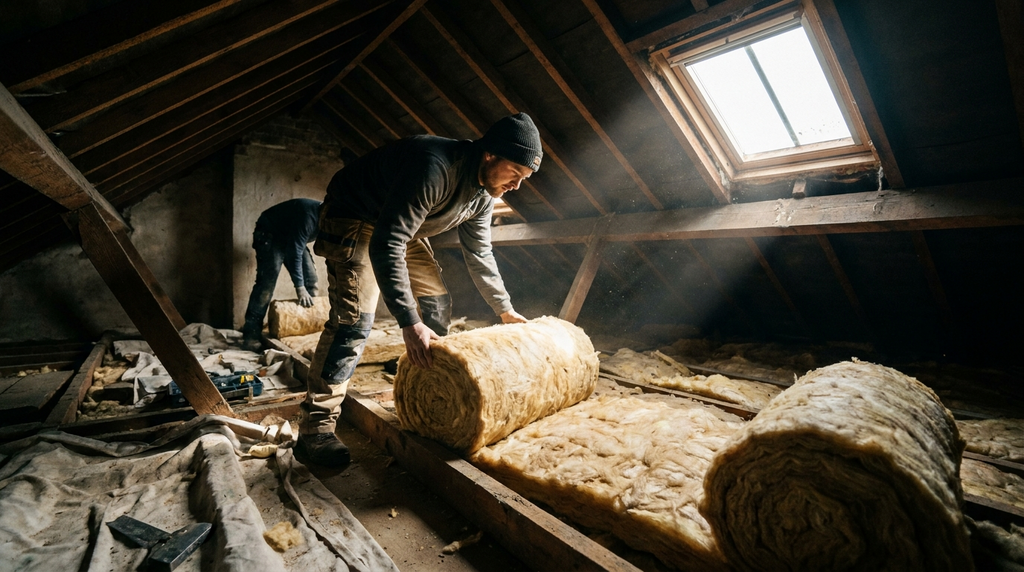
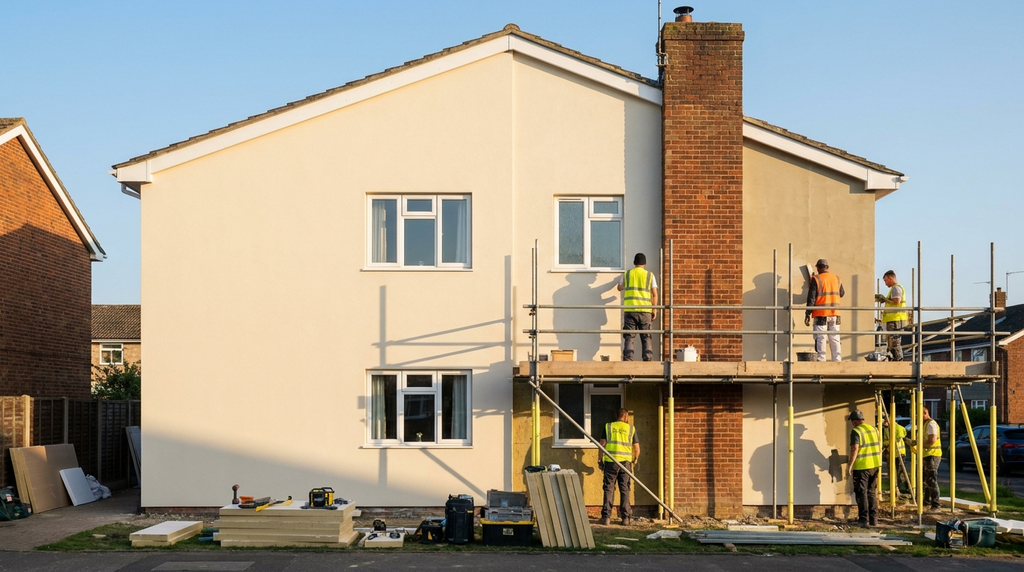
External wall insulation (EWI) is a layer of insulating material fixed to the outside of your home and then rendered or clad. The cost depends on your property size, the wall construction (solid brick, stone, or cavity), and the insulation system you choose (mineral wool, phenolic foam, or expanded polystyrene).
According to the Energy Saving Trust, the average cost for a typical three-bedroom semi-detached home is £14,000 including scaffolding, labour, and materials (Energy Saving Trust, 2026). Detached homes cost more, ranging from £18,000 to £22,000, while small terraces cost between £8,000 and £12,000. The wide price range reflects differences in wall area, access difficulty, and the finish you choose.
The typical kWh saving from EWI is 2,000–4,000 kWh per year in a gas-heated home
Installing external wall insulation on an uninsulated solid-wall home can cut your heating energy use by 2,000 to 4,000 kilowatt-hours (kWh) per year. That is the amount of energy needed to heat a typical home for several winter months.
At the 2026 energy price cap rates set by Ofgem, this translates to an annual bill reduction of £120 to £240 (Ofgem, 2026). The saving assumes your home previously had no wall insulation at all. Solid-wall homes see the largest reduction because they lose heat fastest through uninsulated masonry. The Energy Saving Trust’s research on solid wall insulation confirms these figures (Energy Saving Trust, 2026).
Quick numbers cost, payback, and grant amounts for EWI in 2026
| Property type | Average cost (£) | Annual saving (£) | Payback period (years) | GBIS grant (£) | ECO4 grant (£) |
|---|---|---|---|---|---|
| Semi-detached | 14,000 | 120–240 | 40–70 (without grant) | Up to 7,500 | Up to 15,000 |
| Detached | 18,000–22,000 | 200–350 | 50–80 (without grant) | Up to 7,500 | Up to 15,000 |
| Terrace | 8,000–12,000 | 80–150 | 40–70 (without grant) | Up to 7,500 | Up to 15,000 |
Payback periods without a grant are long because the upfront cost is high relative to annual savings. With a full grant covering the installation, your payback drops to zero. The Great British Insulation Scheme (GBIS) and ECO4 grants are the two main routes to free or heavily subsidised EWI (GOV.UK, 2026; Ofgem, 2026).
The Great British Insulation Scheme closed on 31 March 2026. It funded insulation measures only and never covered windows or glazing.
The Great British Insulation Scheme closed on 31 March 2026. It funded insulation measures only and never covered windows or glazing. The scheme is administered by energy suppliers, and eligible homeowners pay nothing upfront if fully approved (GOV.UK, 2026).
Eligibility is based on your household receiving certain benefits, including Pension Credit, Universal Credit, Income Support, or Housing Benefit. If you do not receive benefits, you may still qualify if your total household income is below £31,000 per year. The grant covers the full cost of installation for those who meet the criteria, so you should check with your energy supplier or a registered installer before paying for any work.
ECO4 grants pay for EWI in off-gas-grid homes with an EPC rating of E, F, or G (2026)
The ECO4 scheme covers up to 100% of installation costs for external wall insulation in eligible homes, with a maximum grant of £15,000 per property. This is the largest grant available for EWI and is fully funded by energy suppliers with no repayment required (Ofgem, 2026).
To qualify for ECO4, your property must be off the mains gas grid, have an Energy Performance Certificate (EPC) rating of E, F, or G, and be owner-occupied or privately rented. The scheme targets homes with the poorest energy efficiency and no access to mains gas, which often have the highest heating costs. If you meet these criteria, you can apply through your energy supplier or a certified installer.
The direct answer external wall insulation costs £14,000 on average, but grants can reduce it to zero
For a typical three-bedroom semi-detached home, external wall insulation costs £14,000 on average without any grant. The Great British Insulation Scheme closed on 31 March 2026. It funded insulation measures only and never covered windows or glazing. With ECO4, eligible off-gas-grid homes also pay nothing. Without grants, the payback period is 40 to 70 years, making EWI a very long-term investment compared to other home improvements.
If you are not eligible for a grant, you should weigh the annual saving of £120–£240 against the upfront cost. For many homeowners, the main benefit is improved comfort and reduced heat loss rather than a short financial payback.
How to verify an EWI installer MCS certification and TrustMark registration are mandatory for grants (2026)
The Great British Insulation Scheme closed on 31 March 2026. It funded insulation measures only and never covered windows or glazing. TrustMark registration is also required, as it covers consumer protection and quality assurance (MCS, 2026; TrustMark, 2026).
For non-grant work, the installer may need FENSA or NICEIC/NAPIT registration if the installation involves building regulations, such as fire safety requirements. Always check the installer’s certification on the MCS and TrustMark registers before signing a contract. Unverified work may void your building warranty or prevent you from claiming a grant later. how to check an installer’s MCS and TrustMark registration