The Great British Insulation Scheme closed on 31 March 2026. It funded insulation measures only and never covered windows or glazing.
Whether you qualify depends primarily on your property’s Energy Performance Certificate (EPC) rating and your household income. The GBIS targets homes rated EPC D, E, F, or G that have solid walls or uninsulated cavity walls. If you live in social housing, your landlord may also access separate funding through the Social Housing Decarbonisation Fund. The Great British Insulation Scheme closed on 31 March 2026. It funded insulation measures only and never covered windows or glazing.
Great British Insulation Scheme eligibility
The Great British Insulation Scheme closed on 31 March 2026. It funded insulation measures only and never covered windows or glazing. The scheme is open to owner-occupiers and private tenants (with landlord permission). If you receive means-tested benefits such as Universal Credit or Pension Credit, you will be prioritised. The grant covers the full cost of installation for eligible households, with no contribution required.
ECO4 scheme for low-income households
The Energy Company Obligation (ECO4) is a separate government scheme that funds external wall insulation for low-income and vulnerable households, regardless of Council Tax band. It runs until March 2026 and targets homes with EPC ratings of E, F, or G (Ofgem, 2026). To qualify, you must receive one of several qualifying benefits, such as Income Support or Child Tax Credit. The scheme obligates larger energy suppliers to fund insulation measures, and you can apply through your energy company or a certified installer.
Local authority and devolved government grants
In England, some local councils offer discretionary grants for external wall insulation through the Home Upgrade Grant (HUG), which targets off-gas-grid homes with EPC ratings below C (GOV.UK, 2026). In Scotland, the Warmer Homes Scotland scheme provides grants up to £7,500 for solid wall insulation for low-income households (Energy Saving Trust, 2026). Wales offers the Nest scheme, which can cover the full cost of external wall insulation for eligible homes. Northern Ireland has the Affordable Warmth Scheme. This provides grants up to £7,500 for insulation measures.
A worked example
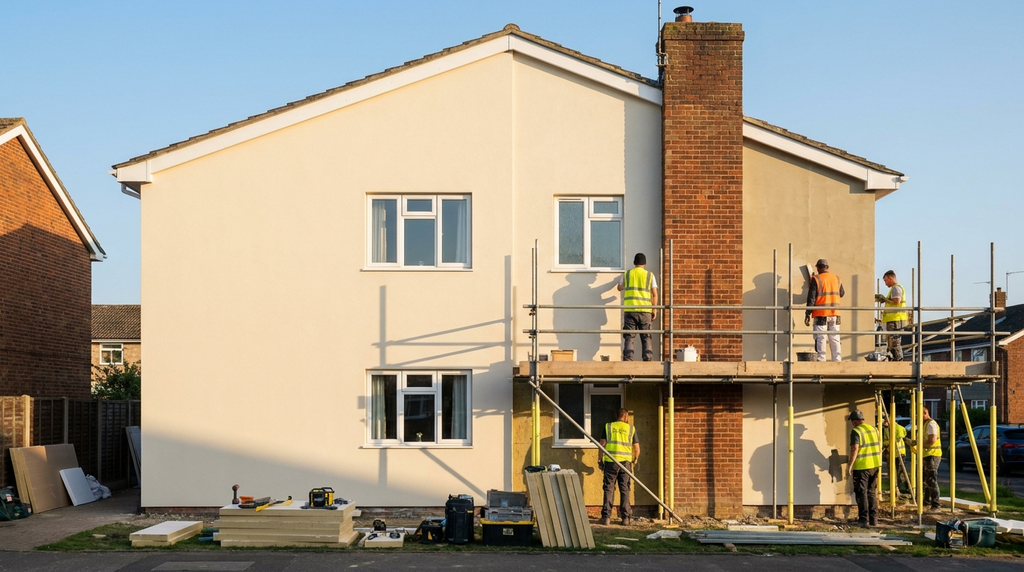
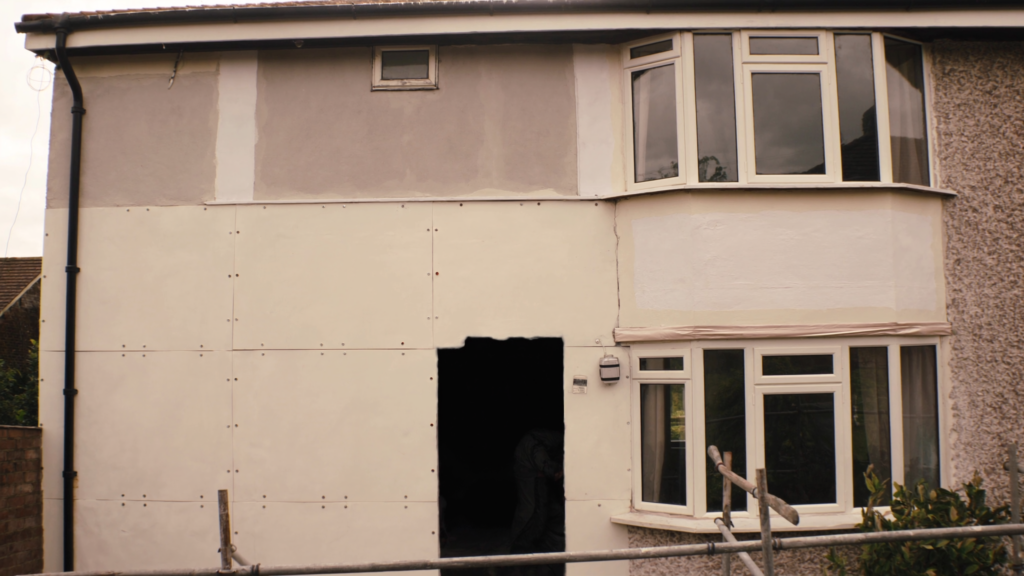
The Great British Insulation Scheme closed on 31 March 2026. It funded insulation measures only and never covered windows or glazing. The Energy Saving Trust estimates that adding 100mm of external wall insulation to a semi-detached house costs between £11,000 and £15,000 without support. The Great British Insulation Scheme closed on 31 March 2026. It funded insulation measures only and never covered windows or glazing. The property’s solid walls would be covered with insulation boards, mesh, and render, reducing heat loss through the walls by up to 60%. Annual savings of £455 mean the home’s carbon dioxide emissions drop by roughly 1.4 tonnes per year. With a 25-year lifespan for the insulation system, the total lifetime savings reach £11,375, and the home’s EPC rating typically jumps from band E to band C or D. Energy Saving Trust confirms that 0% VAT applies to all installations until March 2027.
| Item | Figure |
|---|---|
| Upfront cost after grants | £0 |
| Yearly savings | £455 |
| Payback period | 0 years (fully funded) |
| 25-year lifetime savings | £11,375 |
What homeowners often get wrong
The most common mistake is assuming external wall insulation is only for old houses with solid walls when many modern cavity-wall homes also qualify for grants. Here are three frequent errors that cost homeowners money or miss out on support.
- Believing you need solid walls for a grant Many homeowners with uninsulated cavity walls think they cannot apply for external wall insulation grants. The Great British Insulation Scheme closed on 31 March 2026. It funded insulation measures only and never covered windows or glazing.
- Ignoring the Council Tax band check Homeowners often assume their income alone determines eligibility and forget the Council Tax band requirement. The Great British Insulation Scheme closed on 31 March 2026. It funded insulation measures only and never covered windows or glazing.
- Thinking you must own the property outright Private tenants frequently assume they cannot access grants for external wall insulation. The Great British Insulation Scheme closed on 31 March 2026. It funded insulation measures only and never covered windows or glazing.
Quick reference
- The Great British Insulation Scheme closed on 31 March 2026. It funded insulation measures only and never covered windows or glazing.
- The Great British Insulation Scheme closed on 31 March 2026. It funded insulation measures only and never covered windows or glazing.
- The Great British Insulation Scheme closed on 31 March 2026. It funded insulation measures only and never covered windows or glazing.
- Annual energy savings from external wall insulation on a typical semi-detached home range from £300 to £500, depending on wall type and property size.
- 0% VAT on insulation installation applies until March 2027, but only if you use a registered installer certified by BBA or BESCA under the TrustMark scheme.
Frequently Asked Questions
You qualify if your home has an EPC rating of D, E, F, or G and is in Council Tax bands A–D in England or A–E in Scotland and Wales, as per GOV.UK. Low-income households receiving means-tested benefits are prioritised under the Great British Insulation Scheme.
For private homeowners not eligible, costs typically range from £8,000 to £22,000, according to the Energy Saving Trust.
Both are government schemes that can cover external wall insulation, but eligibility criteria differ.