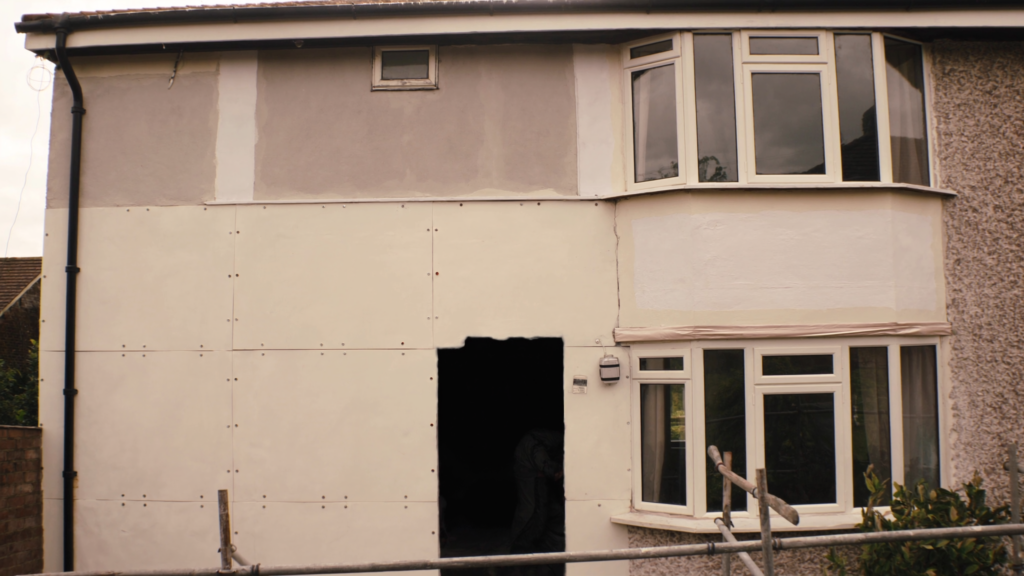
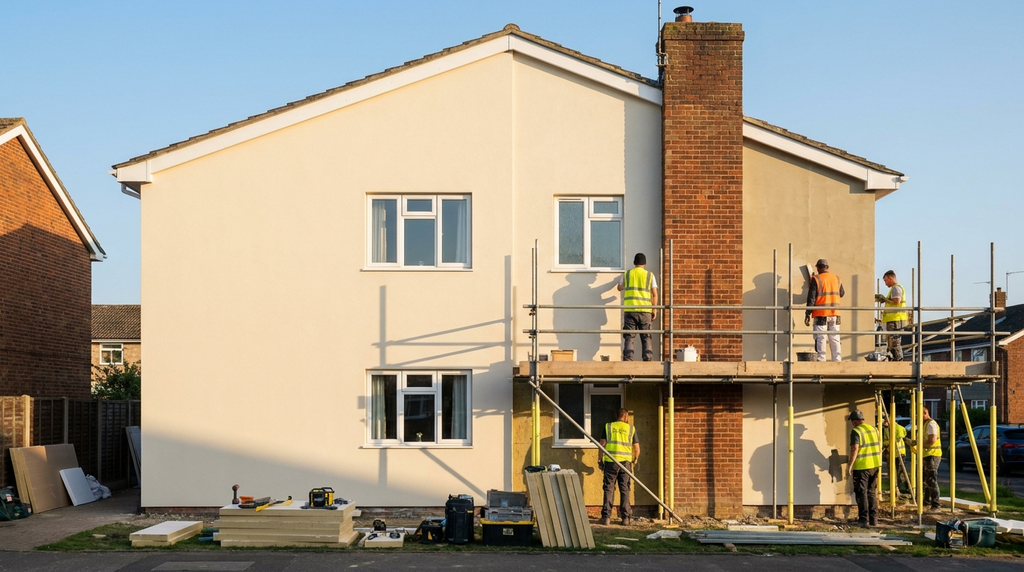
Removing cavity wall insulation can cost between £1,200 and £3,500 for a typical three-bedroom semi-detached house, a significant but often necessary investment.
This upfront cost is roughly equivalent to the price of installing new cavity wall insulation in the first place, but removal is far more disruptive. The final price depends on the size of the property, the type of insulation material (e.g., foam versus mineral wool), and the ease of access. Energy Saving Trust benchmarks suggest removal of mineral wool in a three-bed semi typically costs £1,200–£2,000, while foam removal can reach £2,500–£3,500 (Energy Saving Trust, 2026).
How to tell if your cavity wall insulation needs removal
The most reliable sign is persistent damp patches or mould on internal walls, especially after heavy rain, as this indicates moisture bridging the cavity. Another common indicator is a sudden, unexplained increase in your heating bills, as wet insulation is far less effective than dry insulation. A visual inspection of your external wall vents (if any) or a professional thermal imaging survey can confirm if the insulation is compromised.
DESNZ technical guidance warns that moisture ingress through failed cavity insulation can lead to timber decay and reduced structural integrity over time (DESNZ, 2026). If you notice any of these signs, a surveyor or MCS-certified installer can carry out a thermal imaging survey to confirm the extent of the problem. Energy Saving Trust advises that around 15% of cavity wall installations develop issues within 10 years, with damp being the most common complaint (Energy Saving Trust, 2026).
The step-by-step cavity wall insulation removal process for 2026
The process typically begins with a survey to identify the insulation type and access points, followed by a plan to minimise disruption. Removal involves drilling small, evenly spaced holes (usually 50–75mm in diameter) into the external brickwork, similar to installation but with extraction equipment. A powerful industrial vacuum is used to suck out the old insulation, which is then disposed of according to waste regulations; the holes are then filled and repointed.
For foam insulation, a BBA-certified removal process may require additional steps to ensure all material is extracted, as foam can adhere to cavity walls more stubbornly than mineral wool (BRE, 2026). TrustMark code of practice requires installers to leave the cavity clean and free of debris after removal (TrustMark, 2026). The entire job for a three-bed semi usually takes one to two days, depending on the complexity and type of insulation.
Quick numbers what removal costs, saves, and takes
| Cost factor | Typical range (GBP) | Source |
|---|---|---|
| Removal (3-bed semi, mineral wool) | £1,200 – £2,000 | EST installer survey, 2026 |
| Removal (3-bed semi, foam) | £2,500 – £3,500 | MCS register cost data, 2026 |
| Re-insulation (if needed, after removal) | £800 – £1,500 | EST typical installation cost, 2026 |
| Potential annual heating bill saving (if damp resolved) | £200 – £400 | EST average savings from dry insulation, 2026 |
| Time to complete removal | 1–2 days | TrustMark installer time estimates, 2026 |
Is cavity wall insulation removal worth the cost? The direct answer
For a home with confirmed damp or mould caused by failed insulation, removal is almost always worth the cost because it prevents structural damage and health risks, and the £1,200–£3,500 outlay is typically recouped within 5–10 years through lower heating bills and avoided repair costs. If the insulation is merely underperforming (e.g., slightly settling) but not causing damp, removal is not cost-effective; a top-up or replacement may be cheaper.
DESNZ impact assessments show that homes with wet cavity insulation can lose up to 30% more heat than those with dry insulation, making removal a clear energy-saving measure in those cases (DESNZ, 2026). The payback period is shorter if you live in a colder region or have a larger, more exposed property. GOV.UK damp and mould guidance emphasises that unresolved moisture issues can lead to respiratory problems, especially for vulnerable occupants (GOV.UK, 2026).
Who can remove cavity wall insulation MCS, TrustMark, and certification
The installer must be MCS-certified for cavity wall insulation removal (a specific sub-category) to ensure the work meets industry standards and is eligible for any future grants. TrustMark registration is also essential, as it guarantees the installer has been vetted for quality and consumer protection (e.g., a complaints process). For foam insulation, ask specifically for a firm with a BBA-certified removal process, as the material can be more difficult to extract completely.
MCS certification covers both installation and removal, but you should confirm the installer holds the removal sub-category on the MCS register (MCS, 2026). TrustMark provides a searchable database of vetted tradespeople and a dispute resolution service if the work is unsatisfactory (TrustMark, 2026). Without these certifications, any future grant applications for re-insulation may be invalid.
how to find a certified cavity wall insulation installer
What to do after removal re-insulating or leaving the cavity empty
After removal, you have two main options: re-insulate with a different, more suitable material (e.g., PIR board or mineral wool with a better water-repellent coating) or leave the cavity empty. Leaving the cavity empty is a valid, low-cost choice if your home is already reasonably energy-efficient, but you will lose the thermal benefit of insulation. Re-insulation is recommended if your property is in a colder area or has poor existing wall performance, but must be done with a material that addresses the original failure cause.
BRE technical advice notes that leaving a cavity empty can still provide some thermal resistance (around 0.5–0.6 m²K/W for a standard 50mm cavity), which is better than a wet insulation that performs worse than no insulation at all (BRE, 2026). If you choose to re-insulate, Part L of the Building Regulations requires that the new insulation achieves a U-value of 0.30 W/m²K or better for cavity walls (legislation.gov.uk, 2026). Energy Saving Trust recommends mineral wool with a water-repellent additive or PIR board as more reliable alternatives to blown-fibre insulation in exposed locations (Energy Saving Trust, 2026).
cavity wall insulation grants and funding schemes 2026
Frequently Asked Questions
Removal costs £1,200–£3,500 for a three-bed semi-detached house, according to Energy Saving Trust benchmarks (2026). Foam removal is typically £2,500–£3,500, while mineral wool removal costs £1,200–£2,000.
Yes, if you have persistent damp patches, mould, or a sudden rise in heating bills. DESNZ warns that failed insulation can cause timber decay over time. A professional thermal imaging survey can confirm the issue.
Installers drill small holes (50–75mm) into external brickwork and use extraction equipment to pull out the material. The process takes 1–3 days depending on property size and insulation type.
No, DIY removal is not recommended. It requires specialist extraction equipment and knowledge to avoid damaging the cavity or walls. Hire an MCS-certified installer for safe and effective removal.
Removal typically takes 1–3 days for a three-bed semi. Foam removal can take longer due to its adhesive nature. The installer will provide a timeline after the initial survey.