One in three UK homes has solid walls, but only a fraction are insulated
Solid walls, typically found in homes built before the 1920s, have no cavity gap to trap heat. The English Housing Survey for 2023-24, the latest data available for 2026 context, shows that around one in three homes in England has solid walls (DESNZ, 2026). Despite this, only a small percentage have been insulated, leaving millions of homes losing heat far faster than cavity-walled properties.
Solid walls lose heat up to three times faster than cavity walls, making insulation one of the highest-impact retrofits available. Without it, a typical solid-wall home could be wasting hundreds of pounds each year on heating that escapes through the fabric of the building. The 2026 landscape for solid wall insulation is shaped by clearer grant eligibility rules, stricter installer standards, and a growing awareness among homeowners that this is a long-term investment in comfort and energy efficiency.
This article explains the pros and cons of solid wall insulation in 2026, covering the costs, savings, grant routes, installer verification, and the key trade-offs between external and internal systems. It focuses on what homeowners need to know to make an informed decision, not on technical installation details.
The direct answer solid wall insulation is worth it for most eligible homeowners in 2026
Yes, for most solid-wall homes, installing external or internal insulation reduces heat loss by 45% to 60%, cutting annual heating bills by £200 to £400 according to Energy Saving Trust figures for 2026 (Energy Saving Trust, 2026). The decision becomes much easier when grant funding is available, as the upfront cost drops significantly.
It is not worth it if your walls are structurally unsound, have persistent damp issues that cannot be resolved, or if you cannot access grant funding and the full upfront cost is prohibitive. The Great British Insulation Scheme closed on 31 March 2026. It funded insulation measures only and never covered windows or glazing.
Quick numbers costs, savings, and payback periods
| Insulation type | Average installed cost (UK) | Annual saving (EST) | Typical payback period (unassisted) | Typical payback with grant (GBIS) |
|---|---|---|---|---|
| External solid wall insulation | £8,000 to £22,000 | £200 to £400 | 20 to 55 years | 5 to 15 years |
| Internal solid wall insulation | £4,000 to £13,000 | £200 to £400 | 10 to 33 years | 3 to 10 years |
Costs are based on MCS installer survey averages for 2026, while savings draw on Energy Saving Trust data for a typical gas-heated semi-detached home (Energy Saving Trust, 2026). Grant amounts are taken from Ofgem GBIS scheme data (Ofgem, 2026). Payback periods assume a medium-sized semi-detached property; actual figures vary by house size, heating system, and energy tariff.
Who qualifies for solid wall insulation grants in 2026
Eligibility is the core question for most homeowners. The Great British Insulation Scheme closed on 31 March 2026. It funded insulation measures only and never covered windows or glazing.
The Great British Insulation Scheme closed on 31 March 2026. It funded insulation measures only and never covered windows or glazing. Solid walls are a primary measure under GBIS, meaning the scheme specifically targets homes with solid walls that are uninsulated or poorly insulated (Ofgem, 2026).
ECO4 is for low-income households and those living in fuel poverty. Eligibility is based on receiving specific benefits or meeting income thresholds. The Great British Insulation Scheme closed on 31 March 2026. It funded insulation measures only and never covered windows or glazing. Both schemes require the installation to be carried out by an MCS-certified installer.
How to verify an installer MCS, TrustMark, and the guarantee
Solid wall insulation must be installed by a company with MCS certification to meet grant and warranty standards. MCS certification covers both external and internal systems, and the installer must hold the relevant product-specific MCS certificate for the system they are fitting (MCS, 2026).
TrustMark is the government-endorsed quality mark for home improvement work. You should check that the installer is registered with TrustMark specifically for solid wall insulation, not just general building work (TrustMark, 2026). For external systems, the installation comes with a 25-year guarantee from the Cavity Insulation Guarantee Agency (CIGA) or an equivalent provider. Internal systems may have a shorter guarantee, typically 10 to 15 years, so confirm the terms before signing a contract.
The two main types external versus internal solid wall insulation
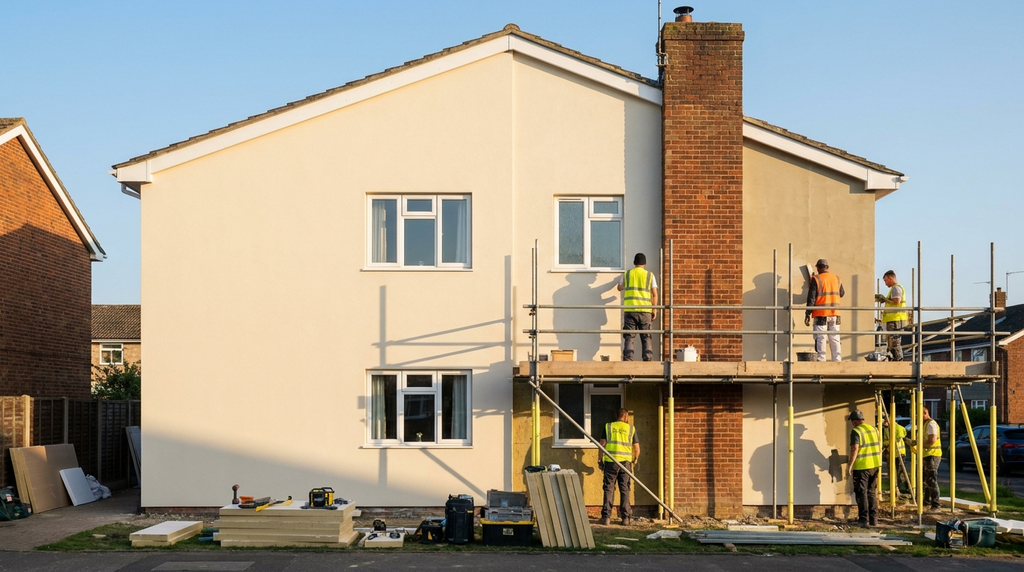
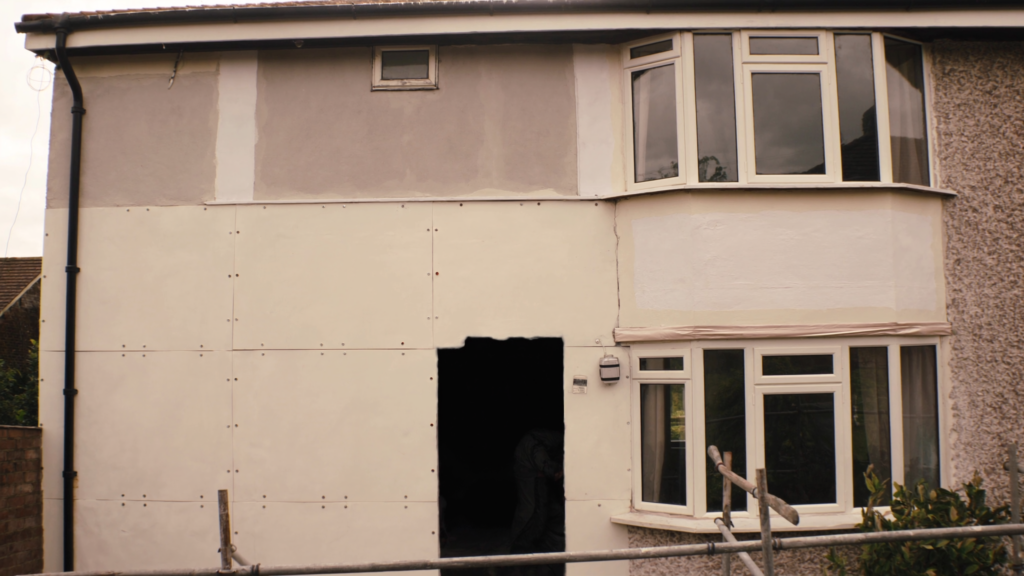
External solid wall insulation is applied to the outside face of the wall. It retains the building’s thermal mass, reduces condensation risk, and improves weatherproofing. However, it changes the appearance of the house and requires planning permission in conservation areas or for listed buildings. The U-value target under Building Regulations Approved Document L (2026 edition) is a minimum of 0.30 W/m²K (GOV.UK, 2026).
Internal solid wall insulation is applied to the inside of external walls. It is cheaper and less disruptive to the building’s exterior, but it reduces room size by 50mm to 100mm, requires re-plastering, and can cause condensation issues if not detailed correctly. Both systems must meet the same U-value target, but the installation approach differs significantly.
The main cons damp, cost, and disruption
Damp risk is the most serious concern. Internal insulation can trap moisture against the wall if the surface is not properly prepared, leading to interstitial condensation. External insulation can mask existing damp problems. This allows them to worsen behind the new layer. A pre-installation damp survey by a qualified surveyor is essential before any work begins (BRE, 2026).
Cost is another major drawback. External solid wall insulation is one of the most expensive retrofit measures, often exceeding £15,000 for a semi-detached home. Even with a grant, the remaining cost can still be significant. Disruption is also considerable: external work can take 2 to 4 weeks, requires scaffolding, and may affect neighbours. Internal work requires emptying rooms and redecorating afterwards. These factors mean solid wall insulation is not a quick or cheap fix, but for most eligible homeowners, the long-term savings and comfort gains make it a worthwhile investment.
Compare solid wall insulation costs with cavity wall insulation costs
Frequently Asked Questions
External solid wall insulation costs £8,000 to £22,000 for a typical three-bed semi, while internal insulation costs £4,000 to £13,000 according to Energy Saving Trust figures for 2026. Costs depend on wall area, access, and finish type.
Yes, for most eligible homes it reduces heat loss by 45% to 60%, cutting annual bills by £200 to £400 per Energy Saving Trust data for 2026. It is not worth it if walls have unresolved damp or structural issues.
Ofgem administers these schemes, and you must use an MCS-certified installer.
External insulation adds a weatherproof layer to the outside, preserving internal space but changing the look of your home. Internal insulation is cheaper and quicker but reduces room size slightly and requires redecoration.
Properly installed insulation should not cause damp, but pre-existing damp issues must be fixed first. The Energy Saving Trust advises that a survey identifies any risks before installation.