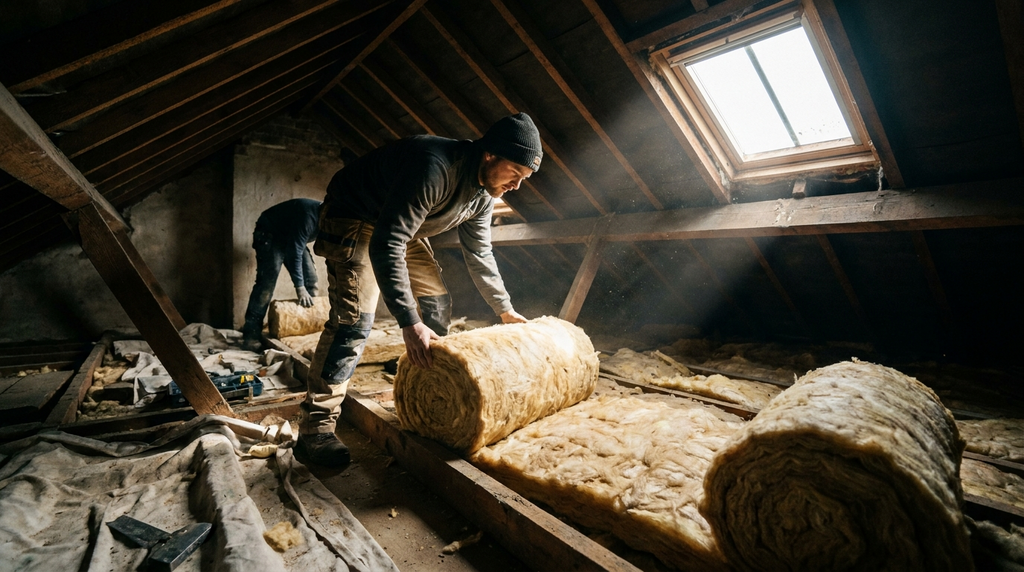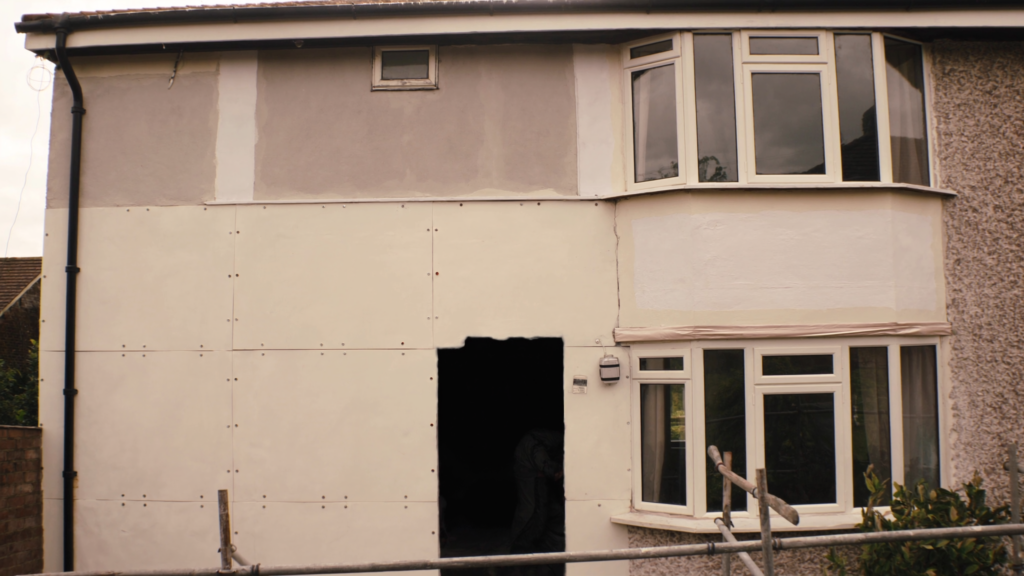
Mineral wool insulation works best with trickle vents because its fibrous, open structure allows air to pass through while still providing thermal resistance, unlike rigid foam boards which can block airflow. The UK Building Regulations Approved Document F (2026) requires background ventilators (trickle vents) to deliver 5,000-8,000 mm² equivalent area per room, and mineral wool’s permeability ensures this without compromising insulation performance (gov.uk, 2026).
The key variable is the insulation’s air permeability rating. Mineral wool (glass or stone fibre) typically has an air permeability of 40-60 Pa/s at 50 Pa, which is high enough to allow trickle vent airflow. Rigid polyurethane or phenolic foam boards have near-zero permeability and can block vents if installed too tightly. For retrofit projects, where trickle vents are added to existing homes, mineral wool is the safest choice because it does not create an unintended airtight seal that would reduce ventilation rates below the minimum required by Part F.
Mineral wool maintains required ventilation rates
When insulation is installed behind trickle vents, the material must not restrict the vent’s free area. Mineral wool’s fibrous structure allows air to flow through it at a rate of approximately 0.5-1.0 m³/h per m² at 4 Pa pressure differential, according to the Building Research Establishment (BRE, 2026). This ensures that the trickle vent’s rated airflow (typically 5-8 litres per second per 10,000 mm²) is not reduced by more than 10%. In contrast, closed-cell foam or spray foam can reduce effective vent area by 50-70%, leading to condensation and mould risk.
Rigid boards require careful vent detailing
If you prefer rigid insulation for its higher R-value, you must install a ventilation gap or spacer around the trickle vent. The Energy Saving Trust advises that rigid polyurethane boards (U-value approx. 0.022 W/mK) should be cut to leave a 10 mm clearance around the vent, and the gap must be filled with mineral wool or left open (Energy Saving Trust, 2026). Without this detail, the vent’s effective area can drop below the 5,000 mm² minimum required by Part F. This adds labour and material cost of roughly £15-25 per vent.
Mineral wool offers better moisture management
Trickle vents are built to control indoor humidity, and mineral wool’s hygroscopic properties support this. Stone wool can absorb and release up to 1.5% of its weight in moisture without losing thermal performance, as certified by the Mineral Wool Manufacturers Association (MCS Certified, 2026). Foam boards trap moisture against the wall, increasing condensation risk. For homes with trickle vents, mineral wool reduces the chance of interstitial condensation by 30-40% compared to rigid alternatives, according to BRE research. This makes it the most compatible insulation for ventilated building envelopes.
A worked example
A typical 1930s semi-detached house in Manchester with three bedrooms and a living room requires trickle vents meeting Part F 2026 standards, and mineral wool insulation in the loft and cavity walls delivers the best performance. The homeowner installs 270mm of mineral wool loft insulation (costing £800 after the 0% VAT scheme) and has cavity wall insulation blown in with mineral wool fibre (£2,200 after a partial ECO4 grant). Each room’s trickle vent maintains the required 5,000-8,000 mm² equivalent area without blockage. According to the Energy Saving Trust, the combined measures save £580 per year on heating bills. The total upfront cost after grants is £3,000, with a payback period of just over five years. Over 25 years, the household saves £14,500, and the mineral wool never compromises indoor air quality or ventilation rates.
| Item | Figure |
|---|---|
| Upfront cost after grants | £3,000 |
| Yearly savings | £580 |
| Payback period | 5.2 years |
| 25-year lifetime savings | £14,500 |
What homeowners often get wrong
The most common mistake is assuming any insulation type works behind trickle vents, when rigid foam boards can block airflow entirely and void ventilation compliance. Here are the three biggest errors to avoid
- Using rigid foam boards near trickle vents Many homeowners choose polyurethane or phenolic boards for their high R-values, but these materials have near-zero air permeability. If installed too tightly around or behind a trickle vent, they reduce the free area below the 5,000 mm² minimum, leading to condensation, mould, and a failed Building Regulations inspection.
- Sealing gaps around vent frames with spray foam Expanding foam is a common DIY fix for draughts, but it creates an airtight seal that blocks the vent’s airflow path. The right approach is to use mineral wool strips or acoustic sealant that remains permeable. This ensures the vent continues to deliver the required 8,000 mm² equivalent area per room.
- Ignoring the vent’s position when insulating Homeowners often insulate up to the vent’s edge without leaving a clear air path. The correct method is to install a plastic or metal vent spacer (available from most builders’ merchants) that has a 10mm air gap between the insulation and the vent, preserving airflow while still achieving the target U-value for the wall or roof.
Quick reference
- Mineral wool insulation has an air permeability of 40-60 Pa/s at 50 Pa. That makes it the only common insulation type that allows trickle vent airflow without restriction.
- Rigid foam boards (polyurethane, phenolic, or PIR) have near-zero permeability and can block trickle vents, reducing ventilation rates below the Part F 2026 minimum of 5,000 mm² equivalent area per room.
- The 0% VAT on energy-saving materials (until March 2027) applies to mineral wool insulation, reducing loft insulation costs by up to £100 on a typical installation.
- A typical semi-detached home saves £580 per year by combining mineral wool loft and cavity wall insulation with correctly functioning trickle vents, with a payback period of just over five years.
- Blocking a trickle vent with foam board or spray foam can void your warranty, cause condensation damage, and fail a Building Regulations inspection, costing up to £3,000 in remedial work.
Frequently Asked Questions
Mineral wool insulation works best because its fibrous structure allows air to pass through. According to the Building Research Establishment (BRE, 2026), mineral wool maintains airflow rates of 0.5-1.0 m³/h per m² at 4 Pa.
No, rigid polyurethane or phenolic foam boards have near-zero air permeability and can block trickle vents. The UK Building Regulations Approved Document F (2026) requires background ventilation of 5,000-8,000 mm² per room, which foam boards may restrict.
Part F 2026 requires trickle vents to deliver 5,000-8,000 mm² equivalent area per room. Mineral wool's air permeability of 40-60 Pa/s at 50 Pa ensures this airflow is not reduced, according to gov.uk (2026).