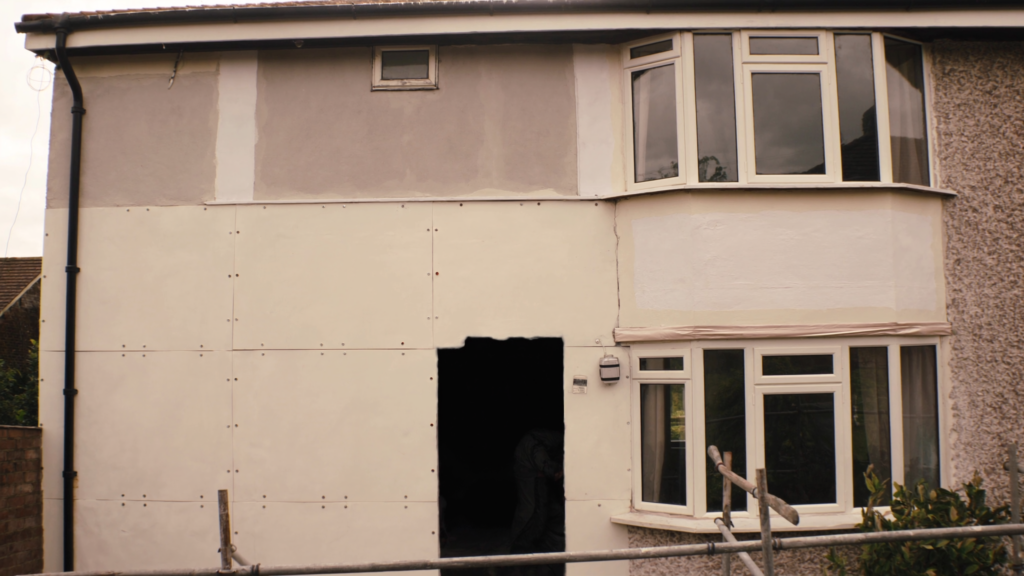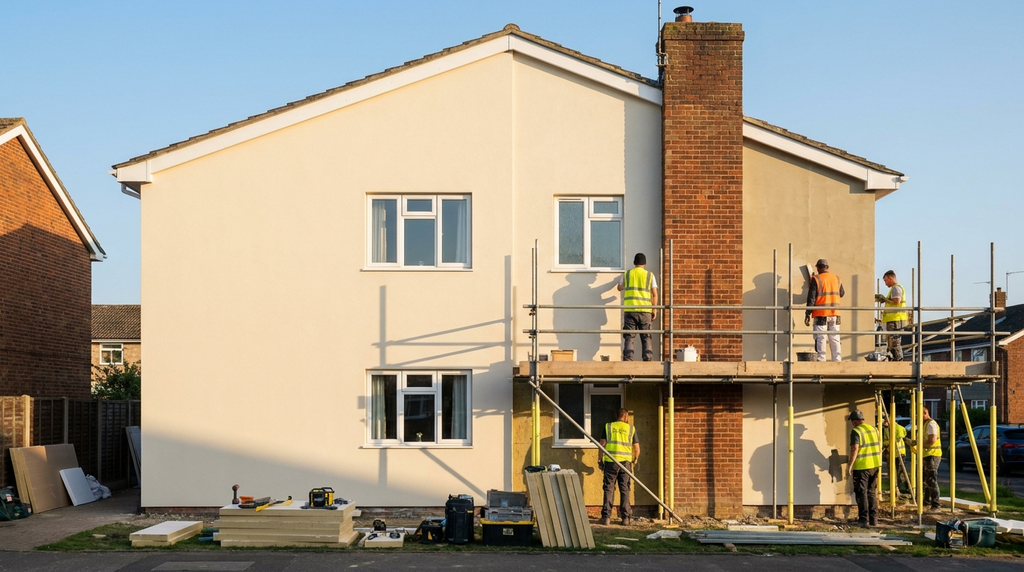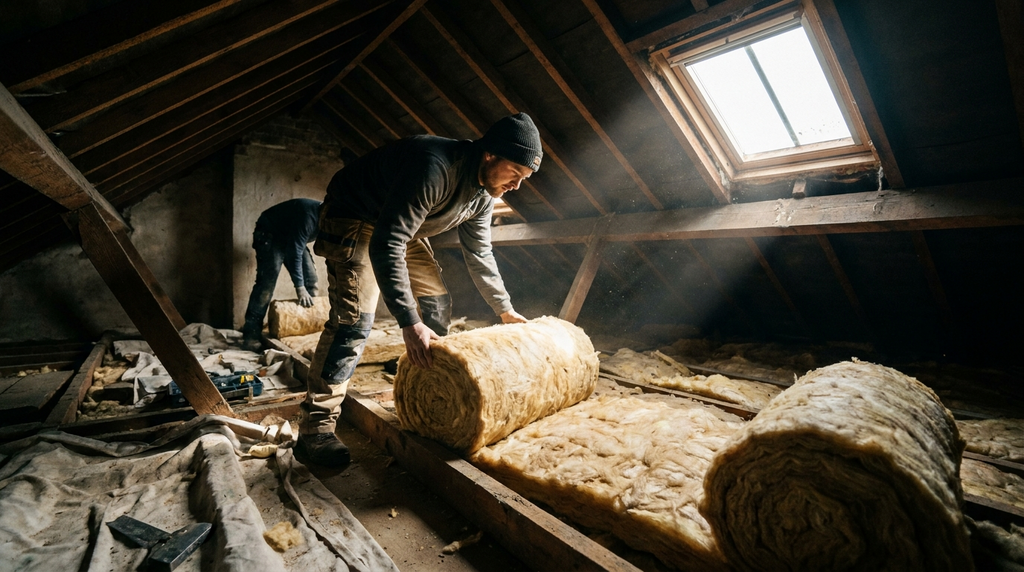
The most important performance difference is that sheep wool insulation has a thermal conductivity of 0.038–0.042 W/mK compared to mineral wool’s 0.032–0.040 W/mK, meaning mineral wool is generally slightly more effective at slowing heat transfer for the same thickness (GOV.UK Approved Document L, 2026).
The deciding factor is thermal performance, moisture management, installation method and cost. Sheep wool is a natural, vapour-active material that absorbs and releases moisture without losing insulation value. That makes it suitable for breathable older homes. Mineral wool, made from rock or glass fibres, is non-absorbent, fire-resistant and cheaper, but it can sag over time if not tightly fitted. Neither is universally better, the right choice depends on your home’s construction and your priorities for sustainability, budget and long-term performance.
Thermal performance and energy savings
Mineral wool typically offers a slightly better U-value for a given thickness. For a 100mm layer, mineral wool achieves around 0.32 W/m²K, while sheep wool achieves approximately 0.38 W/m²K (BRE, 2026). This means you may need slightly thicker sheep wool to match mineral wool’s thermal resistance. However, the difference is marginal in practice, both materials meet current Building Regulations for loft and wall insulation. The Energy Saving Trust notes that insulating a detached home’s loft to 270mm can save around £285 per year on energy bills, regardless of material choice (Energy Saving Trust, 2026).
Moisture handling and breathability
Sheep wool can absorb up to 30% of its weight in moisture without feeling damp and releases it back into the air, reducing condensation risk (MCS Certified, 2026). This makes it ideal for timber-frame or solid-wall homes where breathability is critical. Mineral wool is hydrophobic, it resists water but does not manage vapour actively, which can trap moisture if not combined with a proper vapour barrier. For homes with existing damp issues, sheep wool’s hygroscopic properties often perform better, though it costs roughly 30–50% more per square metre.
Cost, fire safety and environmental impact
Mineral wool costs around £10–£15 per square metre for 100mm thickness, while sheep wool ranges from £20–£30 per square metre (Energy Saving Trust, 2026). Mineral wool is non-combustible and rated A1 for fire safety, whereas sheep wool is naturally fire-resistant but treated with borates to meet Class B fire standards. Environmentally, sheep wool has a lower embodied carbon footprint, around 5–10 kg CO₂ per m³ compared to mineral wool’s 15–25 kg CO₂ per m³ (BRE, 2026). For homeowners prioritising sustainability, sheep wool wins; for budget and fire safety, mineral wool is the safer choice.
A worked example
A typical 1930s semi-detached house in Manchester insulating a 50m² loft space with 270mm of mineral wool costs roughly £650 for materials and installation under the ECO4 scheme if eligible. Switching to sheep wool insulation of the same depth costs around £1,200 because the material is more expensive and less commonly stocked by local installers. The Energy Saving Trust estimates loft insulation saves a semi-detached home about £285 per year on heating bills. With mineral wool the payback period is just over two years, while sheep wool takes four to five years to break even. Over 25 years mineral wool saves approximately £6,500 after costs, compared to sheep wool saving around £5,900. The 0% VAT rate on energy-saving materials until March 2027 applies to both types, reducing upfront costs by £30 for mineral wool and £60 for sheep wool. Neither option qualifies for the BUS grant, which is reserved for heat pumps and biomass boilers.
| Item | Figure |
|---|---|
| Upfront cost after grants | £650 (mineral wool) or £1,200 (sheep wool) |
| Yearly savings | £285 |
| Payback period | 2.3 years (mineral wool) or 4.2 years (sheep wool) |
| 25-year lifetime savings | £6,500 (mineral wool) or £5,900 (sheep wool) |
What homeowners often get wrong
Many homeowners assume that the better thermal performance of mineral wool makes it the obvious winner for every home. Three specific mistakes can lead to wasted money or poor long-term results.
- Choosing mineral wool for a solid-wall Victorian terrace Most think mineral wool is universally safe for older homes, but it can trap moisture in solid-wall construction. Sheep wool breathes naturally and prevents damp, saving you from £3,000 to £7,000 in future damp-proofing costs.
- Ignoring vapour permeability for breathable homes People believe any insulation works in a timber-frame or stone cottage, but mineral wool stops vapour movement and risks condensation. Sheep wool has a healthy indoor humidity level, avoiding mould that can void your building warranty.
- Overlooking the ECO4 grant eligibility criteria Many assume ECO4 covers both materials equally, but the scheme prioritises mineral wool due to lower cost per square metre. If you insist on sheep wool your installer may not offer the grant, leaving you paying the full £1,200 yourself instead of a subsidised £350.
Quick reference
- Mineral wool has a thermal conductivity of 0.032–0.040 W/mK, slightly outperforming sheep wool at 0.038–0.042 W/mK according to BRE data.
- Sheep wool is vapour-active and can absorb up to 30% of its weight in moisture without losing insulation performance. That makes it ideal for older UK homes.
- ECO4 grants typically cover mineral wool installation for low-income households but rarely fund sheep wool due to higher material costs.
- Loft insulation with either material saves the average UK semi-detached home around £285 per year on energy bills based on Energy Saving Trust figures.
- Mineral wool is fire-resistant up to 1,000°C, while sheep wool is naturally flame-retardant but requires a fire barrier in some building applications.
Frequently Asked Questions
Mineral wool typically offers slightly better thermal performance, with a U-value around 0.32 W/m²K for 100mm compared to sheep wool's 0.38 W/m²K (BRE, 2026). In practice the difference is marginal, and both comply with current Building Regulations.
Yes, sheep wool insulation typically costs 2–3 times more per square metre than mineral wool. However, its natural moisture regulation can reduce the need for additional vapour barriers in older homes.
No, sheep wool is naturally flame-retardant due to its high nitrogen and moisture content, and it meets UK fire safety standards (BS 5803-4). Mineral wool is non-combustible and offers superior fire resistance.