Mineral Wool Insulation UK 2026 Complete Guide
If you are looking to cut your heating bills and improve your home’s Energy Performance Certificate (EPC) rating, mineral wool insulation is often the cheapest option per square metre. It works in lofts, cavity walls, and solid walls, with annual savings that can reach £300 or more.
For most existing homes, mineral wool insulation is the lowest-cost way to improve your EPC and cut heating bills by £150 to £300 a year, with a typical payback of under five years in cavity walls and under two years in lofts (Energy Saving Trust, 2026).
Mineral wool insulation costs less per square metre than PIR, EPS, or phenolic boards
Mineral wool rolls or batts are significantly cheaper than rigid foam boards or injected cavity fills. The installed cost for 100 mm mineral wool loft roll is typically £5 to £8 per m², compared with £12 to £18 per m² for PIR board and £10 to £15 per m² for EPS bead cavity fill (Energy Saving Trust, Home Insulation Guide, 2026). If you are doing the work yourself, material-only costs are even lower at £2 to £4 per m² based on current B&Q and Travis Perkins online prices.
The price gap is even wider for thicker installations. For a 270 mm loft top-up, mineral wool costs about half what you would pay for the same thickness in PIR boards. This makes mineral wool the clear choice for budget-conscious homeowners who want maximum savings per pound spent.
A 270 mm mineral wool loft top-up saves £150–£250 a year on heating bills
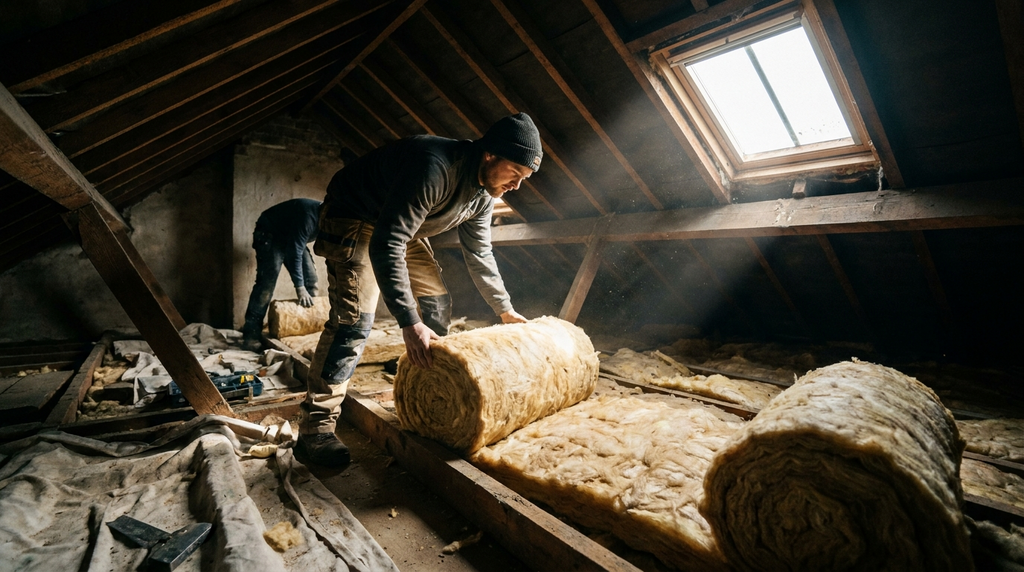
Most pre-1980s homes have 0 to 50 mm of existing loft insulation (Energy Saving Trust, Loft Insulation Report, 2026). Topping this up to the recommended 270 mm with mineral wool rolls typically saves £150 to £250 per year on heating bills (Energy Saving Trust, Energy Saving Calculator, 2026).
The payback period is extremely short at 1 to 2 years (DESNZ, Energy Efficiency Statistics, 2026). That means if you spend £300 on materials and install it yourself, you could recoup the cost in your first winter. The carbon saving is also substantial at 500 to 800 kg CO₂ per year (DESNZ, Greenhouse Gas Reporting, 2026).
Loft insulation is one of the few home improvements where the financial return is almost guaranteed. Because heat rises, a poorly insulated loft is the single biggest source of heat loss in most homes. How to check your current loft insulation depth
Cavity-wall mineral wool injection saves £200–£300 a year and pays back in 3–5 years
For homes with unfilled cavity walls, injecting mineral wool beads or fibre is a fast and relatively inexpensive upgrade. Typical installed cost for a semi-detached house is £300 to £600 (Energy Saving Trust, Cavity Wall Insulation Guide, 2026). Annual heating savings are £200 to £300, giving a payback period of 3 to 5 years (DESNZ, Energy Efficiency Statistics, 2026).
The thermal performance improvement is dramatic. U-value (a measure of heat loss) drops from around 1.5 W/m²K in an unfilled cavity to 0.3 to 0.4 W/m²K after injection (BRE, Insulation Materials Guide, 2026). That is a reduction in heat loss of roughly 75%.
Cavity-wall insulation works best in homes built after 1920 with cavity widths of at least 50 mm. Homes in exposed locations may need additional weatherproofing, but mineral wool injection is suitable for most cavity types.
Quick numbers
| Insulation type | Typical installed cost (per m²) | Annual heating saving | Payback period | U-value achieved |
|---|---|---|---|---|
| Loft roll (270 mm mineral wool) | £5–£8 | £150–£250 | 1–2 years | 0.16 W/m²K |
| Cavity-wall injection (mineral wool) | £6–£10 | £200–£300 | 3–5 years | 0.30–0.40 W/m²K |
| PIR board (100 mm) | £12–£18 | £150–£250 | 3–6 years | 0.22 W/m²K |
| EPS bead cavity fill | £10–£15 | £200–£300 | 3–5 years | 0.32 W/m²K |
Mineral wool insulation is non-combustible and fire-rated to Euroclass A1, safer than foam boards
Mineral wool is classified Euroclass A1 under BS EN 13501-1, meaning it is non-combustible (British Standards, Fire Classification of Construction Products, 2026). In contrast, PIR and EPS boards are Euroclass E or F, which are combustible (British Standards, Fire Classification of Construction Products, 2026).
In a fire, mineral wool does not melt or drip. Foam boards can melt and spread flames (BRE, Fire Performance of Insulation, 2026). This makes mineral wool the safer choice, especially in lofts where electrical cables or recessed lighting can pose ignition risks.
Building Regulations Approved Document B (2026 edition) permits mineral wool in any building height without additional fire barriers. If you are installing insulation in a flat or a building over 11 metres tall, using mineral wool may simplify compliance.
Mineral wool insulation for solid walls internal or external applications cost £4,000–£12,000
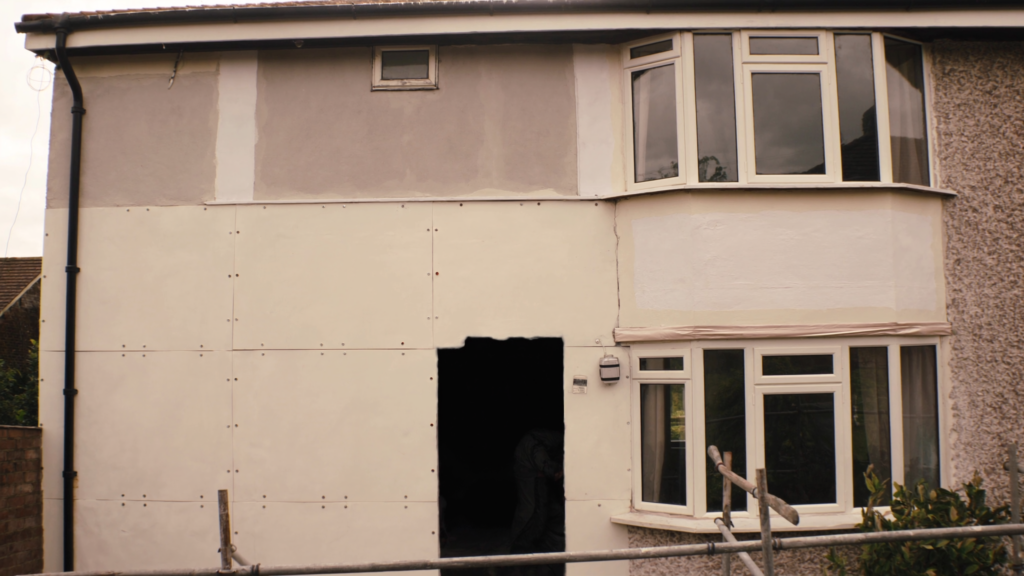
Solid walls have no cavity, so insulation must be added to the internal or external surface. Internal wall insulation using mineral wool batts and plasterboard costs £4,000 to £8,000 for a typical semi-detached house (Energy Saving Trust, Solid Wall Insulation Guide, 2026). External wall insulation with a mineral wool render system costs £8,000 to £12,000.
Annual savings are higher at £300 to £500, but the payback period is 12 to 25 years (DESNZ, Energy Efficiency Statistics, 2026). This makes solid-wall insulation a longer-term investment, though it can significantly improve your EPC rating and property value.
Internal insulation reduces room size by about 100 mm per wall. External insulation does not lose floor space but requires planning permission on some properties. Solid wall insulation options compared
You must use an MCS-certified installer for any grant-funded mineral wool insulation, check the MCS register
The Great British Insulation Scheme closed on 31 March 2026. It funded insulation measures only and never covered windows or glazing. You can check certification at mcs-certified.com (MCS, Find an Installer, 2026).
TrustMark accreditation is also required for all government-funded work (GOV.UK, TrustMark Scheme, 2026). Using an uncertified installer can void your grant eligibility and leave you without warranty cover (Ofgem, ECO4 Compliance, 2026).
Even if you are paying privately, using an MCS-certified installer gives you access to the Insulation Guarantee Agency (IGA) warranty, which covers defects for 25 years.
Mineral wool insulation has the lowest embodied carbon of any mainstream insulation material
Embodied carbon is the total CO₂ emitted during manufacturing, transport, and installation. Mineral wool has an embodied carbon of 20 to 30 kg CO₂e per m³ (BRE, Green Guide to Specification, 2026). That is roughly half that of PIR board (40 to 60 kg CO₂e per m³) and lower than EPS (30 to 50 kg CO₂e per m³).
Mineral wool is made from recycled glass or basalt rock, and it is 80 to 100% recyclable at end of life (Glass Recycling UK, Mineral Wool Recycling, 2026). This makes it the most environmentally friendly choice for homeowners who want to reduce both operational and embodied carbon.
For a typical loft top-up, the embodied carbon is paid back in operational savings within a few months. Over the lifetime of the insulation, the net carbon saving is substantial.
Frequently Asked Questions
Installed mineral wool costs £5 to £8 per m² for 100 mm loft roll, with material-only prices at £2 to £4 per m² from B&Q and Travis Perkins. The Energy Saving Trust confirms this is the cheapest insulation option per square metre.
The payback period is 1 to 2 years for a DIY loft top-up to 270 mm and under 5 years for cavity wall installation. These figures come from DESNZ Energy Efficiency Statistics for 2026.
Topping up existing loft insulation to 270 mm with mineral wool saves £150 to £250 per year on heating bills, according to the Energy Saving Trust's 2026 calculator.
Mineral wool is cheaper per m² than PIR boards, costing £5-£8 installed versus £12-£18 for PIR. However, PIR has a higher R-value per mm, so mineral wool needs thicker installation for the same thermal performance.
Yes, mineral wool insulation can improve your EPC rating by up to 2 bands, especially in lofts and cavity walls. The Energy Saving Trust states it is often the lowest-cost way to boost your Energy Performance Certificate score.