The most important thing to know before choosing an insulation material
The material you choose has less impact on overall performance than correct installation and achieving the right U-value target for your project. All three materials, cellulose, glass wool, and sheep wool, can meet current UK Building Regulations for thermal performance when installed to the correct thickness. The key differences are in cost, environmental footprint, moisture management, and ease of installation, not in raw thermal efficiency per millimetre.
Your decision should be guided by your specific project type (loft, wall, roof), budget, and whether you need to meet a specific environmental or health standard. A well-installed glass wool loft with 300 mm thickness will perform similarly to a well-installed cellulose or sheep wool loft at the same thickness, provided airtightness is addressed. The main trade-offs are in upfront cost, long-term moisture behaviour, and eligibility for government grants.
How the thermal performance of cellulose, glass wool, and sheep wool compares
Cellulose typically offers a thermal conductivity (lambda value) of 0.039–0.042 W/mK, glass wool 0.032–0.044 W/mK, and sheep wool 0.038–0.045 W/mK, all broadly similar for practical purposes (BRE Global EPDs, 2026). Achieving a Building Regulations target U-value (e.g., 0.16 W/m²K for a loft) requires roughly the same installed thickness for each material, typically 250–300 mm for a loft, as specified in DESNZ SAP 10.2 conventions. The real performance differentiator is airtightness and installation quality, gaps or compression reduce the effective U-value regardless of material.
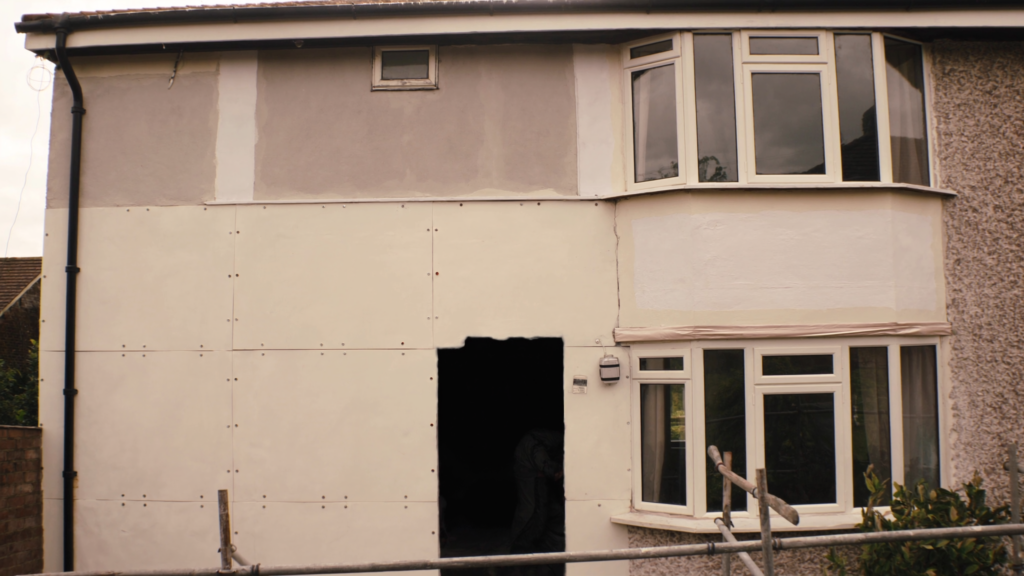
For walls, the required thickness varies. A cavity wall may need 100–150 mm, while a solid wall may need 80–120 mm internal or external, depending on the target U-value. The British Board of Agrément (BBA) certification data for each product line confirms that all three materials can meet these targets when installed correctly. The practical takeaway is that you should not choose one material over another based solely on its lambda value, the differences are too small to matter in most UK homes.
Quick numbers, cost, R-value, and environmental impact per material
| Material | Typical cost per m² (installed, loft 250 mm) | Thermal conductivity (W/mK) | Embodied carbon (kg CO₂e/m²) | Recycled content (%) | Typical lifespan (years) |
|---|---|---|---|---|---|
| Cellulose (loose-fill) | £15–25 | 0.039–0.042 | 12–18 | 75–85 | 50+ |
| Glass wool (rolls) | £10–18 | 0.032–0.044 | 20–30 | 40–60 | 50+ |
| Sheep wool (rolls/batts) | £25–40 | 0.038–0.045 | 5–10 | 0 | 50+ |
Cost data is from the National Insulation Association (NIA) 2026 member pricing survey. Embodied carbon figures are from BRE Global Environmental Product Declarations (EPDs) for each material type. Recycled content percentages vary by manufacturer but are highest for cellulose, which is made from recycled newsprint. Glass wool typically contains 40–60% recycled glass, while sheep wool contains no recycled content as it is a natural fibre. how to compare insulation costs and savings
Which insulation is best for moisture management and breathability
Sheep wool is hygroscopic, it can absorb and release moisture vapour without losing thermal performance. That makes it suitable for older, breathable buildings (e.g., solid stone walls). Historic England’s “Insulating Solid Walls” guidance (2026 edition) recommends vapour-permeable materials like sheep wool for pre-1919 solid wall properties to avoid trapped moisture. Cellulose (treated with borate salts) also manages moisture well, but it can settle and lose effectiveness if exposed to persistent liquid water or high humidity, as noted in BRE Digest 444 “Insulation materials for timber-framed buildings”.
Glass wool is not hygroscopic; it relies on a vapour control layer to prevent interstitial condensation, which must be correctly specified. If a vapour barrier fails or is omitted, glass wool can trap moisture against cold surfaces, leading to mould or rot. For modern cavity walls with a sealed cavity, glass wool performs well. For older, solid walls or timber frames, sheep wool or cellulose are generally safer choices for moisture management.
Eligibility for UK insulation grants, who qualifies
The Great British Insulation Scheme (GBIS) is the main government scheme in 2026, targeting households with an EPC rating of D–G and in Council Tax bands A–D (England) or equivalent in Scotland/Wales (GOV.UK, 2026). Grant covers cellulose and glass wool loft insulation, but not sheep wool unless a specific product is listed on the TrustMark scheme. Households with a total income under £31,000 (or on certain means-tested benefits) may qualify for the Energy Company Obligation (ECO4) scheme, which also covers solid wall insulation with cellulose (Ofgem, 2026).
Key exclusion: Homes with an EPC rating of A–C or in higher Council Tax bands generally do not qualify for any grant. If you are not eligible for a grant, you can still install any material at your own cost. Sheep wool is rarely covered by government schemes, so you will likely pay full price. Always check your EPC rating and Council Tax band before applying, these are the two main eligibility filters.
How to verify your installer is certified and your insulation is eligible for a grant
For any grant-funded work, the installer must be registered with TrustMark and certified under the relevant PAS 2030:2023 scheme for the material being installed (TrustMark, 2026). For cellulose and glass wool, the installer must hold a valid MCS (Microgeneration Certification Scheme) certification if the work is part of a heat pump or solar PV installation, but for insulation-only, MCS is not required; TrustMark and PAS 2030 are the standard. For sheep wool, the product must be listed on the TrustMark product database to be eligible for any government scheme.
Always check the installer’s certification number on the TrustMark or MCS register before paying a deposit. You can search by company name or certification number. If the installer is not registered, grant funding cannot be claimed, and you may be liable for the full cost. For self-installed insulation, no grant is available, only certified installers can access government schemes. how to find a certified insulation installer
The direct answer cellulose vs glass wool vs sheep wool, which should you choose?
Choose cellulose if you want a low-embodied-carbon, recycled-content material that is good for airtightness in lofts and walls, and you can find a certified installer for your grant. Cellulose is typically the cheapest option after glass wool and has the lowest environmental footprint. It works well in lofts, timber frames, and solid walls when installed by a trained professional. However, it can settle over time if not installed correctly, and it is not suitable for areas prone to persistent damp.
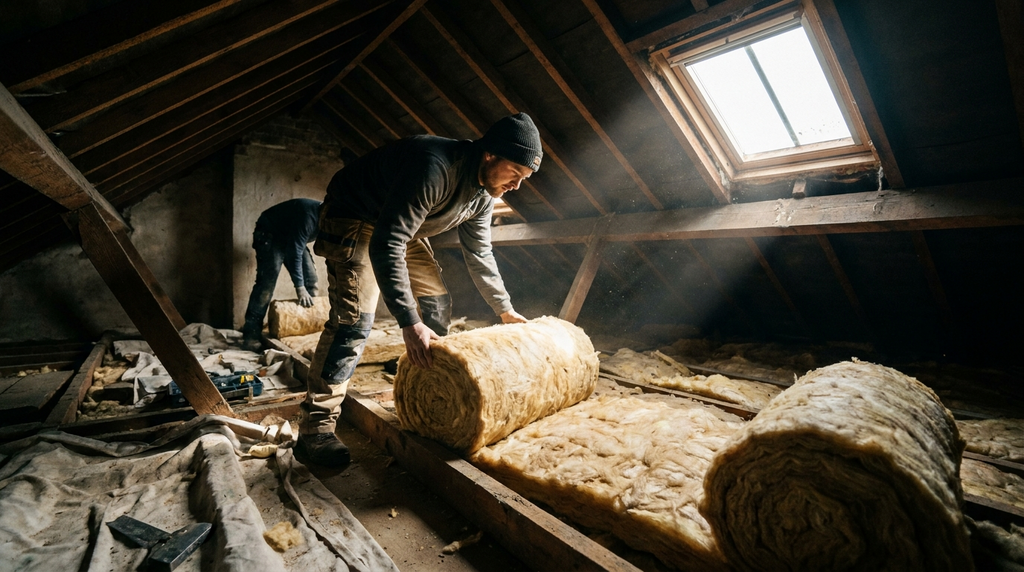
Choose glass wool if you have a tight budget, need a standard, widely available product, and your building has a vapour control layer. Glass wool is the most common insulation in UK homes and is widely available at builders’ merchants. It is quick to install in lofts and cavities, and it is almost always covered by government grants. The main downside is that it is not breathable and can cause skin irritation during installation.
Choose sheep wool if you are insulating an older, breathable building (pre-1919 solid wall) and moisture management is a priority, even though it costs more and is rarely covered by grants. Sheep wool is the best option for solid stone or brick walls where vapour permeability is critical. It is also a natural, renewable material with low embodied carbon. The trade-off is higher upfront cost and limited grant eligibility. The best choice depends entirely on your building type, budget, and grant eligibility, there is no single “best” material for every UK home. how to choose insulation for solid walls
Frequently Asked Questions
Yes, glass wool has the lowest lambda value at 0.032 W/mK, but cellulose (0.039–0.042) and sheep wool (0.038–0.045) are close enough that thickness matters more. All three meet Building Regulations when installed correctly, per DESNZ SAP 10.2.
Sheep wool costs £25–£45/m² installed, roughly double glass wool, but offers natural moisture regulation and zero synthetic binders. According to the Energy Saving Trust, it suits eco-conscious projects where budget allows.
Yes, cellulose can be blown into cavity walls at 100–150 mm thickness to achieve a U-value of 0.30 W/m²K or lower. BBA certification confirms it meets UK regs for cavity fill when installed by approved contractors.
Glass wool costs £10–£20/m² and requires PPE due to irritant fibres, while sheep wool costs £25–£45/m² and is safe to handle without gloves. Both need 250–300 mm thickness for a 0.16 W/m²K loft target, per Ofgem guidelines.
Sheep wool has the lowest embodied carbon at 4–8 kg CO₂/m³, followed by cellulose at 8–15 kg, then glass wool at 20–30 kg (BRE Global EPDs, 2026). Sheep wool is also biodegradable and renewable.