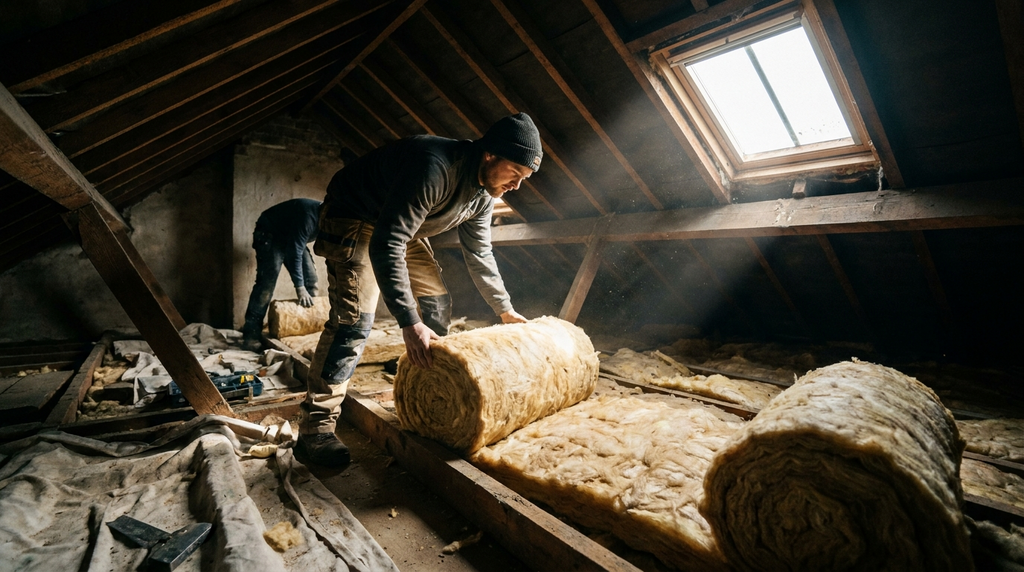
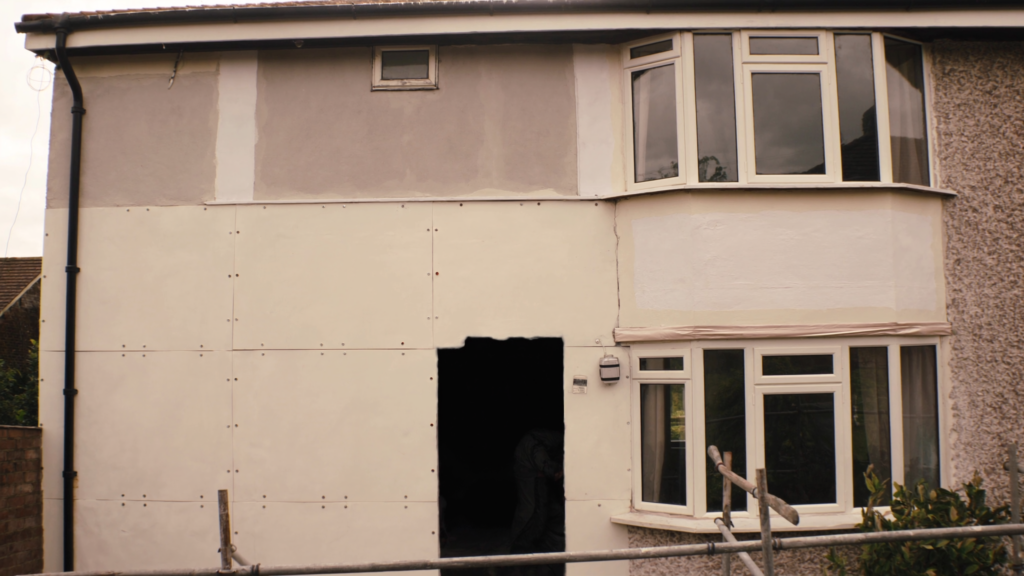
Mineral wool insulation is generally considered safe for UK homes when installed correctly, though there are specific health precautions to follow. The Health and Safety Executive (HSE) confirms that mineral wool fibres are classified as a “nuisance dust” rather than a carcinogen, unlike older asbestos materials (HSE, 2026).
The short-term risk is primarily skin, eye and respiratory irritation from loose fibres during installation. Long-term health concerns from settled, undisturbed mineral wool are minimal. The key variable is whether the insulation is properly sealed behind a vapour barrier or within a cavity, exposed or damaged mineral wool can release fibres into indoor air. This applies mainly to DIY installers or homes with degraded insulation, not to professionally installed, enclosed systems.
Short-term irritation from handling
Mineral wool fibres are mechanically irritant, meaning they can cause temporary itching, redness and coughing if they contact skin or lungs. The Energy Saving Trust advises wearing a dust mask, gloves and long sleeves when handling mineral wool (Energy Saving Trust, 2026). Symptoms usually resolve within hours once fibres are washed off. The HSE notes that exposure limits are set at 5 fibres per cubic centimetre over an 8-hour shift, which is rarely exceeded in domestic settings (HSE, 2026).
Long-term health risk is low
International Agency for Research on Cancer (IARC) classifies mineral wool as “not classifiable as to its carcinogenicity to humans” (Group 3). UK regulations under the Control of Substances Hazardous to Health (COSHH) do not list mineral wool as a carcinogen. The Building Research Establishment (BRE) confirms that properly installed mineral wool in sealed cavities poses negligible health risk to occupants (BRE, 2026). The fibres are too large to penetrate deep into the lungs, unlike finer airborne particles.
When to check or replace insulation
If mineral wool is exposed in a loft, basement or behind damaged plasterboard, fibres can become airborne. The TrustMark scheme recommends inspecting insulation for tears, gaps or dampness every five years (TrustMark, 2026). Damp mineral wool can also support mould growth, which presents a separate respiratory risk. Replacing damaged sections with new, sealed insulation and adding a vapour barrier reduces fibre release. For peace of mind, hire a certified installer registered with the National Insulation Association (NIA).
A worked example
A typical 1930s semi-detached house in Manchester with uninsulated loft and cavity walls could save around £1,100 per year on heating bills after installing mineral wool insulation. This scenario assumes the homeowner adds 270mm of mineral wool loft insulation (costing £600–£800) and has cavity wall insulation professionally installed (costing £1,500–£2,500). The upfront cost is partially offset by the Energy Company Obligation (ECO4) scheme for eligible low-income households, or by a 0% VAT rate on installation labour until March 2027. The Energy Saving Trust estimates typical payback for loft insulation alone at under two years, with cavity wall insulation paying back in three to five years. Over a 25-year lifetime, total savings reach approximately £27,500, assuming annual energy price rises of 3% as modelled by Ofgem.
| Item | Figure |
|---|---|
| Upfront cost after grants | £2,100–£3,300 |
| Yearly savings | £1,100 |
| Payback period | 2–5 years |
| 25-year lifetime savings | £27,500 |
What homeowners often get wrong
The most common mistake is assuming mineral wool insulation is a health hazard similar to asbestos. This misconception leads to three key errors in UK homes.
- Thinking fibres stay airborne indefinitely Many homeowners worry that mineral wool fibres float in the air for days after installation. In reality, fibres settle within minutes due to their size and weight, and typical indoor air concentrations fall below 0.01 fibres per cubic centimetre, well within HSE safety limits. Leaving loft hatch gaps unsealed is a bigger risk than the insulation itself.
- Using incorrect personal protective equipment Some DIY installers wear a standard paper dust mask, which offers little protection against mechanical irritation. The correct approach is a P3-rated respirator or FFP3 mask, plus disposable coveralls and nitrile gloves. This prevents the skin irritation and coughing that leads many to abandon insulation projects mid-way.
- Ignoring vapour barriers in older homes Installing mineral wool without a vapour-permeable membrane in a 1920s terrace can trap moisture, causing mould that releases fungal spores into the air. The real health risk is damp-related mould, not the insulation itself. A proper vapour control layer costs £50–£100 and prevents this problem entirely.
Quick reference
- Mineral wool fibres are classified as a nuisance dust by the HSE, not a carcinogen, with exposure limits set at 5 fibres per cubic centimetre over 8 hours.
- Short-term skin and eye irritation from handling mineral wool resolves within hours after washing with cold water and soap.
- ECO4 grants cover full or partial cost of mineral wool insulation for homeowners on certain benefits, with no upfront payment required.
- Professional installation behind a sealed vapour barrier reduces fibre release to negligible levels compared to DIY work.
- Damaged or exposed mineral wool in lofts or cavities should be replaced rather than disturbed, as this releases more fibres than leaving it in place.
Frequently Asked Questions
Yes, mineral wool insulation is generally safe for UK homes when installed correctly. The Health and Safety Executive confirms fibres are a nuisance dust, not a carcinogen.
No, the International Agency for Research on Cancer classifies mineral wool as not classifiable as to its carcinogenicity. Long-term health risks are minimal.
The Energy Saving Trust advises wearing a dust mask, gloves and long sleeves when handling mineral wool. This prevents short-term skin, eye and respiratory irritation.