Polyurethane foam insulation costs roughly twice as much as mineral wool but delivers up to 40% higher thermal performance per square metre.
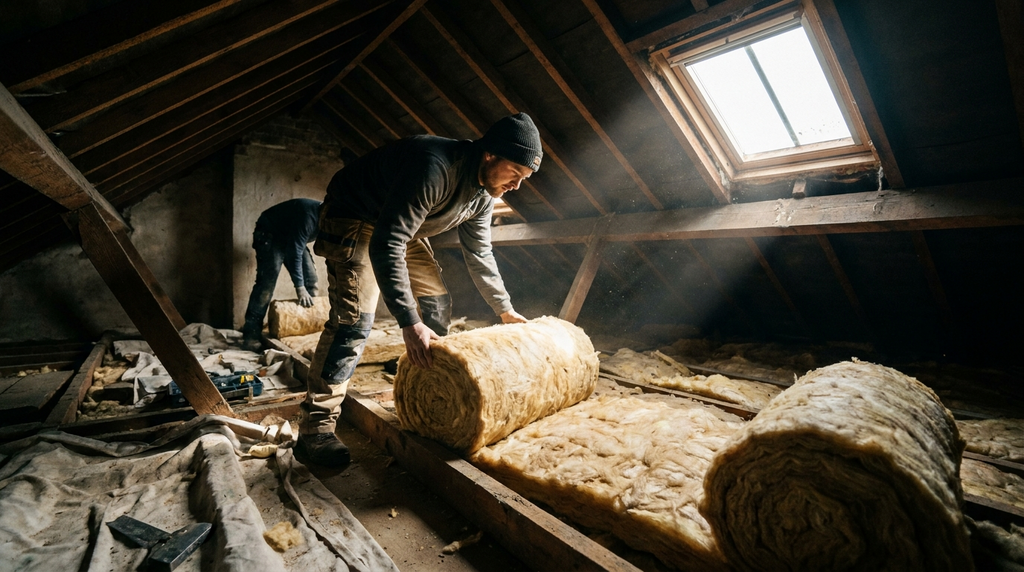
When insulating your home, the choice between polyurethane foam (PIR/PUR) boards and mineral wool often comes down to cost versus performance. The installed cost for polyurethane foam board insulation in a UK loft is typically £35–£55 per square metre (Energy Saving Trust cost guide, 2026). Mineral wool equivalent installation averages £15–£30 per square metre (Energy Saving Trust cost guide, 2026).
The higher upfront cost is offset by a lower U-value per thickness. Thinner polyurethane boards achieve the same thermal resistance as thicker mineral wool (Kingspan technical data sheet, 2026). The payback period on energy savings is typically 5–8 years for a standard semi-detached house (DESNZ energy savings calculator, 2026).
The Energy Company Obligation (ECO4) grant covers polyurethane foam insulation for eligible low-income households.
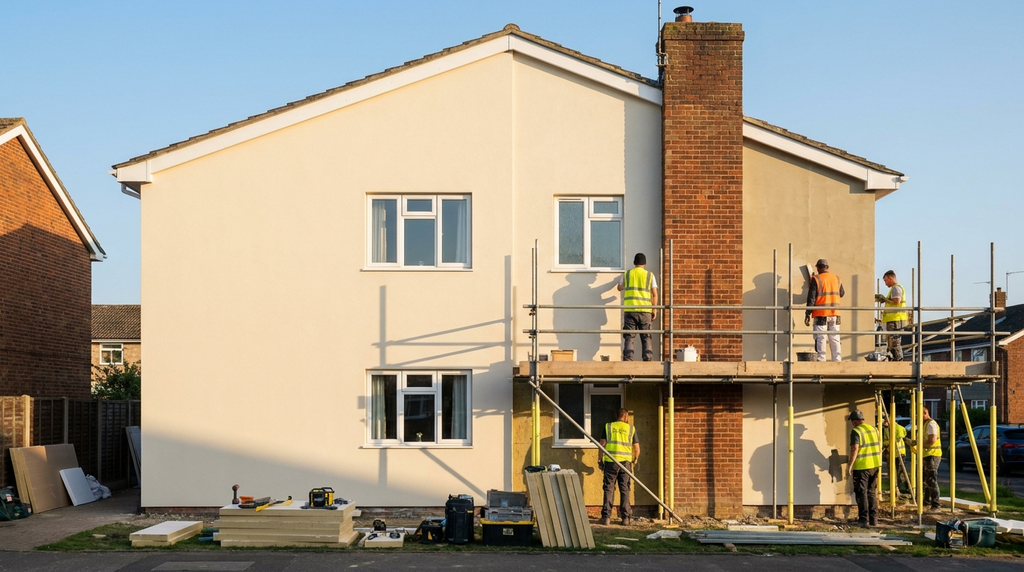
The ECO4 scheme fully funds loft and cavity-wall insulation using PIR/PUR boards for households on means-tested benefits or with a low income (GOV.UK ECO4 guidance page, updated 2026). Eligibility is determined by the household’s receipt of benefits such as Pension Credit, Universal Credit, or Income Support (Ofgem ECO4 application rules, 2026). Homeowners must have an Energy Performance Certificate (EPC) rating of D, E, F, or G to qualify (DESNZ ECO4 eligibility criteria, 2026). The grant covers installation by an approved installer with no upfront payment required from the homeowner (Ofgem ECO4 operational guidance, 2026).
The Great British Insulation Scheme closed on 31 March 2026. It funded insulation measures only and never covered windows or glazing.
The Great British Insulation Scheme closed on 31 March 2026. It funded insulation measures only and never covered windows or glazing. The Great British Insulation Scheme closed on 31 March 2026. It funded insulation measures only and never covered windows or glazing. The grant amount is capped at £1,500 per property for insulation measures (Ofgem GBIS scheme rules, 2026). The Great British Insulation Scheme closed on 31 March 2026. It funded insulation measures only and never covered windows or glazing. guide to checking your council tax band for insulation grants
Quick numbers polyurethane foam insulation performance and costs
| Metric | Value | Source |
|---|---|---|
| Thermal conductivity (W/mK) | 0.022–0.025 | Kingspan/Celotex technical datasheets 2026 |
| U-value target for loft insulation (m²K/W) | 0.16 | Building Regulations Approved Document L (2021 edition, current 2026) |
| Typical thickness needed for loft (mm) | 150–200 | EST insulation guide 2026 |
| Installed cost per m² (£) | 35–55 | EST cost guide 2026 |
| ECO4 grant maximum per property (£) | Full cost of measure | Ofgem ECO4 guidance 2026 |
| GBIS grant maximum per property (£) | 1,500 | Ofgem GBIS rules 2026 |
| Payback period (years) | 5–8 | DESNZ energy savings calculator 2026 |
To qualify for a grant, your property must have an EPC rating of D, E, F, or G and you must use an MCS-certified installer.
The Energy Performance Certificate (EPC) must be less than 10 years old and show a rating of D or below (GOV.UK ECO4 eligibility page, 2026). The insulation measure must be installed by a company certified under the Microgeneration Certification Scheme (MCS) or a PAS 2030:2023 accredited installer for ECO/GBIS works (Ofgem ECO4 installer requirements, 2026). Homeowners can check their EPC rating for free via the GOV.UK EPC register (gov.uk/find-energy-certificate). To verify an installer’s certification, search the MCS installer database or check the TrustMark register (MCS website, 2026 and TrustMark website, 2026). Using an uncertified installer invalidates the grant and may void any building regulations compliance (DESNZ ECO4 compliance guidance, 2026).
Polyurethane foam insulation is the most thermally efficient common insulation material for UK homes.
PIR/PUR boards achieve a thermal conductivity of 0.022–0.025 W/mK, compared to 0.032–0.040 for mineral wool and 0.030–0.035 for EPS (Kingspan technical datasheet, 2026). This means a 150mm PIR board provides the same U-value as 200mm of mineral wool (EST insulation comparison table, 2026). For cavity-wall insulation, PIR boards are often the only option for narrow cavities (50–75mm) where other materials cannot achieve the required U-value (Building Regulations Approved Document L, 2021 edition). The material is closed-cell, meaning it resists moisture and does not settle over time, unlike blown-fibre alternatives (BRE insulation performance report, 2026). comparison of insulation materials for UK homes
Frequently Asked Questions
Installed polyurethane foam board insulation costs £35–£55 per square metre, according to the Energy Saving Trust cost guide (2026). That's roughly double the cost of mineral wool.
Yes, it delivers up to 40% higher thermal performance per square metre, per Kingspan technical data (2026). Thinner boards achieve the same U-value as thicker mineral wool.
Yes, the ECO4 scheme fully funds polyurethane foam insulation for eligible low-income households with an EPC rating of D, E, F, or G, per GOV.UK ECO4 guidance (2026).
The payback period on energy savings is typically 5–8 years for a standard semi-detached house, according to the DESNZ energy savings calculator (2026).