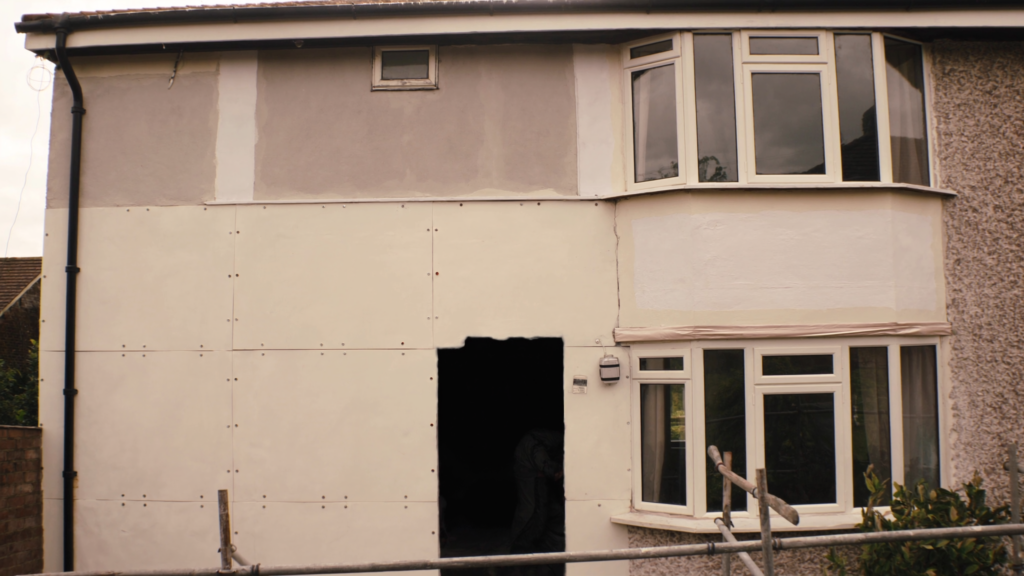
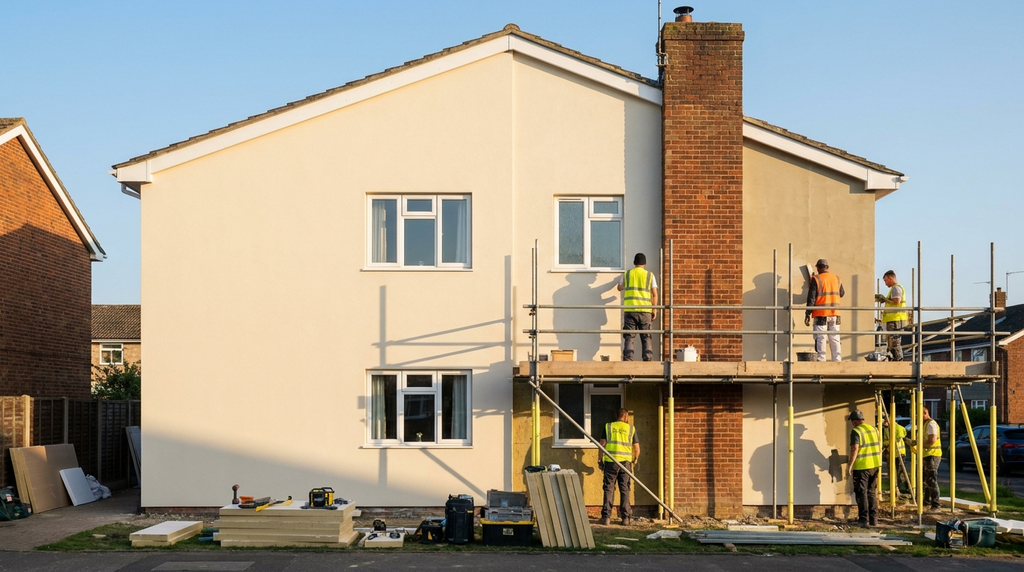
Installing full fabric insulation before a heat pump saves roughly £1,000–£2,000 on the heat pump installation cost alone
Should you install insulation or a heat pump first in 2026? The short answer is insulation, because it directly reduces the size and cost of the heat pump you need.
Data from the Energy Systems Catapult, cited in DESNZ Electrification of Heat reports, shows that without insulation a heat pump must be oversized to handle peak heat loss. This oversizing raises the upfront cost by 20–40% (DESNZ, 2026).
A well-insulated home with cavity wall insulation, 270mm loft insulation, and floor insulation can use a smaller, cheaper heat pump. Typical retrofit insulation costs £4,000–£8,000, while a heat pump installation after the Boiler Upgrade Scheme (BUS) grant costs £7,000–£13,000 (Energy Saving Trust, 2026). The priority order is clear: insulation first cuts both capital and running costs.
A heat pump with poor insulation costs around £300–£500 more per year to run than a gas boiler
Using Ofgem’s typical domestic consumption values (TDCVs) for 2026 and Energy Saving Trust heat pump performance data, a heat pump in an uninsulated home costs significantly more to run than a gas boiler.
An uninsulated home has a heat loss of 12–15 kW, while an insulated home drops to 4–6 kW. At electricity prices of around 35p/kWh versus gas at 6p/kWh, a poorly insulated heat pump can add £300–£500 to annual bills compared to a gas boiler (Ofgem, 2026). Insulation reduces heat demand by 40–60%, making heat pump running costs competitive with gas.
Energy Saving Trust field trials show that insulated homes with heat pumps achieve a Seasonal Coefficient of Performance (SCOP) above 3.0, meaning the pump delivers three units of heat for every unit of electricity. Uninsulated homes often fall below 2.5, reducing efficiency and increasing costs (Energy Saving Trust, 2026).
Quick numbers insulation vs heat pump cost and savings comparison
| Measure | Typical installed cost (2026) | Annual energy saving (gas home) | Annual energy saving (heat pump home) | Payback period (gas) | Payback period (heat pump) |
|---|---|---|---|---|---|
| Loft insulation (270mm top-up) | £500–£1,000 | £150–£250 | £100–£200 | 2–4 years | 3–5 years |
| Cavity wall insulation | £1,500–£3,000 | £200–£400 | £150–£300 | 4–8 years | 5–10 years |
| Solid wall insulation (external) | £10,000–£15,000 | £400–£700 | £300–£500 | 15–25 years | 20–30 years |
| Air-source heat pump with insulation | £7,000–£13,000 (after BUS) | £200–£400 | £150–£300 | 7–13 years | 5–10 years |
| Air-source heat pump without insulation | £14,000–£20,000 (after BUS) | £0–£100 | £100–£200 | 20–30 years | 15–25 years |
Sources: Energy Saving Trust cost guides (2026), DESNZ Energy Trends table 6.2 (DESNZ, 2026), MCS installation data (MCS, 2026).
The direct answer insulate first
The Committee on Climate Change (CCC) 2026 progress report and the DESNZ Heat and Buildings Strategy both recommend insulating the fabric before installing a heat pump (DESNZ, 2026).
Insulation reduces the heat load, so a smaller, cheaper heat pump suffices. Installing a heat pump without insulation risks higher bills and poor comfort, including cold spots and slow warm-up times. The Boiler Upgrade Scheme provides a £7,500 grant for heat pumps in 2026, available regardless of insulation status, but performance improves significantly with fabric upgrades (GOV.UK, 2026).
Typical whole-home costs are insulation (£5,000–£10,000) plus a heat pump (£7,000–£13,000), totalling £12,000–£23,000. A heat pump alone in an uninsulated home may cost £18,000–£25,000 due to oversizing. The sequence of insulation first delivers the lowest total cost.
how to insulate your home step by step
Heat pump eligibility requires an Energy Performance Certificate (EPC) of band C or better from 2026 for new grants
From 2026, new Boiler Upgrade Scheme applications require an EPC of band C or above, or evidence of planned insulation upgrades (GOV.UK, 2026).
Loft insulation to 270mm and cavity wall insulation are the cheapest ways to lift an EPC from band D to C. Solid wall insulation is expensive, costing £10,000–£15,000, but may be needed for older homes to reach band C. Heat pump installers who are MCS certified can advise on the insulation upgrades needed for eligibility.
How to verify your insulation and heat pump installer MCS
For heat pumps, the installer must be MCS certified (or an equivalent scheme) for BUS grant eligibility (MCS, 2026). For insulation, cavity wall installers should be registered with the Cavity Insulation Guarantee Agency (CIGA), and loft insulation installers should hold TrustMark certification (TrustMark, 2026).
Gas boiler removal requires a Gas Safe registered engineer for safe disconnection (Gas Safe Register, 2026). Check guarantees: insulation work typically has a 25-year CIGA guarantee, while heat pump work comes with a manufacturer warranty of 5–10 years and an MCS-backed guarantee. Use the MCS installer database at mcscertified.com and the TrustMark finder at trustmark.org.uk.
The U-value target what a heat pump needs for efficient operation (0.15 W/m²K walls, 0.11 W/m²K roof)
Heat pumps run best with low-temperature flow at 35–45°C, requiring well-insulated fabric to reach target room temperatures. Building Regulations Approved Document L (2021, updated for 2026 compliance) sets fabric efficiency standards (GOV.UK, 2026).
A typical uninsulated wall has a U-value of 1.5–2.0 W/m²K. After adding 100mm of external wall insulation, this drops to 0.15–0.20 W/m²K. Loft insulation improved from 100mm (U-value around 0.30) to 270mm (U-value around 0.11) cuts heat loss by 60%. Floor insulation targets a U-value of 0.15–0.20 W/m²K for ground floors (Energy Saving Trust, 2026).
If your existing U-values are above these targets, a heat pump will struggle to deliver comfort without higher flow temperatures, which lowers its efficiency.
how to check your home’s U-values
Frequently Asked Questions
Yes. Energy Saving Trust advises insulating first because it reduces heat demand by 40–60%. This allows a smaller, cheaper heat pump and lower running costs.
Typical retrofit insulation costs £4,000–£8,000, while a heat pump after the Boiler Upgrade Scheme grant costs £7,000–£13,000, according to Energy Saving Trust (2026).
Yes. Ofgem data shows insulation cuts heat demand by 40–60%, making heat pump running costs competitive with gas and saving £300–£500 per year versus an uninsulated home.
Insulation first. DESNZ Electrification of Heat reports show that insulating before a heat pump lowers upfront costs by 20–40% and improves efficiency.
Yes, but it costs more. Energy Saving Trust field trials show uninsulated homes often have a SCOP below 2.5, leading to higher electricity bills and oversizing costs.