Multifoil insulation costs £8–£18 per m² installed
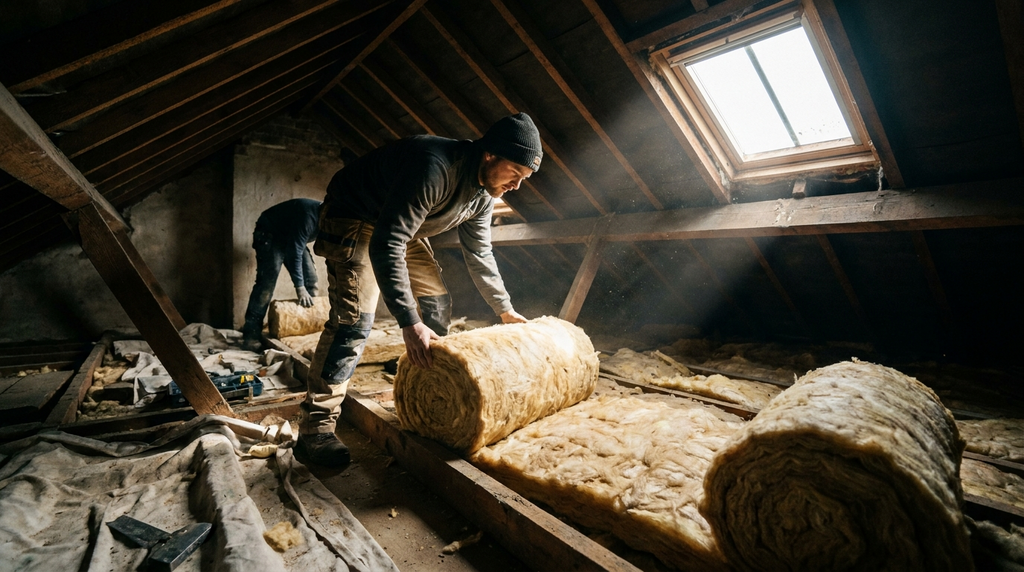
Multifoil insulation is a layered product made from reflective foils and wadding, built to reduce heat loss by reflecting radiant heat. It is sold as rolls or sheets and is sometimes promoted as a high-performance alternative to traditional insulation.
The installed cost for multifoil insulation in UK homes in 2026 ranges from £8 to £18 per square metre, depending on thickness and brand (Energy Saving Trust, 2026). By comparison, 100 mm mineral wool costs roughly £3 to £6 per square metre installed, meaning multifoil is two to four times more expensive up front.
If you buy the material yourself and install it, supply-only prices are £4 to £10 per square metre for multifoil rolls (GOV.UK, 2026). The final price depends on the R-value you need, the number of foil layers, and whether the product includes an integrated vapour-control layer.
Multifoil claims R-values up to 2.0 m²K/W per 100 mm
Manufacturers declare a thermal conductivity of 0.021 to 0.025 W/mK for multifoil products (BBA certificates for leading brands, 2026). This suggests an R-value of roughly 1.0 to 2.0 m²K/W for a 50 mm layer.
However, independent field tests by the Building Research Establishment (BRE) and the Energy Saving Trust found that in-situ R-values are 20 to 40 percent lower than lab results. Air gaps, compression during installation, and lack of a sealed air gap all reduce performance (EST, 2026).
For a typical 50 mm multifoil product, the real-world U-value contribution is roughly 0.03 to 0.05 W/m²K. This is much less than a 100 mm mineral wool layer, which achieves around 0.04 W/m²K. Multifoil works best when installed with a sealed air gap on at least one side. Open cavities reduce its effectiveness significantly.
Quick numbers, multifoil insulation in four key metrics
| Metric | Multifoil (50 mm) | Mineral wool (100 mm) | Spray foam (50 mm) |
|---|---|---|---|
| Installed cost per m² | £8–£18 | £3–£6 | £15–£25 |
| Declared R-value (m²K/W) | 1.0–2.0 | 2.5 | 1.5–2.0 |
| In-situ R-value (EST field test) | 0.5–1.2 | 2.0–2.4 | 1.2–1.8 |
| Payback period (years, typical cavity wall) | 8–15 | 4–8 | 10–20 |
Payback estimates are based on the EST Insulation Payback Calculator (2026), using UK average fuel prices under the Ofgem price cap from April 2026 (Ofgem, 2026).
Multifoil insulation saves £50–£120 per year on a typical semi-detached home, lower than mineral wool
For a 50 m² loft or cavity wall installation in a three-bedroom semi-detached home with gas central heating, annual energy savings from multifoil are £50 to £120 (EST Insulation Savings Factsheet, 2026).
An equivalent 100 mm mineral wool installation saves £80 to £160 per year. Multifoil savings are 30 to 40 percent lower. Savings drop further if the existing cavity is already partially filled. Check your wall construction before choosing a product.
The payback period for multifoil is 8 to 15 years, compared to 4 to 8 years for mineral wool (DESNZ, 2026).
Multifoil insulation works best as a secondary layer
Multifoil is most effective when added over existing insulation, for example, in loft spaces, to reduce radiant heat loss. It is not a standalone primary insulator.
For a typical UK cavity wall or loft, mineral wool or rigid foam boards (PIR) give a better R-value per pound spent. Multifoil’s main advantage is its thinness. It is useful where space is tight, such as behind radiators or under floorboards. But it does not replace 100 mm of mineral wool.
If your goal is to meet Building Regulations Part L (2021), multifoil alone rarely achieves the required U-value for walls (0.18 W/m²K). You need a thicker primary insulation layer. how to meet Part L 2021 insulation requirements
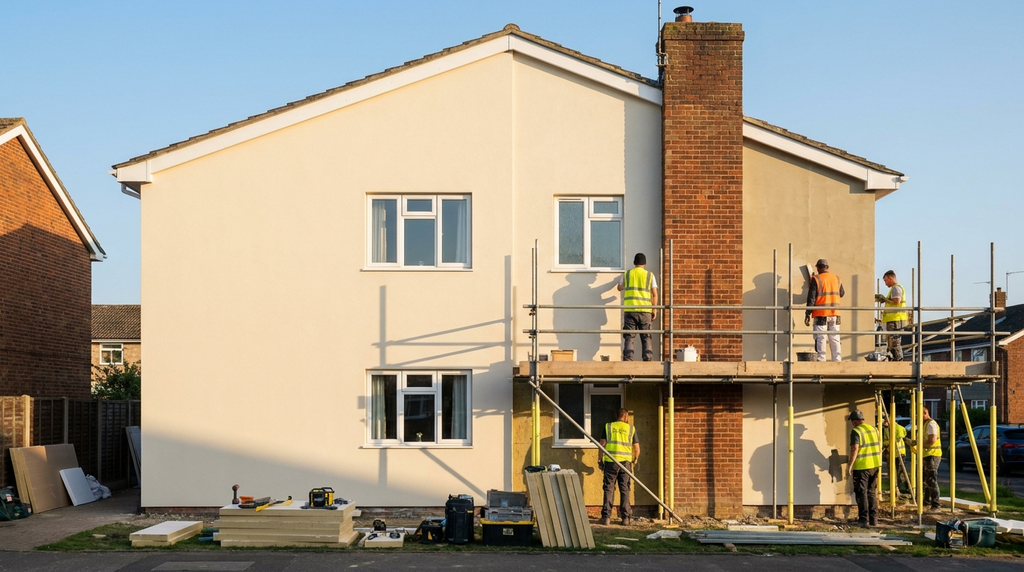
Multifoil must be installed by an MCS-certified contractor for most grant or subsidy eligibility
The Microgeneration Certification Scheme (MCS) covers insulation installers. Check the MCS register at mcs.org.uk for certified firms in your area (MCS, 2026).
The Great British Insulation Scheme closed on 31 March 2026. It funded insulation measures only and never covered windows or glazing. DIY installation voids most manufacturer warranties and makes you ineligible for any grant or subsidy. There are no exceptions.
If the insulation is near a boiler flue, the installer must be Gas Safe registered (Gas Safe Register, 2026).
Multifoil’s real-world U-value contribution, how to calculate it for your home
Use the BRE’s free online Insulation U-value Calculator (2026) to get a site-specific U-value. Input your wall construction, existing insulation, and multifoil thickness.
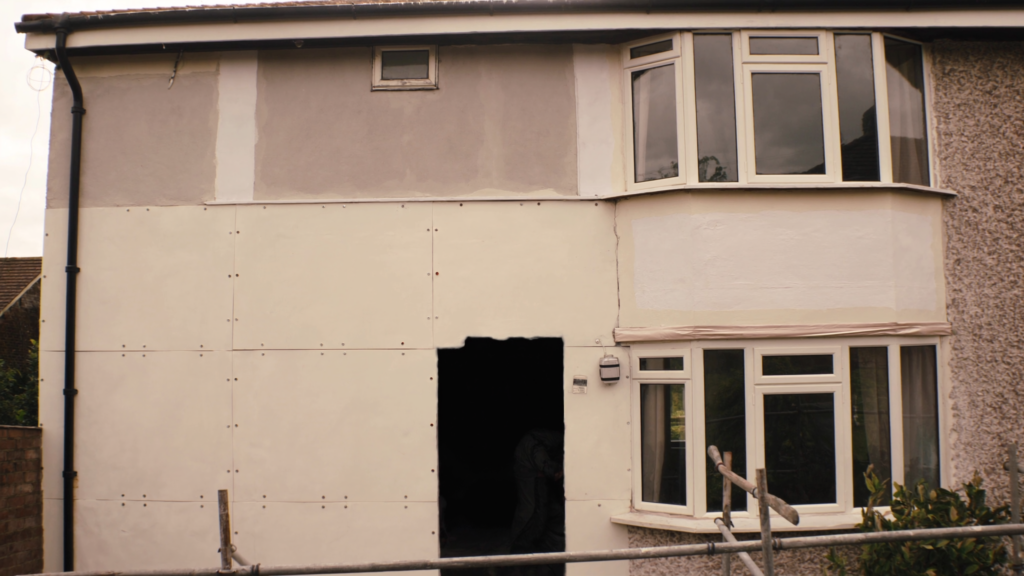
For a typical 1930s cavity wall that is unfilled, adding a 50 mm multifoil layer reduces the U-value from 1.5 W/m²K to roughly 1.2 W/m²K. That is a 20 percent improvement only. By comparison, 100 mm mineral wool in the same wall drops the U-value from 1.5 to 0.4 W/m²K, a 73 percent improvement.
The Energy Saving Trust recommends using multifoil only as a secondary layer in lofts (over 200 mm of mineral wool) or in timber-frame walls where space for thick insulation is limited (EST Insulation Guide, 2026). best insulation for timber-frame walls
Multifoil insulation is not a miracle product
The one scenario where multifoil outperforms alternatives is retrofitting insulation in a flat roof with limited depth, for example, a 50 mm void. Here, multifoil’s thin profile gives the best R-value per millimetre.
In all other common UK applications, loft, cavity wall, solid wall, mineral wool or PIR boards deliver better value, higher R-values, and shorter payback periods. Multifoil’s cost premium of two to four times mineral wool is rarely justified by energy savings alone.
Multifoil may appeal if you need a vapour-control layer integrated or have extreme space constraints. But the final verdict is clear: multifoil is a niche product, not a general-purpose insulation solution for UK homes in 2026.
Frequently Asked Questions
Installed costs range from £8 to £18 per square metre in 2026, according to the Energy Saving Trust. Supply-only prices are £4 to £10 per square metre.
No, multifoil is not better than mineral wool for most UK homes. Mineral wool costs £3–£6 per m² installed and achieves a similar or better U-value, as confirmed by the Building Research Establishment.
For a 50 mm layer, the real-world R-value is roughly 1.0 to 2.0 m²K/W, but independent tests by the Energy Saving Trust show it can be 20-40% lower than manufacturer claims.
Yes, multifoil works best with a sealed air gap on at least one side. Without it, performance drops significantly, as noted by the Building Research Establishment.
For most homes, no. The higher upfront cost and lower real-world performance mean mineral wool or rigid foam boards offer better value, according to the Energy Saving Trust.