If you are a homeowner looking to cut energy bills and keep your home warm, choosing the right insulation is one of the most effective steps you can take. The UK’s cool, damp climate places specific demands on insulation materials, and the wrong choice can lead to damp problems or wasted money.
The best insulation for the UK climate in 2026 is mineral wool for most lofts and walls, and rigid PIR foam boards for floors and solid walls where space is tight. Mineral wool offers the best balance of cost, fire resistance, and breathability, while PIR boards deliver the highest insulation value per unit thickness.
The best insulation for the UK climate in 2026 is mineral wool for most lofts and walls, and rigid PIR foam boards for floors and solid walls
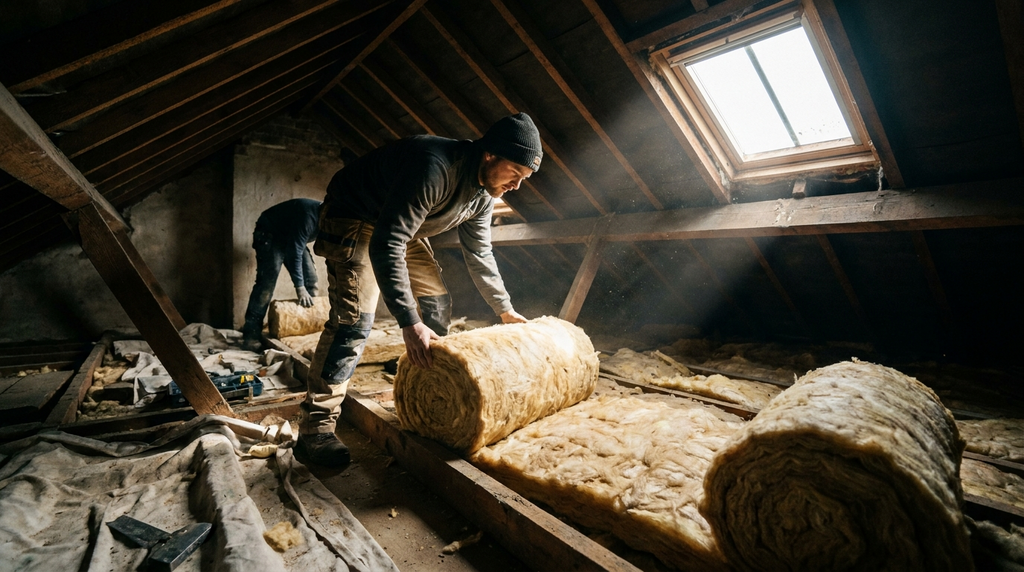
Mineral wool, which includes rock wool and glass fibre, is the most widely used insulation material in the UK. It is naturally non-combustible, which means it does not contribute to the spread of fire, and its fibrous structure allows moisture vapour to pass through, reducing the risk of condensation in lofts and cavity walls. Energy Saving Trust notes that mineral wool is the most cost-effective option for loft and cavity wall insulation (Energy Saving Trust, 2026).
PIR (polyisocyanurate) foam boards are rigid panels with a closed-cell structure that traps gas for high thermal performance. They achieve a U-value as low as 0.18 W/m²K at a thickness of around 100mm, compared to mineral wool which needs roughly 200mm to reach the same level. This makes PIR the preferred choice for solid wall insulation and floor insulation, where every centimetre of space matters.
The UK’s Building Regulations, Approved Document L 2026 edition, set a minimum U-value of 0.16 W/m²K for new loft insulation and 0.18 W/m²K for cavity walls (DESNZ, 2026). Both mineral wool and PIR can meet these targets when installed to the correct thickness.
Loft insulation costs £300–£700 to install and saves £200–£400 per year on heating bills
For a typical 3-bedroom semi-detached house, installing 270mm of mineral wool loft insulation costs between £300 and £500 if you do it yourself, or £500 to £700 for professional installation. The Energy Saving Trust estimates annual energy savings of £200 to £400, depending on your property size and how much insulation was there before (Energy Saving Trust, 2026).
The payback period is 1.5 to 3.5 years, making loft insulation one of the fastest-returning home improvements. If your loft already has some insulation, topping it up to 270mm still delivers significant savings.
Cavity wall insulation costs £600–£1,200 and saves £200–£500 annually
Cavity wall insulation for a semi-detached house typically costs £600 to £1,200, which includes a survey and installation by a CIGA-registered installer. The Cavity Insulation Guarantee Agency (CIGA) provides a 25-year guarantee on installations by its registered members (CIGA, 2026).
Annual savings range from £200 to £500, according to the Energy Saving Trust (Energy Saving Trust, 2026). The payback period is 2 to 5 years, which is slightly longer than loft insulation but still a strong return. Before installation, a survey must confirm that the cavity is suitable and free from defects such as blocked cavities or damp.
Solid wall insulation (internal or external) costs £4,000–£14,000 and saves £300–£800 per year, with a payback of 8–20 years
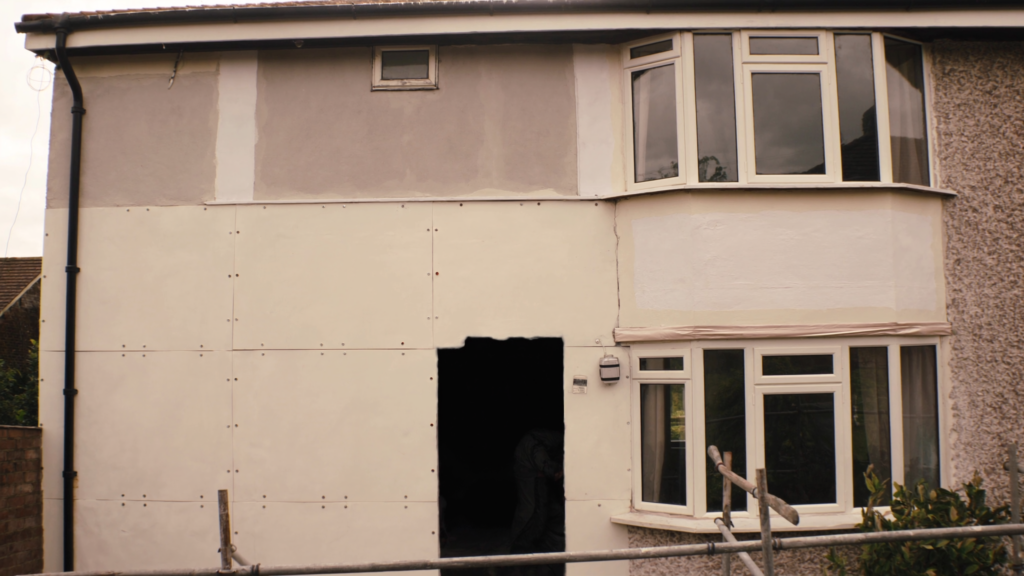
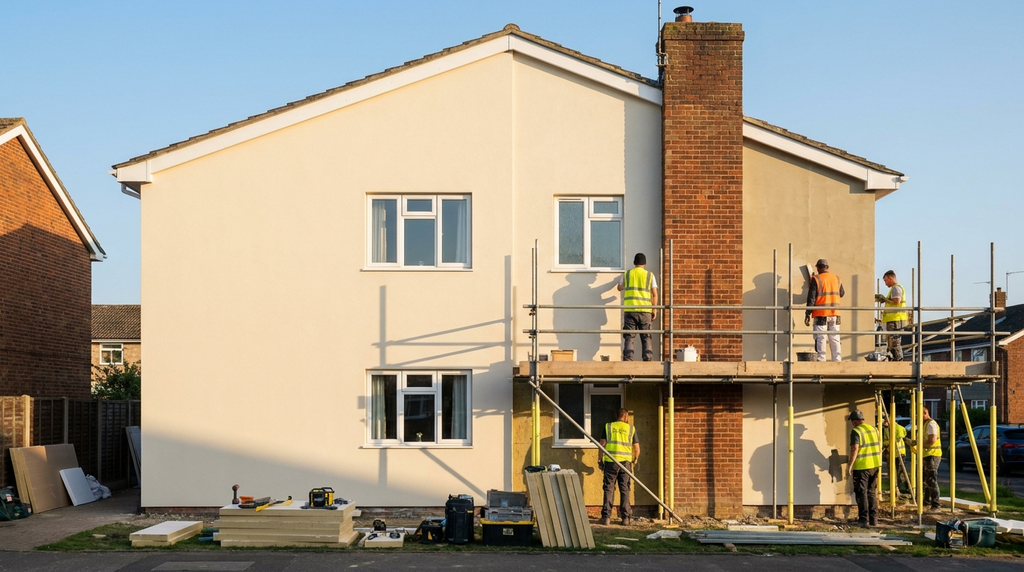
Solid wall insulation is more expensive because it covers the entire wall area and requires more material and labour. Internal wall insulation (IWI) for a semi-detached house costs £4,000 to £8,000. External wall insulation (EWI) costs £8,000 to £14,000, partly because it includes a weatherproof render finish.
The Energy Saving Trust estimates annual savings of £300 to £800 for solid wall insulation (Energy Saving Trust, 2026). Payback periods range from 8 to 20 years, which makes this a longer-term investment. EWI is generally more effective than IWI because it wraps the whole building in a continuous thermal layer and reduces thermal bridging at floors and internal walls.
Quick numbers insulation types, U-values, costs, and savings compared
| Insulation type | Typical U-value (W/m²K) | Installed cost (3-bed semi) | Annual savings | Payback period |
|---|---|---|---|---|
| Loft insulation (mineral wool) | 0.16 | £300–£700 | £200–£400 | 1.5–3.5 years |
| Cavity wall insulation (mineral wool or EPS beads) | 0.18 | £600–£1,200 | £200–£500 | 2–5 years |
| Solid wall insulation (PIR or EPS) | 0.30–0.35 | £4,000–£14,000 | £300–£800 | 8–20 years |
| Floor insulation (PIR) | 0.20–0.25 | £1,500–£3,000 | £100–£200 | 10–15 years |
| Pipe and tank insulation (foam) | N/A | £30–£80 | £30–£60 | 1–2 years |
Figures are based on Energy Saving Trust data and the 2026 edition of Building Regulations Part L (Energy Saving Trust, 2026; DESNZ, 2026). Ofgem’s 2026 Energy Price Cap rates were used to calculate savings (Ofgem, 2026).
The best insulation for your home depends on your wall type, budget, and whether you want the fastest payback or highest long-term value
There is no single material that suits every home. The answer to “best insulation uk climate” depends on three factors: your wall construction, your budget, and your priority between fast payback and long-term value.
For the fastest payback, loft insulation using mineral wool is the clear winner. Cavity wall insulation is the next best option if your home has unfilled cavities. For solid-wall homes, external wall insulation with PIR boards offers the highest long-term value, even though the payback is 8 to 20 years.
If you cannot afford full solid wall insulation, internal wall insulation with PIR boards can provide good savings at a lower upfront cost. The Energy Saving Trust provides a personalised assessment tool on its website (Energy Saving Trust, 2026).
You must use an MCS-certified or TrustMark-registered installer for most grant-funded insulation work
The Great British Insulation Scheme (GBIS) and ECO4 both require that cavity wall and solid wall insulation be installed by an MCS-certified contractor. MCS certification confirms that the installer meets industry standards for design, installation, and customer service. For loft insulation, installers should be TrustMark-registered or hold a relevant Competent Person Scheme certification.
You can check whether an installer is certified on the MCS register at mcscertified.com or the TrustMark website at trustmark.org.uk (GOV.UK, 2026; MCS, 2026). Using an unregistered installer may invalidate your grant and leave you without a guarantee if problems arise.
ECO4 grant for home insulation explained
Frequently Asked Questions
Mineral wool is the best loft insulation for the UK climate according to the Energy Saving Trust (2026). It is cost-effective, fire-resistant, and breathable, reducing condensation risk.
Loft insulation saves £200-£400 per year on heating bills, based on Energy Saving Trust data. Installation costs range from £300 to £700.
The 2026 Building Regulations Approved Document L require a minimum U-value of 0.16 W/m²K for new loft insulation, as set by DESNZ.
PIR foam is better than mineral wool where space is tight, achieving a U-value of 0.18 W/m²K at 100mm thickness. Mineral wool needs 200mm for the same performance.
Mineral wool is the most cost-effective insulation for UK homes, according to the Energy Saving Trust (2026). It balances low cost, fire resistance, and moisture management.