The 2026 U-Value Standards for Building Regulations Part L Are Now in Force
If you are building a new home, extending your property, or replacing a roof, wall, or window, the 2026 U-value standards set by Building Regulations Part L (England and Wales) and Section 6 (Scotland) are the legal minimum thermal performance you must meet. These standards, consolidated from the 2021 edition of Approved Document L and subsequent 2026 amendments, apply to all new dwellings and to existing homes undergoing a material change of use or a thermal element upgrade (HM Government Approved Document L, 2021 edition incorporating 2026 amendments).
The maximum U-values for new-build homes are: walls 0.18–0.26 W/m²K, roofs 0.11–0.16 W/m²K, floors 0.13–0.18 W/m²K, windows 1.2–1.6 W/m²K, and doors 1.0–1.6 W/m²K. For existing homes undergoing thermal upgrades, the targets are less stringent: walls ≤0.30, roof ≤0.16, floor ≤0.25, windows ≤1.6, and doors ≤1.8 W/m²K (Scottish Government Section 6, 2022 edition). Compliance is verified through SAP 10.2 calculations for new homes and the Standard Assessment Procedure for existing dwellings.
Quick Numbers Current U-Value Targets vs. Typical Uninsulated Performance
| Building element | Uninsulated typical U-value (W/m²K) | New-build maximum (W/m²K) | Retrofit maximum (W/m²K) | Source |
|---|---|---|---|---|
| Solid wall (external) | 2.1 | 0.18–0.26 | 0.30 | Energy Saving Trust, 2026; BRE Domestic Building Fabric U-values Guide |
| Loft (uninsulated) | 0.5–1.5 | 0.11–0.16 | 0.16 | Energy Saving Trust, 2026 |
| Suspended timber floor | 1.0–2.0 | 0.13–0.18 | 0.25 | Energy Saving Trust, 2026 |
| Single-glazed window | 5.0 | 1.2–1.6 | 1.6 | Glass and Glazing Federation, 2026 |
The gap between uninsulated and target performance is dramatic. A solid wall losing 2.1 W/m²K must improve by roughly a factor of ten to meet the new-build target, while a single-glazed window at 5.0 W/m²K needs to cut heat loss by over 70% to reach 1.4 W/m²K.
What the 2026 U-Value Standards Mean for Your Energy Bills
Lower U-values directly reduce heat loss. A wall improving from 1.0 to 0.18 W/m²K can cut annual heating costs by £200–£400 for a typical three-bed semi, based on DESNZ average gas prices and SAP methodology (Energy Saving Trust, 2026). For a new-build home meeting 2026 standards, annual space heating costs are typically £300–£600 lower than a home built to pre-2002 Part L standards (DESNZ, 2026).
Retrofit upgrades to 2026 standards can pay back within 5–15 years depending on the element and existing insulation level (Energy Saving Trust, 2026). The 2026 standards also reduce carbon emissions: a new-build meeting current Part L emits approximately 75–80% less CO2 from heating than a 1990s home (Climate Change Committee, 2026).
The Direct Answer Insulation U-Value Standards Are the Maximum Heat Loss Rates Set by UK Building Regulations
A U-value, or thermal transmittance, measures how many watts of heat pass through one square metre of a building element per degree Celsius of temperature difference (W/m²K). Lower numbers mean better insulation. The 2026 UK standards are set by Building Regulations Part L (England and Wales) and Section 6 (Scotland), with maximum U-values for each building element.
For new builds, the maximum U-values are: walls ≤0.18–0.26, roofs ≤0.11–0.16, floors ≤0.13–0.18, windows ≤1.2–1.6, and doors ≤1.0–1.6 W/m²K (Approved Document L, 2021 edition with 2026 updates). For existing homes undergoing thermal upgrades, the targets are: walls ≤0.30, roof ≤0.16, floor ≤0.25, windows ≤1.6, and doors ≤1.8 W/m²K (Scottish Government Section 6, 2022 edition). These standards apply to new homes, extensions, loft conversions, and any work requiring Building Regulations approval, enforced by local authority building control or approved inspectors.
How to Check If Your Installer Meets the 2026 Standards MCS, TrustMark, and Competent Person Schemes
The Great British Insulation Scheme closed on 31 March 2026. It funded insulation measures only and never covered windows or glazing. For windows and doors, use a FENSA or CERTASS registered installer who can self-certify compliance with Part L U-value standards (FENSA, 2026; GOV.UK, 2026).
For full house retrofits, look for a PAS 2035:2025 certified retrofit coordinator and installers registered with TrustMark (TrustMark, 2026; BRE, 2025 edition). Always ask for the U-value calculation certificate for the specific insulation product installed, which must be provided by the manufacturer and verified by the installer (British Board of Agrément, 2026).
How to Verify Your Home Meets the 2026 U-Value Standards After Installation
Request a SAP (Standard Assessment Procedure) calculation report for new builds or major renovations, which includes the whole-dwelling U-value compliance statement (BRE, SAP 10.2, 2022 edition). For individual element upgrades, ask the installer for a U-value calculation using the BR 443 methodology, which sets conventions for U-value calculations (BRE, BR 443, 2024 edition).
Check the Building Regulations compliance certificate issued by your local authority building control or approved inspector after completion. For existing homes, use the Energy Performance Certificate (EPC), which lists the estimated U-values of each element, and compare these to the 2026 standards (GOV.UK, 2026). If your home was built or renovated after June 2022, the builder must provide a compliance declaration. For pre-2022 homes, the 2026 standards only apply if you carry out thermal element replacement or a material change of use.
The Cost of Upgrading to 2026 U-Value Standards and Available Support
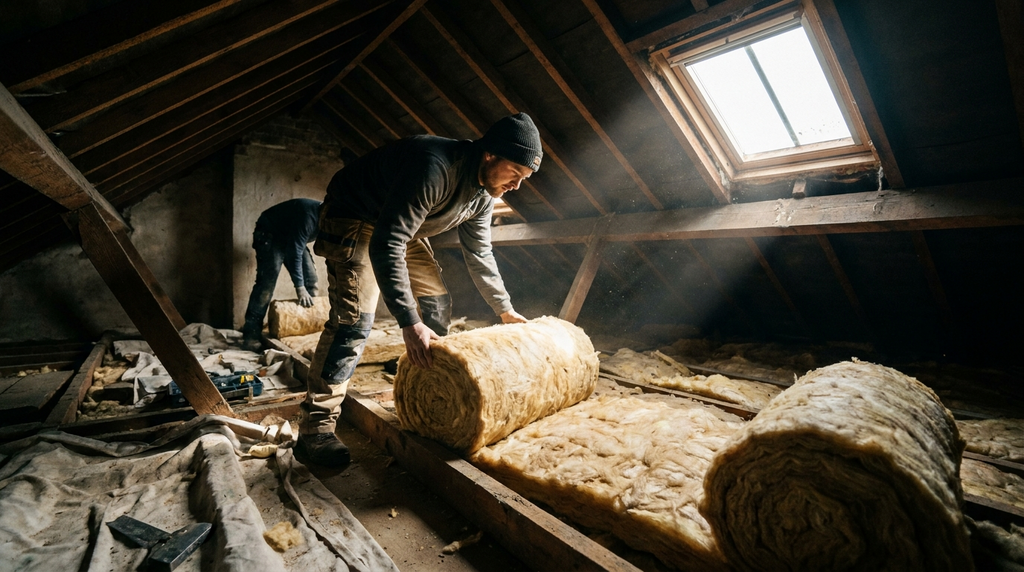
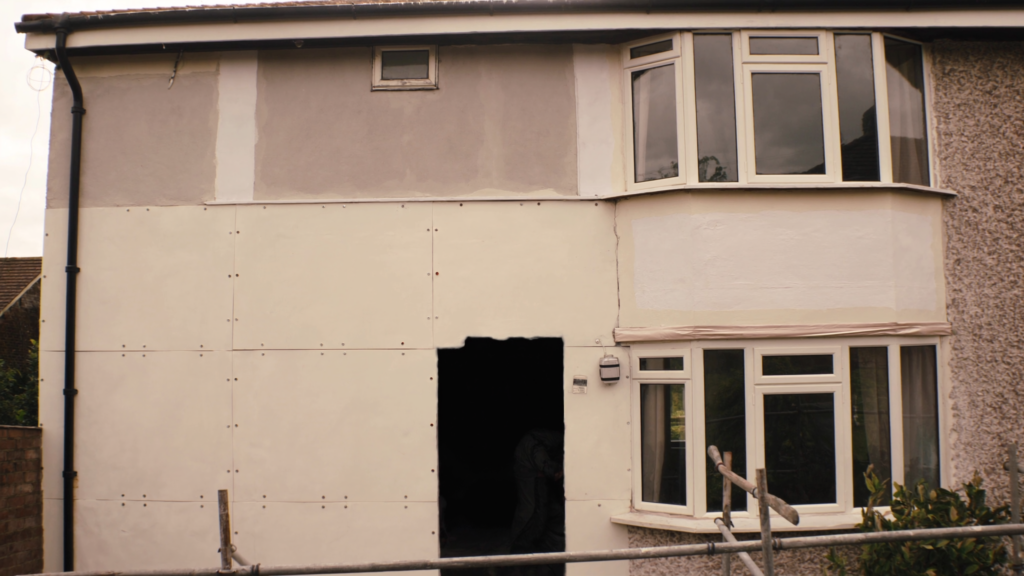
Typical costs for upgrading to 2026 standards: loft insulation top-up to 0.16 W/m²K (270mm mineral wool) £400–£800; cavity wall insulation (0.30 W/m²K) £600–£1,200; solid wall internal insulation (0.30 W/m²K) £4,000–£8,000; external wall insulation (0.30 W/m²K) £8,000–£15,000; double glazing upgrade to 1.2 W/m²K £3,000–£6,000 for a three-bed semi (Energy Saving Trust, 2026).
The Great British Insulation Scheme closed on 31 March 2026. It funded insulation measures only and never covered windows or glazing. The Boiler Upgrade Scheme (BUS) does not cover insulation, but the Energy Company Obligation (ECO4) funds insulation for low-income and fuel-poor households (Ofgem, 2026; GOV.UK, 2026). VAT on insulation materials and installation is reduced to 0% until March 2027 under the government’s energy-saving materials relief (HMRC, 2026).
Frequently Asked Questions
New-build walls must achieve a U-value of 0.18 to 0.26 W/m²K under Building Regulations Part L 2026. This is verified by SAP 10.2 calculations as per HM Government Approved Document L.
The 2026 U-value target for lofts in new homes is 0.11 to 0.16 W/m²K. For retrofits, the maximum is 0.16 W/m²K, according to Energy Saving Trust guidance.
Uninsulated solid walls have a typical U-value of 2.1 W/m²K, so the 2026 new-build target of 0.18-0.26 represents roughly a tenfold improvement. Single-glazed windows at 5.0 W/m²K must cut heat loss by over 70% to meet 1.4 W/m²K.
Yes, retrofit targets are less stringent: walls ≤0.30, roof ≤0.16, floor ≤0.25, windows ≤1.6, and doors ≤1.8 W/m²K. New-build targets are tighter, as detailed in Scottish Government Section 6 and Approved Document L.
Compliance for new homes uses SAP 10.2 calculations. For existing dwellings undergoing thermal upgrades, the Standard Assessment Procedure is required, as per HM Government Approved Document L.