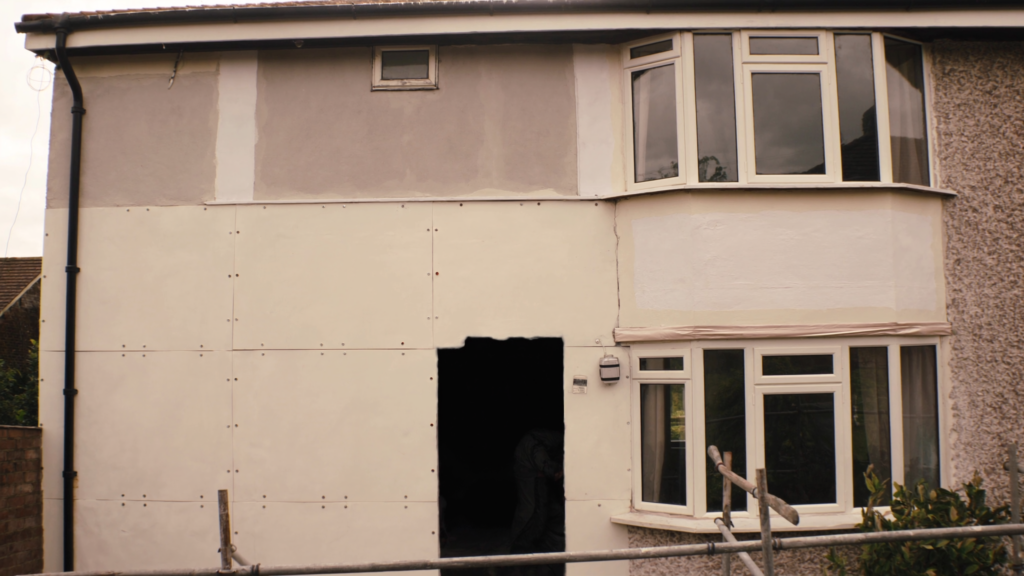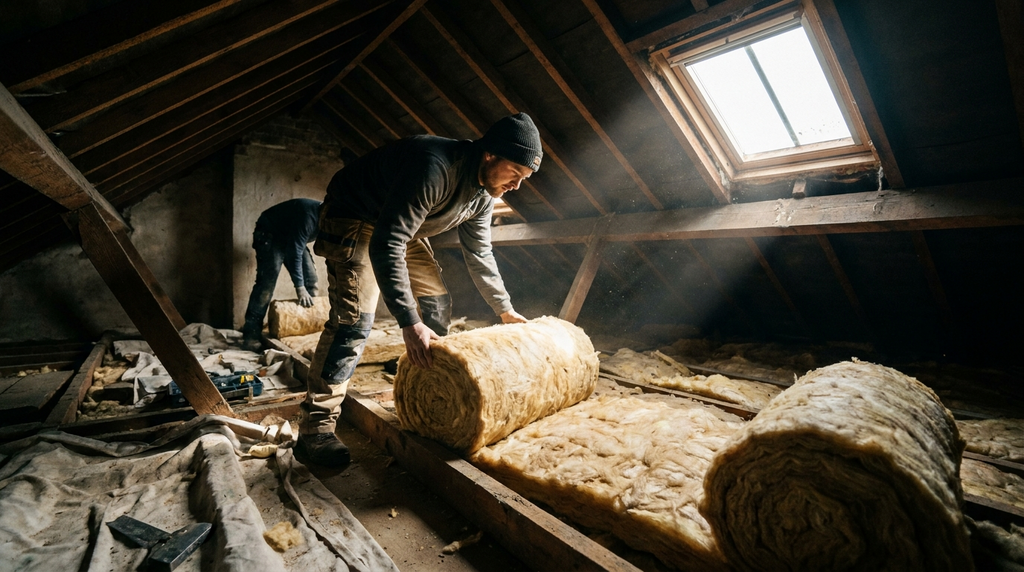
Listed building owners face a specific legal barrier to standard insulation methods
If you own a listed building, the standard insulation routes that work for most UK homes are often legally unavailable to you. This is because the Planning (Listed Buildings and Conservation Areas) Act 1990 protects the special architectural or historic interest of the building. Under Section 7 of that Act, any alteration that affects the character of a listed building requires formal Listed Building Consent (GOV.UK, 2026).
Standard cavity-wall insulation or external-wall insulation systems are routinely refused for listed buildings because they alter the appearance, fabric, or breathability of the structure. Historic England’s “Energy Efficiency and Historic Buildings” guidance (2021 edition, updated 2026) states that modern insulation materials can trap moisture inside solid masonry walls, leading to damp and decay (GOV.UK, 2026). The legal barrier is not a blanket ban, it is a requirement that any insulation system must be compatible with the building’s historic fabric and must not change its character.
The three grant routes open to listed building owners in 2026
Listed building owners can access grant funding for insulation, but each scheme has specific conditions. The Great British Insulation Scheme closed on 31 March 2026. It funded insulation measures only and never covered windows or glazing. Listed status does not automatically disqualify you, but the installer must propose a system that is compatible with the building’s structure and approved by the local planning authority (GOV.UK, 2026).
The Energy Company Obligation (ECO4) offers funding for solid-wall insulation in hard-to-treat homes, including listed buildings, provided the measure is approved by the local planning authority. The ECO4 scheme specifically requires that the insulation measure does not cause harm to the building’s fabric (Ofgem, 2026).
In Scotland, Home Energy Scotland (HES) has specific allowances for listed buildings, including funding for internal wall insulation using breathable materials. In Wales, the Nest scheme offers similar support. Northern Ireland’s Boiler Upgrade Scheme does not cover insulation, but the Northern Ireland Energy Advice service can direct you to local grants (Energy Saving Trust, 2026).
Quick numbers, grant amounts, average costs, and U-value targets for listed buildings
| Grant name | Maximum funding | Homeowner co-pay (typical) | Target U-value (solid wall) | EPC threshold required |
|---|---|---|---|---|
| Great British Insulation Scheme (GBIS) | Up to £2,500 for solid wall | £0–£500 depending on income | 0.30 W/m²K | E, F, or G (low income) or D (general) |
| Energy Company Obligation (ECO4) | Up to £10,000 for solid wall | £0–£2,000 depending on income | 0.30 W/m²K | E, F, or G |
| Home Energy Scotland (HES) | Up to £7,500 for solid wall | £0–£1,500 depending on income | 0.30 W/m²K | E, F, or G |
| Welsh Government Nest | Up to £5,000 for solid wall | £0–£1,000 depending on income | 0.30 W/m²K | E, F, or G |
Data sourced from Ofgem ECO4 installer guidance (2026), Energy Saving Trust “Home Insulation Costs” (2026), and GOV.UK “Listed Building Energy Efficiency” page (GOV.UK, 2026).
Who qualifies for a listed building insulation grant, the eligibility checklist
To qualify for a listed building insulation grant, your property must meet specific criteria. The property must have an Energy Performance Certificate (EPC) rating of E, F, or G for ECO4; GBIS requires E, F, or G for low-income households or EPC D for general applicants (GOV.UK, 2026).
The building must be occupied, either owner-occupied or private rented, and the applicant must own the property or have landlord consent. The insulation measure must be approved by the local conservation officer. A letter of no objection or formal Listed Building Consent is required before the grant is paid. Without this approval, the grant cannot proceed (Ofgem, 2026).
Key eligibility points:
- EPC rating E, F, or G (ECO4) or D (GBIS general route).
- Property must be occupied.
- Applicant must own the property or have landlord consent.
- Listed Building Consent or letter of no objection from the local conservation officer is mandatory.
How to verify a listed-building insulation installer
All grant-funded insulation work must be installed by a contractor certified under the Microgeneration Certification Scheme (MCS) for solid-wall insulation. You can check the MCS Installer Directory to confirm certification (MCS, 2026). The installer must also be TrustMark-registered for consumer protection; ECO4 and GBIS require both certifications (TrustMark, 2026).
For listed buildings, the installer should hold additional conservation accreditation, such as from the Institute of Historic Building Conservation (IHBC), or provide evidence of experience with heritage fabric. The IHBC has a list of accredited practitioners who specialise in historic building work (IHBC, 2026). Using an installer without this experience can lead to damage to the building’s fabric and refusal of grant funding.
Can you insulate a listed building in 2026?
Yes, you can insulate a listed building in 2026, but only with a system that does not alter the building’s character or cause moisture damage. Internal wall insulation using breathable materials such as wood fibre or lime plaster is the standard approved approach for solid walls (Historic England, 2026).
You must obtain Listed Building Consent before starting any work. Retrospective consent is rarely granted and can lead to enforcement action, including a requirement to remove the insulation at your own cost. Grant funding is available if the property meets EPC and income criteria, but the installed system must be approved by the local conservation officer before work begins (GOV.UK, 2026).
Compare insulation options for solid walls in older homes
What happens if you insulate a listed building without consent
Insulating a listed building without the required consent is a criminal offence under the Planning (Listed Buildings and Conservation Areas) Act 1990. On conviction, you can face a fine of up to £30,000 or imprisonment (GOV.UK, 2026).
Local planning authorities can serve a Listed Building Enforcement Notice requiring the removal of the insulation and restoration of the original fabric at the owner’s cost. Historic England’s enforcement guidance (2021) notes that unauthorised work can also affect the building’s insurance and future saleability (Historic England, 2026). The risk is not theoretical, local authorities actively monitor listed buildings for unauthorised alterations.
Understand the full process for obtaining Listed Building Consent
Frequently Asked Questions
No. Under Section 7 of the Planning (Listed Buildings and Conservation Areas) Act 1990, any alteration affecting the building’s character requires formal Listed Building Consent. Insulation without consent is a criminal offence, as confirmed by GOV.UK in 2026.
Only insulation systems that are compatible with the building’s historic fabric and do not alter its character are allowed. Historic England recommends vapour-permeable materials such as wood fibre or lime-based insulation, as stated in their 2021 guidance updated in 2026.
Ofgem confirms that ECO4 specifically requires the measure not to harm the building’s fabric (2026).
Rarely. Most listed buildings have solid masonry walls without a cavity. Even where a cavity exists, standard cavity-wall insulation is routinely refused because it can alter the building’s appearance or trap moisture, per Historic England guidance (2026).
Costs vary widely but typically range from £2,000 for internal lime-based wall insulation in a single room to over £15,000 for whole-house vapour-permeable systems. The Energy Saving Trust notes that specialist materials and Listed Building Consent fees add to the cost.