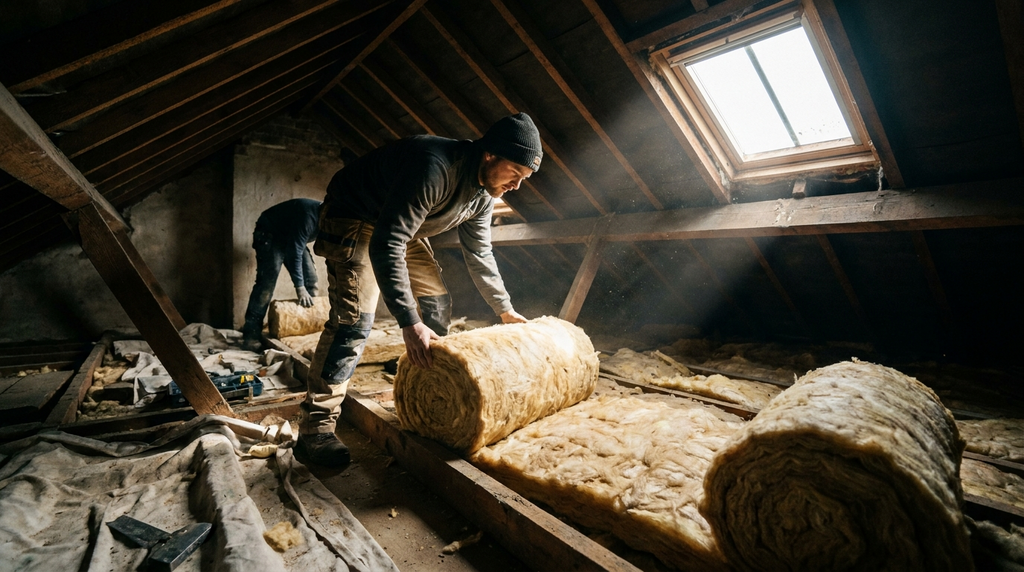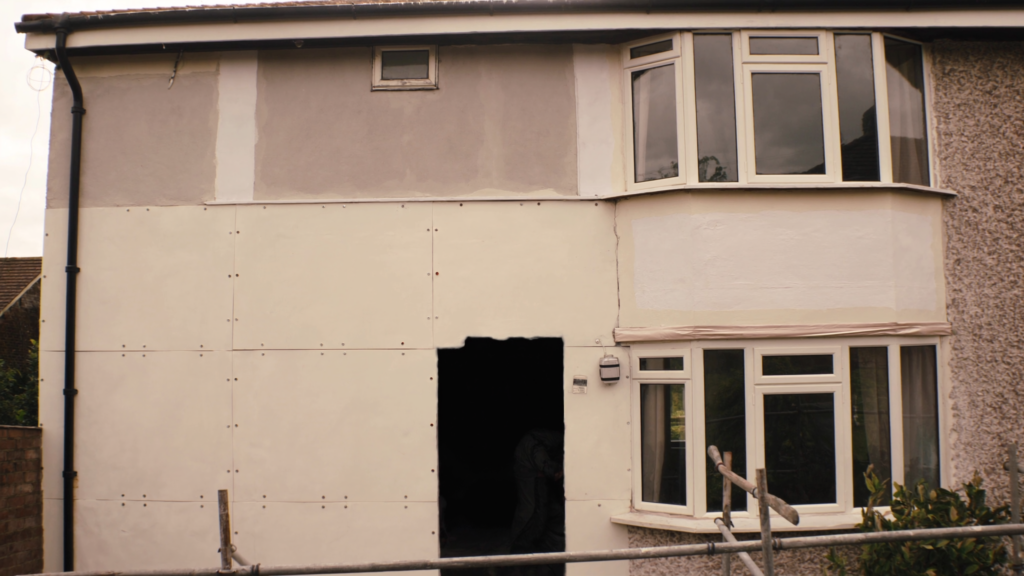
The 2026 Building Regulations require new walls to achieve a U-value of 0.18 W/m²K, roughly three times stricter than the average uninsulated cavity wall from the 1980s.
The 2026 update to Part L of the Building Regulations sets new minimum thermal performance standards for walls, roofs, and floors in new dwellings. These rules are built to cut carbon emissions from heating and cooling in newly built homes. The target fabric energy efficiency (TFEE) for a new home is now calculated against a 31% lower carbon emissions baseline compared to the 2021 standards (GOV.UK, 2026).
For homeowners building a new house, the U-value limits for new build walls (0.18 W/m²K) and roofs (0.11 W/m²K) are the headline figures you must ensure your builder or architect is designing to. A U-value measures how easily heat passes through a building element; lower numbers mean better insulation. These figures are about three times stricter than the average uninsulated cavity wall from the 1980s, which typically achieved a U-value of around 0.6 W/m²K (BRE, 2026).
The key insulation regulation change for extensions in 2026
If you are adding a single-storey extension, the regulations are slightly different from a full new build. For a single-storey extension, the maximum permitted U-value for a new roof is 0.15 W/m²K, and for a new wall it is 0.18 W/m²K (GOV.UK, 2026). Extensions must not make the thermal performance of the existing dwelling worse; you may need to upgrade the insulation of the connecting wall or floor.
The “area-weighted average” rule applies. This means if the extension is large, you cannot compensate with a lower performance in the main house. For example, if your extension has a large glazed area, the walls and roof must still meet the U-value limits. The existing building’s thermal performance must be maintained or improved.
Quick numbers U-value limits and compliance thresholds
| Element | New Build (W/m²K) | Extension (W/m²K) | Replacement (W/m²K) |
|---|---|---|---|
| Wall | 0.18 | 0.18 | 0.18 |
| Roof (pitched) | 0.11 | 0.15 | 0.15 |
| Roof (flat) | 0.11 | 0.15 | 0.12 |
| Floor | 0.13 | 0.18 | 0.15 |
| Windows/Doors (glazed) | 1.2 | 1.2 | 1.4 |
These figures come from Approved Document L, Volume 1: Dwellings, Tables 4.2, 4.3, and 4.4 (2026 edition) (GOV.UK, 2026). For replacements, such as a new window or roof, the new element must meet the figures in the third column. Note that replacement windows and doors have a slightly higher permitted U-value of 1.4 W/m²K. This reflects the difficulty of retrofitting high-performance glazing into existing frames.
The direct answer to “what are the insulation building regulations in the UK for 2026?”
For new homes, the regulations require a whole-dwelling fabric energy efficiency (FEE) target of no more than 45 kWh/m²/year, enforced through the Standard Assessment Procedure (SAP 10.2) (GOV.UK, 2026). This means the total calculated energy demand for heating, cooling, and hot water must not exceed that limit per square metre of floor area each year.
For extensions, the regulations mandate that the new fabric meets the U-values listed in the table above, and that the existing building’s thermal performance is not downgraded. For replacements, such as a new window or roof, the new element must meet a U-value of 1.2 W/m²K for windows or 0.15 W/m²K for a replacement roof (GOV.UK, 2026). Compliance is checked by building control or an approved inspector.
How to check if your builder is using an MCS-certified installer for insulation works
The Microgeneration Certification Scheme (MCS) is not required for standard insulation installation, such as loft or cavity wall insulation, under Building Regulations. However, MCS certification is required if you want to claim the Great British Insulation Scheme (GBIS) grant (MCS, 2026). For cavity wall insulation, the installer must be registered with the Cavity Insulation Guarantee Agency (CIGA) to provide a 25-year guarantee (CIGA, 2026).
For solid wall insulation, whether internal or external, the installer should be TrustMark-registered. The Great British Insulation Scheme closed on 31 March 2026. It funded insulation measures only and never covered windows or glazing. You can check an installer’s certification by searching the MCS or TrustMark online directories. Always ask for proof of certification before work begins.
How to verify a building control notice for insulation work
All insulation work that changes the building’s thermal envelope, such as new walls, roofs, floors, or replacing windows, must be notified to your local authority building control (LABC) or an approved inspector (GOV.UK, 2026). You can check if a Building Control Notice has been submitted by searching the LABC register for your postcode.
If the work is done under a Competent Person Scheme, such as FENSA for windows or CERTASS for insulation, the installer must self-certify and issue a certificate within 10 days (GOV.UK, 2026). Keep this certificate safe; it proves the work meets regulations and is needed when you sell your home. How to check building regulations compliance for home improvements
The cost of failing to meet the 2026 insulation regulations
A local authority can issue a “building notice” requiring the removal or correction of non-compliant insulation. The costs for remedial work typically exceed £5,000 for a single storey extension (Local Government Association, 2026). Non-compliant work can also void your home insurance policy and reduce the property’s resale value (Association of British Insurers, 2026).
If you sell a home with non-compliant insulation, the buyer’s solicitor will flag it during the conveyancing search. This can delay or collapse the sale (Law Society, 2026). The safest approach is to use a TrustMark-registered or MCS-certified installer and to obtain a building control completion certificate before any work is signed off. How to find a TrustMark registered installer for home insulation
Frequently Asked Questions
For new builds, the 2026 Building Regulations (Part L) set a maximum U-value of 0.18 W/m²K for walls and 0.11 W/m²K for roofs. These are roughly three times stricter than an average 1980s uninsulated cavity wall, according to GOV.UK.
For a single-storey extension in 2026, the maximum U-value for a new wall is 0.18 W/m²K and for a new roof it is 0.15 W/m²K (GOV.UK, 2026). You must also ensure the extension does not worsen the existing dwelling's thermal performance.
The 2026 regulations require a 31% lower carbon emissions baseline compared to the 2021 standards, according to GOV.UK. The target fabric energy efficiency (TFEE) is calculated against this stricter baseline, meaning walls and roofs must achieve lower U-values.
Yes, you may need to upgrade the insulation of the connecting wall or floor when adding an extension. The 2026 regulations state that extensions must not make the thermal performance of the existing dwelling worse (GOV.UK, 2026).
The area-weighted average rule means that if your extension has a large glazed area, the walls and roof must still meet the U-value limits. You cannot compensate with lower performance in the main house, as per the 2026 Building Regulations (GOV.UK).