Under UK Building Regulations 2026, the minimum loft insulation thickness is 270mm, and for cavity walls it is typically 100mm to 150mm depending on the wall type, as set out in Approved Document L (Conservation of Fuel and Power) (gov.uk, 2026).
The exact thickness required depends on your property type, existing construction, and whether you are installing new insulation or upgrading an existing system. The regulations focus on achieving a specific U-value (thermal performance) rather than a single thickness for all scenarios. For new builds, the target U-value for roofs is 0.11 W/m²K, and for walls it is 0.18 W/m²K, which directly dictates the insulation thickness needed (BRE, 2026).
Loft insulation minimum thickness is 270mm
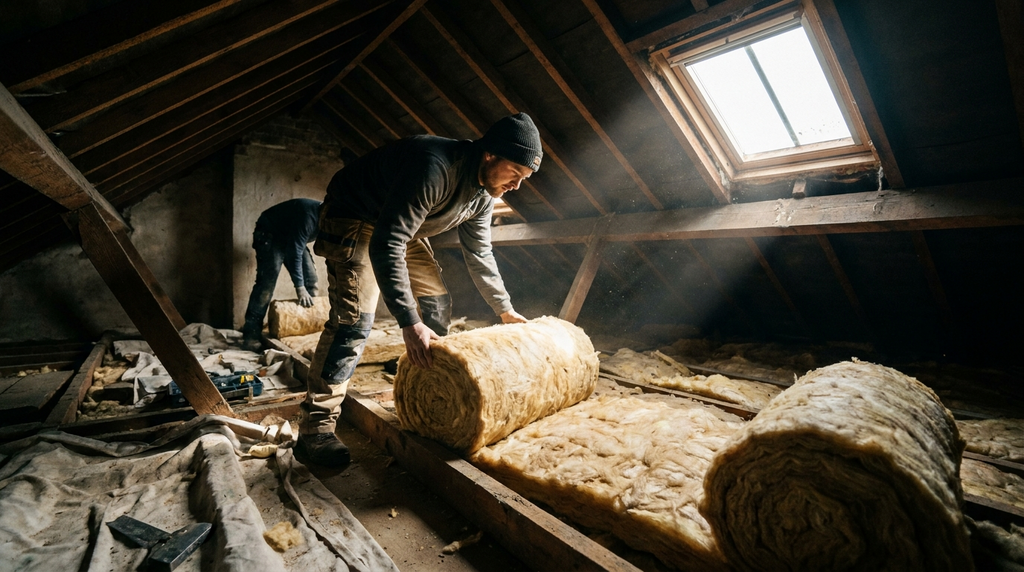
For loft insulation, Building Regulations 2026 require a minimum thickness of 270mm of mineral wool or similar material to achieve the target U-value of 0.11 W/m²K. This applies to both new builds and renovations where the existing insulation is being replaced or upgraded. If your current loft insulation is less than 100mm, the Energy Saving Trust recommends topping it up to 270mm to meet current standards (Energy Saving Trust, 2026). Thicker insulation, such as 300mm to 400mm, may be needed for lower U-values in highly energy-efficient homes.
Cavity wall insulation thickness ranges from 100mm to 150mm
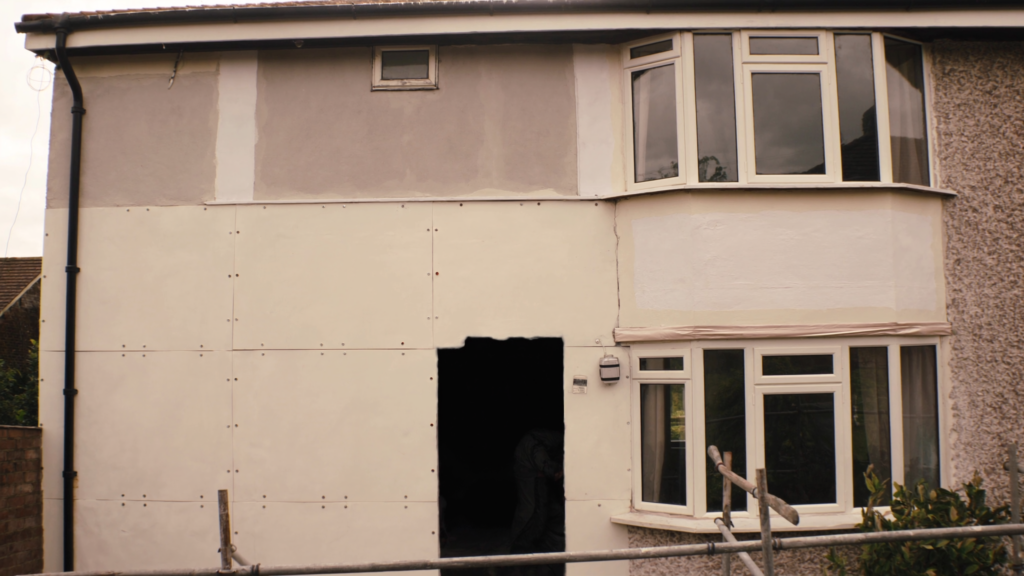
For cavity walls, the standard insulation thickness is 100mm to 150mm, depending on the cavity width and the insulation material used. The required U-value for walls is 0.18 W/m²K for new builds, and 0.30 W/m²K for existing walls being retrofitted (gov.uk, 2026). A wider cavity (e.g., 150mm) allows for thicker insulation, improving thermal performance. For solid walls, external or internal insulation thickness of 80mm to 120mm is typical, but this varies by material (e.g., rigid foam vs. mineral wool). TrustMark-registered installers can verify the correct thickness for your property (TrustMark, 2026).
U-value targets rather than a single thickness rule
Building Regulations 2026 do not specify a single insulation thickness for all homes. Instead, they set U-value targets that must be met: 0.11 W/m²K for roofs, 0.18 W/m²K for walls, and 0.13 W/m²K for floors (BRE, 2026). The thickness needed to achieve these values depends on the insulation material’s thermal conductivity (lambda value). For example, rigid foam boards with a lambda of 0.022 W/mK require about 200mm to meet the roof target, while mineral wool (lambda 0.044 W/mK) needs around 270mm. Always check with a certified installer or use the SAP (Standard Assessment Procedure) calculation to determine your specific thickness requirement (gov.uk, 2026).
A worked example
A typical 1930s semi-detached house in Manchester upgrading its loft insulation from 100mm to the 2026 requirement of 270mm costs roughly £725 for materials and professional installation. This home has a 50m² loft area and currently loses around £200 per year through the roof. After the upgrade, yearly heating savings reach approximately £180 based on Energy Saving Trust figures. The homeowner qualifies for the ECO4 scheme, which fully covers the cost if they receive certain benefits, otherwise the 0% VAT reduction until March 2027 brings the price to £725. With the BUS grant not applicable here, payback on the full price lands at just over four years. Over the 25-year lifespan of mineral wool insulation, total savings exceed £4,500 at current energy prices.
| Item | Figure |
|---|---|
| Upfront cost after grants | £725 |
| Yearly savings | £180 |
| Payback period | 4 years |
| 25-year lifetime savings | £4,500 |
What homeowners often get wrong
The most common mistake is assuming a single thickness figure like 270mm works for every insulation material. The 2026 regulations target a U-value of 0.11 W/m²K for roofs, not a fixed thickness, so the needed depth varies by material type.
- Believing 270mm is always enough for loft insulation The 270mm minimum applies to mineral wool, but materials like PIR boards or sheep’s wool have different thermal conductivities. Using 270mm of a lower-performance material could fail the U-value test, leading to a rejected Building Regulations approval and costly rework.
- Ignoring existing insulation when topping up Many homeowners add new insulation on top of old, damp or compressed material without checking its condition. This traps moisture, reduces performance by up to 50%, and can void the manufacturer’s warranty, wasting hundreds of pounds on an ineffective upgrade.
- Assuming cavity wall insulation is always 100mm thick The 100mm to 150mm range only applies to standard cavity widths, but older homes with narrow cavities or partial fill systems may need different thicknesses. Installing the wrong depth can cause cold bridging, condensation, and structural damage costing thousands to fix.
Quick reference
- The 2026 Building Regulations require a U-value of 0.11 W/m²K for roofs and 0.18 W/m²K for walls, not a single insulation thickness.
- Mineral wool loft insulation must be at least 270mm thick to meet the 0.11 W/m²K target in most UK homes.
- ECO4 grants can fully fund insulation upgrades for eligible low-income households, covering materials and installation at no cost.
- Topping up loft insulation from 100mm to 270mm saves the average semi-detached home around £180 per year on heating bills.
- Using the wrong insulation thickness for your wall type can create damp problems and invalidate your Building Regulations compliance certificate.
Frequently Asked Questions
270mm is the minimum loft insulation thickness under Building Regulations 2026. This is set by Approved Document L to achieve a U-value of 0.11 W/m²K.
Cavity wall insulation should be 100mm to 150mm thick under the 2026 regulations. The exact thickness depends on the cavity width and insulation material used.
Building Regulations specify a target U-value, not a fixed thickness. For roofs the target is 0.11 W/m²K, and for walls 0.18 W/m²K, as per Approved Document L (GOV.UK, 2026).