U-values measure how fast heat escapes through a building element
A U-value is the rate of heat transfer through a wall, roof, floor, or window, expressed in watts per square metre per degree of temperature difference (W/m²K). The lower the U-value, the better the insulation performance: less heat escapes in winter and less heat enters in summer. UK Building Regulations set maximum U-values for new-build and renovation work, with targets that have tightened over time (DESNZ, Approved Document L, 2021 edition with 2026 amendments).
A U-value measures heat loss through walls, roofs, floors, and windows in W/m²K. Lower numbers mean better insulation. For new builds, walls target 0.18, roofs 0.11, floors 0.13, and windows 1.2 W/m²K. Check your home's performance against these 2026 targets.
- A U-value below 0.18 W/m²K is the 2026 target for new walls.
- New-build roofs should achieve 0.11 W/m²K or lower.
- Replacement windows must meet 1.4 W/m²K under Part L.
- Existing floors during renovation target 0.25 W/m²K.
- Top up loft insulation to 0.16 W/m²K for best savings.
- U-values measure how fast heat escapes through a building element
- Current UK U-value targets for walls, roofs, floors, and windows
- How to calculate the U-value of a building element you already own
- Quick numbers U-value performance ranges and typical cost savings
- The direct answer to "u values explained" U-values are the single number that tells you if your insulation is working
- How to verify your installer is certified and your work meets U-value targets
- What upgrading to 2026 U-values actually costs and saves over 10 years
Think of a U-value as a speed limit for heat loss. A wall with a U-value of 0.18 W/m²K loses heat at one-tenth the rate of an uninsulated solid brick wall at 2.1 W/m²K. Every building element in your home has its own U-value, and the lower that number, the less energy you need to keep the house warm.
Current UK U-value targets for walls, roofs, floors, and windows
For new-build walls, the target is 0.18 W/m²K or lower; for existing walls during renovation, 0.30 W/m²K is typical. New-build roofs (pitched, insulation at ceiling level) target 0.11 W/m²K; flat roofs target 0.13 W/m²K. New-build floors target 0.13 W/m²K; existing floors during improvement work target 0.25 W/m²K. Windows and glazed doors in new builds should achieve 1.2 W/m²K or lower; replacement windows in existing homes should achieve 1.4 W/m²K (DESNZ, Approved Document L, 2021 edition with 2026 updates).
These targets apply when you are building a new home or carrying out certain renovation work that requires Building Regulations approval. If you are simply topping up loft insulation, you do not need to meet the full new-build target, but aiming for at least 0.16 W/m²K for the roof is recommended by the Energy Saving Trust (Energy Saving Trust, 2026). For replacement windows, the 1.4 W/m²K target is a legal requirement under Part L of the Building Regulations.
How to calculate the U-value of a building element you already own
A U-value is calculated from the thermal conductivity (lambda value) and thickness of each material layer in the construction, plus surface resistances. For a simple cavity wall, the total thermal resistance (R-value) is the sum of each layer’s R-value (thickness ÷ lambda), plus internal and external surface resistances. The U-value is the reciprocal of the total R-value (U = 1 / Rtotal). Online U-value calculators from the BRE (Building Research Establishment) or manufacturers like Kingspan can handle multi-layer constructions (BRE, BR 443: Conventions for U-value calculations).
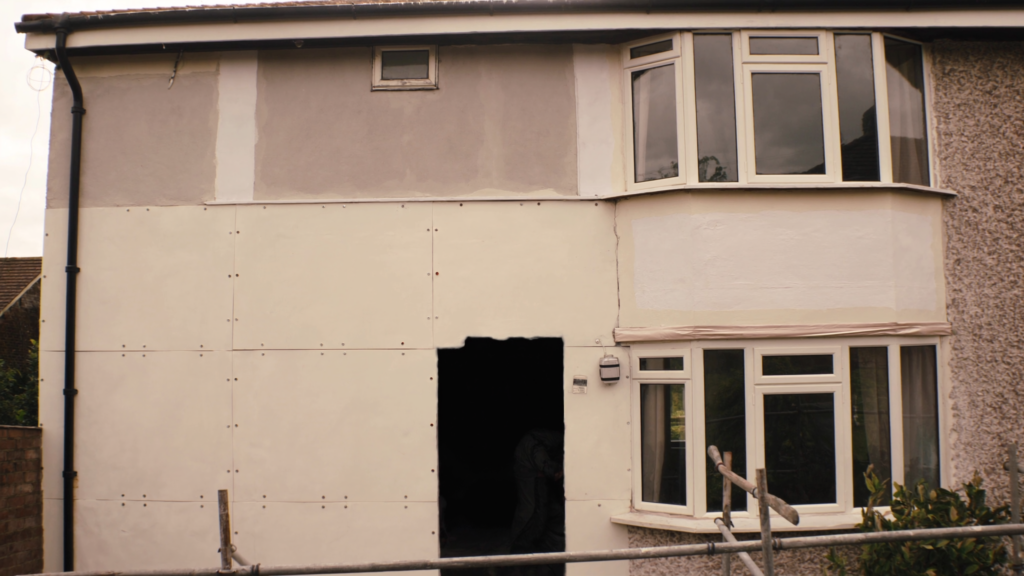
If you know what your walls, roof, and floors are made of, you can input the materials and thicknesses into a free online calculator. For example, a 225mm solid brick wall with no insulation has a U-value around 2.1 W/m²K. Adding 60mm of external wall insulation board drops that to roughly 0.30 W/m²K. The calculation is straightforward once you have the lambda value for each material, which is usually printed on the insulation product datasheet.
Quick numbers U-value performance ranges and typical cost savings
| Building element | Old U-value (pre-2002) | New-build U-value (2026) | Annual saving per m² (£) | Payback period (years) |
|---|---|---|---|---|
| Solid wall (uninsulated) | 2.1 W/m²K | 0.18 W/m²K | £15–£25 | 10–20 |
| Cavity wall (unfilled) | 1.5 W/m²K | 0.18 W/m²K | £8–£12 | 2–6 |
| Pitched roof (100mm insulation) | 0.35 W/m²K | 0.11 W/m²K | £5–£8 | 2–5 |
| Single glazing | 5.0 W/m²K | 1.2 W/m²K | £20–£35 | 13–27 |
These figures are based on Energy Saving Trust data for a typical gas-heated semi-detached house in the UK (Energy Saving Trust, Home insulation guide, 2026). Savings and payback vary by property size, heating system efficiency, and local fuel prices. The payback for solid wall insulation is longer because the upfront cost is higher, but the annual savings are substantial.
The direct answer to “u values explained” U-values are the single number that tells you if your insulation is working
A U-value is a simple metric: lower numbers mean better insulation, and UK Building Regulations set maximum allowed values for each part of the house. To check your home, look up the U-value of each element (e.g., from an EPC, your builder’s spec, or a retrofit assessment) and compare it to the 2026 targets above. If your wall U-value is above 0.30 W/m²K, you are losing significantly more heat than a modern home, and upgrading insulation will cut your heating bills (Energy Saving Trust, Understanding U-values, 2026).
The key takeaway: you do not need to do the maths yourself. Just know that a U-value below 0.18 (walls), 0.11 (roof), or 1.2 (windows) is excellent; anything above 0.30 (walls) or 2.0 (windows) is poor. Your Energy Performance Certificate (EPC) lists U-values for each building element, or a retrofit assessment can measure them directly. How to read your EPC rating
How to verify your installer is certified and your work meets U-value targets
For cavity wall insulation, use an installer registered with the National Insulation Association (NIA) and certified under the Cavity Wall Insulation Guarantee Agency (CIGA) scheme. The Great British Insulation Scheme closed on 31 March 2026. It funded insulation measures only and never covered windows or glazing. For roof and loft insulation, check for TrustMark registration and, if using spray foam or rigid board, ensure the installer follows the manufacturer’s system with a guaranteed U-value.
For windows and doors, the installer must be FENSA or CERTASS registered to comply with Building Regulations for replacement glazing (FENSA, Find an installer, 2026). Always ask for a written U-value calculation or certificate before work starts, and check that the final installed performance matches the target. If you are using a grant scheme, the installer must also be registered with that scheme to release the funding. Great British Insulation Scheme eligibility
What upgrading to 2026 U-values actually costs and saves over 10 years
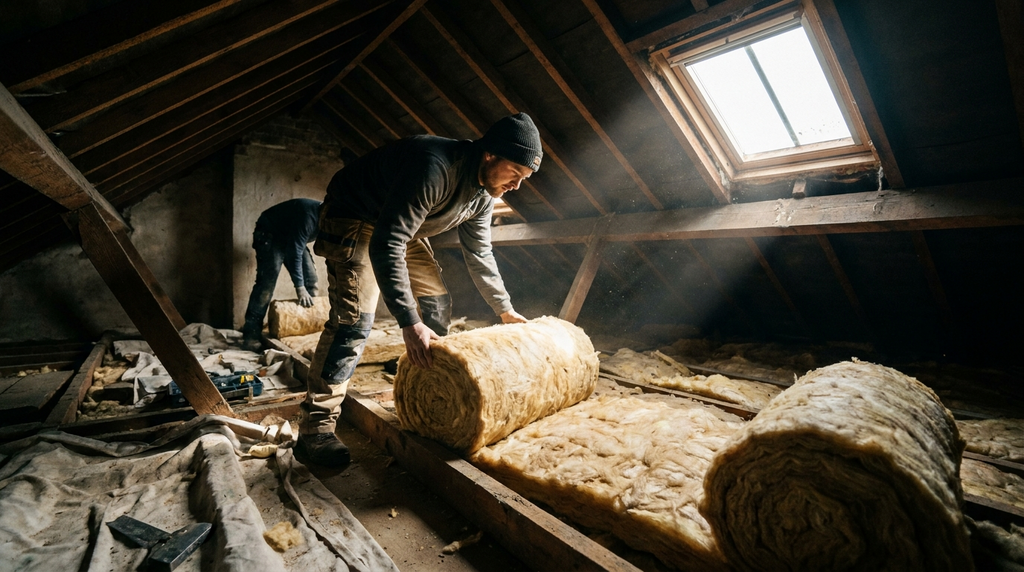
External wall insulation (solid walls) costs £8,000–£14,000 for a semi-detached house and saves £300–£500 per year on heating, giving a payback of 16–28 years without grant support. Cavity wall insulation costs £500–£1,500 and saves £150–£250 per year, with a payback of 2–6 years; it is often free via ECO or the Great British Insulation Scheme (Energy Saving Trust, Cost and savings of home insulation, 2026). Loft insulation (top-up from 100mm to 270mm) costs £300–£600 and saves £100–£200 per year, with a payback of 2–5 years. Double glazing to 1.2 W/m²K costs £4,000–£8,000 for a typical house and saves £150–£300 per year, with a payback of 13–27 years (DESNZ, Great British Insulation Scheme installer cost data, 2026).
Over 10 years, the total savings from cavity wall insulation can reach £1,500–£2,500, while external wall insulation saves £3,000–£5,000. If you qualify for grant funding, the payback period shrinks dramatically or becomes immediate. The key variable is whether your home is eligible for funded schemes, which are based on household income and property energy efficiency.
Frequently Asked Questions
A U-value measures how fast heat passes through a building element like a wall or window. It is expressed in watts per square metre per kelvin (W/m²K). The lower the number, the better the insulation, as confirmed by the Energy Saving Trust.
For new-build walls, the 2026 target is 0.18 W/m²K or lower. For existing walls during renovation, a U-value of 0.30 W/m²K is typical under Approved Document L (DESNZ, 2021 edition with 2026 amendments).
For new-build pitched roofs with insulation at ceiling level, the target is 0.11 W/m²K. Flat roofs should achieve 0.13 W/m²K. For existing homes, aiming for 0.16 W/m²K is recommended by the Energy Saving Trust.
New-build windows and glazed doors should achieve 1.2 W/m²K or lower. Replacement windows in existing homes must meet 1.4 W/m²K under Part L of the Building Regulations (DESNZ, 2021 edition with 2026 updates).
A U-value is calculated from the thermal conductivity and thickness of each material layer in a building element. You can use the formula U = 1 / (Rsi + R1 + R2 +.. + Rse), where R values are the thermal resistances. The Energy Saving Trust provides guidance on standard calculations.